
Angelonia Companion Plants for Sunny Beds and Containers
Choosing angelonia companion plants comes down to three things: sun, water, and elbow room. Angelonia wants full sun, well-drained soil, and not much water once it settles in. Anything planted next to it has to be fine with those terms, or one of the two plants will struggle.
The good news is that the list of plants that qualify is long, and most of them are ordinary warm-season flowers you can find at any garden center. Below are ten that work, five that don’t, and a simple layout for beds and pots.
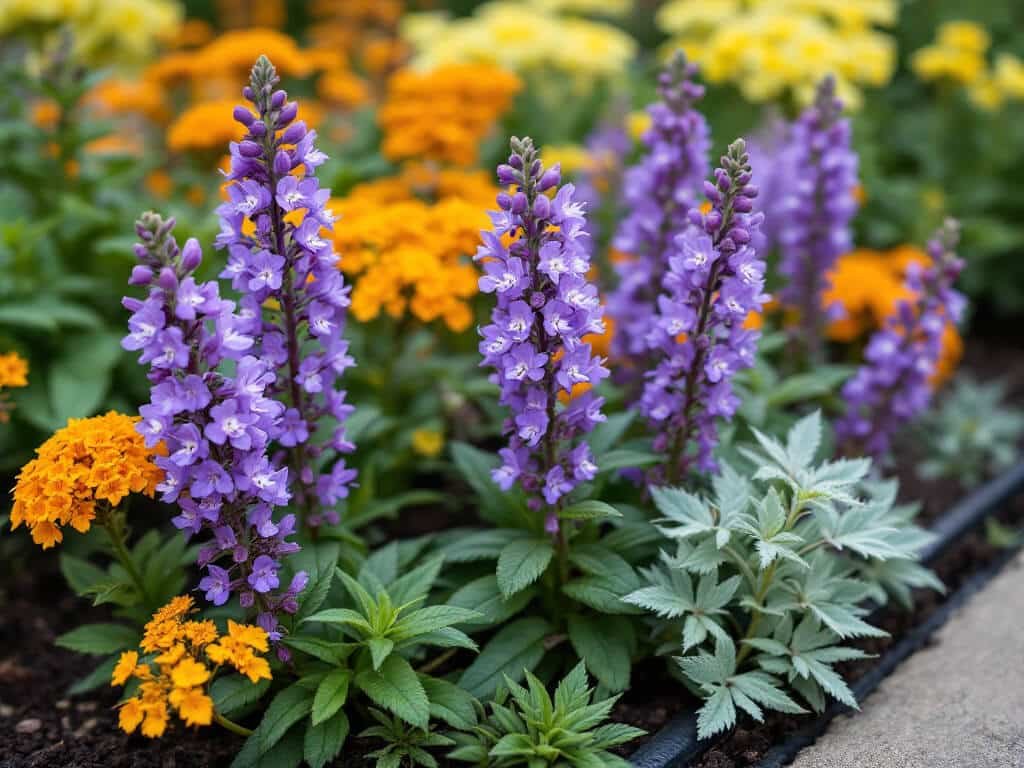
Why pairings matter for angelonia
Angelonia is a tender perennial that is hardy in roughly USDA Zones 9 to 11. Most of you in Zones 5 to 8 will grow it as an annual. It stays fairly compact at 12 to 18 inches tall (cultivars vary), and it blooms through summer, often for at least six weeks and on toward frost when conditions suit it.
That bloom time depends on the plant staying comfortable. It needs a bright, sunny spot and fertile, well-drained soil. It wants moderate moisture while it establishes, then moderate to low water once it is mature. A neighbor that needs constant watering pulls you toward overwatering angelonia, and soggy soil is where Phytophthora root and crown rot can show up.
Crowding matters too. Angelonia can get aphids, spider mites, and powdery mildew, though RHS describes it as generally pest- and disease-free and some cultivars show resistance. Giving each plant room for airflow is a cheap way to stay on the right side of that. And a companion that shares a pest, as coleus can with spider mites, gives problems a place to move between plants.
So the rule is to group plants by water and light first, and by color second.
Best companion plants for angelonia
All ten of these take full sun and warm weather. Spacing is measured from the center of one plant to the center of the next.
Lantana
Lantana likes the same sun, heat, and well-drained conditions as angelonia. Its round flower clusters contrast with angelonia’s upright spikes, so the two read as different shapes rather than a block of one texture. Keep at least 12 to 16 inches between plant centers, and more if the lantana cultivar grows wider than your angelonia.
Salvia farinacea
Mealy cup sage offers flowers that attract pollinators and takes the same sunny, heat-tolerant conditions. It is also upright, so it works behind or beside angelonia. Use at least 12 to 16 inches between centers and adjust for the mature width of the cultivar you buy.
Dwarf zinnia
Dwarf zinnias use the same warm-season space and add a flat, daisy-like flower against angelonia’s spikes. Choose dwarf types specifically, since they are less likely to overwhelm angelonia. Plant them at least 12 inches from angelonia, and farther if the zinnia cultivar spreads wider.
Verbena
Verbena loves heat and sun and mixes well with angelonia in a shared planting. Give it 12 to 16 inches between centers at minimum. If you buy a trailing or spreading verbena, allow extra room so it doesn’t creep over the angelonia crown.
Gomphrena
Gomphrena tolerates sun and warm conditions and is a compatible flowering partner for angelonia. Check the tag for the cultivar’s mature width and use that as your guide. As a starting point, keep at least 12 inches between centers.
Ornamental pepper
Ornamental pepper brings contrasting foliage and fruit to a bed, and it occupies the same warm-season, full-sun planting period. That gives you something to look at besides flower spikes. Space it 12 to 16 inches from angelonia, or by the pepper cultivar’s mature width if that is larger.
Blue fescue
Blue fescue adds a fine-textured, grassy foliage contrast and suits sunny, well-drained spots. It makes a tidy edge in front of taller angelonia. Keep at least 12 inches between centers and don’t crowd the clump, since it looks and performs best with room around it.
Dusty miller
Dusty miller offers silvery foliage that sets off angelonia’s flower color, and it is commonly listed among plants that grow well with angelonia in sunny displays. It works best toward the front of a planting. Allow at least 12 inches between centers, adjusted for the cultivar’s width.
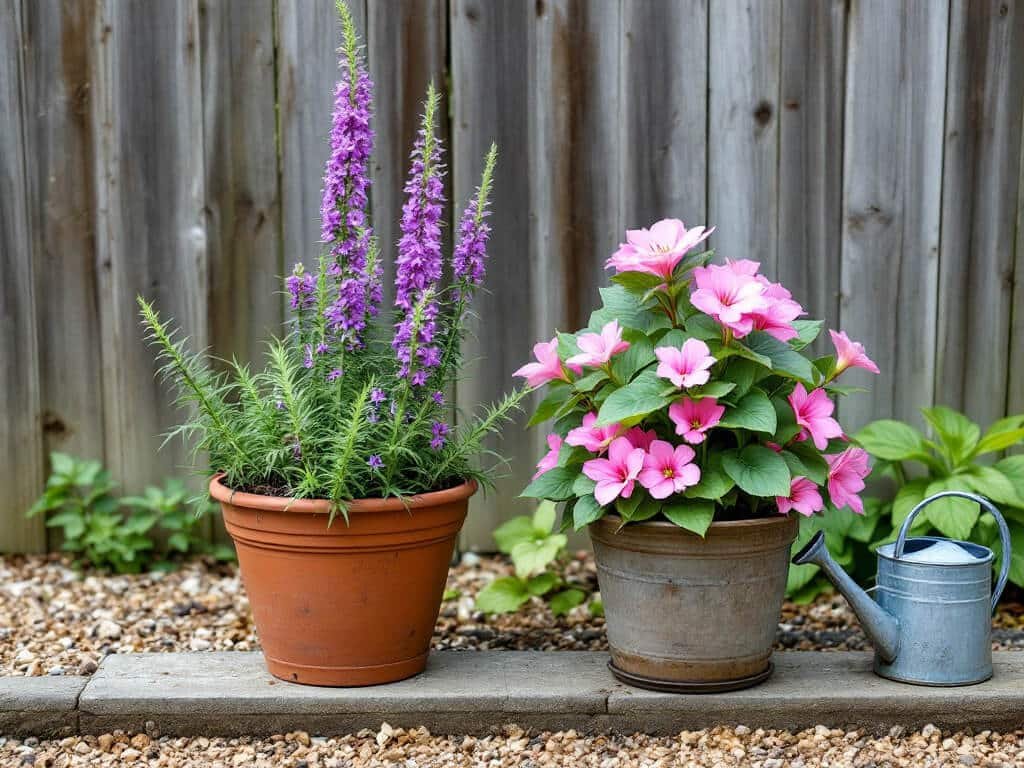
Sweet potato vine
Sweet potato vine is the trailing piece for containers and mixed displays. Plant it near the container edge, not directly against the angelonia crown, and leave enough room for the vine to trail without covering the plant. Letting it smother angelonia defeats the point of the pairing.
Geranium
Geranium is a sunny, warm-season flowering contrast that works in both containers and beds. In beds, use at least 12 to 16 inches between centers. In containers, give each plant room for its mature width instead of packing the pot.
What not to plant with angelonia
Don’t pair angelonia with plants that need shade or constantly moist soil. That is the common thread in everything below, and it is the one mistake that is hard to fix once the plants are in the ground.
Impatiens
Impatiens wants shadier conditions and more consistently moist soil than angelonia. Put them together and one plant is always in the wrong place. Angelonia gets too much water or impatiens gets too much sun, and usually both happen.
Hosta
Hosta prefers shade and moisture, the opposite of angelonia’s full-sun, well-drained setup. In a shared root zone the two can also compete with each other. Keep hosta in the shade bed where it belongs.
Hydrangea macrophylla
Bigleaf hydrangea likes a more consistently moist setting than angelonia does. One source reports that acidic, constantly moist soil can cause problems for angelonia, which is exactly the soil a hydrangea bed tends toward. Plant angelonia somewhere drier and sunnier instead.
Coleus
Pairing guidance for coleus flags spider mites as a potential shared concern, which is a reason to keep them apart. Coleus also commonly performs best in conditions that may not match a full-sun angelonia display. If you want it in the same container group, expect to compromise on one plant or the other.
Vinca in the same container
You may see advice that vinca competes with angelonia for potassium when they share a pot. That specific claim is not supported by the university or RHS sources I checked, so treat it as unverified, not as established fact. Vinca is not on my list of recommended partners, but I wouldn’t skip it on that claim alone.
Layout and spacing
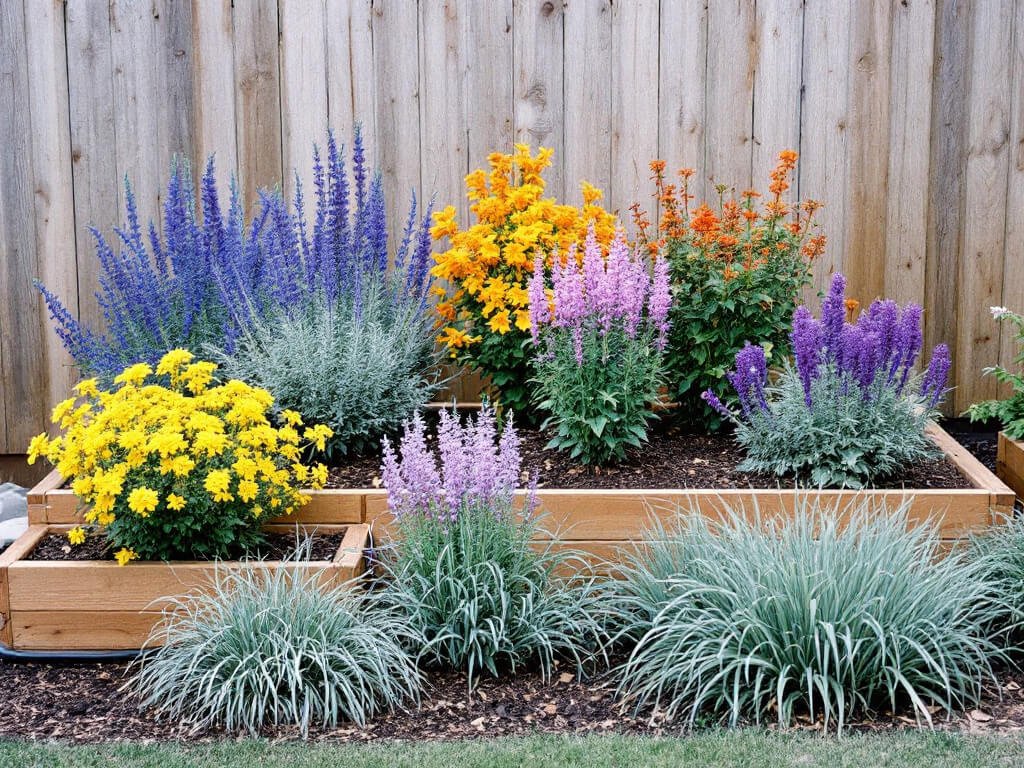
Put angelonia in the sunniest, best-drained part of the bed or container, and group companions by similar water needs, not by color alone. Plan on roughly 12 to 16 inches between plant centers in a bed, then adjust for each cultivar’s mature width.
Back or side: upright companions such as salvia or lantana.
Middle: angelonia, in the sunniest and best-drained spot.
Front edge: low plants such as dusty miller or blue fescue.
Container rim: sweet potato vine, kept off the angelonia crown so it can trail without covering the plant.
Anywhere: check the tag width on spreading types like verbena, lantana, and gomphrena and add room if needed.
FAQ
What grows well with angelonia?
Plants that share its full-sun, warm-season, and well-drained-soil conditions are the safest choices. That includes lantana, Salvia farinacea, verbena, zinnias, gomphrena, ornamental peppers, blue fescue, and dusty miller.
How far apart should angelonia and its companions be planted?
University of Massachusetts guidance recommends spacing angelonia 12 to 16 inches apart in beds, while North Carolina State Extension lists 9 to 12 inches for some angelonia plants. Go by the cultivar’s mature width and keep air moving between plants instead of using one number for everything.
Can angelonia grow with impatiens?
It is generally a poor match. Impatiens prefers shade and consistently moist conditions, while angelonia does best in full sun and well-drained soil.