
Anemone Companion Plants for Healthy Garden Beds
Choosing anemone companion plants is harder than it sounds, because “anemone” covers several plants with different needs. A woodland anemone under a shrub wants dappled shade, a Japanese anemone in a border wants steady moisture, and a tuber-grown Anemone coronaria wants sun and sharp drainage. A companion that suits one can sulk next to another.
Start by working out which type you have. Once you know that, the choice of neighbors gets much simpler: match the light, match the moisture, and give everything room to breathe.
One note on hardiness. Hardiness varies a lot by species and cultivar, and I can’t give you one USDA range that covers every anemone. Check the tag for the specific plant you buy before you plan the bed around it.
Why pairings matter for anemone
The main reason is shared conditions. Woodland anemones prefer partial or dappled shade. Japanese and hybrid types tolerate full sun to partial shade, and Mediterranean types like A. coronaria prefer full sun. Water splits the same way: Japanese anemones want reliably moist but well-drained soil, while many spring-flowering and Mediterranean types need excellent drainage and may prefer drier conditions during summer dormancy.
If you plant a thirsty neighbor next to a plant that wants to dry out, one of them loses. Pick companions that agree with the anemone about water and light, and most of your work is done.
The second reason is disease. Anemones can pick up powdery mildew and leaf spot, and some spring-flowering types get anemone smut or rust. Overcrowding contributes to mildew and leaf spot, especially when moisture conditions are unfavorable. A companion that smothers the crowns works against you.
Pests are the third reason. Slugs, snails, caterpillars, and leaf or bud eelworms all go after anemones. You can’t plant your way out of them, but you can keep the bed open enough that air moves through it.
Size and timing matter too. Spring-flowering anemones form low clumps or carpets about 4–12 inches tall, so they need neighbors that won’t shade them out once they’ve bloomed. Japanese anemones are taller and flower late in the season or into autumn, so they need partners that fill the gap in front of them or share the late-season show.
Best companion plants for anemone
None of these pairings comes with a verified anemone-specific spacing. For every plant below, use the mature width on the plant label and leave a little extra room around the anemone crowns.
Japanese forest grass (Hakonechloa macra)
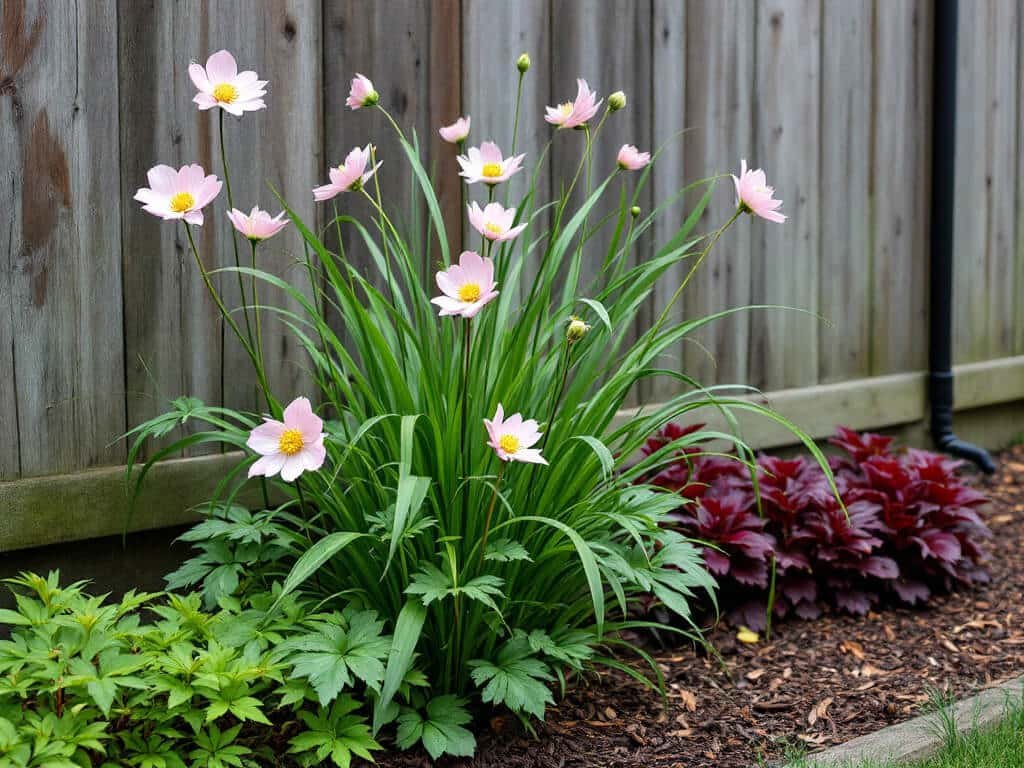
This grass suits partial shade and moisture-retentive, well-drained soil, which is exactly what Japanese anemones like. Its low foliage contrasts with the taller anemone stems rising behind it. Space it by its labeled mature width and don’t crowd the anemone.
Heuchera
Heuchera does well in partial shade and well-drained soil. Its low foliage sits at the front of the border, so it doesn’t compete with anemones for vertical space. Follow the mature-width recommendations for both plants when you set them out.
Hosta
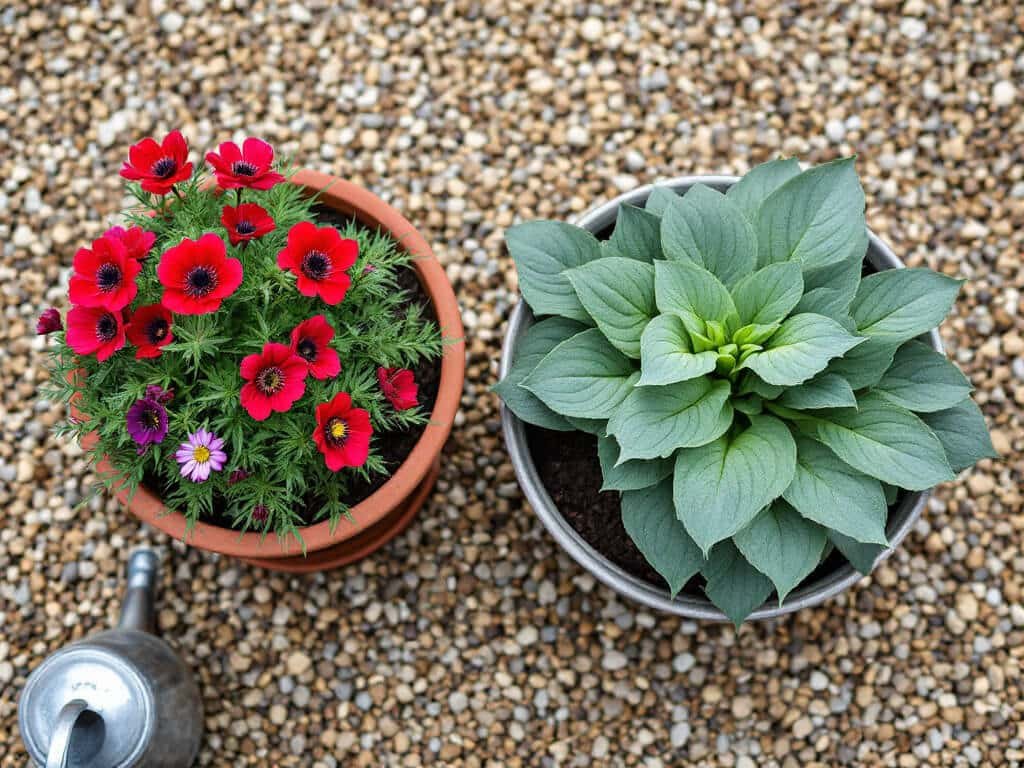
Hostas tolerate partial shade and work in moist, well-drained soil. Their broad leaves make a strong contrast beneath or beside taller anemones. Allow each plant its full mature spread so the leaves don’t pile onto the anemone crowns.
Ferns
Ferns suit woodland and dappled-shade plantings and give you foliage interest while the anemone is flowering. They are a natural fit for woodland anemones in particular. Pick the fern first, then space it by that fern’s mature width.
Deciduous shrubs
Deciduous shrubs provide the dappled shade woodland anemones prefer, and they give the planting some structure. Plant the anemones outside the shrub’s crowded root zone, not jammed into the tangle right at the base. No fixed distance is verified, so base it on the shrub’s mature size.
Roses
Anemones are listed as suitable for underplanting roses and shrubs, with lower-growing anemones beneath a taller woody framework. Keep the rose at its own recommended planting distance and stay out of the densest root area. This is a better fit where the soil drains well.
Sedum
Late-season flowering sedums can share a sunny border with Japanese anemones where the soil is well drained. The difference in height adds structure. Skip this pairing if the bed stays waterlogged, because sedum won’t tolerate it any better than the anemone will.
Hardy geraniums
Many hardy geranium cultivars tolerate sun or partial shade and fill the front of a border around taller anemones. Check the cultivar’s mature spread before buying, because it varies. Leave breathing room between the geranium foliage and the anemone crowns.
Astrantia
Astrantia is compatible with the rich, moist but well-drained conditions Japanese anemones prefer, and its flower form contrasts with the anemone’s. Use mature-width guidance for both plants. This is one of the easier pairings if your border holds moisture without sitting wet.
Pulmonaria
Pulmonaria suits partial shade and spring displays alongside woodland anemones. Its foliage keeps the bed interesting after the flowers fade. Space it by the plant label rather than by any companion formula.
What not to plant with anemone
Most bad pairings come down to one of two problems: the companion wants different conditions, or it takes more space than the anemone can spare.
Plants that need permanently wet or waterlogged soil
Do not put anemones in a bed that stays waterlogged. Anemones, especially spring-flowering and Japanese types, can suffer in excessively wet conditions. A companion that demands soggy ground will drag the anemone into those same conditions. Choose neighbors with similar drainage needs.
Deep-shade plants beside sun-loving Anemone coronaria
Mediterranean anemones need a sunny, sheltered position. Deep-shade plants want the opposite, and one of the two will be unhappy. Keep A. coronaria with sun-tolerant plants, or grow it in its own container.
Highly aggressive spreaders
Japanese hybrids can spread rapidly and become a nuisance. Pairing them with another vigorous colonizer makes containment harder, and you end up pulling out one or both. Choose restrained companions, and install root barriers where appropriate.
Plants that crowd the anemone crowns
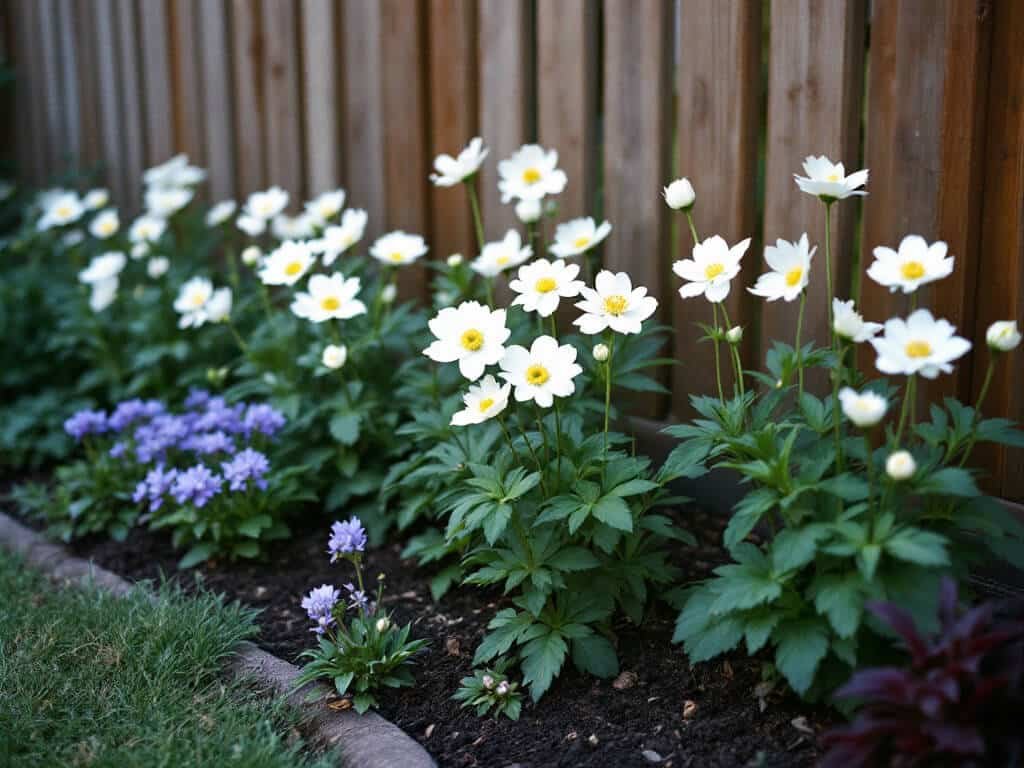
Dense planting right at the base of the anemone restricts airflow. Overcrowding can contribute to powdery mildew and leaf spot, especially when moisture conditions are unfavorable. A companion that looks fine on its own can still cause trouble if it sits tight against the crowns.
Drought-only plants beside Japanese anemones
Japanese anemones need moisture and shouldn’t be allowed to get very dry, particularly while they are establishing. A plant that wants to be left alone in dry soil won’t survive the watering a new Japanese anemone needs. Keep dry-soil plants in a different part of the garden.
Layout and spacing
Lay out the bed according to the anemone type, not according to the word “anemone.” The sun, shade, and drainage you have should decide where each type goes. Because no spacing figure is verified for any pairing, rely on the mature width on each plant’s label and leave enough room for air to move.
Woodland anemones: plant in drifts beneath deciduous trees or shrubs, with shade-tolerant foliage plants such as ferns, hostas, heucheras, or pulmonaria around them.
Japanese anemones: place toward the middle or back of a moist, well-drained border, with lower plants such as hardy geraniums, heuchera, or Japanese forest grass in front.
Late-season sun borders: pair Japanese anemones with sedum where the soil is well drained and never waterlogged.
Anemone coronaria: give it the sunniest, fastest-draining spot you have, or grow it in a container.
Under roses and shrubs: use lower-growing anemones, keep the woody plant at its recommended spacing, and plant away from the densest root area.
FAQ
Which plants grow well with anemones?
Plants chosen for the same light and moisture conditions work well, including ferns, hostas, heucheras, deciduous shrubs, roses, and other shade- or moisture-tolerant perennials. The best choices depend on whether you have a woodland, Japanese, hybrid, or Mediterranean type.
Can anemones grow in full sun?
Yes, some types do. Mediterranean anemones such as A. coronaria prefer full sun, and Japanese and hybrid anemones tolerate it if the soil doesn’t dry out too much. Woodland types generally prefer partial or dappled shade.
How much space should be left between anemones and companion plants?
There is no single verified spacing for all anemones or companions, because mature size varies widely by species and cultivar. Use the mature width on the plant label, leave room for air circulation, and avoid overcrowding, which is associated with disease problems.