
Alpine Strawberry Companion Plants: What to Grow Nearby
Choosing alpine strawberry companion plants is harder than most garden lists make it look, because there is no tested list to lean on. The extension and botanical sources reviewed for this article gave no validated pairings for Fragaria vesca, with plant-specific benefits or with spacing. So this article tells you what is known, what isn’t, and how to choose neighbors using what the plant itself needs.
Alpine strawberry is a semi-evergreen perennial that spreads as ground cover. It stays small, usually about 20 cm (8 inches) tall, with some cultivars reaching about 30 cm (12 inches). That low habit decides most of your planting choices.
Plenty of websites will hand you a tidy list of “best companions” for strawberries. I’d treat those lists with caution here. For alpine strawberry specifically, the claims about pest repellent, pollinator pull, or growth boosts weren’t backed up by the sources reviewed, so I’m not repeating them.
Why pairings matter for alpine strawberry
The real risks of a bad neighbor are the ordinary ones: competition, shade, and crowding. Alpine strawberry wants fertile, moist but well-drained soil, and it fruits best in full sun, though it tolerates partial shade. A taller or thirstier plant next to it can change all three of those conditions.
Crowding is the issue to watch. Alpine strawberry spreads, and it is prone to grey mould, which gets worse when air can’t move and foliage stays damp. Its other known problems are aphids, slugs, snails, glasshouse red spider mite, vine weevil, strawberry viruses, and root rot.
The practical test for any neighbor is simple. Does it want similar sun and moisture, and will it leave the strawberries room for airflow and picking? If yes, it’s a reasonable candidate. If it needs different conditions or sprawls over the top, skip it.
Best companion plants for alpine strawberry
I can’t give you a ranked list of proven companions, and I won’t make one up. What I can offer is one real data point and a way to judge candidates.
Sage, geranium, and hosta (seen together, not tested)
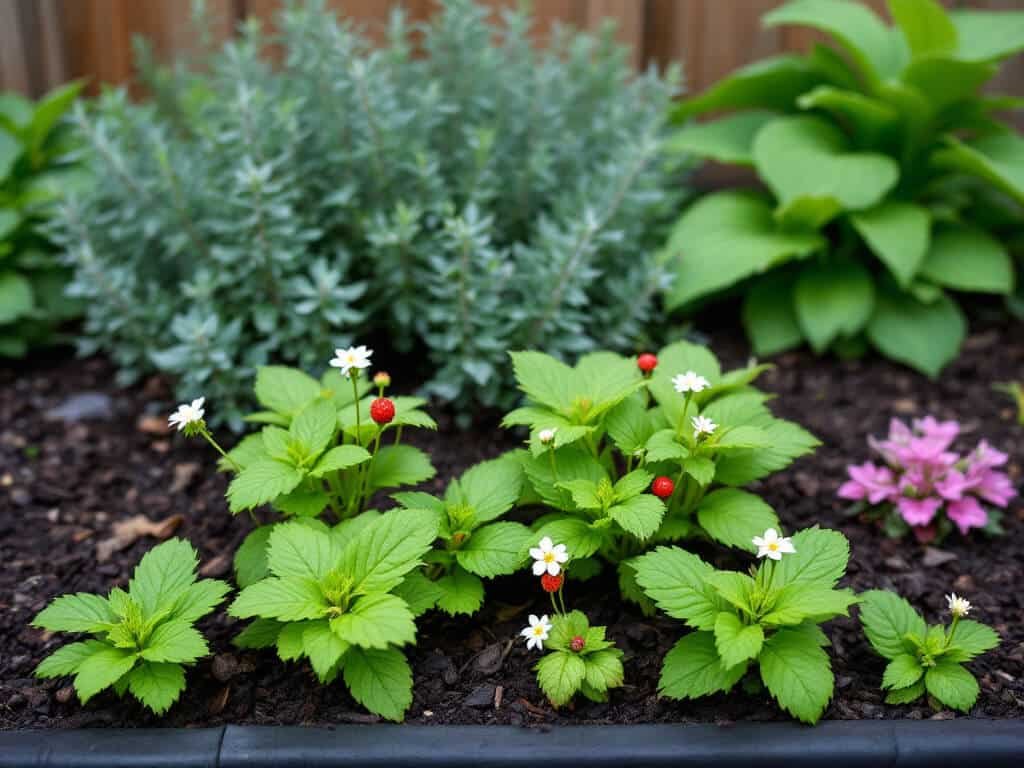
A University of Minnesota Extension educational image shows alpine strawberry growing beside sage, geranium, and hosta. It’s a photograph, not a trial, so it shows these plants can share a bed, not that any of them helps the strawberries. No spacing came with it.
If you want to try one of these, treat it as an experiment. Hosta tends to suit shade and sage suits sun, so they won’t both match the same strawberry spot. Match the neighbor to the light your strawberries actually get.
Any neighbor that shares the same conditions
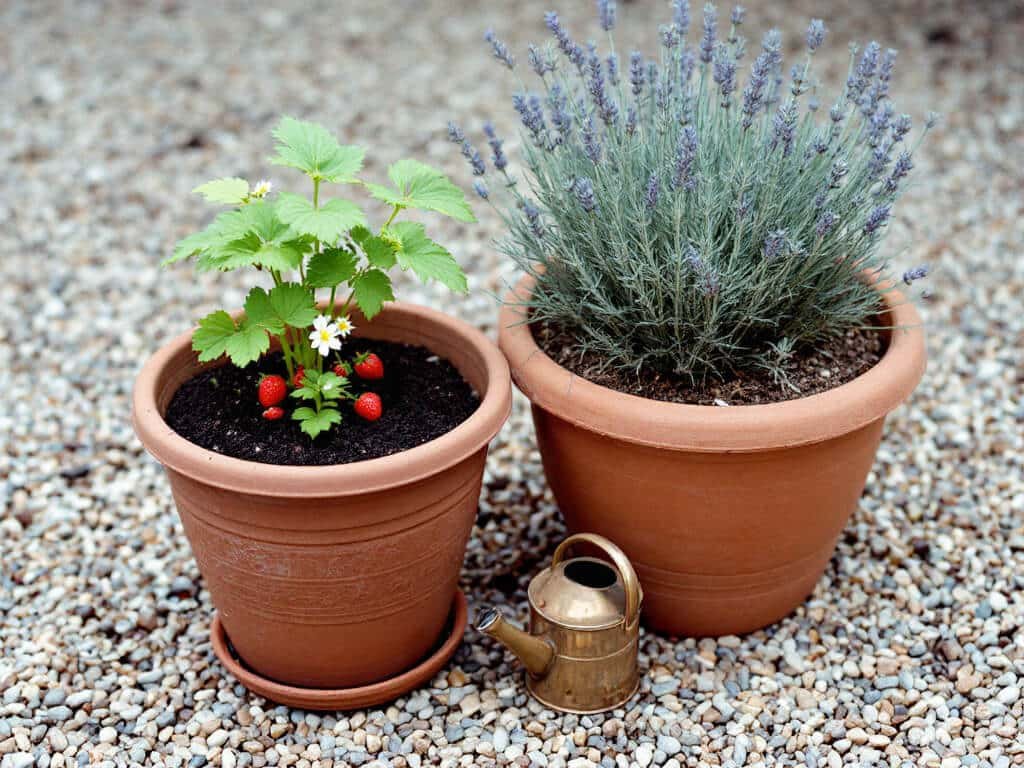
The safest choice is a plant that wants what alpine strawberry wants: moist but well-drained soil and a similar amount of light. Keep it from towering over a plant that tops out around 20 to 30 cm. Give it room so the strawberry foliage can dry after rain.
Before planting, check the plant’s own tag for its mature width. Then leave a gap between it and the strawberries rather than planting edge to edge. The brief gives no companion-specific spacing figure, so that judgment is yours to make.
What not to plant with alpine strawberry
No plants verified as bad companions
The sources reviewed did not establish any specific plant as a bad companion for alpine strawberry. That covers allelopathy, shared pests or diseases, resource competition, and mismatched water needs. Anyone giving you a firm “never plant X next to strawberries” list for this plant isn’t working from these sources.
Anything that crowds or shades it
What the brief does support is avoiding overcrowding. Grey mould is a known problem for alpine strawberry, so don’t pack plants tight enough to trap damp air around the foliage and fruit.
That means skipping large, dense, or fast-spreading plants right beside your strawberries. It also means not letting the strawberries themselves run into each other, since they spread on their own.
Plants with very different water needs
Alpine strawberry wants consistently moist but well-drained soil, especially in containers and hot weather. A neighbor that needs to dry out between waterings will leave one of the two plants unhappy. Check the water needs of anything you add and choose plants whose needs line up.
Layout and spacing
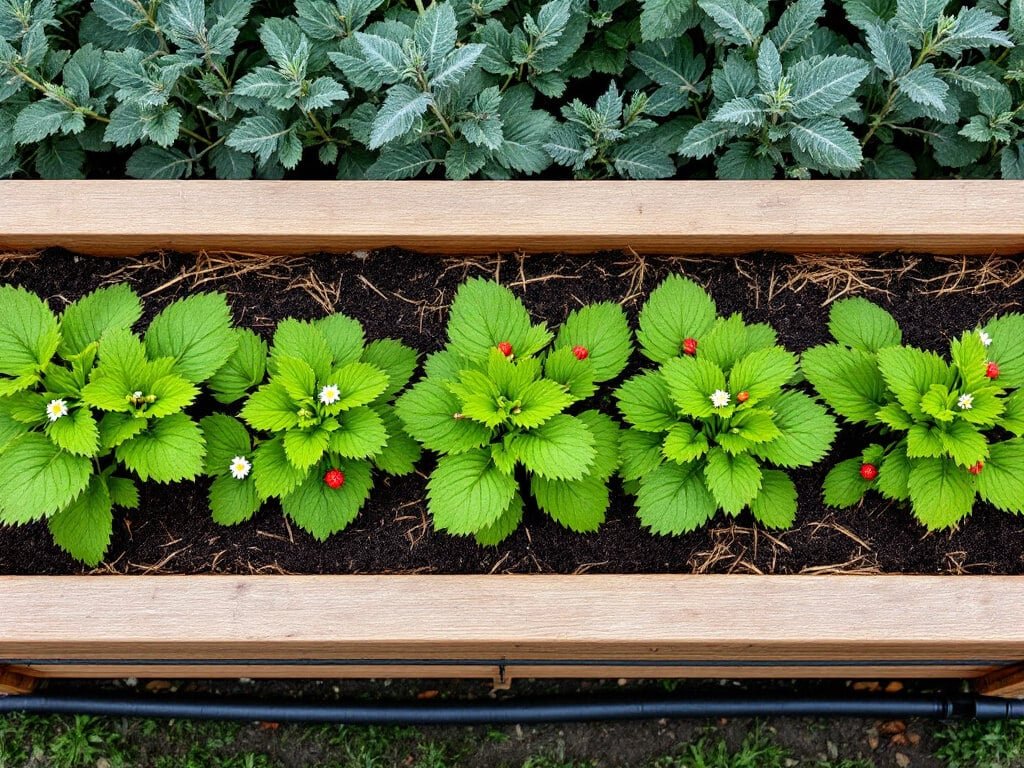
Put alpine strawberries where their small size is an advantage: the front of a bed, along a path, under suitable trees, or in containers. Leave enough room for airflow and for reaching the fruit. The only spacing figure in the brief is a general one for strawberries, so use it as a starting point.
Front of a bed: plant alpine strawberries at the edge so taller plants sit behind them and don’t shade them.
Along a path: let them spread as ground cover, and keep the fruit within easy reach.
Under suitable trees: this works because the plants tolerate partial shade, though fruiting is better in full sun.
In containers: keep the soil moist but well drained, and check often in hot weather.
Between plants: the RHS gives 45 cm (about 18 inches) between strawberry plants in the ground as a general guide. No separate figure exists for alpine strawberry companions.
FAQ
Are alpine strawberries perennials?
Yes. Fragaria vesca is a semi-evergreen perennial that can spread as ground cover.
Can alpine strawberries grow in partial shade?
Yes, but full sun generally produces better fruiting. Some alpine strawberry cultivars are particularly suitable for partial shade.
How far apart should alpine strawberries be planted?
The RHS gives 45 cm (about 18 inches) between strawberry plants in the ground as a general direct-soil spacing. The sources reviewed don’t give a separate figure for spacing alpine strawberry from companion plants.