
Peruvian Lily Companion Plants
Choosing Peruvian lily companion plants mostly comes down to water and elbow room. This plant wants fertile, well-drained soil that stays moderately moist, and it sulks in anything soggy. Pick neighbors that like the same conditions and give them space, and most of the work is done.
Below are ten plants that fit, four that don’t, and a simple layout for a sunny bed.
Why pairings matter for peruvian lily
Peruvian lily is a tuberous perennial that grows about 1 to 3 feet tall and 1 to 2 feet wide, with dwarf forms staying near 1 foot. It needs at least six hours of direct sun, with some afternoon shade in hot climates. It is generally hardy outdoors in zones 7 to 10, so gardeners in colder zones often grow it in a container and bring it indoors for winter.
The main risk from a bad neighbor is water. Peruvian lily needs moderate, steady moisture during growth and bloom, but poor drainage invites Pythium and Rhizoctonia root rot. A companion that needs frequent watering can drown it. A companion that spreads aggressively can crowd the roots, since Peruvian lily itself expands in the ground.
One myth to drop: no extension source I found shows that any companion repels aphids, spider mites, or whiteflies on Peruvian lily, prevents root disease, or feeds it nutrients. Plant these pairings because they share cultural needs and look good together, not for pest control.
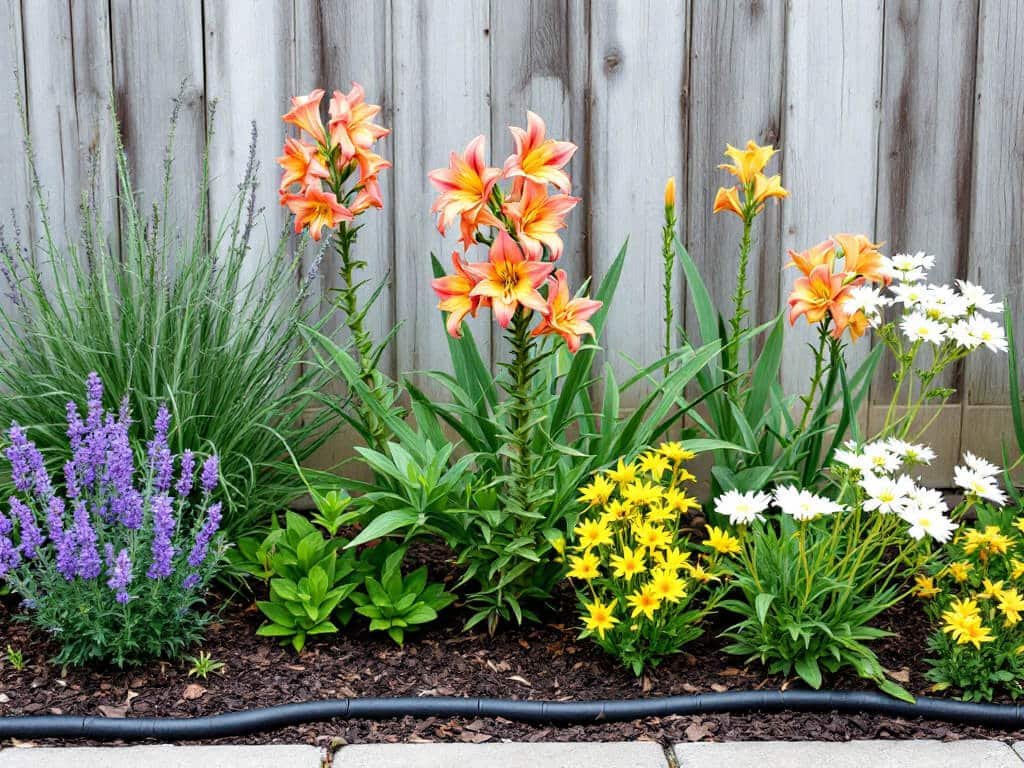
Best companion plants for peruvian lily
Every spacing below is measured from the Peruvian lily crown. The 12 to 18 inch figures come from Peruvian lily’s own recommended planting distance, not from a companion-specific trial, so treat them as a solid starting point.
Lavender
Lavender shares the need for well-drained soil, and its fragrant flower spikes contrast with the clustered blooms of Peruvian lily. Keep it 12 to 18 inches from the crown.
Yarrow (Achillea millefolium)
Yarrow is listed as a compatible companion for Alstroemeria, the Peruvian lily’s botanical name. It suits sunny, well-drained beds. Leave at least 12 inches between crowns.
Coreopsis
Coreopsis is also listed as an Alstroemeria companion. It brings a different summer-flowering form to the bed. Allow at least 12 inches between plants.
Felicia (Felicia amelloides)
Felicia is listed as a companion too, and it fills a lower layer in a sunny planting. That makes it a good front-of-bed choice. Keep it at least 12 inches from the crown.
Snapdragon (Antirrhinum majus)
Snapdragons add vertical flower spikes and summer color, and they do well in well-drained soil. Use at least 12 inches of separation, and more for tall varieties.
Lisianthus (Eustoma grandiflorum)
Lisianthus is a long-lasting cut flower, like Peruvian lily, and its blooms complement the clustered flowers of your lilies. If you cut for the vase, these two make a natural pair. Allow at least 12 inches between crowns.
Carnation (Dianthus caryophyllus)
Carnation offers a contrasting flower form and is used in the same kind of cut-flower arrangements. Plant it at least 12 inches away in well-drained soil.
Rose (Rosa spp.)
A rose gives you a bold, taller focal point beside Peruvian lily, but it needs real root room. Separate them by at least 18 inches, and go farther for large roses.
Echinacea (Echinacea purpurea)
Echinacea is reported as a compatible plant. It blooms at the same time as Peruvian lily and has pollinator value. Mature plants get broad, so give them at least 18 inches between crowns.
Sedum ‘Autumn Joy’
Sedum ‘Autumn Joy’ adds late-season texture and color just as Peruvian lily flowering winds down. That keeps the bed interesting into fall. Allow at least 18 inches between crowns.
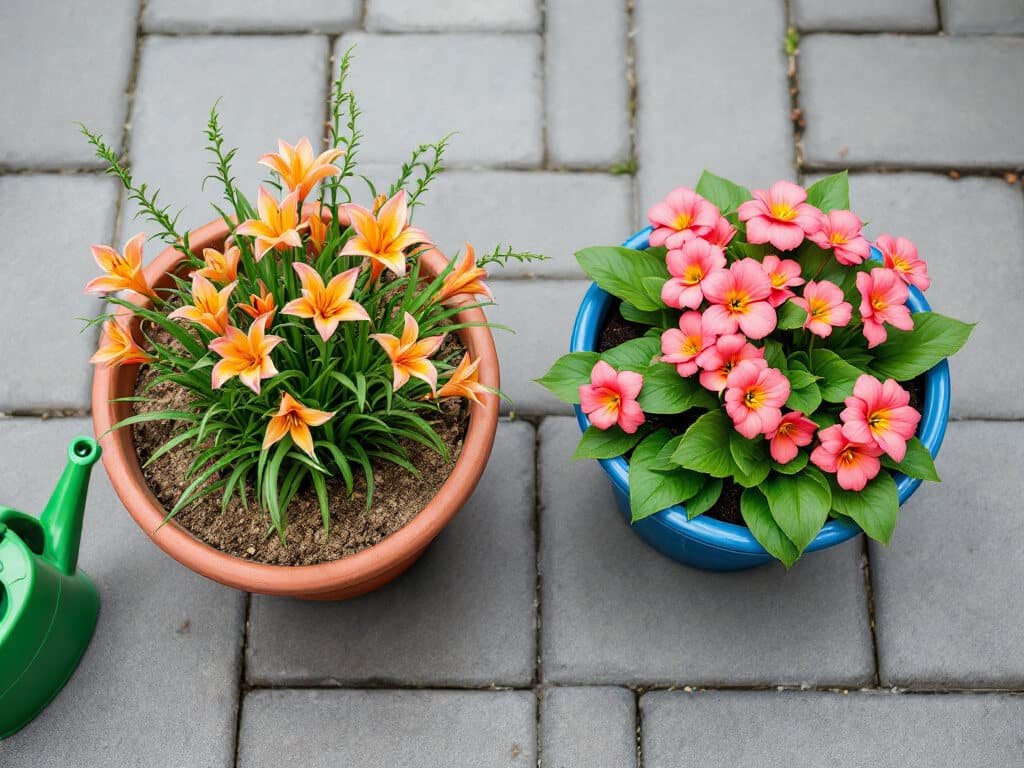
What not to plant with peruvian lily
I found no reliable extension evidence of allelopathy, meaning a plant poisoning its neighbors, with Peruvian lily. The documented problems are moisture, root competition, and crowding. Do not plant Peruvian lily where water sits or the soil stays saturated.
Impatiens
Impatiens need more moisture than Peruvian lily can handle in the same pot or bed. Keep them out of the same container, and out of any bed that stays persistently wet.
Begonia
Begonias are commonly grown with higher, more consistent moisture than Peruvian lily tolerates. Watering for the begonia means overwatering the lily, so avoid close mixed plantings.
Hosta
Hosta is cited as a poor match because its frequent irrigation conflicts with the drainage Peruvian lily needs. Don’t put both on the same high-water schedule.
Astilbe
Astilbe wants consistently moist conditions, and saturated soil can contribute to root problems in Peruvian lily. Skip the pairing in wet or poorly drained ground.
Aggressive spreaders
Peruvian lily expands and can crowd neighboring roots in the ground. A dense or invasive neighbor turns that into a competition for space. Hold the recommended separation, and divide the lily when it gets crowded.
Layout and spacing
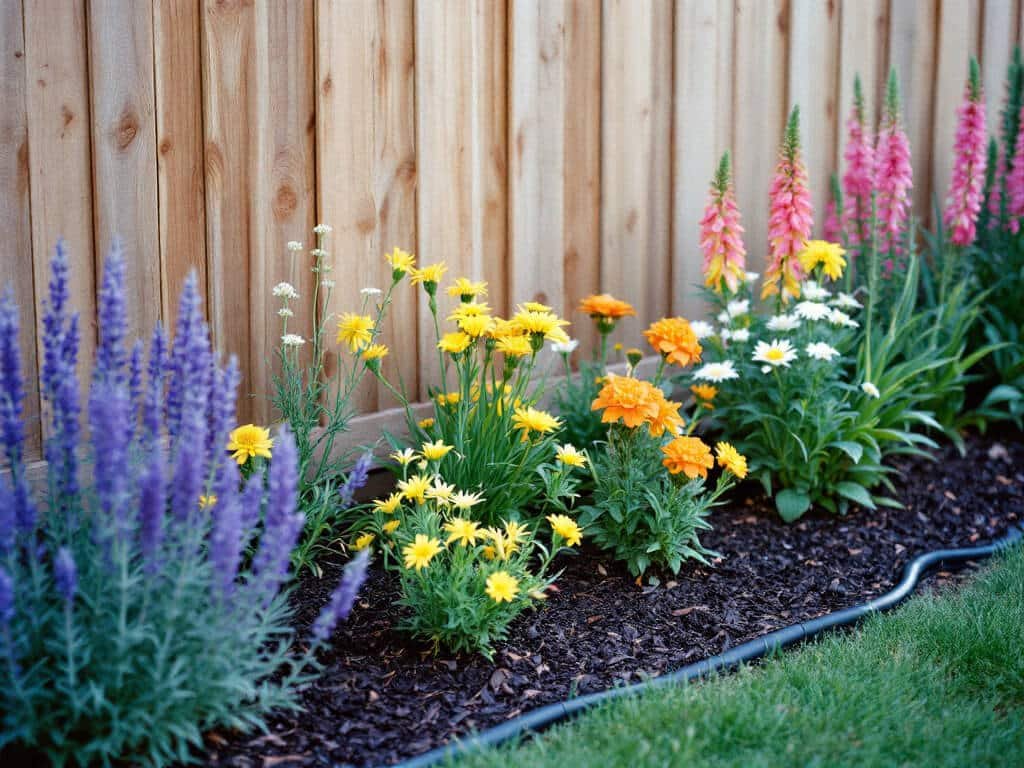
Put Peruvian lilies in the middle or rear of a sunny bed so the low plants can cover the front and the tall ones can stand behind. Start with 12 to 18 inches between crowns and neighbors, and use containers if you can’t keep the soil well drained.
Front: lavender, yarrow, coreopsis, or Felicia, at least 12 inches from the crown (lavender 12 to 18)
Middle or rear: Peruvian lily, with echinacea or sedum ‘Autumn Joy’ at least 18 inches away
Back: snapdragons at least 12 inches away (more for tall types), or roses at least 18 inches away (more for large ones)
Containers: use a pot of Peruvian lily on its own where drainage is poor, rather than mixing it with moisture-loving plants
FAQ
Can lavender grow with Peruvian lily?
Yes. They can share a sunny, well-drained planting area, but space them apart rather than planting them tightly together.
How much space should Peruvian lily have from companion plants?
Use about 12 to 18 inches from the Peruvian lily crown to a nearby companion as a starting point. Allow more room for large roses, grasses, or spreading plants.
Can Peruvian lily grow with impatiens or begonias?
They are generally poor choices for the same container or bed. Impatiens and begonias typically need more moisture, while Peruvian lily is vulnerable to problems in saturated soil.