
Ajuga Companion Plants: Good and Bad Pairings
Picking ajuga companion plants is mostly a question of manners. Ajuga is a mat-forming ground cover that runs along the soil on stolons, so anything you plant beside it has to tolerate a neighbor that spreads, and has to like the same soil and light.
Ajuga stays low, usually 3–9 inches tall depending on the cultivar. Most commonly grown forms are rated for zones 4–9, though some cultivars go from zone 3 to zone 10, so check your plant’s label. It carries blue flowers in spring (one Missouri Botanical Garden guide lists April through May for ‘Catlin’s Giant’), and the foliage is evergreen or semi-evergreen in mild climates.
This article covers what works beside it, what doesn’t, and how to lay it out so you aren’t pulling ajuga out of the lawn in two years.
Why pairings matter for ajuga
Ajuga wants humus-rich, well-drained soil with medium moisture. It tolerates moderately dry conditions once established and handles anything from full sun to full shade, though foliage color is usually best with at least 3–4 hours of sun a day. A good companion fits inside that range.
The bigger reason to be picky is disease. Crown rot is the main documented problem for ajuga, and it shows up in humid conditions, heavy soil, and crowded plantings. Don’t pack ajuga tightly against other plants or put it in wet, heavy soil, because that combination is how you get crown rot.
One more note on what the research does and doesn’t support. You’ll see claims that certain plants repel pests from ajuga, fix nitrogen for it, or share root space in some special way. The extension and botanical garden sources behind this article don’t verify any of that for ajuga, so the pairings below are based on light, moisture, drainage, and plant height, which are things you can check yourself.
Best companion plants for ajuga
A caveat on spacing: no source verified a universal distance between ajuga and its companions. Where I give spacing, it’s the companion’s own label spacing, plus enough room that you can still divide the ajuga later.
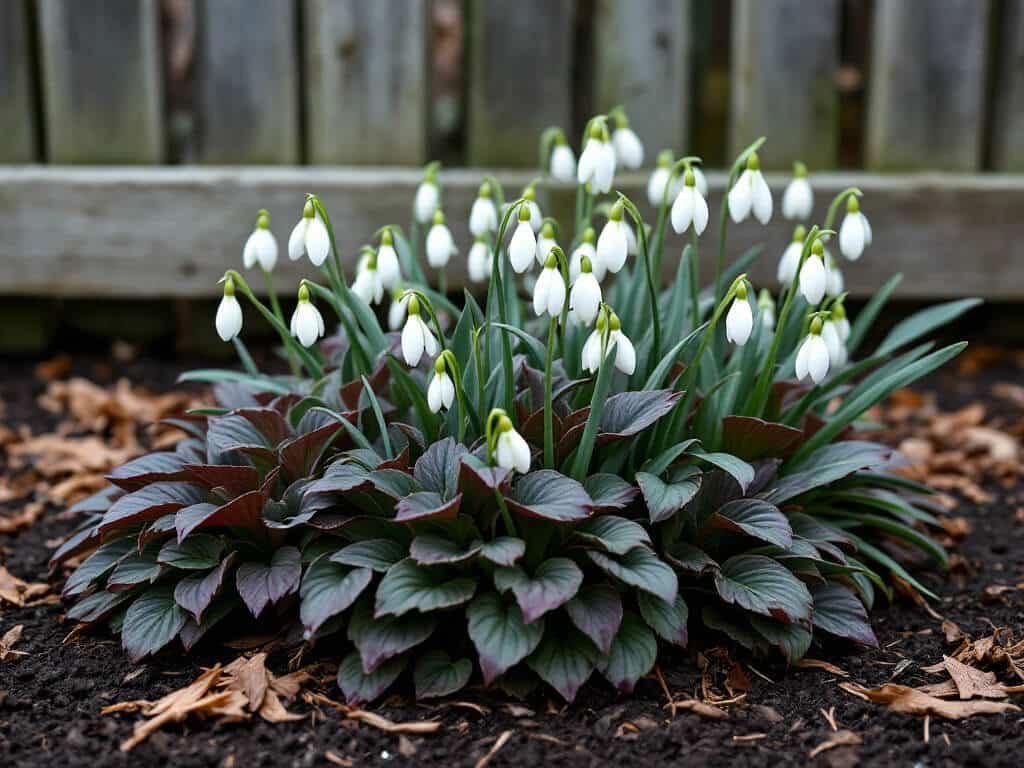
Snowdrops (Galanthus spp.)
Snowdrops come up through low ground cover in early spring, then fade before ajuga’s mat is at its fullest. They get their season, and ajuga gets its own. Plant the bulbs at the spacing on the package.
Spring bulbs generally
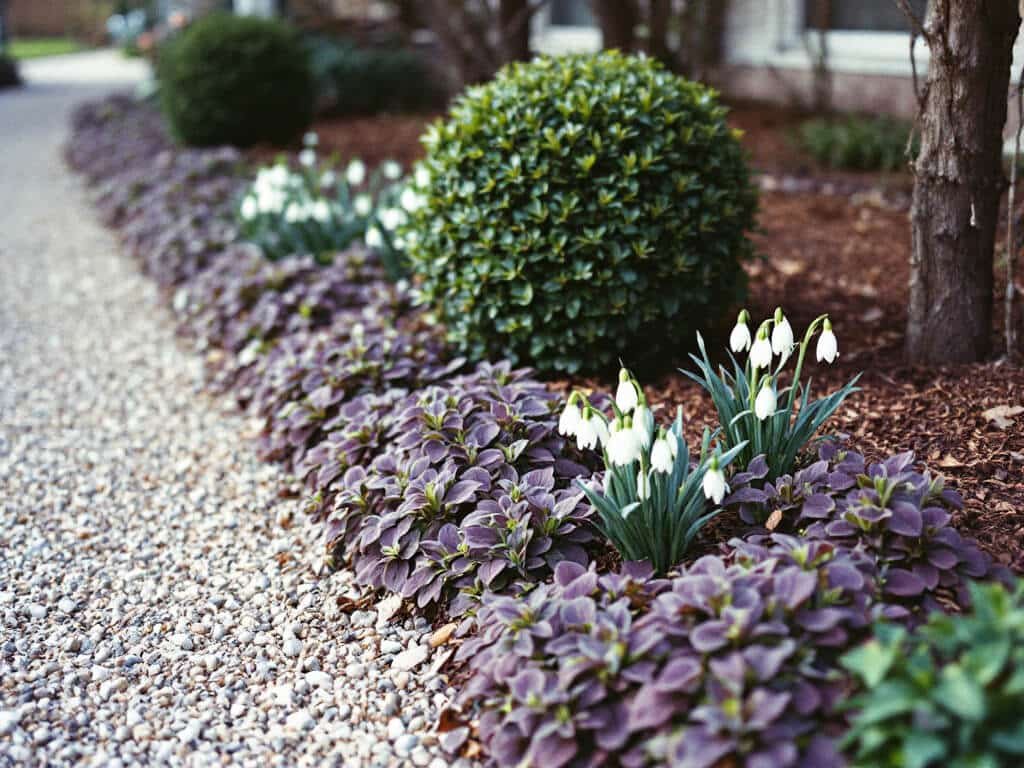
Bulbs send up upright growth above ajuga’s low foliage, so the two use different layers of the same bed. Follow the bulb package’s spacing. Leave a little extra room so you can lift and divide the ajuga without digging up bulbs.
Low-growing woodland perennials
Their shade tolerance and low-to-moderate moisture needs line up with ajuga’s preference for part shade. I’m not going to hand you a long plant list, because the research doesn’t support specific pairings. Pick perennials that want the same conditions, and give each one its mature width.
Shade-tolerant ornamental plants
Ajuga earns its keep in difficult shady spots under trees or around shrubs, with taller plants providing structure overhead. Space the taller plants by their mature spread. Keep ajuga from crowding their crowns, since crowding is what invites rot.
Small shrubs
Ajuga works as an understory ground cover, using the low layer while the shrub takes the upper one. Keep it outside the shrub’s immediate crown area. Use the shrub’s labeled planting distance for the shrub itself.
Plants suited to containers
Ajuga is documented as a good container and rock garden plant, so it can share a pot with plants that match its light, moisture, and drainage needs. Choose a container big enough for the mature roots of everything in it. There’s no verified universal spacing for container plantings, so go by each plant’s label.
Rock-garden plants with similar drainage needs
Ajuga does fine in a rock garden as long as the planting medium drains well and doesn’t stay saturated. Match it with plants that want medium moisture and sharp drainage, not ones that sulk in anything less than bone dry. Spacing depends on the plant, so follow the label.
Slope-appropriate plants
Ajuga is documented for banks and slopes, where its spreading habit covers the soil between larger plants. That’s a good use for it. Leave room for the stolons to run, and don’t let it reach the lawn or an adjoining perennial bed.
What not to plant with ajuga
The list of bad pairings is shorter, and the reasons are mostly about spread and water.
Lawn grasses
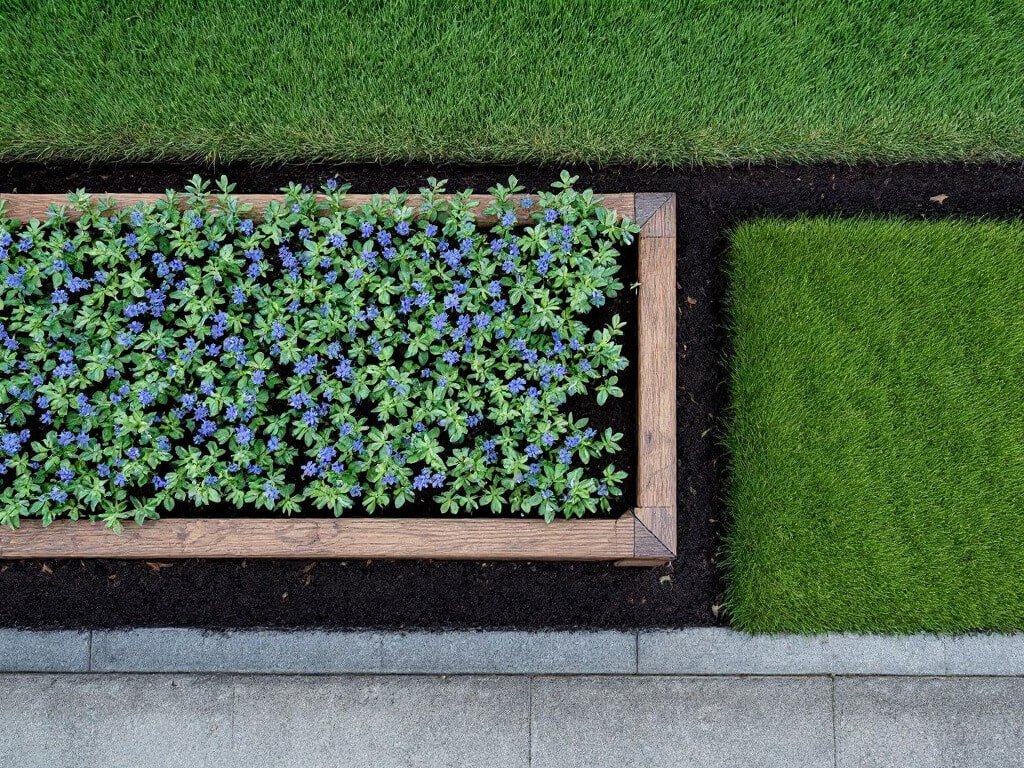
Ajuga spreads by stolons and will establish islands in turf. Once it’s in the grass, you have a management problem, because mowing doesn’t solve it and pulling it out takes patience. Don’t plant ajuga directly against a lawn edge.
Perennial beds with plants that must stay isolated
Ajuga’s rapid spread can push into neighboring beds and compete for space. If you have a collection of plants that need their own room, or a bed you’ve worked hard to keep tidy, put the ajuga somewhere else. Pulling it back out of established perennials is tedious work.
Plants requiring very dry soil
Ajuga prefers medium moisture and may need more water than drought-adapted plants do. Whether a particular dry-soil plant works next to it depends on the plant and your site, but as a rule, a bed that suits one will stress the other.
Plants requiring saturated soil
Wet, heavy soil raises ajuga’s crown-rot risk. A water-loving plant that needs persistently wet ground is a poor match, even if the light conditions line up. You’d have to choose between keeping the neighbor happy and keeping the ajuga alive.
Crowded, poorly ventilated plantings
Overcrowding raises crown rot risk, especially in hot, humid weather. This one isn’t a single plant. It’s a pattern: too many plants squeezed together with no air moving through. Give ajuga’s neighbors their full mature width.
Layout and spacing
Think of ajuga as the bottom layer. Put it under shrubs or taller shade plants, or at the edge of a bed where you can watch the stolons and cut them back when they wander. For ajuga itself, Missouri Botanical Garden recommends 6–9 inches between plants if you want quick ground cover.
Under shrubs or taller shade plants: ajuga as the low layer, kept outside each shrub’s immediate crown.
Bed edges: a spot where you can see and trim the stolons before they travel.
Bulb plantings: bulbs at their package spacing, with room left to divide the ajuga.
Slopes and rock gardens: ajuga between larger plants, in soil that drains well.
Containers: only plants with similar light, drainage, and watering needs, in a pot big enough for all the roots.
Away from: lawn, isolated perennial beds, and any spot that stays soggy or bone dry.
FAQ
Can ajuga grow in full shade?
Yes. Ajuga tolerates full shade, although many cultivars develop better foliage color with at least 3–4 hours of sun each day.
How far apart should ajuga plants be spaced?
Missouri Botanical Garden recommends spacing plants 6–9 inches apart for prompt ground-covering. That’s ajuga-to-ajuga spacing, not a universal distance for every companion plant.
Is ajuga invasive?
Ajuga spreads rapidly by stolons and can move into lawns or adjacent perennial beds, where it may be hard to remove. Its behavior varies by site and cultivar, so contain or monitor it rather than planting it beside areas where spread is unacceptable.