
Ageratum Companion Plants: What Grows Well Together
Choosing ageratum companion plants comes down to matching sun, water, and height, because those are the only pairing factors the extension sources actually support. Ageratum (Ageratum houstonianum) is a tender annual that wants full sun, steady moisture, and good airflow. Pick neighbors that want the same things, and keep them far enough away that air can move.
This article sticks to what can be verified. That means fewer promises about pest control than you’ll see elsewhere, and more practical guidance on where each plant goes.
Why pairings matter for ageratum
Ageratum is an herbaceous annual, not a shrub, and in zones 5-9 it goes in after the danger of frost has passed. It prefers full sun but tolerates light or partial shade. It likes fertile, moist, well-drained soil. It has some drought tolerance, but it performs best with regular moisture, and it doesn’t like sitting in saturated ground.
That combination is the reason to be picky. A neighbor that wants dry feet will either get overwatered or leave your ageratum thirsty. A neighbor that grows tall and dense will shade it and trap humidity around its foliage. Ageratum reaches about 6 to 24 inches depending on the cultivar, so height varies a lot between varieties. Check the tag before you decide who goes in front.
The pest and disease list is the other reason. Aphids and whiteflies can show up. Powdery mildew, Botrytis, root rots, and southern bacterial wilt can all occur, and crowded, poorly ventilated beds make the fungal problems more likely.
One myth is worth clearing up. No extension source reviewed backs the claims that ageratum repels pests, improves the flavor or yield of nearby vegetables, or has a special relationship with particular plants. The same goes for the popular idea that marigolds reliably repel ageratum pests. Pair plants because they share light, water, soil, and airflow needs, and treat any pest benefit as a bonus you shouldn’t count on.
Best companion plants for ageratum
All of these start from the same spacing: 12 inches from ageratum, which is the commonly listed ageratum spacing. Increase it when a companion has a bigger mature spread.
Marigold
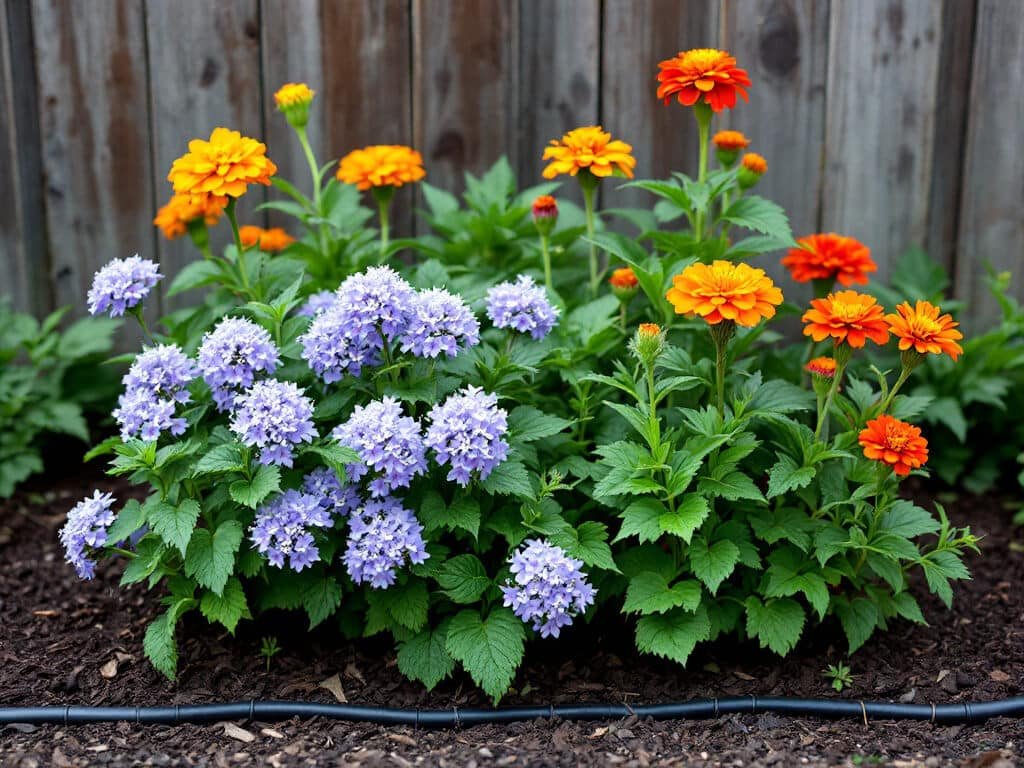
Marigold shares ageratum’s full-sun conditions and fits the same annual-bed use. The claim that marigolds reliably repel ageratum pests or suppress nematodes was not verified by the extension sources, so plant them for the color and the matching growing conditions. Keep them 12 inches from ageratum.
Zinnia
Zinnia wants the same warm-season, full-sun setting. It gives you taller color above low-growing ageratum, so it works best behind it. No pest-control effect was verified. Space it 12 inches from ageratum.
Snapdragon
Snapdragon adds vertical structure to a sunny annual border. It is a good choice when you want upright spikes behind a mound of ageratum. No direct pest or disease benefit was found. Leave 12 inches between it and ageratum.
Cosmos
Cosmos supplies a taller flowering layer in a sunny bed, which gives you height contrast with the ageratum below it. No ageratum-specific biological benefit was verified. Plant it 12 inches from ageratum, and put it at the back so it doesn’t shade the smaller plant.
Sweet alyssum
Sweet alyssum stays low and can fill the border in front of ageratum. Both are commonly used as flowering annuals. A pest-control benefit was not verified, so think of this as a design pairing. Keep it 12 inches from ageratum.
Petunia
Petunia shares warm-season annual-bed conditions and gives you a contrasting flower form against ageratum’s small, fluffy blooms. No direct benefit to ageratum was found. Space it 12 inches away, and give it more room if the variety spreads wide.
Verbena
Verbena is listed alongside ageratum as having similar sun and water requirements. The caution is spread: use it only where the cultivar’s mature width still leaves air moving through the planting. Start at 12 inches from ageratum and widen it for spreading types.
Lantana
Lantana can share a sunny summer planting, including one that runs moderately moist to dry. It is larger than ageratum, so it belongs behind it, not beside it. No pest-control benefit was verified. Give it at least 12 inches from ageratum, and more if the plant is large.
Dwarf salvia
Dwarf salvia offers upright flower spikes and is identified as having similar growing requirements. Position it so mature foliage doesn’t crowd the ageratum. Keep it 12 inches from ageratum as a starting point.
Rose
Ageratum can work as a low, blue-flowering filler around roses where both get adequate sun and airflow. The spacing here follows the rose, not a fixed ageratum number. Start at 12 inches from ageratum, and add whatever clearance that rose needs at its mature size.
What not to plant with ageratum
The honest answer is that very little is proven to be a bad match. These are the cautions the brief supports, and I’ve kept them in proportion.
Black walnut
A juglone-related incompatibility was reported in a non-extension source, but the extension sources reviewed did not verify it. There is no evidence-based exclusion rule here, so I wouldn’t redesign a bed around it. If you already have a walnut tree nearby, treat this as an open question and watch how the plants do.
Mint
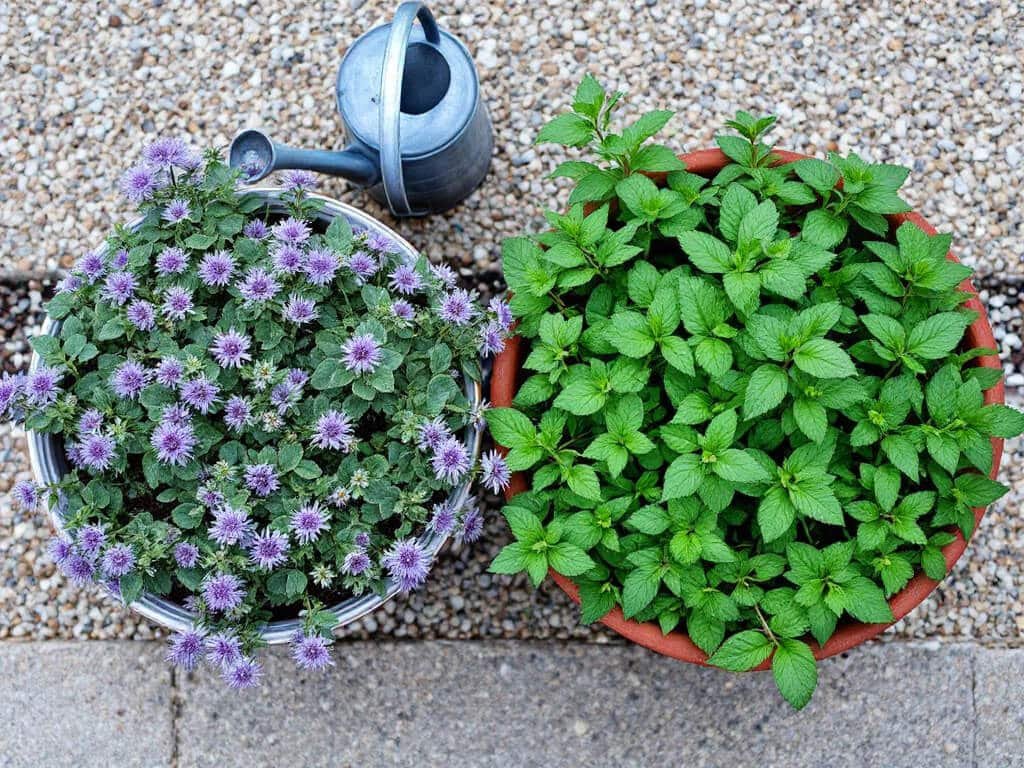
Mint spreads aggressively, and that can create competition for space and moisture in a small annual planting. No extension source verified this as an ageratum-specific problem. It’s a general management concern, and the easy fix is to keep mint in its own pot or bed.
Lemon balm
Lemon balm is vigorous in the same way, and it can overwhelm a small annual planting. No ageratum-specific incompatibility was verified. Give it its own container, away from your ageratum.
Dense, poorly ventilated plantings of any species
Crowding is the one problem that is supported by the sources. Ageratum needs good air circulation, and tight plantings raise the risk of powdery mildew and Botrytis. Use the cultivar’s mature width and the 12-inch ageratum spacing as the minimum starting point, and go wider when in doubt. This applies no matter which companion you choose.
Layout and spacing
Put ageratum near the front or middle of a sunny bed, and place taller companions behind it so they don’t cast shade over it. Measure spacing from where each plant will be at maturity, not from the size of the nursery pot.
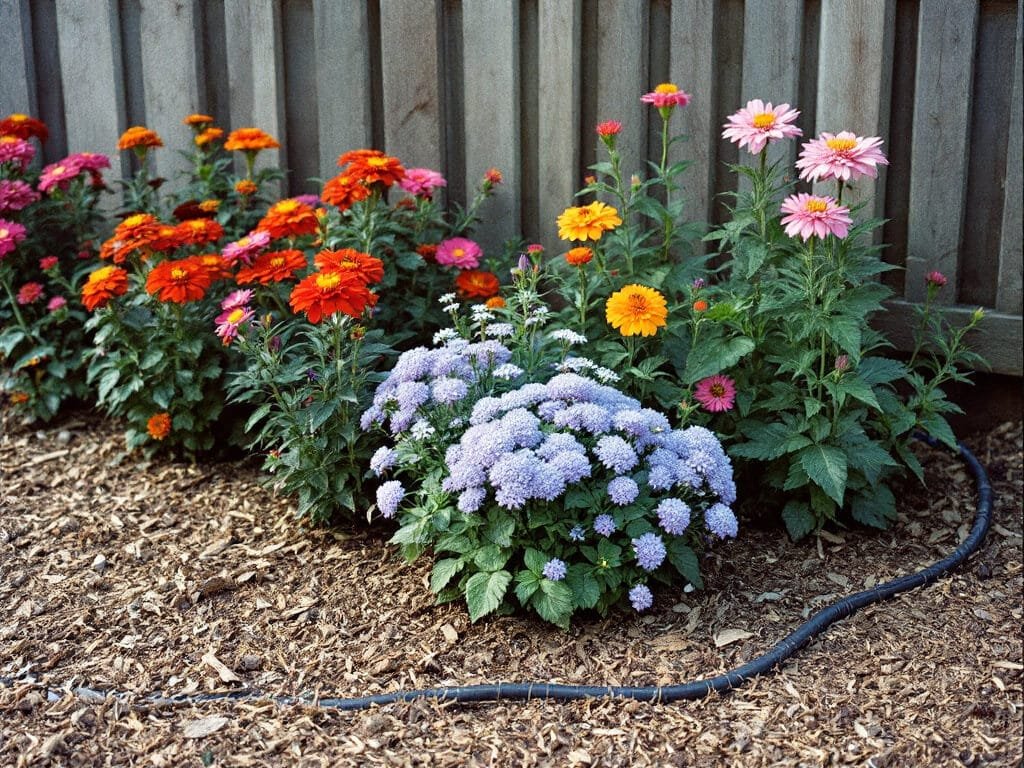
– Front edge: sweet alyssum, 12 inches from ageratum.
– Middle of the bed: ageratum, with petunia or verbena alongside, each 12 inches away and wider for spreading types.
– Back of the bed: zinnia, cosmos, snapdragon, or dwarf salvia, 12 inches from ageratum, with lantana set behind as well.
– Around roses: ageratum as low filler, 12 inches from the ageratum side plus the rose’s own clearance.
– Containers: combine ageratum only with plants that tolerate regular moisture but still need well-drained soil, and leave room for airflow instead of packing the pot.
FAQ
Does ageratum need full sun?
Yes. Full sun is preferred, although ageratum tolerates light or partial shade.
How far apart should ageratum be planted from companions?
A 12-inch starting spacing is listed for ageratum in a university extension table. Increase the distance when a companion has a larger mature spread or dense foliage.
What conditions help prevent ageratum disease?
Use well-drained soil, avoid excessive moisture around the crown, and keep foliage as dry as practical. Good air circulation helps reduce powdery mildew, Botrytis, and root or crown problems.