
Sunflower Companion Plants: What to Plant Nearby
Most sunflower companion plants advice comes down to two questions: what fits around a tall, full-sun annual, and what the evidence says about it. A lot of popular pairings are really just space-use arrangements, and a few claims, like sunflowers repelling pests, don’t hold up. This guide sticks to what works in practice and flags what isn’t established.
Sunflowers (Helianthus annuus) are warm-season annuals. Plant them after frost danger has passed, give them full sun, and choose neighbors that can handle the same conditions.
Why pairings matter for sunflower
A sunflower takes up a lot of vertical space but not much ground, which is why people tuck other plants around it. That works as long as you respect its root zone. Sunflowers compete for light, water, and nutrients, especially when the bed is crowded or weedy, and drought stress weakens them.
There is also a myth to clear up. Extension-based evidence does not support treating sunflowers as universal pest repellents, or assuming every popular pairing improves growth. Sunflowers can even attract aphids and stink bugs, so keep an eye on nearby crops.
The one real caution is allelopathy. Extracts and decomposing residue from sunflowers have reduced germination in some plants. That doesn’t mean everything beside a living sunflower will fail. It means you should be careful about what you do with the debris, which we’ll cover below.
Sunflower size varies a lot by variety, from dwarf types to plants several feet tall. Check the seed packet for mature height and spacing before you plan anything around it.
Best companion plants for sunflower
None of these pairings is proven to improve sunflower growth. They earn their spot by using different layers of space and sharing the same sun and water needs. Spacing is measured from the base of the sunflower.
Cucumber
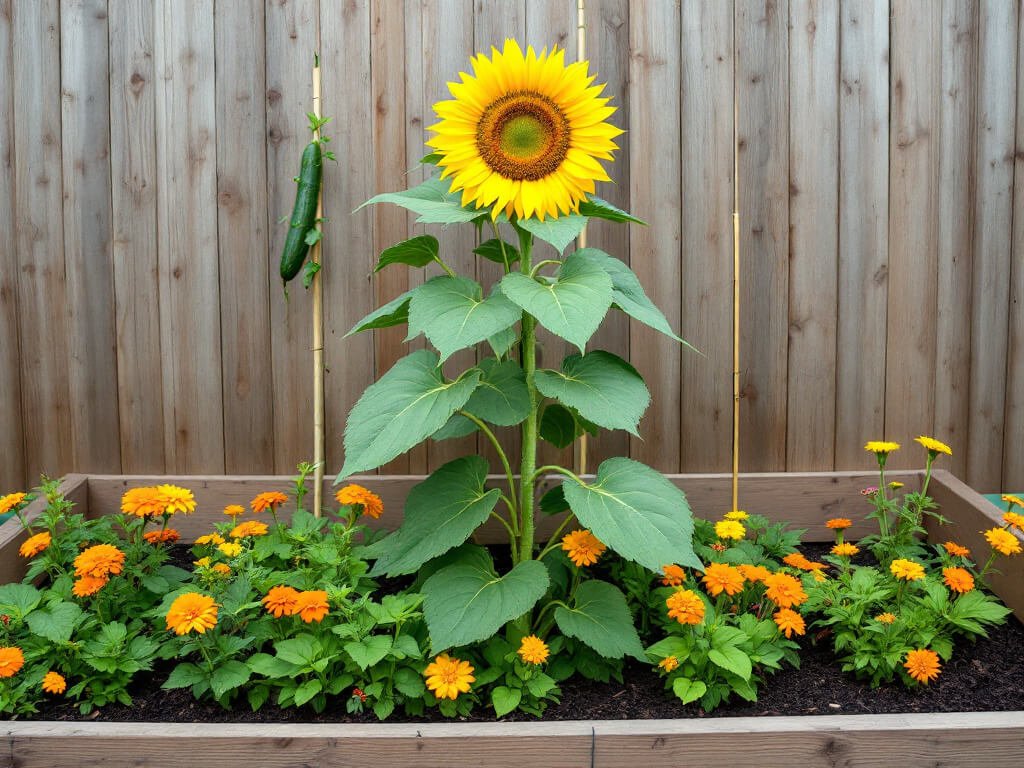
A sturdy sunflower can act as a living support for cucumber vines. That’s a practical arrangement, not a pest-control effect. Plant cucumber at least 18 inches from the sunflower base, and add extra support if the sunflower can’t carry the vine’s weight.
Summer squash
Squash spreads its broad leaves low while the sunflower takes the vertical space. Keep it outside the sunflower’s immediate root zone, 18 to 24 inches from the stem.
Nasturtium
Nasturtium stays low and uses the soil surface near the sunflower. It tolerates some light shade. Leave at least 12 inches around the sunflower base.
Zinnia
Zinnia adds another full-sun flowering layer and may attract pollinators. A specific benefit to sunflowers hasn’t been established, so plant it because you like it. Follow the zinnia seed packet and keep plants about 12 to 18 inches from the sunflower.
Marigold
Marigold gives you a low flowering layer and can support beneficial-insect habitat. I wouldn’t count on it repelling pests from your sunflowers, since that claim isn’t verified. Allow 12 to 18 inches from the sunflower base, depending on the marigold’s mature size.
Basil
Basil stays shorter than a sunflower and has compatible full-sun needs. No reliable sunflower-specific pest-repellent effect has been verified, so treat it as a kitchen crop that happens to fit. Plant it at least 12 inches away and water both plants according to what each needs.
Bush bean
Bush beans occupy the lower layer under tall sunflowers. Don’t count on a nitrogen benefit passing to the sunflower, because that transfer isn’t established. Leave at least 18 inches, and remove sunflower residue before planting sensitive follow-on crops.
Corn
Corn shares the warm-season, full-sun conditions and works as a tall back row. Both are heavy aboveground growers, so separate the rows by at least 30 inches and keep irrigation steady.
Lettuce
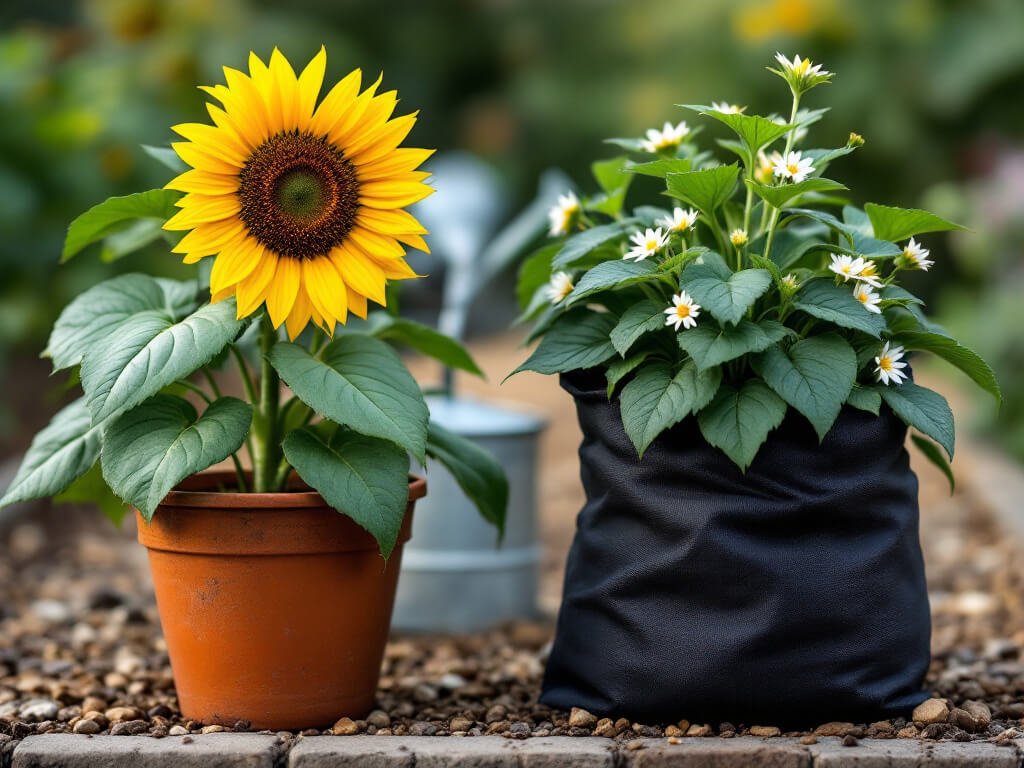
Lettuce can use the lower layer while the sunflower is young, but it will be shaded later. Nothing shows that growing it near sunflower roots helps. Keep it at least 18 inches away and sow before the sunflower canopy closes.
Carrot
Carrots have a different root shape and a lower canopy, so they don’t compete for the same space. A sunflower-specific nutrient benefit hasn’t been verified. Give carrots their own row at least 18 inches from the sunflower, and keep fresh sunflower residue out of their seedbed.
What not to plant with sunflower
This list is shorter and the evidence is narrower than most companion-planting charts suggest. Most of it concerns sunflower residue and extracts, not living plants side by side.
Potato
Sunflower residues and extracts have been linked to reduced germination or growth in some crops. The evidence is strongest for residue or extract exposure, not every living-plant combination. Skip planting potatoes in the same tight bed, and don’t plant them right after working fresh sunflower debris into the soil.
Spring wheat
Laboratory work found reduced germination after exposure to sunflower extracts. That doesn’t prove the same effect beside a living sunflower. Still, don’t use sunflower residue around wheat seed.
Barley
Barley showed the same reduced germination in laboratory extract studies. Keep fresh sunflower residue out of the seed zone.
Any shallow-rooted crop placed directly at the stem
Sunflowers compete for light, water, and nutrients, and the competition gets worse with weeds or dense plantings. A shallow-rooted plant crammed against the stem loses. Leave a clear root zone and use the companion’s own mature-size spacing.
Layout and spacing
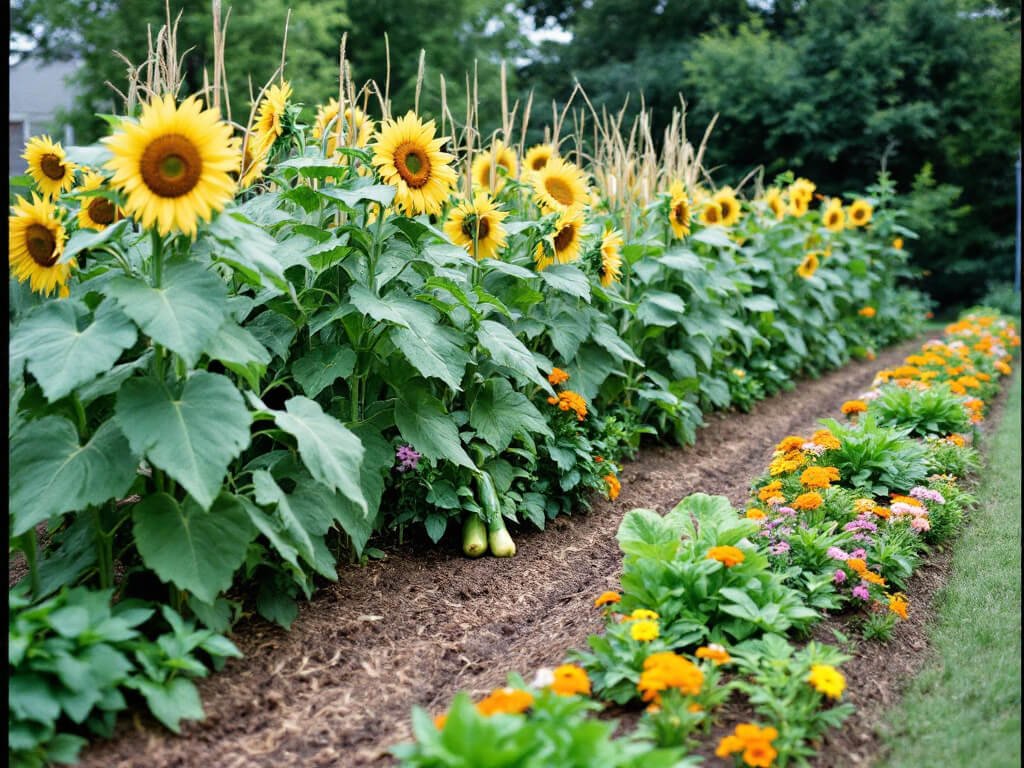
Put tall sunflowers along the north side or back edge of a bed so they cast less shade on shorter crops. Place low companions around the sunflower, not against it, and give crops with different water needs their own rows.
Back or north edge: sunflowers, with corn as a tall back row if you want one (rows at least 30 inches apart).
Next layer: cucumber or summer squash at 18 to 24 inches from the sunflower stems.
Low layer: nasturtium, zinnia, marigold, and basil at 12 to 18 inches, adjusted to their mature size.
Separate rows: carrot and lettuce at least 18 inches away, with lettuce sown early.
Timing: many sunflowers bloom about 8 to 12 weeks after sowing, and sowing every 1 to 3 weeks extends flowering. Plan low companions so they aren’t overrun by later sowings.
At cleanup: remove sunflower roots and stems rather than using them as mulch or digging them in around newly sown crops.
FAQ
Do sunflowers repel garden pests?
No reliable evidence shows that they do. They may attract pollinators and other insects, and they can draw pests such as aphids or stink bugs, so monitor nearby crops.
Can cucumbers grow with sunflowers?
Yes, as a space-use strategy rather than a proven biological benefit. The vines may climb a sturdy sunflower, but keep the cucumber at least 18 inches from the base and add support if the sunflower can’t bear the weight.
Should sunflower debris go into the soil?
Not where sensitive seeds will be sown. Laboratory and extension-related summaries link sunflower extracts or decomposing residue to reduced germination in some plants, though the effect isn’t universal and a living sunflower doesn’t act as an herbicide.