
Salvia Companion Plants for a Healthy Garden
The hard part of choosing salvia companion plants is that “salvia” covers annuals, tender perennials, hardy perennials, and evergreen culinary subshrubs, and they don’t all want the same treatment. Before you pick a neighbor, find out which kind you have. Then match the neighbor to its sun, drainage, and water needs.
Salvia generally wants full sun and soil that drains. Established plants handle dry spells well, and most of the trouble they get comes from wet feet and too much shade. A good companion shares those conditions or at least doesn’t fight them.
That’s the whole approach here. The plants below either want the same dry, sunny, well-drained conditions, or they flower in ways that bring in helpful insects without asking for extra water. Where a pairing has a documented benefit, I’ll say what it is. Where it’s just a compatible match, I’ll say that too.
Why pairings matter for salvia
Salvia is easy to place wrong because its needs vary by species. Culinary and evergreen types like lighter, drier soil. Some other species tolerate or prefer more moisture. Hardiness varies too: tender salvias are often grown as annuals outside warm climates, while some perennial salvias survive winters in roughly USDA zones 5–9 if the drainage is good and you choose the cultivar carefully. No single zone range covers the genus, so check the label on yours.
Salvias are usually trouble-free, but aphids, capsid bugs, whiteflies, leafhoppers, spider mites, slugs, snails, powdery mildew, and gray mold can show up. Crowding and wet soil make the fungal problems more likely, so the spacing and water match of a companion matter as much as anything it does for pests.
One myth is worth clearing up. You’ll often read that salvia or other herbs “repel” pests from neighboring plants. Penn State Extension explains that herbs more often confuse pests, mask the scent of host plants, interfere with egg-laying, or attract beneficial insects. The evidence doesn’t support promising that salvia will repel a specific pest from the plants next to it, so don’t plant it as pest insurance.
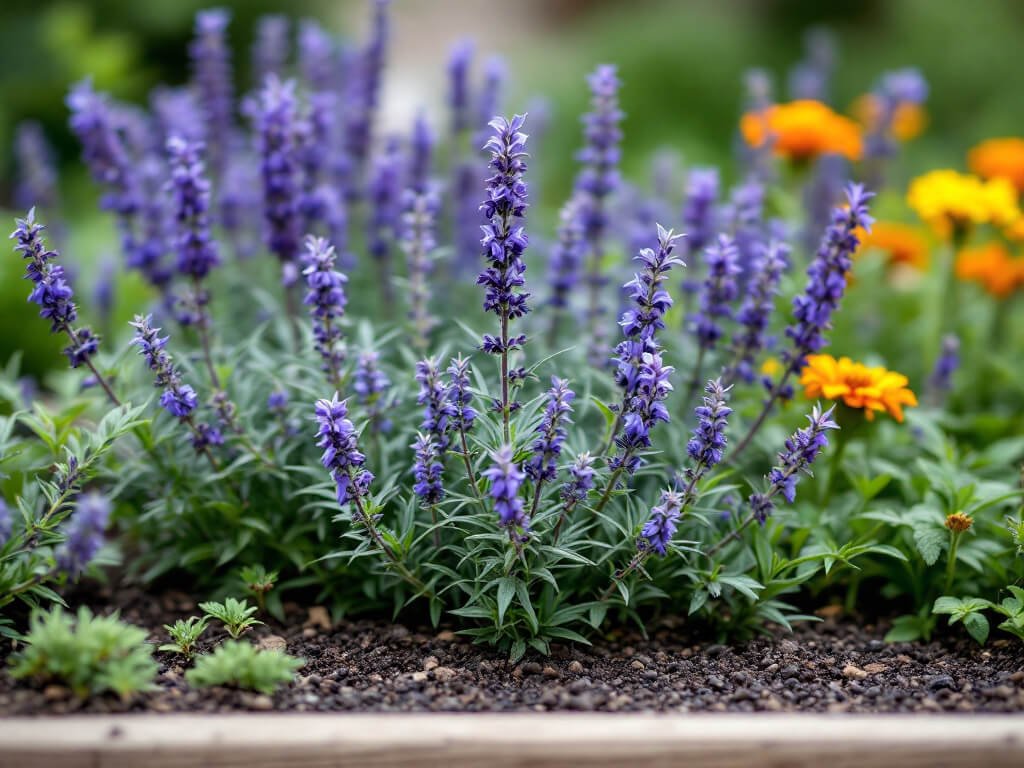
Best companion plants for salvia
The sources back these plants as compatible in growing conditions, and some have documented benefits for beneficial insects. They don’t give a salvia-specific spacing rule for each pairing. Use the mature spread on the salvia cultivar’s label as the controlling measurement, and don’t crowd.
Lavender
Lavender wants the same full sun and well-drained, relatively dry soil, so you can water and site them as one group. That makes it the easiest pairing on this list. Leave enough room for the mature spread of both plants rather than working from a universal figure.
Rosemary
Rosemary likes sunny, dry, well-drained conditions, and its flowers can attract pollinators. It fits beside culinary and evergreen salvias especially well. Use the mature-width spacing listed for both cultivars.
Thyme
Thyme shares the full-sun, dry-soil requirement. It has documented effects on egg-laying by yellow-striped armyworm moths when grown under tomatoes, but that is not proof it protects salvia from anything. Keep the two from overlapping at maturity.
Oregano
Oregano wants full sun and well-drained soil, and flowering oregano can provide nectar for sweat bees and other pollinators. Separate it from salvia according to the labeled mature widths of each plant.
Sage (Salvia officinalis)
Common sage belongs to the same genus and generally prefers full sun and free-draining soil, so it fits beside other dry-soil salvias. Mature size varies a lot by cultivar, so follow the labels for spacing from another salvia. It’s grown mainly for its aromatic leaves, and it may flower in summer.
Calendula
Calendula flowers attract beneficial insects, including ones that prey on aphids, which are one of the pests salvia can get. Use the label spacing for calendula and salvia, and leave room for airflow between them.
Cilantro
Cilantro flowers can attract aphid-eating beneficials such as lacewings, ladybugs, parasitic wasps, and syrphid flies. Let some plants bolt if you want those flowers. Follow the individual plant or seed-packet spacing.
Dill
Dill flowers can support beneficial insects that prey on aphids and caterpillars. Let each plant reach its stated mature width without crowding the salvia next to it.
Fennel
Fennel flowers attract a range of beneficial insects, including parasitic wasps. It gets big, so use the cultivar’s mature spread when you place it, and keep it from shading a smaller salvia.
Marigold (Tagetes)
The Royal Horticultural Society lists marigolds as suitable companions for tender salvias in summer bedding. That’s a good fit for annual-style plantings, since tender salvias go in after frost and may be lifted before autumn frosts. Follow the spacing on both plant labels.
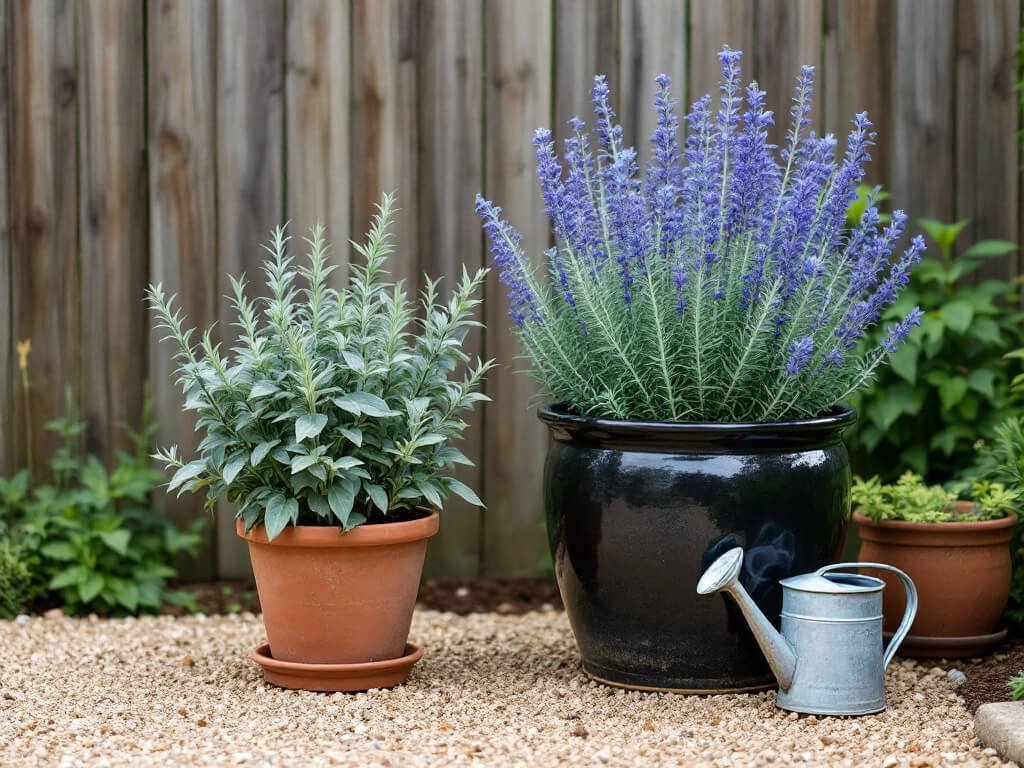
What not to plant with salvia
No reputable source reviewed names a plant that should never go beside salvia. What follows are poor matches based on conflicts in growing conditions, not proven antagonism between plants. The rule underneath all of them is the same: don’t put a plant that needs wet soil next to a salvia that needs dry, well-drained soil.
Water-loving salvias beside dry-soil salvias
Salvia species can clash with each other. Salvia uliginosa prefers wetter conditions, while culinary and evergreen salvias want drier, well-drained soil. If you grow both, give them separate spots rather than one shared watering schedule.
Plants that need wet, poorly drained soil
Most salvias dislike heavy, wet conditions, which can raise disease risk and hurt performance. Anything that needs constantly moist ground will keep the soil wetter than salvia likes. Put those plants in a different bed.
Tall, dense plants on the south side
Salvia generally performs best in full sun, and culinary sage flowers poorly in shade. A tall, dense plant on the south side of a salvia will cut its light. This is a layout problem, not a chemical one, and you fix it by moving the tall plant.
Aggressive spreaders in a small container
A fast spreader in a small pot competes for limited water, nutrients, and root space. The sources support that general concern but don’t name a specific culprit for salvia. Container plants also dry out faster than plants in the ground, so there’s less margin to share.
Layout and spacing
Put salvia in the sunniest, best-drained part of the bed or container, and cluster drought-tolerant herbs around it. Mature size varies so much by cultivar that the plant label is your best spacing guide. Read it for both plants before you dig.
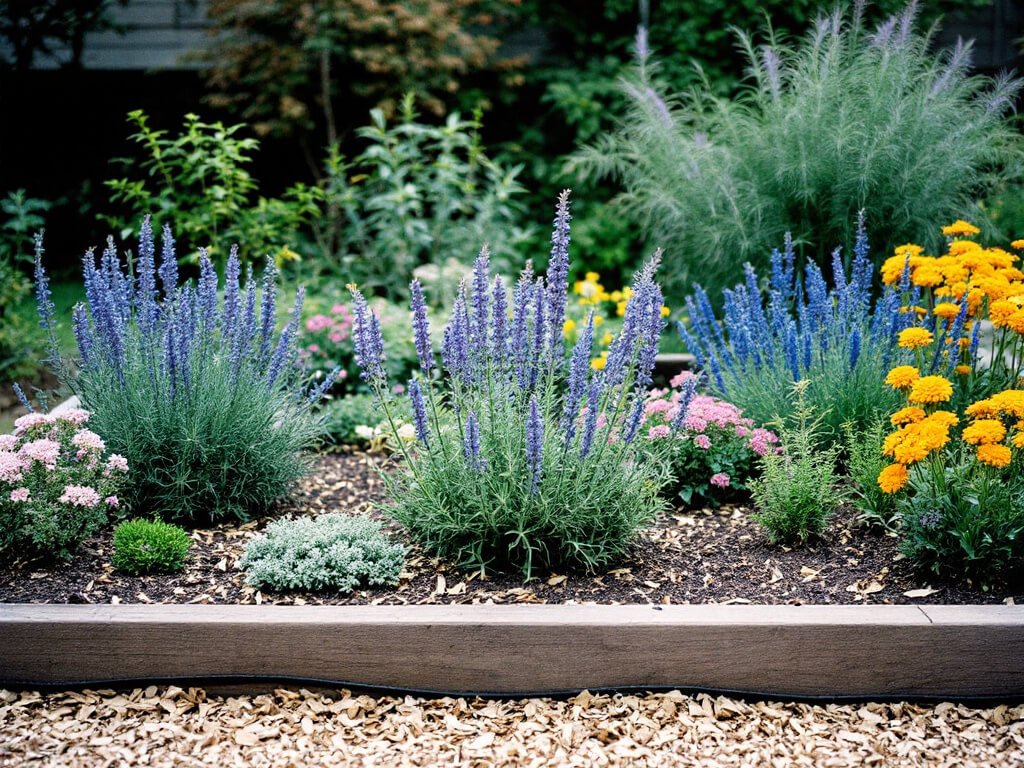
Place salvia in the sunniest, best-drained spot.
Group lavender, oregano, rosemary, or thyme nearby so they share the same watering routine.
Keep tall or dense plants, including mature fennel, off the south side so they don’t shade the salvia.
Space every plant by the mature width on its label, and leave room for airflow.
Put flowering helpers such as calendula, cilantro, or dill where they won’t crowd the salvia.
In containers, skip aggressive spreaders and expect to water more often than in the ground.
FAQ
Can salvia grow with lavender?
Yes. The two generally share a preference for full sun and well-drained soil, so they work as bed companions as long as you allow for the mature size of each.
Which companion plants attract beneficial insects near salvia?
Flowering calendula, cilantro, dill, fennel, oregano, rosemary, and thyme can attract beneficial insects or pollinators. Those benefits aren’t necessarily specific to salvia.
Are there plants salvia should never grow beside?
No categorical “never plant together” rule was verified for salvia. Avoid combinations with conflicting water needs, especially wet-soil plants beside salvias that need dry, well-drained conditions.