
Zinnia Companion Plants: What to Grow Nearby
Most advice on zinnia companion plants comes with promises that a certain herb or flower will repel pests or feed the soil, and none of it is backed by the extension and botanical sources I’d trust. So here is what is actually established, and how to pick neighbors without leaning on claims that may not hold up. The short version: choose plants that want the same sun, soil, and water as zinnias, and treat any extra benefit as a bonus.
Why pairings matter for zinnia
Zinnias are half-hardy annuals, grown for one season in USDA zones 5–9 because frost kills them. They want full sun and fertile, humus-rich, well-drained soil. They aren’t fussy about pH and tolerate acid, neutral, or alkaline soil.
That short list is what makes a neighbor a good or bad choice. A plant that wants shade or soggy ground will fight for the same bed and lose, or make you compromise on watering for both. Matching growing conditions is the one pairing rule I can stand behind.
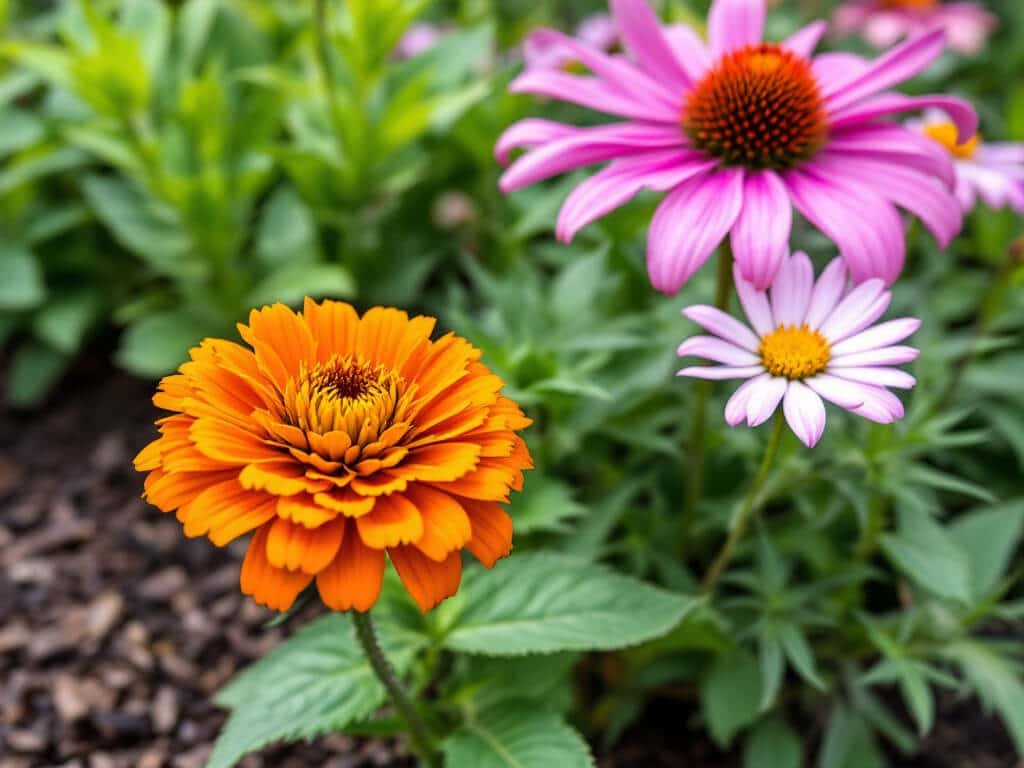
The other reason to think about neighbors is pollinators. Zinnias attract bees, butterflies, and other pollinators, so they fit well in a mixed bed with other sun-loving flowers.
There is also a myth to clear up. You’ll see claims that a particular herb or flower reliably repels zinnia pests. No extension or botanical source I found verifies that. Don’t count on any companion plant to protect your zinnias from pests or disease.
Best companion plants for zinnia
I’m not going to hand you a list of named plants with promised benefits, because no plant-by-plant pairing for zinnias has been verified for pest control, nutrient sharing, or root-depth fit. What you can do is choose by the conditions zinnias are documented to need. These three tests will narrow any nursery shelf quickly.
Full-sun annuals and perennials
Zinnias need full sun, so any neighbor has to be happy in it too. Check the plant tag for “full sun” and skip anything that says part shade or shade. Either full-sun annuals or perennials work, and annuals have the advantage that you can replant the whole bed next year.
Plants that like well-drained soil and moderate water
Zinnias want moist but well-drained soil, with extra water in hot, dry spells. Look for neighbors with the same profile. If a plant needs constantly wet roots or, on the other end, wants to be left bone dry, it will be miserable on the zinnias’ watering schedule.
Pollinator-friendly bloomers
Since zinnias already draw bees and butterflies, neighbors that also flower for pollinators make sense, especially if you’re planting a wildlife-minded bed. Zinnias bloom from summer into early autumn, often peaking in August and September. Flowering may start about 12 weeks after sowing, so pick neighbors whose bloom overlaps with that window if you want the bed to look full at the same time.
What not to plant with zinnia
No specific plant has been verified as a bad neighbor for zinnias. The sources don’t establish problems from allelopathy, shared pests, nutrient competition, or clashing water needs for any named plant. So I won’t invent a blacklist.
What I can tell you is what to avoid by condition, based on what zinnias need.
Plants that need shade
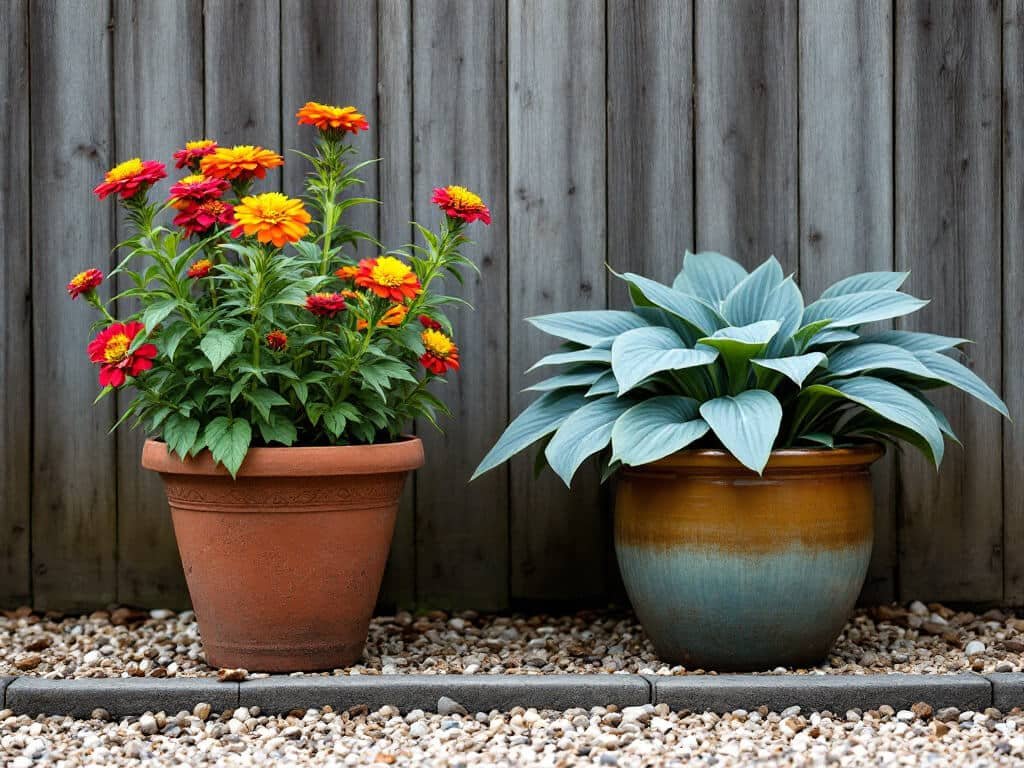
Zinnias need full sun. Pair them with a shade lover and one of you is in the wrong spot, because the bed can’t be both. Keep shade plants in a separate part of the garden.
Plants that need constantly wet soil
Zinnias want moist but well-drained soil, and foot and root rot is on their list of potential diseases. A neighbor that demands soggy ground pushes you toward watering more than zinnias like. Keep wet-soil plants out of the zinnia bed.
Plants you water overhead
Zinnias do better when you avoid wetting the foliage, and their disease list includes botrytis, fungal leaf spot, and powdery mildew. A neighbor that needs regular overhead watering makes that hard. If you can water the base of every plant in the bed, this isn’t an issue. If you can’t, group the plants differently.
Layout and spacing
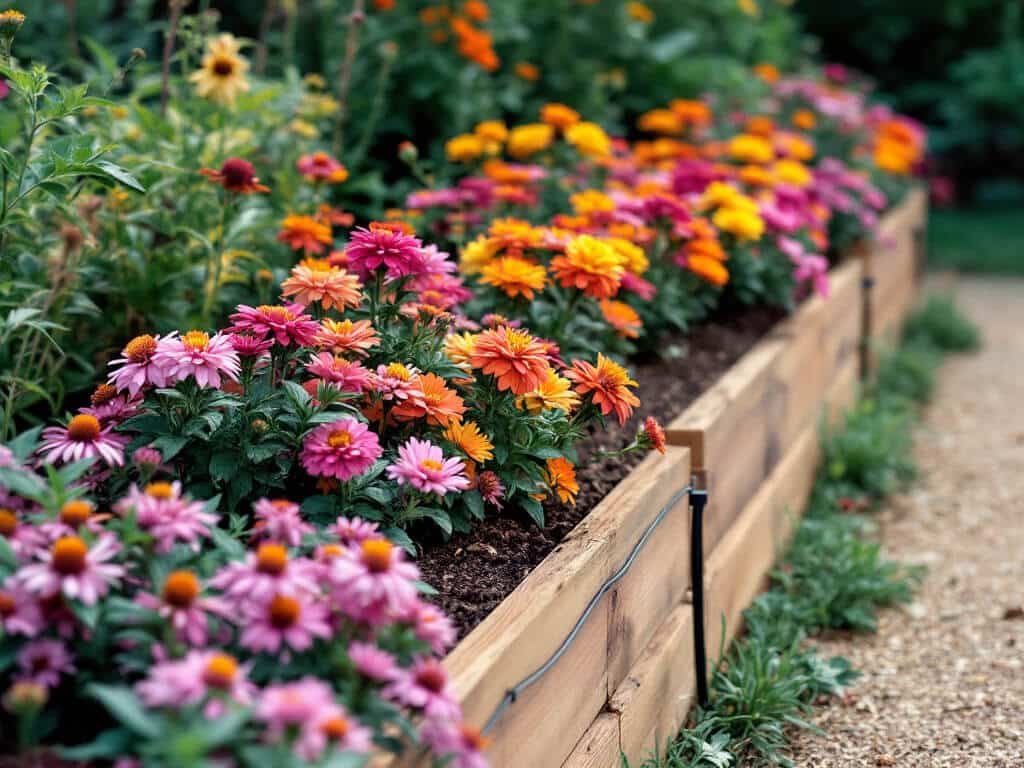
Put zinnias in a sunny, open bed or a container with fertile, well-drained soil, and follow the seed packet or plant label for spacing. For block plantings, the Royal Horticultural Society gives about 12–16 in (30–40 cm) apart as an average, but the right number changes with the cultivar. Leave room for neighbors using their own label spacing, not the zinnias’.
Sun: full sun for the whole bed, no exceptions for neighbors.
Soil: fertile, humus-rich, and well-drained.
Zinnia spacing: follow the label, with roughly 12–16 in (30–40 cm) as a block-planting average.
Height: tall types commonly reach about 28–36 in (70–90 cm), and some get to around 3 ft (1 m). Check the mature height on the tag before deciding what goes in front.
Watering: water the soil during hot, dry weather, not the leaves.
Seedlings: slugs can damage young plants, and damping-off is a risk early on, so keep an eye on the bed right after sowing or transplanting.
FAQ
What plants grow well with zinnias?
Choose plants that tolerate full sun and well-drained soil, because those are zinnias’ documented growing requirements. No specific zinnia pairing was verified as giving a proven pest-control or nutrient-sharing benefit.
How far apart should zinnias be planted from companion plants?
Use the spacing on the zinnia cultivar’s seed packet or plant label. As a general example for block-grown zinnias, allow about 12–16 in (30–40 cm) between plants, keeping in mind that cultivar size changes the number.
Do zinnias attract pollinators?
Yes. Zinnia flowers attract bees, butterflies, and other pollinators, which makes them useful in wildlife gardens as well as ornamental beds.