
Nandina Companion Plants: What to Grow Nearby
Choosing nandina companion plants comes down to two things: matching light and moisture, and leaving room for a shrub whose size depends heavily on the cultivar. Nandina doesn’t need a partner plant to stay healthy, so you’re choosing for texture, color, and fit, not for some hidden benefit underground.
One housekeeping point before you buy anything. Nandina is not bamboo, despite the nickname “heavenly bamboo.” It’s an evergreen to semi-evergreen woody shrub. The records I’m working from don’t give USDA hardiness zones, so verify your cultivar’s zone rating locally before planting, especially in zones 5 and 6.
Why pairings matter for nandina
Nandina wants humus-rich soil that is moist but well drained. It tolerates chalk, clay, loam, and sand, and accepts acid, neutral, or alkaline pH. Established plants handle some drought, but a long dry spell will cost you performance. Anything you plant beside it should be comfortable with those same conditions.
Light is the other filter. Nandina does best in full sun. Some cultivars tolerate partial shade, and a little afternoon shade can help in hot summers. That matters because many of the classic foliage companions, like hostas and ferns, are shade plants. They only work if your spot gets that light, so don’t force them into a full-sun bed.
Size is the third factor. A compact cultivar like ‘Fire Power’ stays around 45 cm (about 18 inches) tall, while larger forms reach 1.5 m (about 5 feet) or more. The spread runs from roughly 0.1 m to 1.5 m. Until you know which nandina you have, you can’t plan the planting around it.
Now the myth. No verified source says nandina needs particular companions for health, pest control, or berry production. Nandina cultivars are generally listed as pest-free, so skip any pairing sold on the promise of repelling pests. Plant companions because they look good together and share conditions.
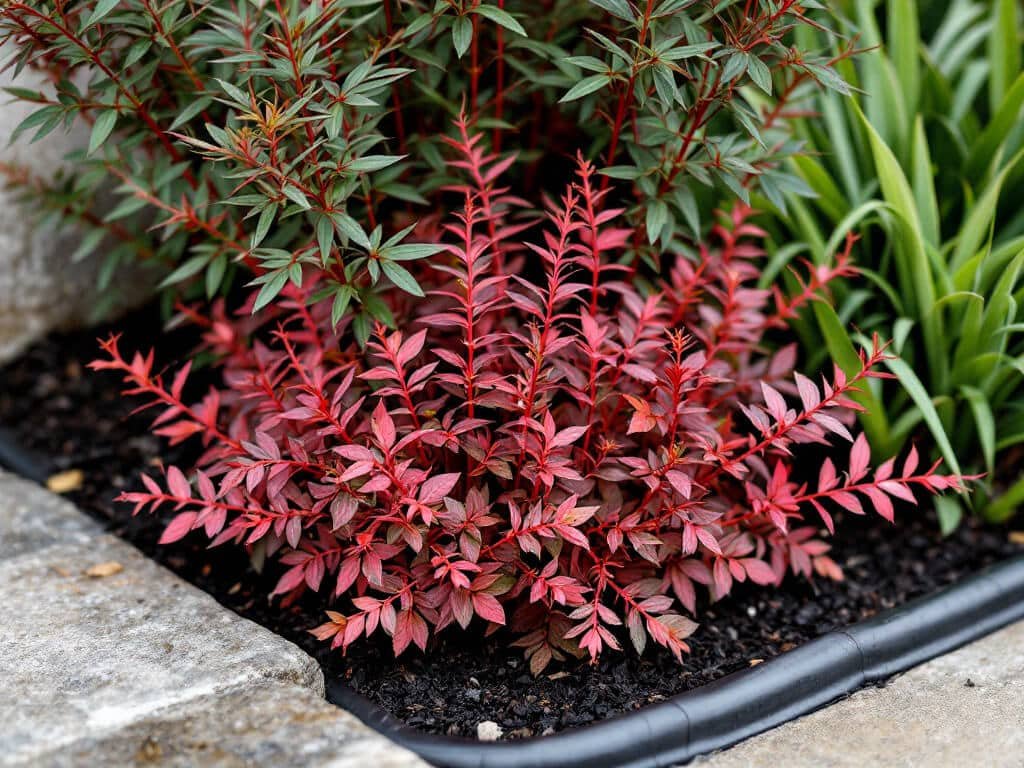
Best companion plants for nandina
None of the sources I have give a nandina-specific planting distance for any companion. The consistent advice is to use each companion’s own mature width and keep its foliage from crowding the shrub’s stems. I’ve noted that for each plant below.
If I were choosing for a typical sunny to lightly shaded bed, I’d start with heuchera, liriope, mondo grass, and Japanese sedge. Save the ferns, hosta, and Japanese forest grass for spots that really get part shade.
Heuchera (coral bells)
Heuchera gives you low foliage in red, bronze, or chartreuse, which can echo or contrast with nandina’s seasonal leaf color. It fills the space in front of or beneath the shrub without competing for the shrub’s height layer. Space it by the cultivar’s labeled mature width.
Liriope
Liriope has grasslike foliage that makes a low edging layer under taller nandina forms. It works best where the nandina has some clear stem showing above the edge. Plant it at the cultivar’s mature width.
Dwarf mondo grass (Ophiopogon japonicus ‘Nana’)
This is a low, evergreen-looking edger that sits in a different height layer from the shrub. It suits a tidy, formal-leaning border. Follow the plant’s mature spread when you set it out.
Japanese sedge (Carex morrowii)
Japanese sedge adds fine, arching foliage at the base of the shrub in a moist, well-drained bed. The narrow blades contrast nicely with nandina’s leaflets. Use the cultivar’s mature width for spacing.
Woodland stonecrop (Sedum ternatum)
This is a low, spreading ground layer for a well-drained position. Don’t buy it thinking it will protect the nandina from pests, because nothing in the sources supports that. Let it spread to its mature width without pushing up against the shrub.
Japanese forest grass (Hakonechloa macra)
Japanese forest grass is a clumping, shade-tolerant grass that gives a soft textural contrast at nandina’s base. Use it only where the site has suitable light and moisture, which in practice means part shade. Space it by its mature spread and keep the leaves off the shrub.
Hosta
Hostas bring broad leaves at low to medium height, a strong contrast to nandina’s narrow leaflets. They belong in partial-shade sites, so skip them in a full-sun bed. Use the mature width listed for the cultivar you choose.
Autumn fern (Dryopteris erythrosora)
Autumn fern adds fern texture and lower growth in a sheltered, partly shaded arrangement around nandina. It suits the shadier side of a shrub that gets afternoon shade. Plant it at its mature spread.
Japanese painted fern (Athyrium niponicum cultivars)
The painted fern’s foliage color and fine texture contrast with nandina’s leaflets in partial shade. Like the autumn fern, it’s a part-shade plant. Give it its full mature spread.
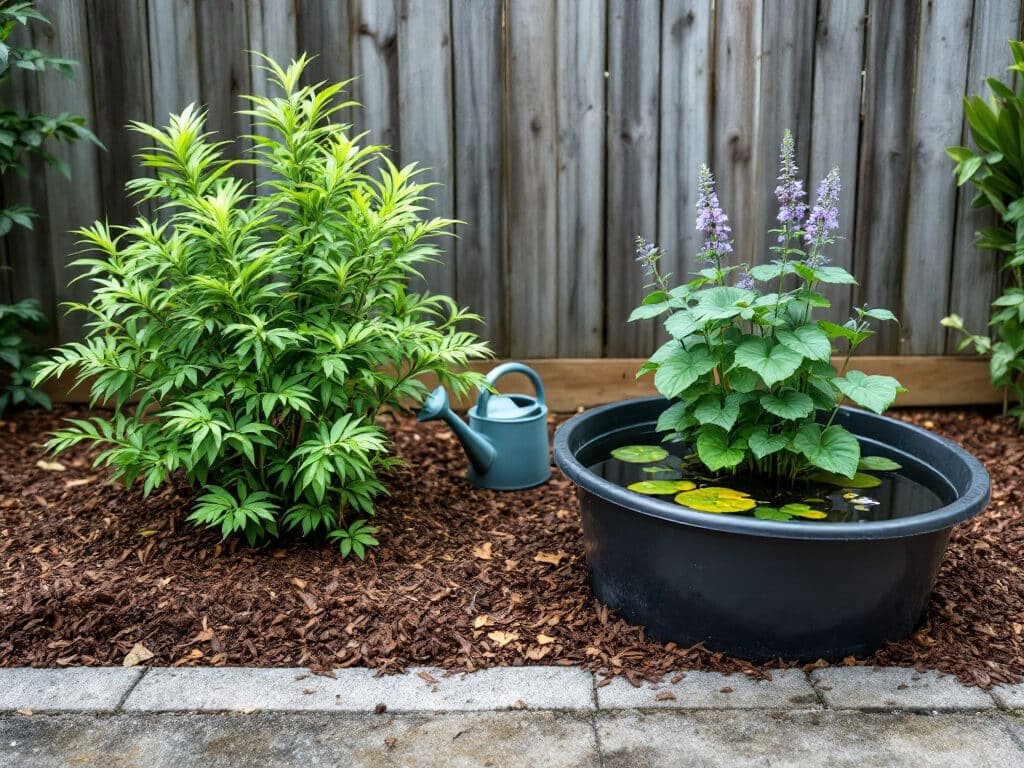
What not to plant with nandina
The sources don’t name any specific plant that harms nandina. The cautions below are about mismatched conditions and crowding.
Plants that need saturated or poorly drained soil
Nandina is specified for moist but well-drained ground. Bog plants and anything that wants standing wet feet have incompatible water needs, and one of the two will suffer.
Plants that need bone-dry soil
Plants that want consistently dry soil conflict with nandina’s preference for moisture, especially while it’s getting established. Newly planted nandina needs steady watering, which would drown a dry-ground plant sitting next to it.
Large, aggressive spreaders
Anything that runs hard can compete with nandina for water, nutrients, and root space. No specific nandina antagonist was verified, so this is a general caution. If a plant is known in your area for taking over beds, keep it out of the nandina’s root zone.
Plants chosen only to repel pests
Nandina cultivars are generally described as pest-free, so there’s nothing to repel. A pairing justified only by pest control isn’t supported by the evidence, and you’d be better off choosing on looks and conditions.
Plants with the same mature footprint
Larger cultivars reach 1 to 1.5 m in both height and spread. Plant another shrub of the same size too close and you get competition for water and poor airflow. Give shrub-sized neighbors real distance, or choose low plants instead.
Layout and spacing
Treat nandina as the structural shrub and use shorter companions as an open front or side layer. Don’t pack plants directly against its stems. Because nandina’s size varies so much, work out distances from each plant’s mature width rather than a single number.
A simple rule I’d use: measure from the nandina’s center to the companion’s center, and make that at least half the shrub’s mature spread plus half the companion’s mature width. That keeps the two from touching at full size.
Back or center: the nandina, placed according to its cultivar’s mature height and spread.
Front edge: low edgers such as liriope, dwarf mondo grass, or Japanese sedge.
Foliage color layer: heuchera in front or to the side, where its red, bronze, or chartreuse leaves show.
Shaded side only: hosta, autumn fern, Japanese painted fern, or Japanese forest grass, where the site gets part shade.
Well-drained gap: woodland stonecrop, allowed to spread to its mature width.
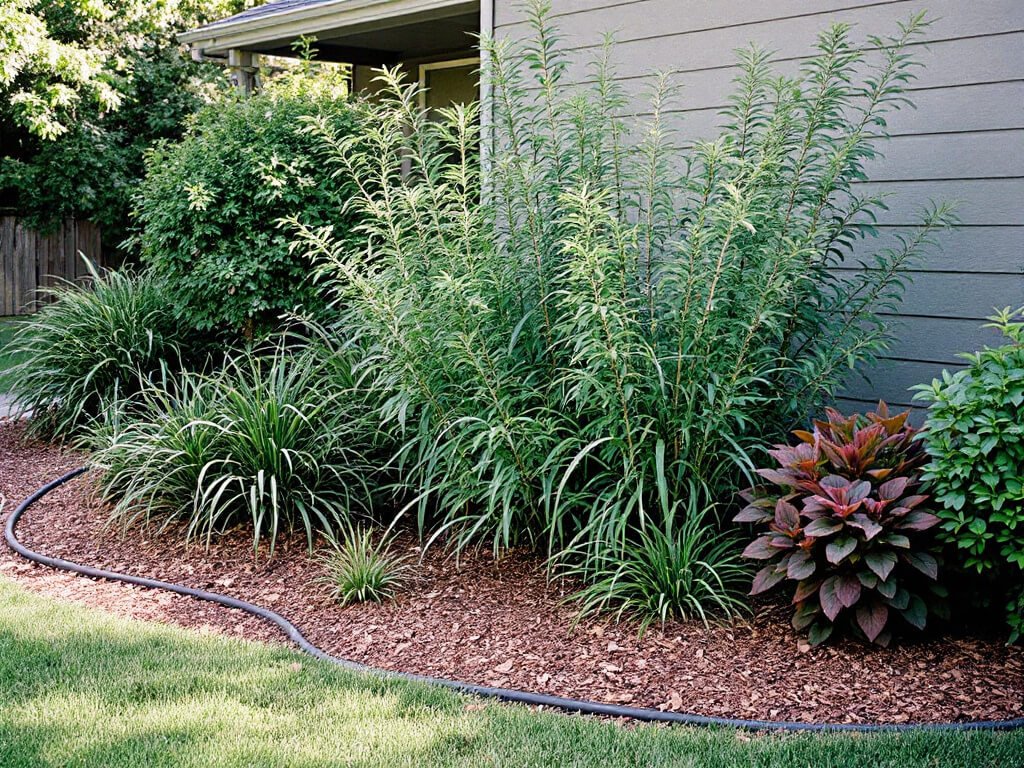
FAQ
Can nandina grow in shade?
Some cultivars tolerate partial shade, but the records most consistently recommend full sun or good light. Light afternoon shade can help in hot summers.
How much space does nandina need?
It depends on the cultivar. Spread runs from about 0.1 to 0.5 m for compact ‘Fire Power’ to about 1 to 1.5 m for larger forms. Use your cultivar’s mature spread instead of a single spacing rule.
Does nandina need companion plants?
No. No verified source says nandina needs companions for growth or pest prevention. Companions are a design and space-management choice, and nandina cultivars are generally described as pest-free.