
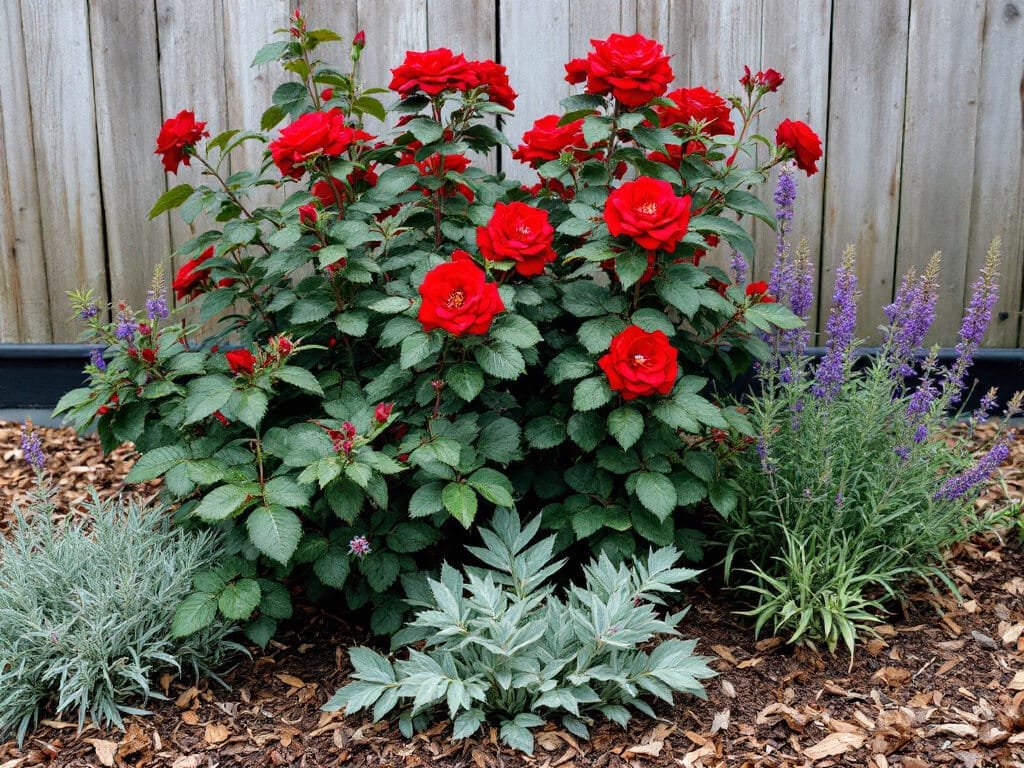
Choosing knockout roses companion plants comes down to two things: matching the rose’s sun and drainage needs, and leaving enough room that air can move through the shrub. Knock Out roses grow in roughly zones 5 to 9, and they’re forgiving enough that most sunny perennials will share a bed with them. The mistakes happen when plants get packed against the rose or when a thirsty plant gets paired with a rose that wants well-drained soil.
This guide covers eight companions that fit those conditions, five kinds of plants to keep out of the bed, and a simple way to lay it all out. One thing up front: no companion plant has been verified to repel Knock Out rose pests. The case for these plants is compatible growing conditions and a better-looking bed, not pest control.
Why Pairings Matter for Knockout Roses
A Knock Out rose is a deciduous shrub that usually reaches about 3 to 5 feet tall and wide, though cultivars vary and unpruned plants can get larger. It blooms in repeated flushes from spring until fall or frost, and it does that best with at least 6 hours of sun. It tolerates some shade but flowers less. Whatever you plant nearby has to leave that sun and that space alone.
Soil matters just as much. These roses like moist, well-drained loam that is neutral to slightly acidic (one extension source gives a target pH of 6.0 to 6.5). Keep them evenly moist while they establish. Once established they handle drought, but they still need water during dry spells. A companion that wants constantly wet soil works against all of that.
Then there’s disease. Knock Out roses are bred for resistance, but black spot, powdery mildew, and rose rosette can still show up. Japanese beetles, rose slugs, aphids, deer, and rabbits also visit. Crowded beds make every one of these harder to spot and deal with.
You’ll see claims that lavender, garlic, marigolds, or other named plants keep rose pests away. No extension source in the research behind this article verified that for Knock Out roses. Plant companions because they suit the site, then keep inspecting your roses as usual.
Best Companion Plants for Knockout Roses
All eight of these share the rose’s preference for sun, and each sits in a lower or different layer than the rose. Check the tag for the mature width of whichever cultivar you buy, and plant to that number, not to the size of the nursery pot.
Lavender (Lavandula spp.)
Lavender wants the same sunny site and well-drained soil as the rose, and it stays in a lower layer beneath the rose’s branches. Leave room for its mature width and keep open air around the rose. No fixed rose-to-lavender distance has been verified, so let the plant’s mature size decide.
Catmint (Nepeta spp.)
Catmint is a low, flowering plant that adds pollinator resources without forming a shrub canopy over the rose. Use its mature spread to set the spacing, and keep it outside the rose’s roughly 3 to 5 foot mature footprint. It works well as an edging plant along the front of the bed.
Salvia (Salvia spp.)
Salvia gives you more flowers for pollinators and sits in its own herbaceous layer. Follow the mature width of the variety you choose. Don’t crowd the base of the rose.
Coreopsis (Coreopsis spp.)
Coreopsis adds long-season flowers and a lower planting layer in the same sunny bed, which pairs well with a rose that also blooms for months. Spacing is cultivar-specific, so read the tag. Keep enough room that air still moves around the rose.
Yarrow (Achillea spp.)
Yarrow brings flat flower clusters that pollinators use, and it tolerates sun. There’s no fixed rose-companion distance for it. Follow the mature spread of the variety you buy.
Coneflower (Echinacea spp.)
Coneflower adds upright flowers for pollinators without turning into a woody canopy. Place it according to the cultivar’s width and outside the rose’s mature root-and-branch area. It makes a good middle layer behind lower plants like catmint.
Ornamental thyme (Thymus spp.)
Thyme is a low ground layer for sunny, well-drained edges. Use its mature spread for spacing, and keep its stems from touching the rose crown. This is the plant to use where you want something between the rose and the lawn or path.
Ornamental grasses (blue fescue, Festuca glauca)
Blue fescue adds contrasting foliage and low vertical structure, using a completely different plant form from the rose. Follow the mature clump width and leave open space for air circulation. A few clumps near the front of the bed give the roses a cleaner backdrop than more flowers would.
What Not to Plant With Knockout Roses
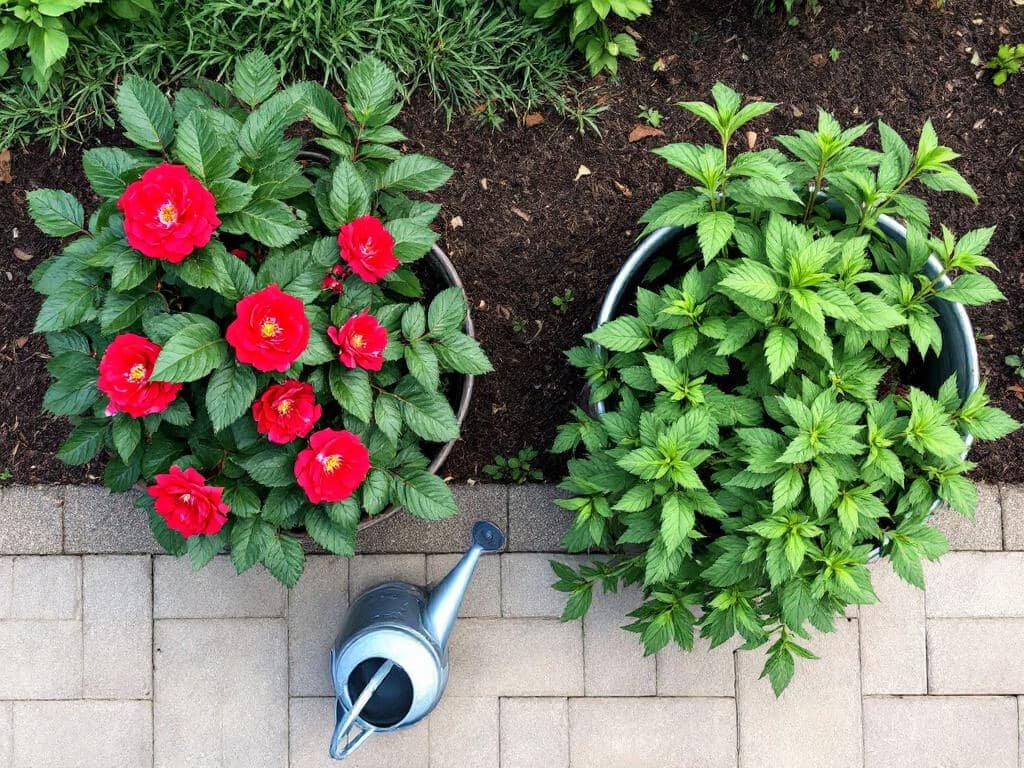
Other roses planted too closely
Crowded roses cut down air movement, and that creates conditions that favor fungal disease. Recommended rose spacing varies a lot by cultivar, from about 3 feet to 8 feet on center. Check your specific rose before you set plants out.
Plants with high water needs in poorly drained soil
Knock Out roses prefer well-drained soil. Established plants that stay excessively wet can develop root problems. If a companion needs constant moisture and your bed holds water, put the companion somewhere else.
Large, aggressive spreaders
A rose that reaches 3 to 5 feet wide or more doesn’t need to fight a spreader for water, nutrients, and space. Anything that runs or self-seeds heavily will end up in the rose’s root zone. Pick clumping plants with a predictable mature width instead.
Dense plants that shade the rose canopy
Flowering drops when the rose gets less than 6 hours of sun. Tall or tightly packed companions can cause exactly that. Keep taller plants to the back or the sides, never on the sunny side of the rose.
Plants that host rose pests, with no plan to manage them
Where aphids, Japanese beetles, or other rose pests are already around, a shared bed can make monitoring harder. No specific plant pairing was verified as uniquely dangerous. Still, if you plant a mixed bed, plan to look over both the rose and its neighbors regularly.
Layout and Spacing
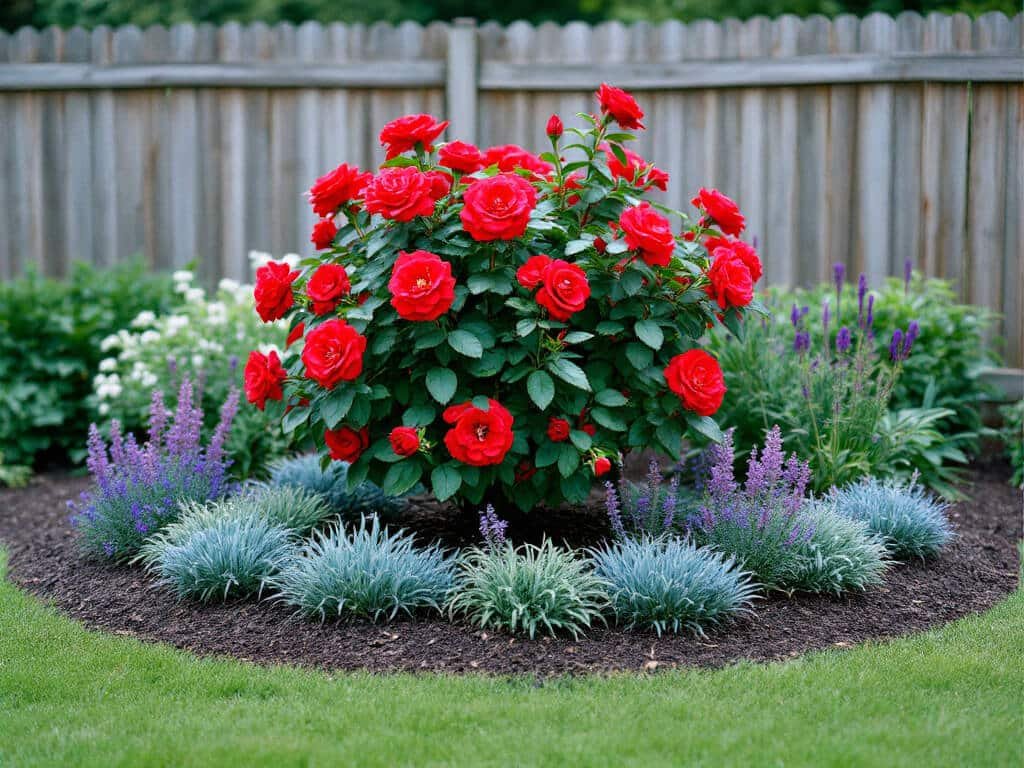
Put the rose where it gets at least 6 to 8 hours of sun and good air movement. Then arrange low companions around the outer edge, not against the crown. There’s no single distance that works for every pairing, because both the rose cultivar and the companion vary in mature size. Published Knock Out spacing runs from about 3 feet apart for some landscape plantings to 8 feet on center for a larger Earth-Kind selection.
Center: the rose, with open space around the crown and mulch pulled back from the base.
Inner ring: low plants such as ornamental thyme or blue fescue, set at their mature width and with stems kept off the crown.
Middle ring: catmint, salvia, or coreopsis, outside the rose’s roughly 3 to 5 foot mature footprint.
Back or sides: upright plants such as coneflower or yarrow, placed so they never shade the rose canopy.
Containers: one appropriately sized rose with compact, drought-tolerant companions. Several plants in a small root zone will compete, so keep the planting simple and keep mulch and companion stems away from the rose’s base.
FAQ
Can lavender grow with Knock Out roses?
Yes, lavender can share the same sunny bed, as long as the soil drains well and each plant has room to reach its mature size. No verified source supports treating lavender as a guaranteed rose-pest repellent.
How far apart should Knock Out roses and companion plants be?
There’s no single evidence-based distance, because rose cultivars and companions vary in mature size. Keep the rose’s canopy open, use the companion’s mature width, and preserve air circulation. Published rose spacing ranges from about 3 feet to 8 feet on center.
Do companion plants prevent rose diseases?
No. Knock Out roses are bred for disease resistance, but black spot, powdery mildew, and rose rosette can still occur. Sun, air movement, well-drained soil, and watering at the base are more dependable than any particular companion pairing.