
Ranunculus Companion Plants: What to Grow Nearby
Choosing ranunculus companion plants comes down to matching light, water, and airflow. It has little to do with pest-repelling tricks. Ranunculus wants evenly moist but well-drained soil, full sun to partial shade, and open air around its foliage, so the best neighbors are the ones that leave those conditions alone.
One thing to settle first: no source I reviewed verifies that marigolds, herbs, or other named plants reliably repel ranunculus pests. Extension guidance says companion planting can support beneficial insects and disrupt how pests find their host plants, but that doesn’t always mean fewer pests on the plant you care about. Pick companions for what they actually do, and don’t count on them as pest control.
Why pairings matter for ranunculus
Ranunculus is a low, clumping plant with upright flower stems, usually grown from corms as a cool-season annual. In zones 5 through 9 it’s generally treated as a tender perennial or annual, and colder areas need winter protection. It blooms mostly in spring, though timing shifts with the cultivar, planting date, and climate.
Its main problems are aphids, grey mould, and powdery mildew. Poor airflow and dry conditions make mildew worse, and a crowded bed holds moisture around the foliage. A bad neighbor won’t poison ranunculus. It will shade it, crowd it, or pull the soil toward a moisture level the plant doesn’t like.
Ranunculus rots in soil that stays soggy, so drainage comes before any pairing decision. Get the bed or the potting mix right first, then add companions that fit.
The research here is also thin. The sources support choosing companions by matching light, moisture, bloom timing, airflow, and beneficial-insect value. They don’t give ranunculus-specific spacing, so the distances below are conservative layout suggestions. Check your corm or seed packet for mature size before you finalize spacing.
Best companion plants for ranunculus
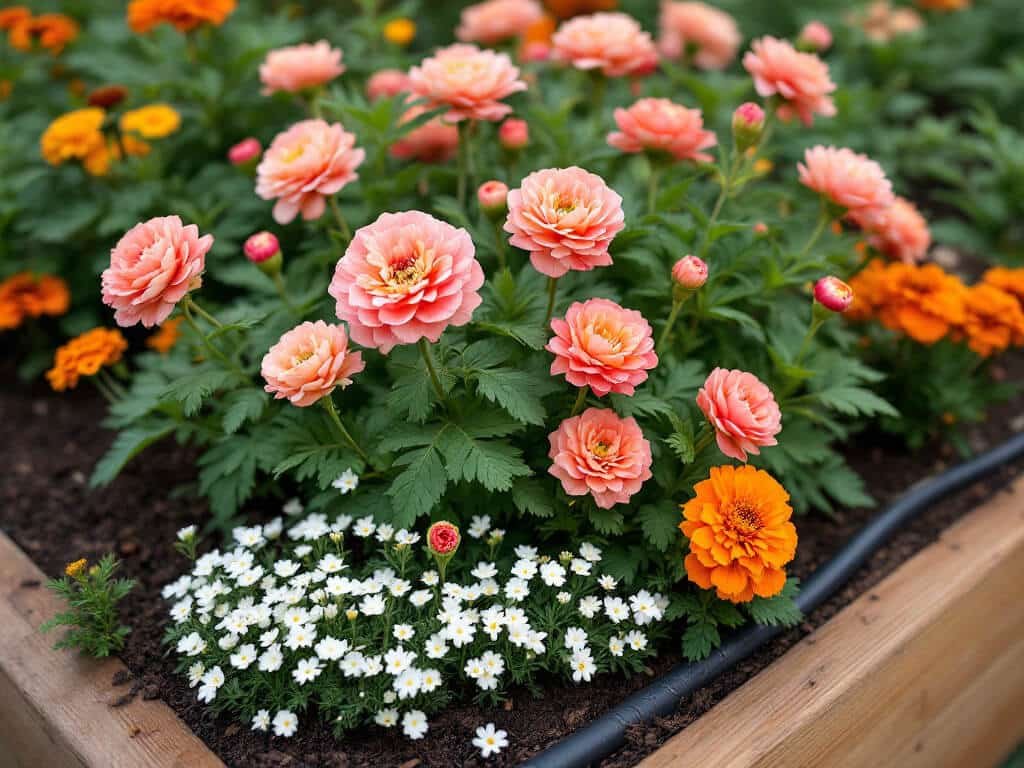
Sweet alyssum
This is my first pick. It’s a small insectary plant, and its flowers can attract pollinators and beneficial insects. Keep it at least 6 inches from the ranunculus crowns so the foliage stays accessible and air can move through.
French marigold
Marigolds add planting diversity, and their flowers are used by beneficial insects. Don’t plant them expecting to repel pests, because that claim isn’t consistently supported. Keep them 6 to 12 inches from the ranunculus crowns.
Nasturtium
Nasturtium is a documented trap-crop example for some vegetable pests, but that evidence isn’t specific to ranunculus. If you use it, put it at the bed edge, at least 12 inches from the ranunculus. Treat it as a bonus, not a pest plan.
Buckwheat
Buckwheat’s flowers support predators and parasitoids, so it works as a nearby seasonal insectary. Don’t crowd it into the ranunculus patch. Leave at least 12 inches between the plants.
Cowpea
Cowpea is another flowering plant that can support beneficial insects. It grows in warm weather, so use it only where it won’t shade spring ranunculus. Leave at least 12 inches.
Sunn hemp
Sunn hemp can contribute flowering habitat for beneficial insects, but it grows vigorously. I’d keep it at the edge of the bed, at least 18 inches away, and make sure it never shades the ranunculus.
Ficaria verna
This low, spring-flowering relative suits moist, partly shaded conditions, which overlap with what ranunculus tolerates. Use it only where its spread is acceptable, and keep it outside the main ranunculus clump. If you don’t want a plant that wanders, skip it.
Scabiosa
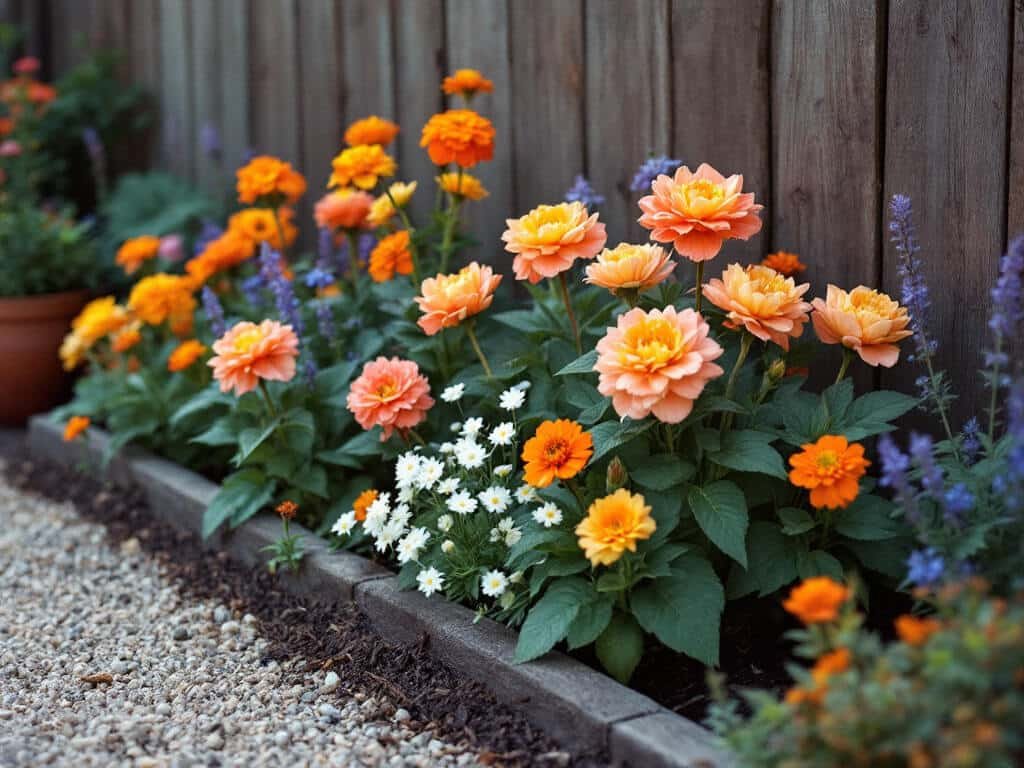
Scabiosa appears in a mixed planting with ranunculus and gives airy, vertical flower structure. Place it where it won’t shade the ranunculus, and follow the spacing on your cultivar’s label.
Linaria
Linaria also shows up in a mixed ranunculus planting and adds a contrasting, airy form. Keep it toward the rear or the edge so it doesn’t cut into the ranunculus’s light or airflow.
Orlaya
Orlaya is another plant used in a mixed ranunculus garden, with light, open flower heads. Use the spacing specified for your chosen cultivar and don’t crowd the crowns.
What not to plant with ranunculus
No reputable source I found establishes any plant as a universally bad companion for ranunculus through allelopathy or shared disease. What follows are situational problems, where a plant’s needs conflict with ranunculus.
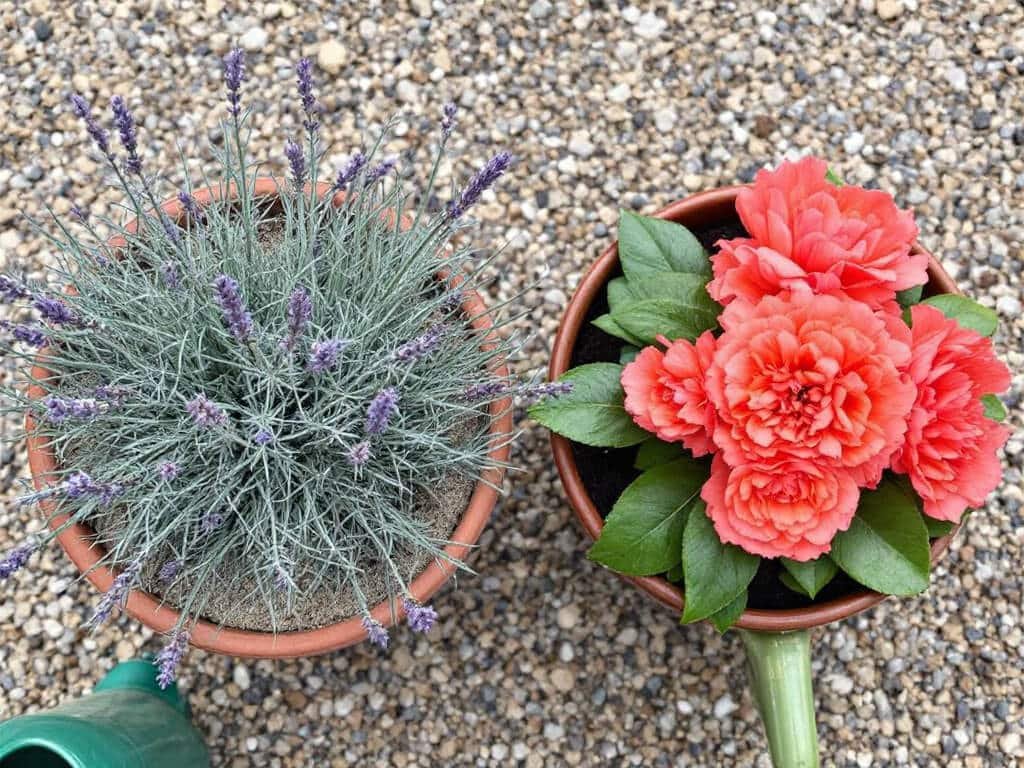
Lavender
Lavender prefers sharper drainage and drier conditions than ranunculus wants. In consistently moist soil lavender will struggle, and in dry soil ranunculus will. Plant it in a separate container or on a distinctly drier bed edge.
Tall, dense plants right beside ranunculus
Tall plants placed immediately next to ranunculus can reduce light and airflow, which raises the risk of moisture-related disease. Keep taller plants to the north or rear of the bed and leave open air around the ranunculus foliage.
Vigorous spreading plants
Aggressive spreaders compete for water, nutrients, and space. Don’t plant them inside the ranunculus clump unless you can control their spread, for instance with a sunk container or regular edging.
Plants that need dry soil during the ranunculus season
Anything that wants to dry out between waterings has a moisture need that clashes with ranunculus. Separate these plants from ranunculus, or grow them in different containers.
Layout and spacing
Give ranunculus the sunniest, best-drained spot in the bed and build outward from there. Low flowering companions go close but not touching, and taller or more vigorous plants go behind. Anything that wants dry soil gets its own pot or a dry corner.
– Center or front: ranunculus, in the sunniest, best-drained spot.
– Near the crowns: sweet alyssum, at least 6 inches away.
– Bed edge: nasturtium at least 12 inches out, French marigold at 6 to 12 inches.
– North or rear: scabiosa and linaria, spaced per the label and kept clear of the ranunculus’s light.
– Seasonal edge plantings: buckwheat and cowpea at least 12 inches away, sunn hemp at least 18 inches.
– Containers: pair ranunculus only with plants that tolerate evenly moist but well-drained soil, in a free-draining potting mix.
– Separate zone: lavender in its own pot or a dry bed edge.
FAQ
Can ranunculus grow with lavender?
They can share a broad planting area, but their moisture preferences differ. Ranunculus likes soil that stays moist, and lavender likes sharper drainage and drier conditions. Separate containers or distinct bed zones are safer.
Do marigolds repel ranunculus pests?
There isn’t enough evidence to promise that they do. Marigolds add flowers and planting diversity, but extension sources caution that commonly repeated pest-control claims are inconsistent or weakly supported.
What is the best low-growing companion for ranunculus?
Sweet alyssum is a reasonable, evidence-based choice because flowering plants can provide nectar and habitat for beneficial insects. Keep it near the ranunculus rather than directly against it, so the foliage stays accessible and air keeps moving.