
Snake Plant Companion Plants: What Actually Works
Snake plant companion plants are easy to get wrong, because the plants that look good beside one often want a completely different watering schedule. The snake plant’s needs are simple: a fast-draining mix, a pot with drainage holes, and soil that dries out substantially between waterings. Anything you put near it has to live with that.
One thing to clear up first. No extension source I found shows that snake plants repel pests, boost a neighbor’s growth, or prevent disease in other plants. Extension sources also warn that many companion-planting claims are anecdotal, so treat everything below as “these plants can share conditions,” not “these plants help each other.”
Why pairings matter for snake plant
Snake plant (Dracaena trifasciata, formerly Sansevieria trifasciata) is an evergreen succulent herb. It grows outdoors year-round in USDA zones 10–12. In zones 5–9, which is most of you, it’s a houseplant or a patio plant you move inside before frost.
That matters for pairing because most snake plant displays are indoors, in pots, where one watering decision covers everything in the container. Snake plants tolerate low light but generally grow better in bright, indirect light. Deep shade can reduce the leaf markings. Water is the bigger risk. Overwatering causes root rot, and root rot is how most snake plants die.
So the useful question isn’t “what looks good next to it.” It’s “what can sit in the same light and tolerate the same dry spell.” Mature size varies by cultivar, so I’m not giving you a single height. Check the tag on yours before you plan a display around it.
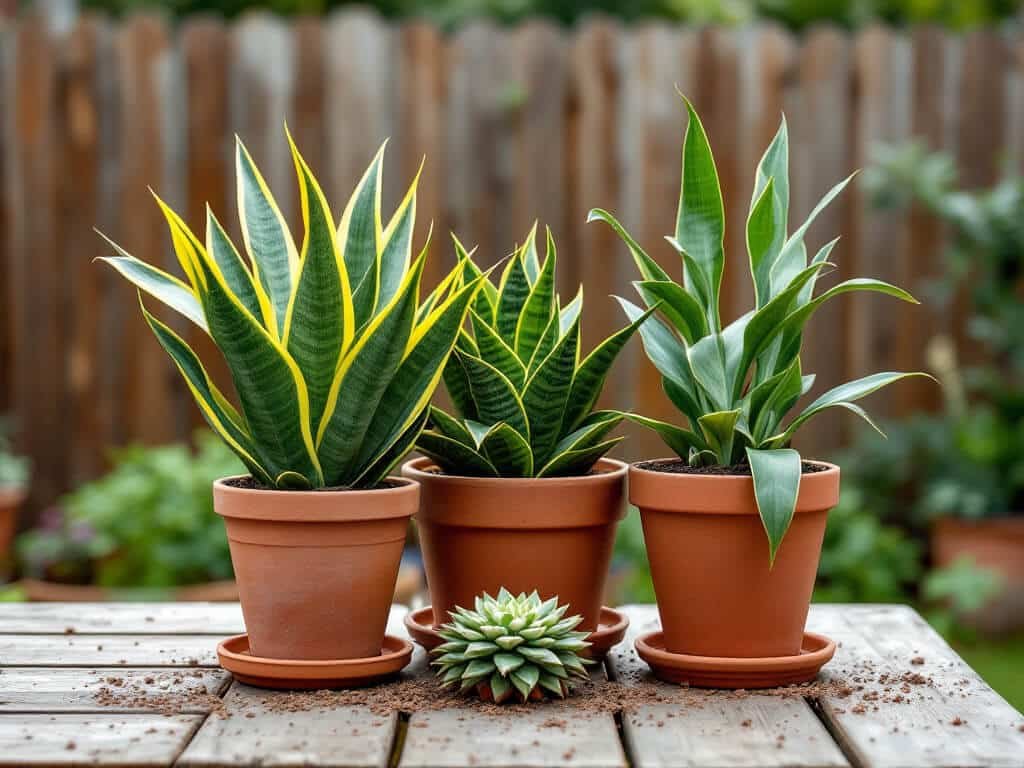
Best companion plants for snake plant
These are compatibility candidates, picked because their light or moisture tolerance overlaps with a snake plant’s. None is proven to benefit the snake plant. I also found no verified spacing figure for any of them in a shared container, which is one more reason to keep them in separate pots (more on that below).
ZZ plant (Zamioculcas zamiifolia)
This is the safest pick. It tolerates low light and dry conditions, much like a snake plant, so the two can sit side by side without anyone fighting over the watering can. It does nothing for the snake plant directly, it just doesn’t create problems. No shared-container spacing is verified, so give each its own pot.
Haworthia
Haworthia is a drought-tolerant succulent that suits a similarly dry display. It usually wants brighter light than a snake plant does, so put it in the brightest spot of the grouping and let the snake plant sit a little further back. No spacing figure is verified.
Aloe
Aloe is another low-water succulent that can share a bright, dry display. Like haworthia, it generally needs more light than a snake plant, so it’s the one that decides where the group goes. No spacing figure is verified.
Jade plant (Crassula ovata)
Jade is a low-water succulent for a bright location. It matches the snake plant’s dry-soil habit, and the light is the part you have to plan for. No verified spacing, so pot it separately.
Echeveria
Echeveria is a low-water rosette succulent that also needs brighter conditions. The rosette shape contrasts nicely with the upright snake plant leaves. It’s a good pick only if you have a bright spot to give it. No spacing figure is verified.
Ponytail palm (Beaucarnea recurvata)
Ponytail palm stores water, so its low-water habits line up with a snake plant’s. It needs brighter light for compact growth, so don’t tuck it into the same dim corner. No verified spacing figure.
Cast-iron plant (Aspidistra elatior)
Cast-iron plant is commonly grouped with low-light houseplants, so it looks like a natural partner on light. The catch is that I couldn’t verify its moisture requirements from reputable sources. Check its watering needs before you commit, and keep it in its own pot either way.
Spider plant (Chlorophytum comosum)
Spider plant tolerates some drying between waterings, and its arching leaves look good beside upright snake plant foliage. Its watering needs may exceed a snake plant’s, though. If you pair them, water by the snake plant’s schedule only if the spider plant clearly tolerates it, and otherwise water them separately. No spacing is verified.
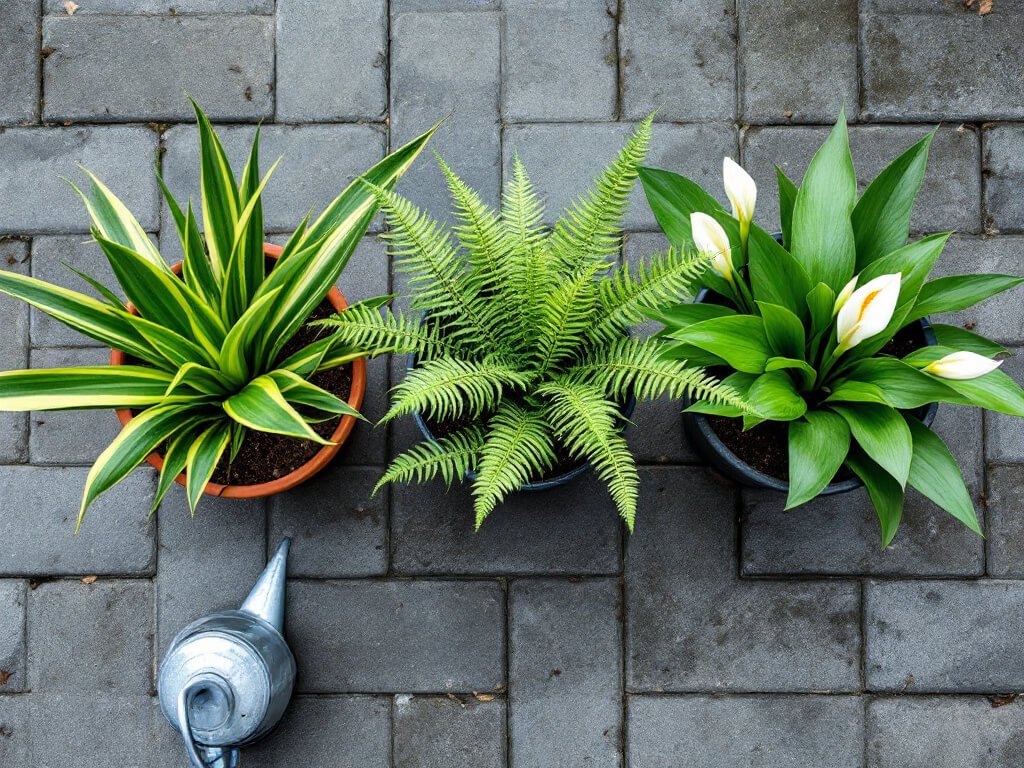
What not to plant with snake plant
None of these are proven to harm a snake plant through toxins or pests. The problem is plain and practical. Their care conflicts with the snake plant’s dry-soil preference, which makes them bad choices for one shared pot.
Ferns
Ferns generally need more consistently moist conditions than a snake plant. If they share a pot, watering the fern raises the snake plant’s root-rot risk.
Calatheas
Calatheas generally want more even moisture and higher humidity than a snake plant. A dry-leaning snake plant mix won’t suit them, and a calathea-friendly mix won’t suit the snake plant.
Peace lilies (Spathiphyllum)
Peace lilies typically need more moisture than a snake plant. With a single shared root zone, you can’t manage both well.
Moisture-loving plants in general
The rule behind all three: a container can’t be thoroughly watered for one plant while the shared root zone stays dry for another. If you put a moisture-loving plant in the same pot as a snake plant, the snake plant’s roots will pay for it.
Layout and spacing
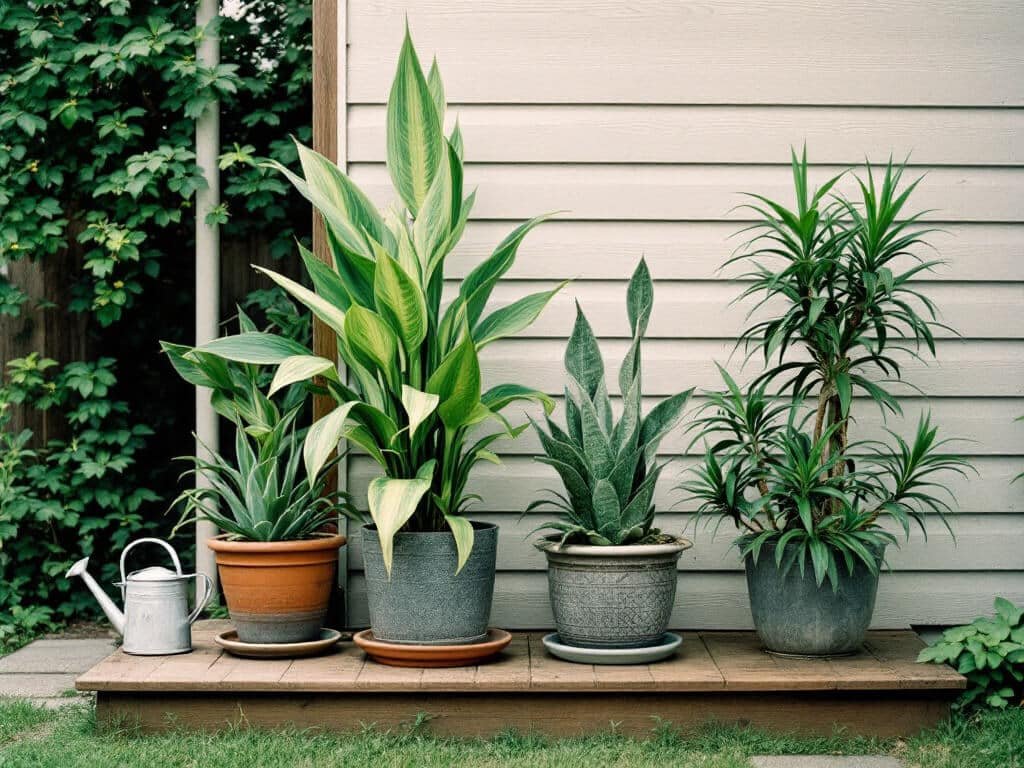
The safest arrangement is a grouped display of individual pots, not one mixed container. Since no shared-container spacing is verified for any of these plants, I’d skip planting them together entirely. Separate pots let you water each plant on its own schedule and keep the snake plant’s soil dry.
Put each plant in its own pot with drainage holes.
Place the plant that needs the most light where it gets adequate light, and arrange the others around that.
Keep the snake plant’s soil separate from everything else’s.
Use a fast-draining, porous potting mix for the snake plant.
Water each pot independently, and let the snake plant’s soil dry substantially first.
FAQ
Can snake plants share a pot with other houseplants?
They can, but only when every plant tolerates the same light, soil drainage, and drying pattern. Separate pots are safer, because snake plants are vulnerable to overwatering.
What is the best companion plant for a snake plant?
No specific pairing is proven to benefit snake plants. ZZ plants and some drought-tolerant succulents are reasonable display partners because their care needs can overlap, although some succulents need brighter light.
Should moisture-loving plants be planted with snake plants?
Usually not in the same container. Ferns, calatheas, and peace lilies generally need more moisture, and keeping a snake plant equally wet can encourage root rot.