
How to Grow Strawberries in Pots
To grow strawberries in pots, you have to get three things right before you buy a single plant: the container, the cultivar, and the potting mix. Strawberries are perennial fruit plants, generally hardy in USDA zones 5 to 9, and they do fine in containers. The catch is that pots dry out faster than beds, and the roots are more exposed to winter cold.
This guide walks through the setup, planting, watering, feeding, and protection, then covers what goes wrong and when to expect fruit.
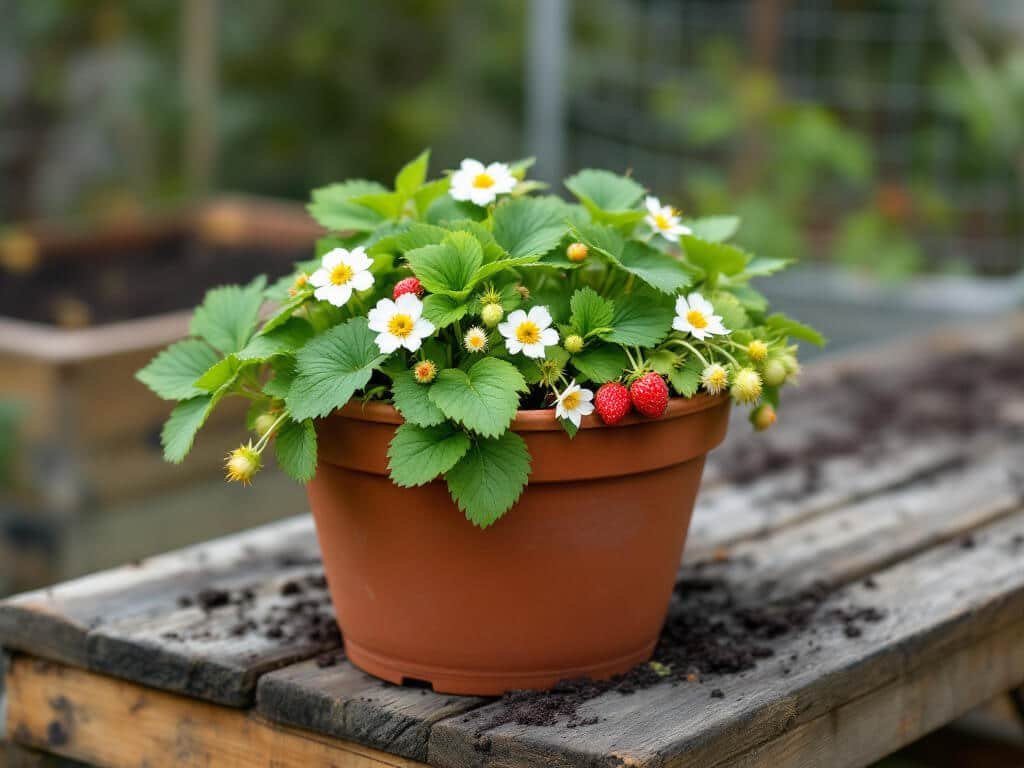
What You Need
Gather this before planting day:
– A container 10–18 inches deep and at least 12 inches wide, with drainage holes
– Strawberry plants or bare-root crowns, preferably a day-neutral cultivar
– Well-drained potting mix (see the mix recipe below)
– Slow-release fertilizer labeled for container fruit, if your mix doesn’t already include one
– A watering can or hose
– Clean scissors or pruners for cutting runners
– Bird netting, if birds are a problem where you live
– Optional winter protection, such as an unheated garage, a sheltered spot, or insulating material for the pot
Choose the Right Pot and Cultivar
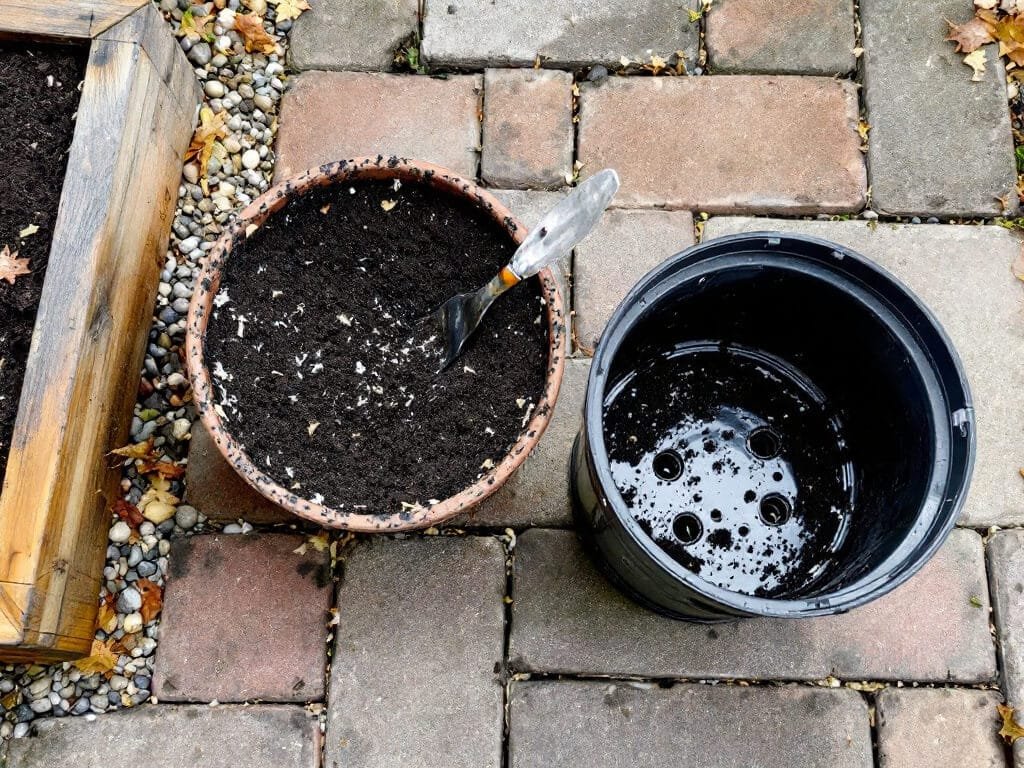
Pick a pot that is 10–18 inches deep and at least 12 inches across. That depth gives the roots room to produce, and the drainage holes are not optional. A 12-inch pot can hold up to four plants, but larger containers are more likely to keep plants going for more than one season. If you want the pot to last, go bigger.
For the cultivar, I’d choose a day-neutral type. These produce relatively few runners, which suits a pot, and they can fruit from mid-spring (May in many areas) until autumn frost. June-bearing types give one main crop in early summer. That’s fine if you want a single flush, but day-neutral plants spread the harvest out.
Be cautious with traditional strawberry pots, the tall jars with pockets down the sides. RHS notes they can be hard to keep productive. A plain round container is the easier choice.
Prepare the Container and Potting Mix
Check the drainage holes first. Strawberries need regular moisture, but the roots should never sit in standing water, so don’t use a pot that lets water pool around them.
Fill the pot with a fertile, freely draining mix. Oregon State’s tested recipe is 1 part perlite, 1 part finely ground fir bark, and 2 parts garden or potting soil. If fir bark is hard to find, any fertile, free-draining potting mix is the goal. The recipe is simply one that works.
If your mix doesn’t already contain fertilizer, work in a slow-release product labeled for container fruit. Oregon State gives a rate of 8 cups per cubic yard for its sulfur-coated fertilizer, but that figure is specific to that product and a bulk batch of mix. For a single pot, follow the label on whatever you buy.
Plant the Strawberries at the Correct Depth
Plant in spring, late summer, or early autumn. Late-summer or early-autumn planting lets the plants establish before the following year’s crop.
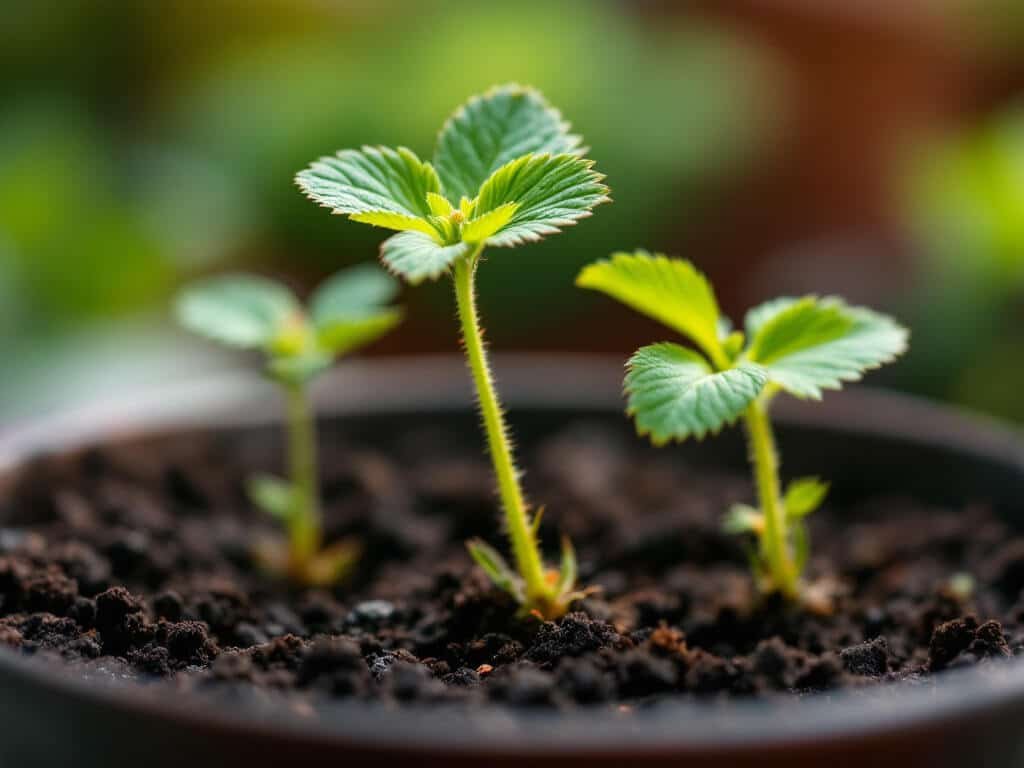
Space plants about 8 inches apart, which is how much horizontal room a compact plant takes up in a container. Set each one so the crown, the point where the roots meet the leaves, sits level with the surface of the mix. Do not bury the crown.
If you’re planting bare-root crowns, spread the roots out in the hole rather than bunching them. Firm the mix around them and water well afterward.
Place the Pot in Full Sun
Strawberries need full sun to grow productively and to ripen fruit properly. Set the pot where it gets sun for most of the day, in a sheltered spot out of strong wind.
One practical point: sun and heat dry containers out quickly. Put the pot where you’ll walk past it and where the hose or watering can is close. A pot you forget to check will wilt before you notice.
Water and Feed Consistently
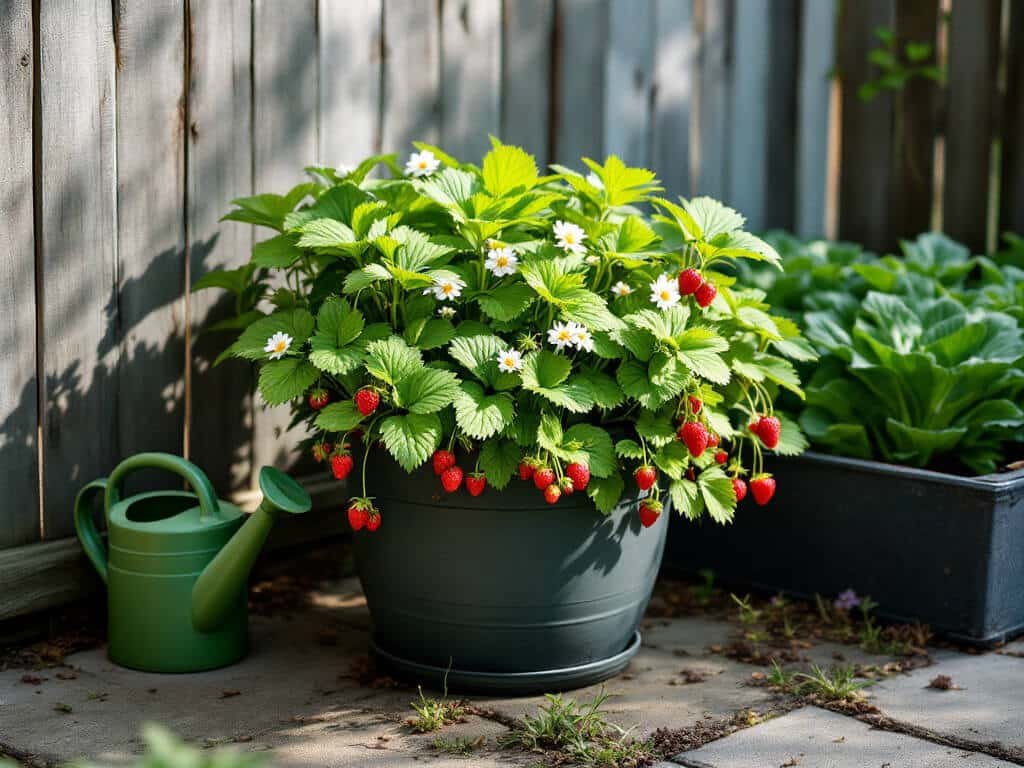
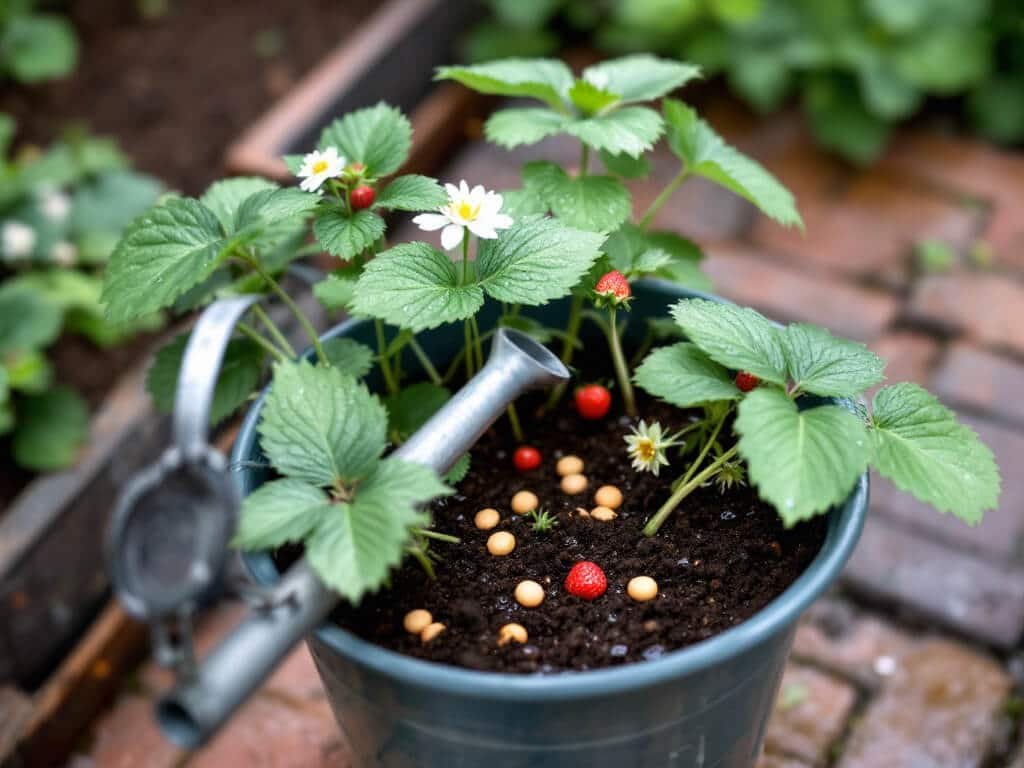
Water whenever the mix needs it, wetting the whole root zone thoroughly, and let excess drain away. In active growth and hot weather, a container may need watering several times a week. Check the mix with a finger rather than going by the calendar, since sun, heat, and pot size all change how fast it dries.
Feed throughout the growing season with a fertilizer suited to container fruit, following the product label. RHS specifically advises keeping container strawberries well fed. The mix in a pot holds a limited supply of nutrients, and regular watering flushes some of it out.
Remove Runners and Protect the Crop
Runners are the long stems that strawberries send out to make new plants. On potted plants, cut them off. Daughter plants hanging over the edge of the pot can’t root, and they draw energy from the parent plant. Day-neutral types make fewer runners, but you’ll still see some.
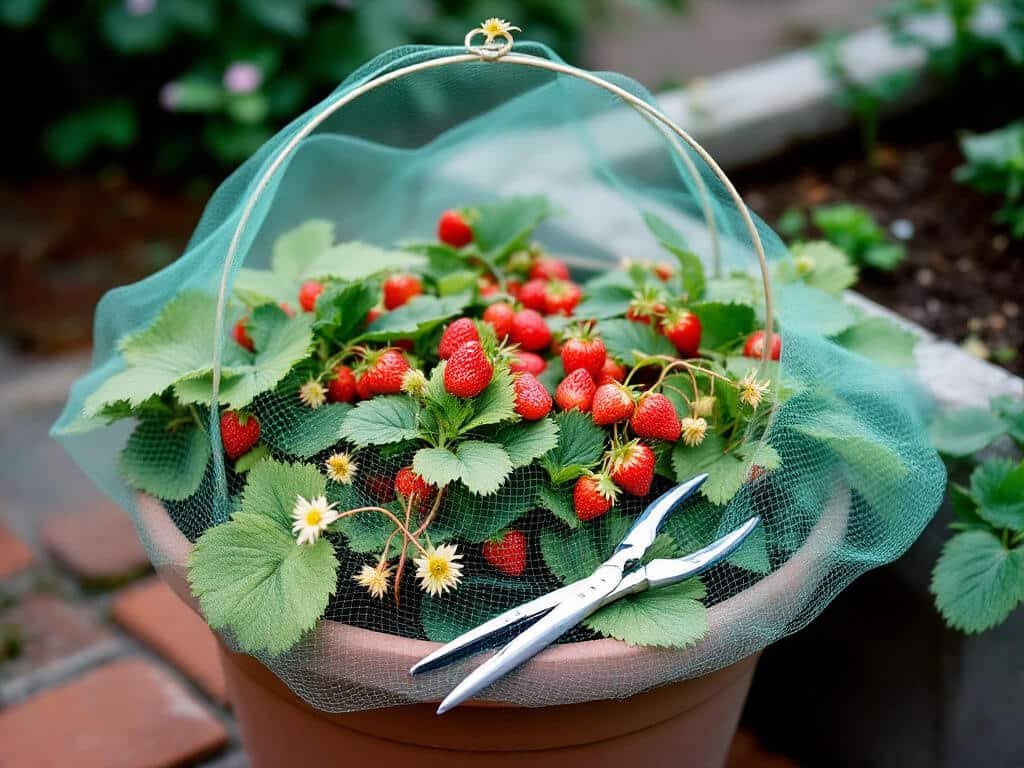
Then protect the fruit. Birds, slugs, and snails are the common strawberry pests. Use bird netting where birds are a problem. For slugs and snails, raise the container off the ground or use a suitable slug control.
Keep scissors or pruners clean, and take off any damaged or affected plant material as you spot it.
Common Problems
– Wilting or dry potting mix: Containers dry faster than garden beds, especially in sun and heat. Check moisture often, and move the pot somewhere watering is convenient.
– Yellowing, weak growth, or poor fruiting: Check that the container drains properly, then make sure the plants are being fed regularly through the growing season.
– Small crops in a crowded pot: Cut back the number of plants or move them to a larger container. Four plants in a 12-inch pot is the upper limit, and larger pots support better long-term growth.
– Gray mold on flowers or fruit: Crowded, poorly ventilated plants are more vulnerable. Improve spacing and airflow, remove affected material, and avoid conditions that keep foliage and fruit wet for long periods.
– Runners taking over: Cut them off, as described above.
– Bird or slug damage: Use netting for birds. Raise the pot or use suitable slug controls for slugs and snails.
When to Expect Results
Timing depends on the cultivar and when you plant. Spring-planted strawberries establish during the growing season. Plants set out in late summer or early autumn have time to establish before they crop the following year.
Day-neutral plants may fruit from mid-spring or May until autumn frost. June-bearing plants give one main crop in early summer.
Don’t plan on the same plants forever. RHS recommends replacing strawberry plants after about three years. Over winter, container roots are more exposed than roots in garden soil, which matters in the colder end of zones 5 to 9. A sheltered location, an unheated garage, or insulating material around the pot can all help.
FAQ
How many strawberry plants can go in a pot?
Oregon State says a 12-inch-diameter pot can hold up to four plants. Larger containers give more root space and are more likely to support plants beyond one season.
Can strawberries grow in a strawberry pot or hanging basket?
Yes, strawberries grow in pots and hanging baskets. RHS cautions that traditional strawberry pots can be difficult to keep productive, and Oregon State advises removing runners from any potted plant.
Should strawberry crowns be covered with soil?
No. Plant with the crown level with the surface of the potting mix. Burying the crown can interfere with plant health.