
The best marjoram companion plants are the ones that want the same hot, dry, fast-draining spot you’re already giving it. Pair it with something thirsty or something that spreads like a rumor, and one of the two plants ends up unhappy.
This guide sorts the good partners from the bad ones, with spacing for each. It covers both bed and container planting, since marjoram does well in either.
Why pairings matter for marjoram
Marjoram wants full sun, free-draining soil, and fairly poor ground. Neutral to alkaline soil suits it. Once established in the ground, it needs little supplemental water. Soggy soil is the thing to avoid, and overwatered seedlings can suffer from damping off.
That makes watering the real test of any neighbor. A plant that needs steady moisture will keep the soil wetter than marjoram likes, and a plant that spreads hard will crowd out its clump. Marjoram is a spreading clump, so it needs at least 8 in (20 cm) of clearance from neighboring plants.
Climate matters too. Sweet marjoram is tender and often grown as an annual where winters are cold. It’s best overwintered indoors in colder regions, so if you’re in the colder end of zones 5 to 9 and want to keep it going, grow it in a pot rather than the bed.
You’ll also see claims online that marjoram repels specific pests or boosts the yield of particular vegetables planted nearby. No extension source in the material reviewed verifies either one, so treat them as unproven. Choose neighbors for shared growing conditions, which is the part you can count on.
Best companion plants for marjoram
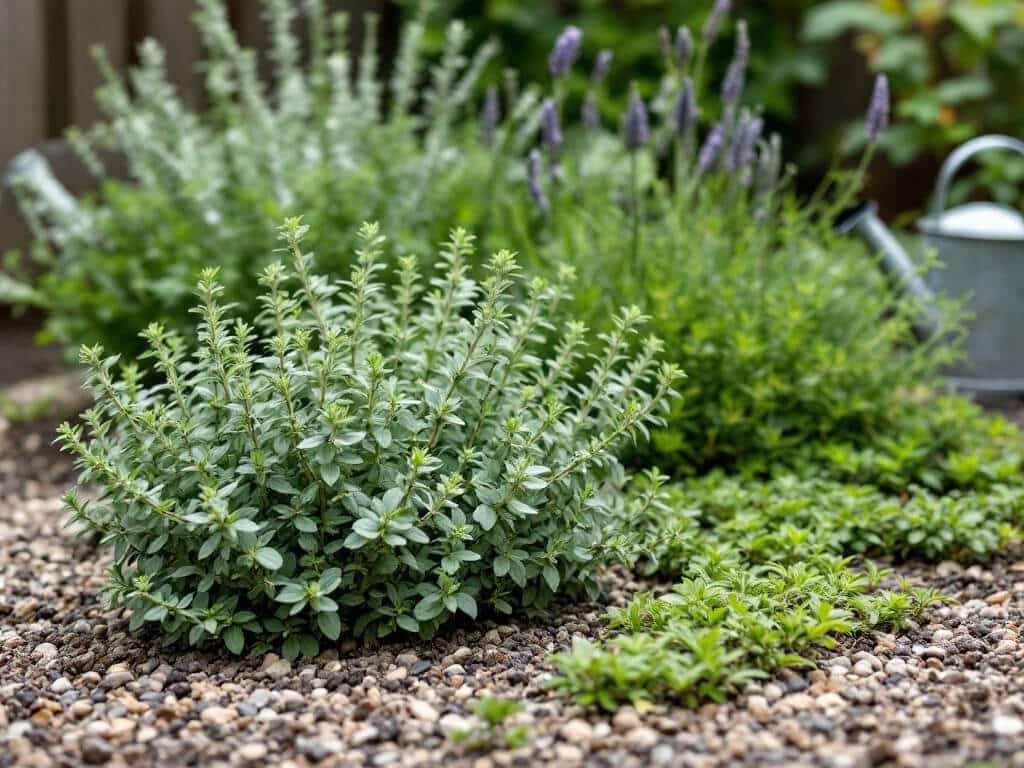
Most of the good partners are other Mediterranean herbs. They like the same sun, the same lean soil, and the same dry spells between waterings.
Sage
Sage shares marjoram’s sunny, dry, well-drained conditions, so neither plant fights the other over water. In a container, space plants 6 to 8 in (15 to 20 cm) apart. In a bed, leave at least 8 in (20 cm).
Thyme
Thyme is a low-growing herb with similar sun and drainage needs, which makes it an easy partner in a shared pot. Space plants 6 to 8 in (15 to 20 cm) apart in the container.
Rosemary
Rosemary wants the same warm, sunny, free-draining conditions. The catch is size, since it can overshadow lower-growing marjoram. Give it a larger container and keep it from shading the marjoram.
Oregano
Oregano shares marjoram’s growing conditions and can sit in the same herb planting. Both spread, so allow at least 8 in (20 cm) between them. Crowding two spreading herbs shortchanges both.
Winter savory
Winter savory is another Mediterranean herb that suits a sunny, well-drained container. Space it about 6 to 8 in (15 to 20 cm) from marjoram. It’s a good pick if you want a savory herb that follows the same watering schedule.
Summer savory
Summer savory is listed alongside marjoram among herbs that tolerate hot, dry conditions once established. Use the same 6 to 8 in (15 to 20 cm) container spacing and don’t let the pot get overcrowded.
Lavender
Lavender is compatible with marjoram’s sun and dry-soil preference. Give it enough room to reach mature size, and don’t let it crowd the marjoram clump. In a bed, this is one to plant with space to spare.
Wild marjoram (Origanum vulgare)
Wild marjoram has nectar-rich flowers that attract bees and butterflies, which adds pollinator value near your culinary marjoram. Allow room for its bushy growth. Don’t treat it like a close-spaced annual.
Basil
Basil is the one compromise on this list. It can share a sunny herb container, but it needs more regular water than marjoram. Plant basil toward the moister side of the pot and marjoram toward the better-drained side. If you can’t manage that split, give basil its own pot.
Mint (in its own pot)
Mint grows in similarly sunny conditions, but its aggressive spread makes sharing soil a bad idea. Keep it in a separate container set beside the marjoram. You get the herbs side by side without the root competition.
What not to plant with marjoram
The problems here come down to water, spread, and disease.
Mint planted in the same bed
Mint spreads aggressively and competes for space. In a shared bed it will push into marjoram’s clump. Grow it in a separate container instead.
Lettuce in the same low-water container
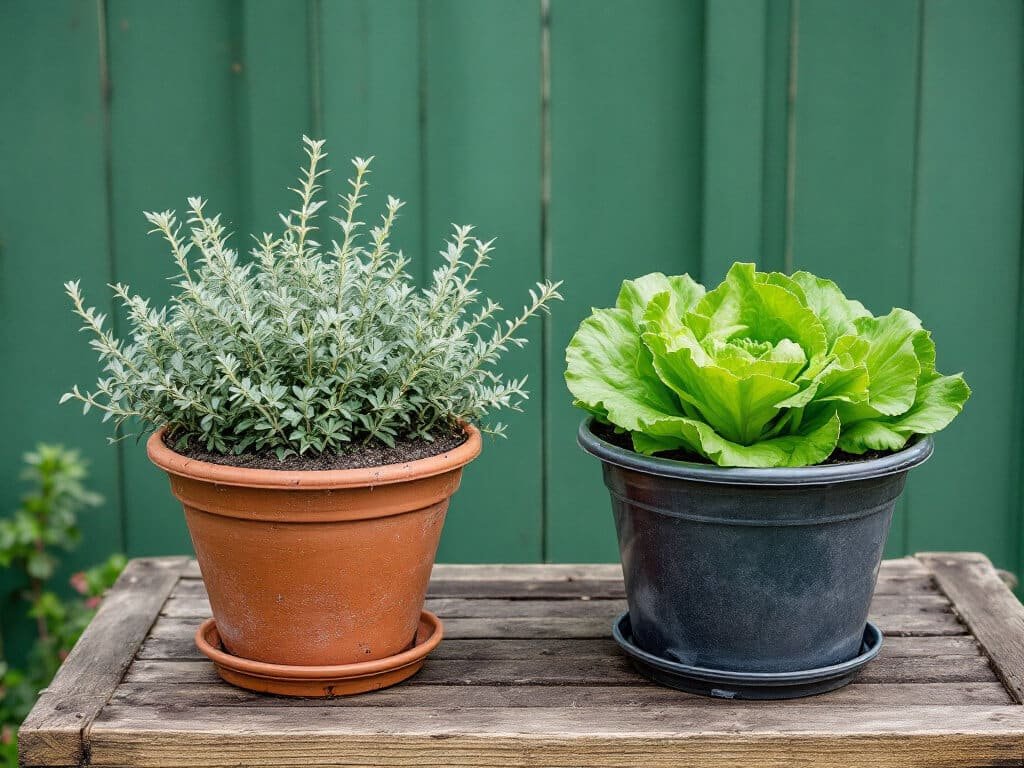
Lettuce generally needs more consistent moisture, while marjoram prefers free-draining conditions and shouldn’t sit waterlogged. Put them in one pot and one of them loses. Separate the watering zones and grow lettuce elsewhere.
Plants that need wet or poorly drained soil
Anything that wants constantly wet ground is a bad match. Marjoram needs free drainage and runs into trouble when the soil stays too wet. If a plant’s care tag says “keep evenly moist” or “tolerates wet feet,” put it in a different part of the garden.
Mint-family plants showing rust symptoms
Mint rust can affect marjoram, savory, and mint species. Do not plant rust-affected plants close to marjoram, and remove or isolate any that show symptoms. That applies to the savories you might otherwise pair it with, so check them before planting.
Layout and spacing
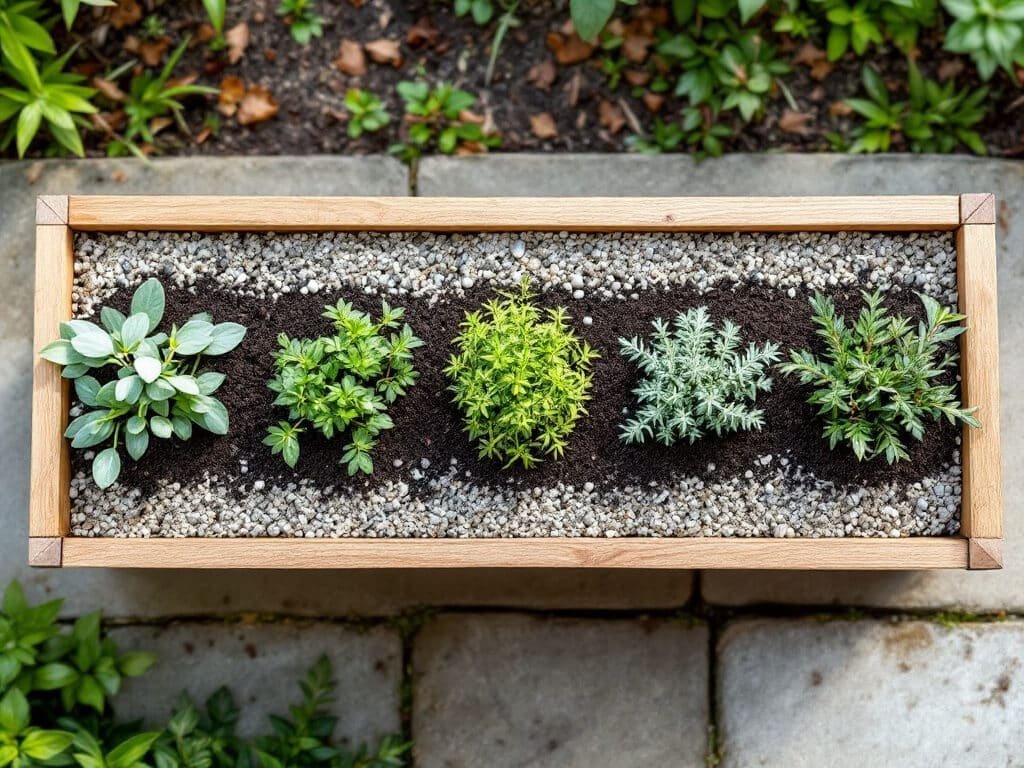
In a bed, put marjoram in the sunniest, fastest-draining spot you have and leave at least 8 in (20 cm) between its clump and its neighbors. In a container, stick to Mediterranean herbs and keep the pot well drained.
– Bed: place marjoram in the sunniest, fastest-draining position, with at least 8 in (20 cm) between it and neighboring plants.
– Container: use a pot at least 8 in (20 cm) deep with drainage holes.
– Container herbs: combine marjoram with sage, thyme, rosemary, oregano, or winter savory.
– Container spacing: allow about 6 to 8 in (15 to 20 cm) between plants.
– Rosemary: use a larger pot and keep it from shading the marjoram.
– Basil: if included, put it on the moister side of the pot and marjoram on the better-drained side.
– Mint: keep it in its own pot beside the marjoram.
FAQ
What grows well with marjoram?
Sage, thyme, rosemary, oregano, and winter savory are suitable choices. They share marjoram’s preference for sun and well-drained conditions.
Can marjoram and mint grow together?
They can sit near one another, but mint is best kept in its own container because it can spread aggressively. Both are also susceptible to mint rust, so diseased plants should be removed or isolated.
How far apart should marjoram be planted?
Plant marjoram at least 8 in (20 cm) from neighboring plants. For compatible herbs in a Mediterranean-style container, about 6 to 8 in (15 to 20 cm) between plants is the guidance.