
Jalapeno Companion Plants: What to Grow Nearby
Intro
Choosing jalapeno companion plants comes down to one constraint: the pepper needs full sun, about 18 inches of room from the next pepper, and steady soil moisture. Any neighbor you add has to fit inside those limits, or it costs you more than it gives.
The good news is that several plants fit easily. Marigolds, alliums, nasturtiums, beans, and a few others can share a bed with jalapenos without much fuss. The less good news is that the evidence for what they actually do for a pepper plant is thin, and I’ll be straight about that as we go.
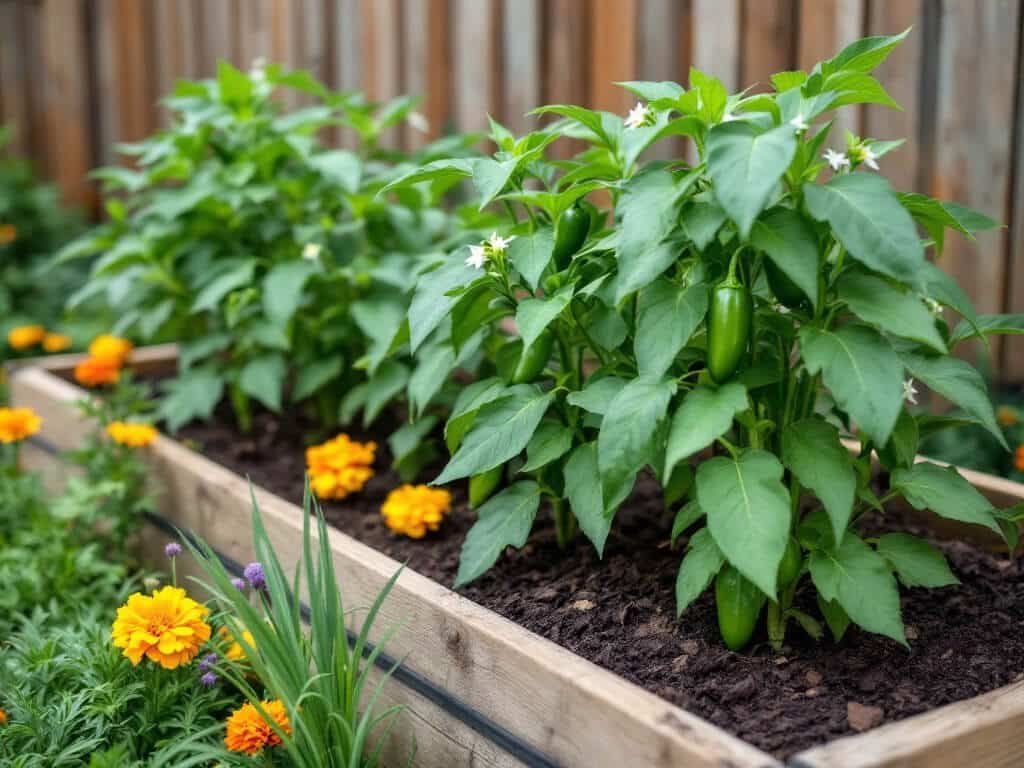
Why pairings matter for jalapeno
Jalapenos are warm-season annuals in zones 5 through 9. They need full sun, fertile and well-drained soil, and consistent moisture, with no drought swings and no waterlogged roots. They also dislike overhead watering, so pick neighbors you can water without soaking the pepper’s leaves.
The pests and problems you’re dealing with are aphids, cutworms, tomato hornworms, bacterial spot, viruses, blossom-end rot, and sunscald. A good pairing can add flowers for beneficial insects, use a different root zone, or give you something else to harvest from the same bed. It can’t fix a shady spot or a crowded bed.
One myth to clear up: companion planting is full of folklore. Extension sources reviewed for this article found nothing showing that any plant, grown beside a jalapeno, reliably improves its flavor, heat, yield, or pest resistance. Treat companions as a supplement to crop rotation, proper spacing, and checking your plants for problems, not a replacement for them.
Best companion plants for jalapeno
None of the sources give a pair-specific distance for jalapenos and each companion. The rule here is simple: keep jalapenos about 18 inches apart, and plant each companion at the spacing on its own seed packet or plant label.
Marigold
Marigolds may help deter nematodes and other pests that go after peppers, and their flowers can draw beneficial insects. Utah State University Extension lists peppers and marigolds as a companion combination. Keep jalapenos 18 inches apart and place marigolds where they won’t shade the pepper, which usually means the bed edge.
Garlic
Garlic is a strongly scented allium that may help repel common garden pests. It stays narrow and upright, so it doesn’t compete much for light. Plant it at its label spacing and keep the 18 inches between jalapeno plants intact.
Chives
Chives are another strongly scented allium with the same possible pest-repelling benefit as garlic. They’re a tidy edging plant and easy to harvest from. Use label spacing for the chives and don’t let the clump crowd the pepper’s base.
Onions
Onions are alliums that may deter some pests, and they take up a different plant form and harvest space than peppers. That makes them easy to tuck in. Follow the spacing for onion sets or seed, and don’t crowd the jalapeno’s root zone.
Nasturtium
Nasturtiums can help mask vulnerable crops from some pests and add habitat diversity to the bed. They sprawl, though, and I’d rather see one in a container beside the pepper than let it roam through the bed. Either way, give it its label spacing so it doesn’t overrun the jalapeno.
Basil
Extension guidance lists basil as a companion for tomatoes, but a benefit specific to jalapenos hasn’t been established. I’d grow it because you’ll use it in the kitchen, not because you expect it to protect the peppers. Use basil’s label spacing and keep its foliage from cutting down airflow around the pepper.
Beans
Legumes can fix nitrogen, though the sources don’t show a particular yield benefit for jalapenos. Beans are fine in the bed as long as they stay out of the way. Use the bush-bean or pole-bean spacing on the packet, and keep them from shading the peppers. Pole beans especially need to go where their height won’t land on the jalapenos.
Peas
Peas can add nitrogen to the soil, but a direct benefit to jalapenos isn’t established. Their real use is timing. Grow them as a cool-season neighbor before hot-weather pepper growth peaks, and follow the recommended pea spacing.
Sunflower
Sunflowers can attract pollinators and act as a wind or dust barrier, but they can also shade jalapenos, which is the bigger risk. Put them on the north side of the bed and follow the variety’s spacing. Peppers need full sun for best yields, so if a sunflower throws shade on them, move the sunflower.
Carrot
Carrots are listed among compatible mixed-crop combinations, and they occupy a different root zone than peppers. A jalapeno-specific benefit isn’t established. Follow carrot-row spacing and keep the pepper about 18 inches from other pepper plants.
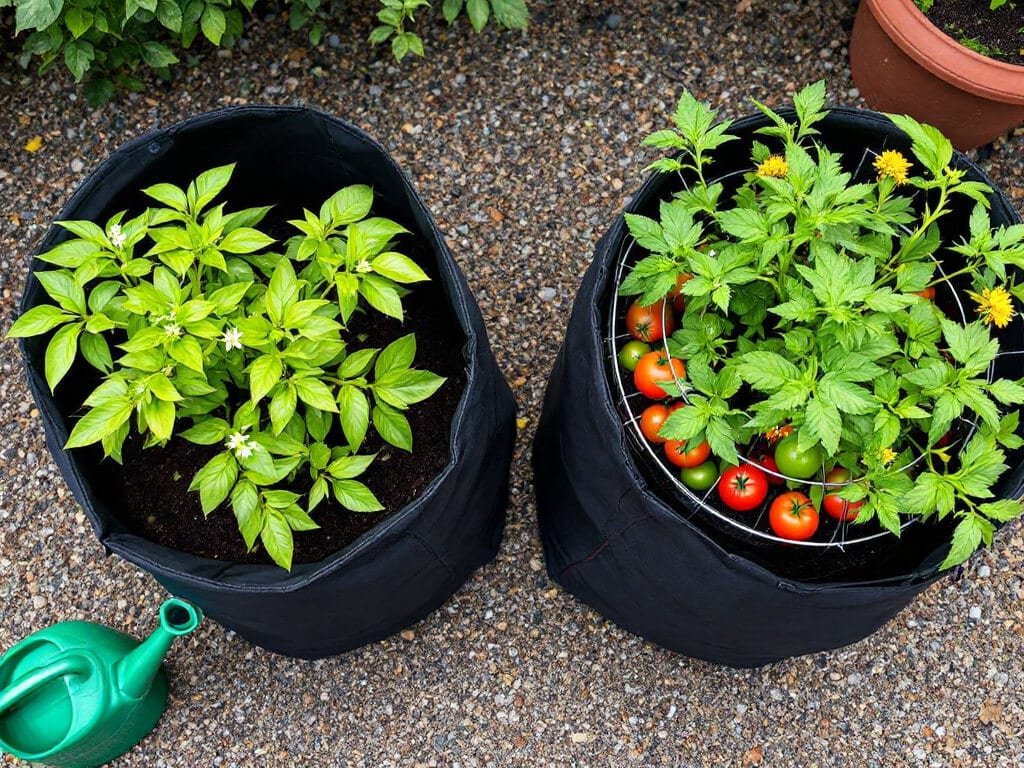
What not to plant with jalapeno
No extension source supplied a verified list of plants that are bad for jalapenos. What follows are practical cautions, not proven incompatibilities.
Other peppers, tomatoes, eggplants, potatoes, and tomatillos
These crops are related to jalapenos and share pests and diseases with them. Planting them together in the same spot year after year can raise disease risk. Don’t plant peppers where tomatoes, potatoes, peppers, eggplants, or tomatillos grew during the previous three or four years. Rotation matters more here than any pairing in this article.
Large, fast-growing plants south of the jalapenos
The problem is light, not chemistry. A tall plant on the south side of a pepper throws shade on it, and peppers want full sun. Put taller plants north of the jalapenos or grow them somewhere else.
Aggressive vining crops
Vines can compete with peppers for water, nutrients, and space if they’re allowed to cover the plant. Keep them out of the pepper’s root and canopy area and follow their recommended spacing. If a vine is already reaching over a jalapeno, cut it back or retrain it.
Layout and spacing
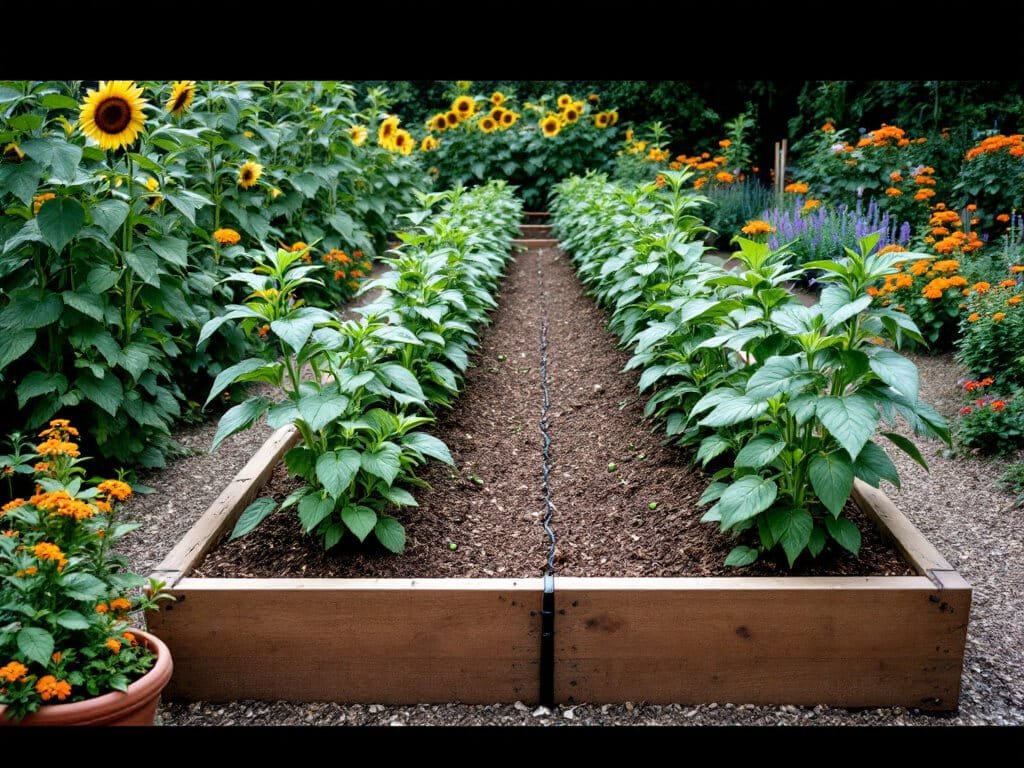
Plant jalapenos in full sun with about 18 inches between plants and 30 to 36 inches between rows. Taller companions go on the north side, short alliums and marigolds go along the edges, and anything that sprawls goes in its own container when space is tight.
- North side of the bed: sunflowers or pole beans, at their own label spacing
- Pepper rows: jalapenos 18 inches apart, rows 30 to 36 inches apart
- Bed edges: garlic, chives, onions, or marigolds, at label spacing
- Container beside the bed: nasturtium, so it can’t overrun the peppers
- Early in the season: peas, before hot-weather pepper growth peaks
Before you plant, check the seed packet or plant label for your jalapeno variety’s mature height and spread, since both vary by cultivar. The packet is also the most reliable source for days to maturity. If your companion list is longer than your bed, drop companions first and keep the pepper spacing.
FAQ
Which herbs can grow near jalapenos?
Basil, chives, and garlic can all go in a diverse garden near jalapenos. The sources give stronger general guidance for alliums than for any herb tested specifically with jalapenos. Keep each herb at its own recommended spacing and preserve full sun and airflow around the pepper.
Can jalapenos grow beside tomatoes?
They can share a bed, but tomatoes and peppers are related and have overlapping disease concerns. Extension guidance says to avoid planting peppers where tomatoes, potatoes, peppers, eggplants, or tomatillos grew in the previous three or four years. Rotating beats grouping them in the same spot every year.
Do marigolds protect jalapeno plants?
Utah State University Extension lists peppers and marigolds as a companion combination and says marigolds may deter nematodes and other pests. Treat that as a possible extra, not guaranteed protection. You still need to identify problems correctly and manage pests directly.