
Basil Companion Plants: What to Grow Together
Choosing basil companion plants is mostly a matter of separating what has been documented from what is just habit. Tomato has the best case. Marigold has some support. The rest are good neighbors because they want the same sun, soil, and water, not because they do anything special for basil.
Basil is a tender annual herb in the mint family, grown as a warm-season annual in zones 5-9. It wants full sun, at least 6 hours a day, and rich, light, well-drained soil that stays evenly moist. Anything you plant beside it has to be fine with those conditions and leave basil room to breathe.
Why pairings matter for basil
Basil’s main weakness is crowding. Fungal and root diseases show up when air doesn’t move and soil stays wet, so the wrong neighbor, planted too close, does more harm than any pest would. Good companions leave basil its 12-18 inches of spacing and its sun.
The second reason is pests, and here you should be careful. Extension sources dispute the idea that herbs simply “repel” insects. What basil appears to do is mask the scent of a neighboring plant or interfere with a pest’s egg-laying. That is a partial effect on specific pests, not a force field, so treat it as a bonus and keep watching your plants.
The third reason is plain use of space. Basil is slow to fill out early in the season, and some quick crops can use that gap before basil gets big.
Best companion plants for basil
Tomato
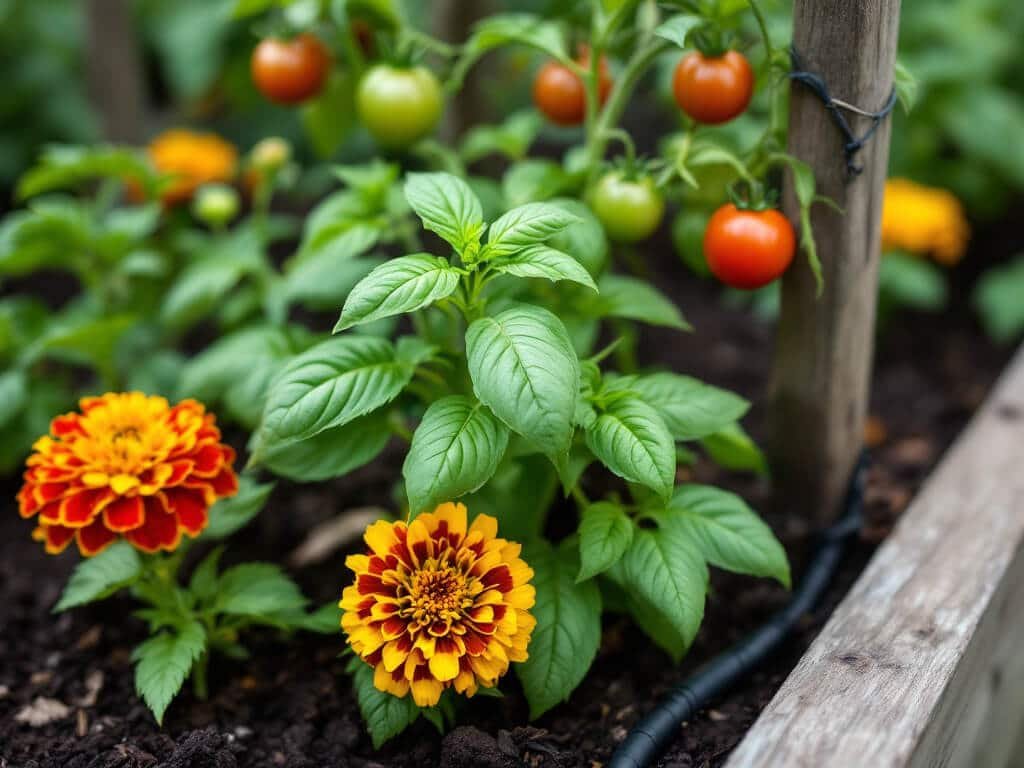
Tomato is the pairing with the most support. Basil can mask tomato scent from thrips and reduce egg-laying by tomato hornworm moths. Plant basil around the tomatoes rather than jammed against the stems, and keep basil plants 12-18 inches apart from each other.
Marigold
In some tomato field and greenhouse studies, basil and marigolds together reduced thrips. Marigolds also add flowers and variety to the bed. Give basil its 12-18 inches and leave enough room for your marigold variety’s mature spread, since that varies a lot.
Cucumber
Basil shows up alongside cucumbers in Royal Horticultural Society displays, but no specific pest benefit was established. It works as a sun-loving neighbor. Keep basil 12-18 inches from other basil and don’t let it get tangled in cucumber foliage.
Pepper
Peppers and basil like the same warm, sunny conditions and the same stretch of summer. No particular benefit between them has been verified, so this is a convenience pairing. Use the 12-18 inch basil spacing and keep air moving between the plants.
Lettuce
Basil can hold space early in the season before later crops fill in, which makes this a succession-planting pairing. Space basil 12-18 inches apart and don’t let it shade young lettuce. If the lettuce is struggling under basil leaves, the basil is too close.
Spinach
Spinach and basil can share a bed to save space, as long as you harvest the spinach before basil reaches full size. Space basil 12-18 inches apart and water enough to keep the soil moist without letting it sit soggy.
Carrot
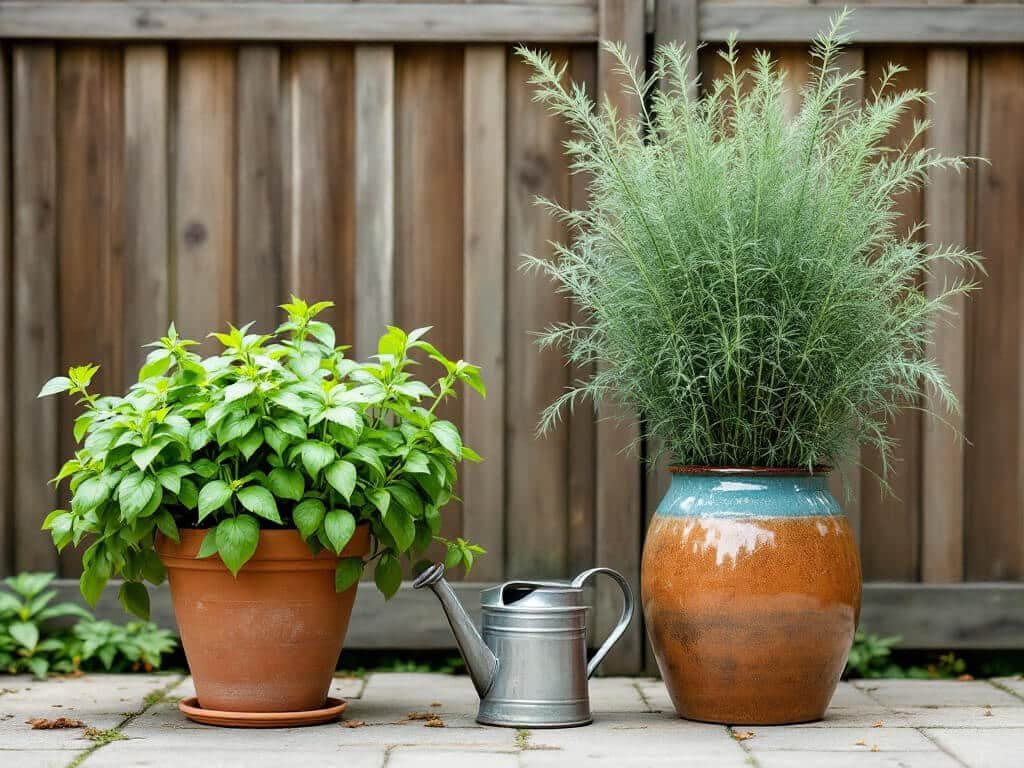
Carrots root in a different layer of soil than basil, so the two make efficient use of a bed. No basil-specific pest benefit was verified. Keep basil at 12-18 inches and be careful when cultivating near the carrots so you don’t disturb their roots.
Chives
Chives and basil both do well in a herb bed with full sun and fertile, well-drained soil. No specific benefit between the two was verified. Keep them far enough apart for airflow and for getting your hands in to harvest, with basil at 12-18 inches.
Parsley
Parsley grows under the same general herb-garden conditions as basil. Again, no specific benefit was verified, so this is about shared habits. Give basil 12-18 inches, and watch the watering in a shared container or bed, since overwatering is the easy mistake.
Dill
Dill and basil are both warm-season edible herbs, and dill adds flowers if you let it bloom. Place dill where its mature height won’t shade the basil, and keep the basil’s 12-18 inch spacing. Dill is the one on this list most likely to block light, so put it on the side the sun comes from last.
What not to plant with basil
No plant could be verified as a consistently bad companion for basil. The extension and Royal Horticultural Society sources describe documented benefits, resource competition, and the general limits of companion planting, but they don’t give a reliable blacklist. I’d be wary of any list online that claims otherwise without a source.
What does go wrong is a set of conditions, not a particular plant. These are the three to avoid.
Anything that shades basil
Basil needs at least 6 hours of bright light. A tall or leafy neighbor that cuts into that, such as dill left to grow tall, will hurt basil no matter how well the two get along otherwise. Put the taller plant on the north side.
Anything that crowds basil
Poor airflow encourages fungal and root disease. If a neighbor’s foliage touches or overlaps basil, move one of them. This applies to cucumber vines and to fast-growing greens alike.
Anything with different water needs
Basil wants soil that is consistently moist but well drained. A plant that needs to dry out between waterings, or one that sits in a wet spot, will leave one of the two unhappy. This matters most in containers, where you can’t give each plant its own watering schedule.
Layout and spacing
In a bed, treat tomato as the main pairing and plant basil around it, not tight against it. Keep basil plants roughly 12-18 inches apart. Don’t pack basil tightly to fit in more companions, because poor airflow and wet soil are what bring on its fungal and root problems.
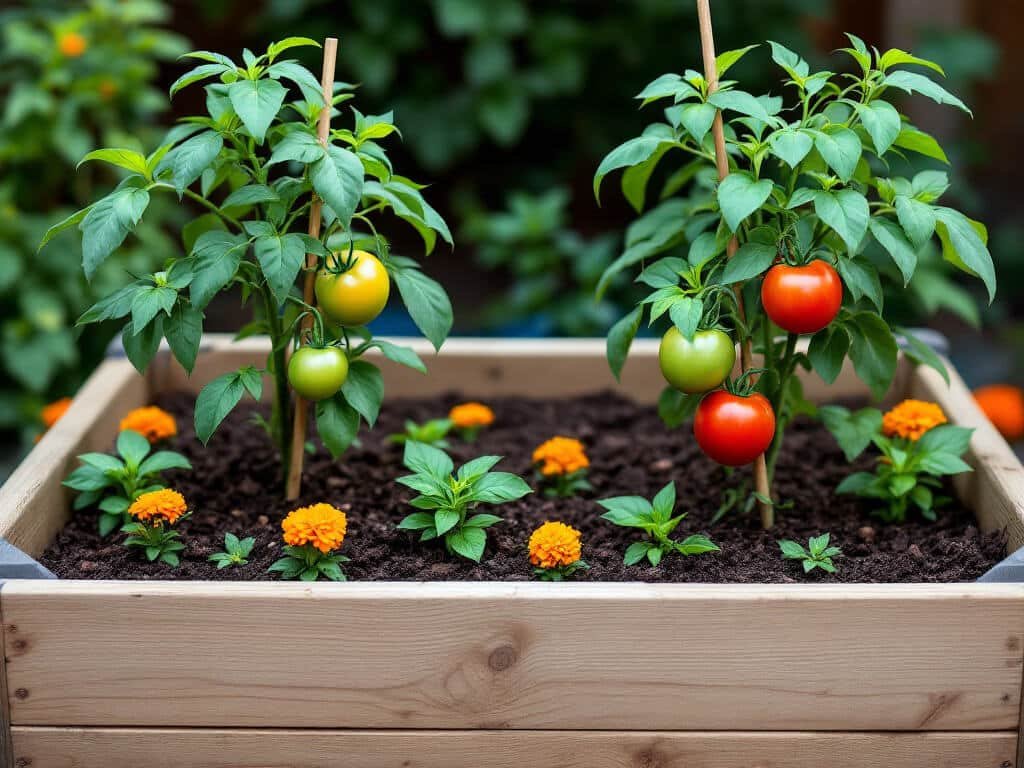
Tomato bed: Set basil around the tomatoes, with 12-18 inches between basil plants. Add marigolds in the gaps, leaving room for their mature spread.
Succession bed: Plant basil with lettuce or spinach early in the season. Harvest the spinach before basil gets large, and keep basil from shading the lettuce.
Herb bed: Use chives, parsley, and dill with basil at 12-18 inches. Put dill where it won’t cast shade on the basil.
Root crops: Pair basil with carrots, and cultivate gently to avoid damaging the carrot roots.
Containers: Combine basil only with plants that tolerate the same sunny, warm, moisture-retentive but well-drained conditions. Avoid packing foliage tightly.
Pinch off flower buds as they form to keep basil producing leaves. If you let it flower, open blooms can attract sweat bees, which is fine if you want them but worth knowing before you put basil next to a path.
FAQ
Does basil really repel tomato pests?
Not exactly. Basil can mask tomato odors from thrips and interfere with tomato hornworm egg-laying, but extension research doesn’t show it reliably repels insects.
Can basil and marigolds be planted together?
Yes, they share sunny conditions, and studies found the pair reduced thrips in some tomato-growing conditions. Treat that as a possible benefit, not a guarantee for every garden.
How far apart should basil plants be?
Space basil 12-18 inches apart to support good airflow. Use that as a starting point in beds, and don’t overcrowd containers.