
Daffodil Companion Plants for Spring Garden Color
Choosing daffodil companion plants is mostly a matter of two jobs: covering for the leaves after the flowers fade, and matching the conditions daffodils already like. Daffodils want fertile, well-drained soil, full sun to light shade, and even moisture while they are growing. Anything that needs something very different will either fail or drag the bulbs down with it.
This guide covers what works around daffodils, what to keep away from them, and how to lay it out in a bed or container.
Why Pairings Matter for Daffodil
Daffodils bloom in spring, and then the show is over. The leaves stay behind, going from green to yellow to floppy, and they have to stay in place until they yellow on their own. That is the main reason to plant companions: something else needs to be happening in the bed while the foliage does its work.
Pairings also protect the bulbs. The sources I’m working from point to waterlogged soil and overcrowding as the conditions that raise the risk of bulb and foliage problems. No single pest or disease stood out as the usual backyard culprit. So a good companion is one that doesn’t demand extra water and doesn’t crowd the bulbs.
Daffodils are commonly grown in USDA zones 3 to 9, though hardiness varies by cultivar, so check the bulb label for your area. Size varies too. Dwarf types can be under 6 inches tall, while many standard daffodils reach about 12 to 24 inches. Check the mature height of your cultivar before you decide what goes in front of it.
Best Companion Plants for Daffodil
Most of the spacing advice here is “follow the label,” and that is deliberate. The research I have found no reliable daffodil-specific spacing numbers for these pairings, and I’d rather say so than make up a figure. Plant each companion at its own recommended depth and spacing, and keep the whole planting from getting crowded.
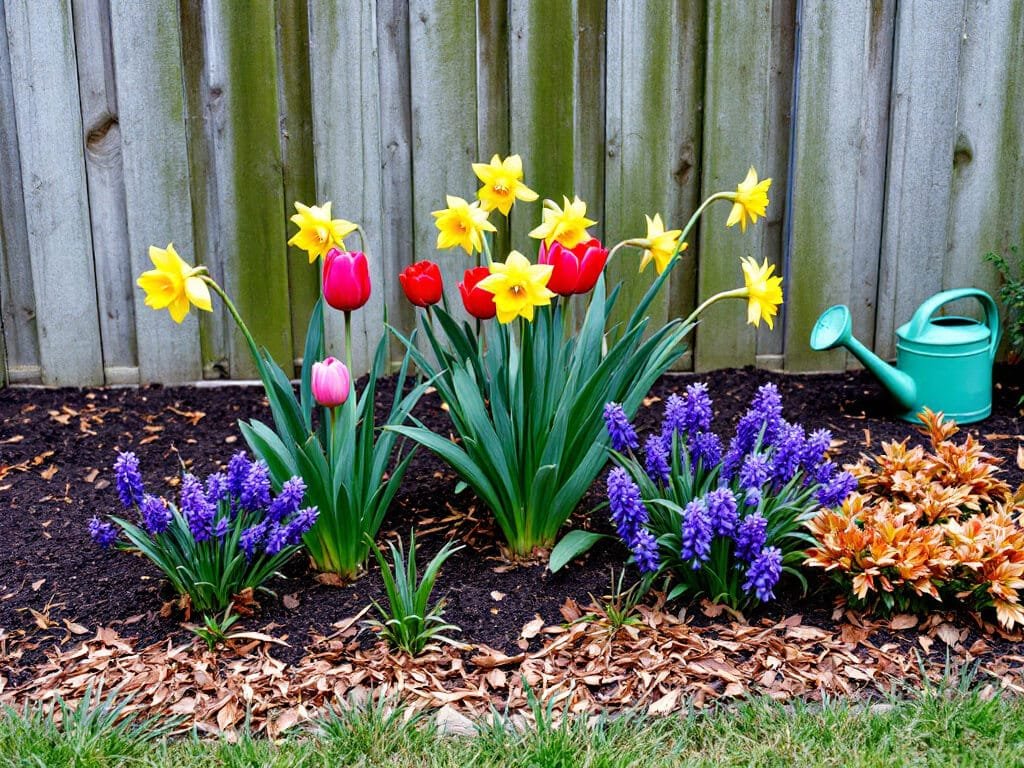
Snowdrops
Snowdrops share the early-spring bulb display and a similar seasonal growth pattern, so they fit into the same part of the calendar. Plant them according to their own bulb label. No daffodil-specific spacing was found.
Tulips
Tulips add another layer of spring bulbs, with different flower forms and colors against the daffodil trumpets. Space them by cultivar and package directions rather than assuming they want the same room as daffodils.
Grape Hyacinth (Muscari)
Muscari stays low and gives purple-blue contrast beneath or around daffodils. Use the spacing on the bulb label. No universal spacing between Muscari and daffodils was found.
Siberian Squill (Scilla)
Scilla brings blue spring color in a lower-growing form, which keeps it out of the way of daffodil leaves. Follow the bulb label for spacing, and don’t let the combined planting get overcrowded.
Hyacinths
Hyacinths add strongly contrasting color and a very different flower shape. Use label spacing for the hyacinths, and keep the daffodils themselves about 4 to 6 inches apart in the ground where that range suits your cultivar.
Polyanthus Primrose
Polyanthus primroses give spring bedding color alongside or after the daffodils bloom. Plant them according to the primrose label, and leave enough room for the daffodil foliage to mature without getting buried.
English Daisy (Bellis)
English daisy adds low color around taller daffodil foliage, so the two don’t compete for the same airspace. Use the plant’s recommended spacing. No verified daffodil-specific figure was found.
Wallflower (Erysimum)
Wallflower extends the spring display with a compatible bedding layer. Follow its spacing guidance, and keep it from blocking the daffodil foliage.
Spring-Flowering Perennials Selected for Later Bloom
This one is a category, not a single plant. Perennials that bloom after the daffodils can pull the eye away from the yellowing leaves. Pick ones with the same sun and drainage needs as daffodils. I can’t give a general spacing figure, so use the tag on whatever you choose.
What Not to Plant With Daffodil
The common thread is that daffodils want well-drained soil and decent light. Anything that pushes the bed toward soggy or dark works against them.
Plants Requiring Constantly Wet Summer Soil
Daffodil bulbs need well-drained conditions and dislike waterlogging. A thirsty companion that needs heavy irrigation can leave the bulbs sitting in wet soil. Skip anything that can’t get through a drier summer.
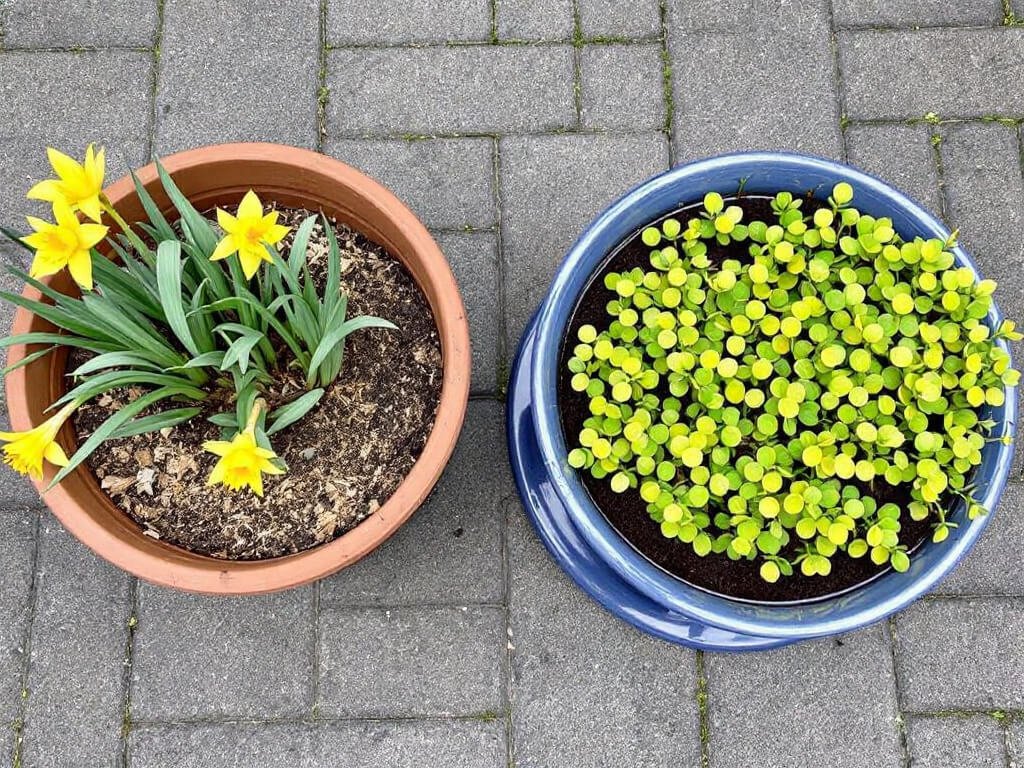
Dense, Competitive Groundcover Directly Over Bulbs
A thick groundcover planted right on top of the bulbs restricts space and airflow. The RHS advises against overcrowding daffodil bulbs, and a dense mat is a quick way to do it. If you want something low, choose the small spring plants above and leave gaps.
Deep-Shade Plants in the Same Exposure
Daffodils in poor light can produce foliage without flowers. A companion that needs deep shade means putting both plants in a spot where the daffodils are likely to underperform. Daffodils want sun to light or dappled shade, so pair them with plants that agree.
Plants With Incompatible Watering Schedules in Containers
In a pot, the mismatch shows up faster. Daffodils need moisture while they are actively growing but shouldn’t sit in saturated mix. A companion that needs frequent watering can keep the whole container too wet, so choose container partners that tolerate the same well-drained mix.
Layout and Spacing
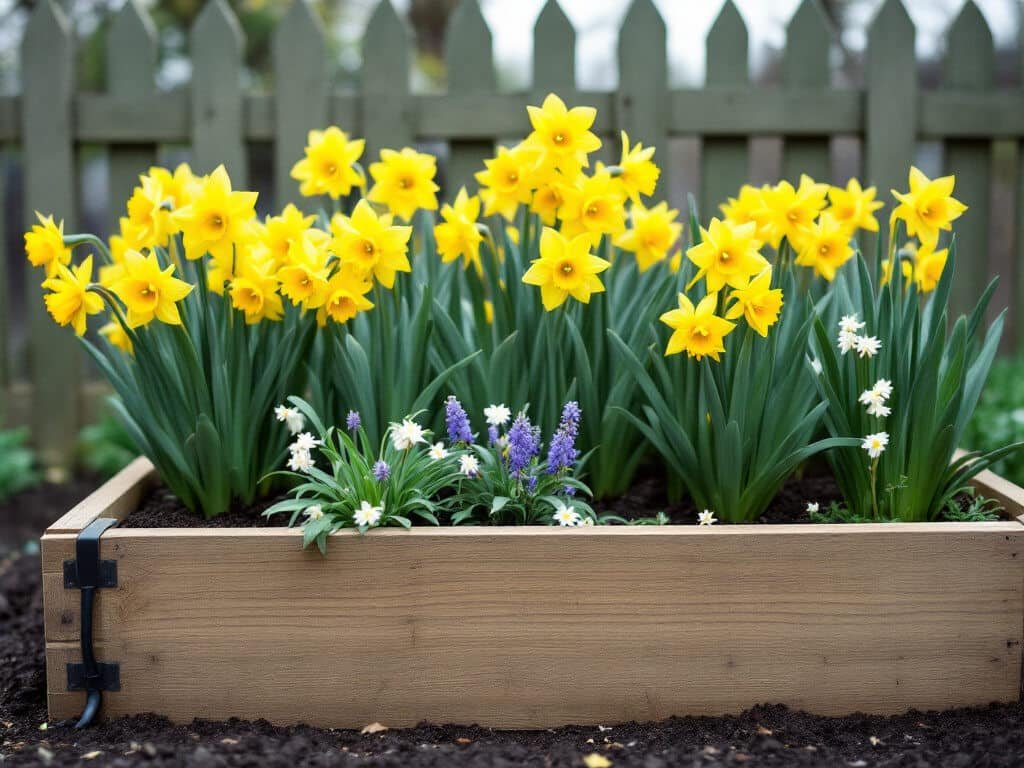
In beds, put daffodils in bold groups toward the middle or back of a border, then tuck lower spring bulbs or bedding plants around them. The goal is to leave the foliage uncovered, since the leaves need light until they die back. Don’t cut the leaves back until they have yellowed naturally.
– Plant daffodil bulbs in fall, before the ground freezes.
– Allow about 4 to 6 inches between standard daffodil bulbs, where that spacing suits the cultivar.
– Plant lower companions (Muscari, Scilla, Bellis, polyanthus, wallflower) around the daffodil clumps, not on top of them.
– Set later-blooming perennials where their new growth will mask the fading daffodil leaves.
– In containers, use a well-drained mix and companions that accept the same spring moisture. Temporary displays can be planted more closely than in-ground bulbs, but follow the container or bulb-label guidance.
FAQ
Can daffodils grow with tulips?
Yes. Gardening sources list tulips as a visually effective spring companion for daffodils. Plant each bulb at its own recommended depth and spacing.
What should not be planted with daffodils?
Avoid companions that need waterlogged soil, deep shade, or consistently heavy summer irrigation. Daffodils do best in fertile, well-drained soil with sun or light shade.
Can I plant daffodils with low-growing flowers?
Yes. Low spring plants such as Muscari, Scilla, polyanthus, Bellis, and Erysimum can add color around daffodils. Keep them from smothering the foliage, which has to stay green until it yellows on its own.