
Kangaroo Paw Companion Plants for Sunny, Dry Gardens
The best kangaroo paw companion plants are the ones that want the same thing it wants: full sun and soil that drains fast. Get that match right and most other problems stay small. Get it wrong and you end up watering one plant to keep the other alive.
This list is built on cultural matches, meaning plants with the same light, water, and soil needs. That’s the honest basis for any pairing here, and I’ll flag where the research stops.
Why pairings matter for kangaroo paw
Kangaroo paw is an evergreen, clump-forming perennial that grows from rhizomes. It wants full sun, regular water to support flowering, and excellent drainage. Established plants handle dry spells, but they don’t handle sitting in wet soil. A neighbor that needs frequent watering puts that water right at the kangaroo paw’s roots.
Size is the other variable. Kangaroo paw ranges from compact types to plants that reach about 6 feet in favorable climates, so what counts as a good neighbor depends on which cultivar you bought. Read the plant tag before you place anything next to it.
Climate matters too. Kangaroo paw is commonly listed as hardy to about zone 10, and some cultivars are reported to survive in zone 9. The available sources verify reliable outdoor growing mainly in warm climates. If you garden in zones 5 through 8, check the hardiness of your specific cultivar before planting it in the ground. Kangaroo paw is also reported to do well in containers, which gives you more control over both drainage and placement.
One myth to drop: you will see claims that certain companions repel kangaroo paw pests, fix nitrogen for it, or follow a set spacing formula. No extension or botanical garden source I could find supports any of that. No specific pest or disease list was verified for kangaroo paw either, so any “this herb protects it” claim has nothing behind it. Pick companions for matching conditions and nothing more.
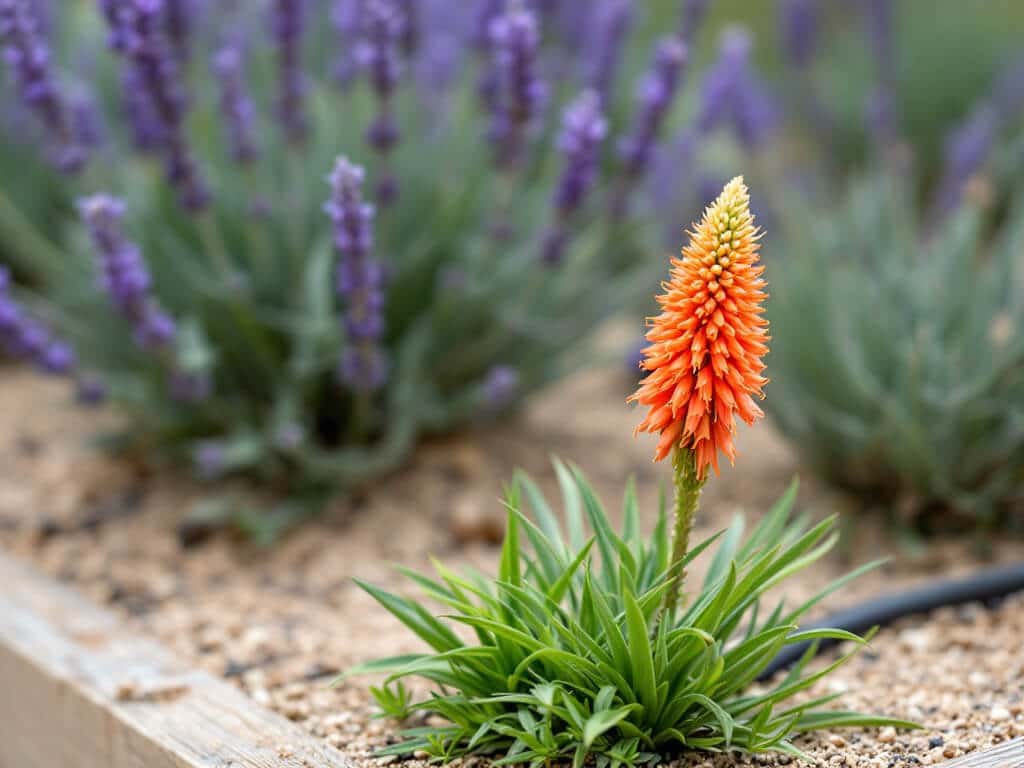
Best companion plants for kangaroo paw
None of these has been tested specifically as a kangaroo paw partner. They earn their spot by sharing its sun and drainage needs. No verified spacing exists for any of them, so use the mature width listed for the cultivar you buy and leave the kangaroo paw’s crown uncrowded.
Lavender
Lavender wants full sun and sharply drained soil, the same setup kangaroo paw does. That makes it the safest woody-herb pairing for a dry bed. Spacing depends on the mature size of the lavender cultivar and the kangaroo paw cultivar, not a universal rule.
Rosemary
Rosemary prefers sunny, well-drained soil, so it shares the watering schedule rather than fighting it. It’s a larger plant than most on this list, so place it where its mature size won’t shade or crowd the kangaroo paw. Set the distance by the tag, since no fixed number is verified.
Sage
Sage suits sunny, dry, well-drained planting sites. It gives you a mounded plant that doesn’t ask for extra water. Check the mature width of your sage and kangaroo paw and plant with that in mind.
Thyme
Thyme stays low and tolerates sunny, sharply drained conditions, so it fills the ground layer around the edge of the bed. Keep it at the outer margin rather than right up against the crown. No specific spacing is verified, so go by the cultivar’s spread.
Oregano
Oregano covers a low, spreading zone and tolerates dry, well-drained soil. That spreading habit is useful as a ground layer, but keep an eye on it, because a plant that runs can compete with the rhizomatous clump. Give it room at the edge and trim it back if it creeps in.
Yarrow
Yarrow adds upright-to-mounded structure to a dry, sunny bed. It works as a middle layer between low herbs and the kangaroo paw’s taller flower stems. Spacing isn’t verified, so follow the mature width of the variety you choose.
Penstemon
Penstemon brings tubular flowers and a sunny, well-drained setting that suits kangaroo paw. It adds flower interest without changing the water plan. Space by the cultivar’s mature size, since no fixed distance is established.
Salvia
Salvia adds flowering structure in a full-sun planting with good drainage. It’s a flexible pick because there are many sizes, so you can match one to the height of your kangaroo paw. Use the tag width for spacing.
Blue fescue
Blue fescue contributes fine-textured foliage and suits sunny, well-drained conditions. Its narrow leaves contrast with the kangaroo paw’s strappy foliage and fuzzy flower stalks. Set it a bit back from the crown, using the cultivar’s listed spread.
California poppy
California poppy fits a sunny, dry planting style and fills open space around the clump on a seasonal basis. It’s the one on this list that comes and goes, so it won’t permanently crowd anything. No spacing is verified, so scatter or place it with the open ground around the crown in mind.
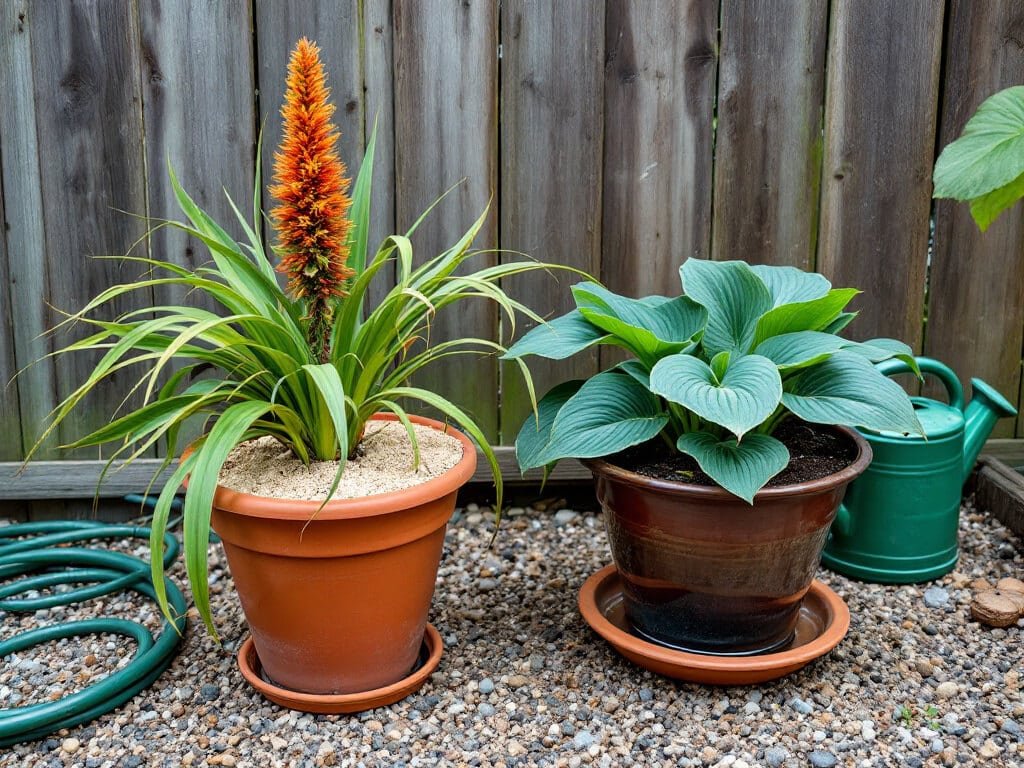
What not to plant with kangaroo paw
The list of poor matches is shorter, and it follows the same logic: anything that changes the water, light, or space around the clump.
Plants that need constantly wet soil
Kangaroo paw needs excellent drainage and may suffer in persistent wetness. Any plant that wants steady moisture will push you to water more than the kangaroo paw can take. No specific plant list was verified, so judge by the plant’s own water needs. If a companion likes consistently moist soil, give it a separate pot.
Plants that need shade
Kangaroo paw needs full sun, so a shade-lover is a bad fit unless it’s planted in a separate spot with different light. You can’t solve this with watering or fertilizer. Put shade plants somewhere else in the yard.
Heavy feeders grown with high-phosphorus fertilizer
Kangaroo paw guidance advises avoiding phosphorus fertilizers. That’s a management conflict, not a proven plant-to-plant problem. If a neighbor needs regular feeding with a high-phosphorus product, it’s hard to keep both plants happy in one bed. Keep them apart or choose a lower-demand companion.
Aggressive spreaders
A fast spreader can compete for space around a rhizomatous clump. No specific species was verified as a problem in the research, so this is a general caution. If you plant anything that runs, like oregano, keep it trimmed back from the crown.
Layout and spacing
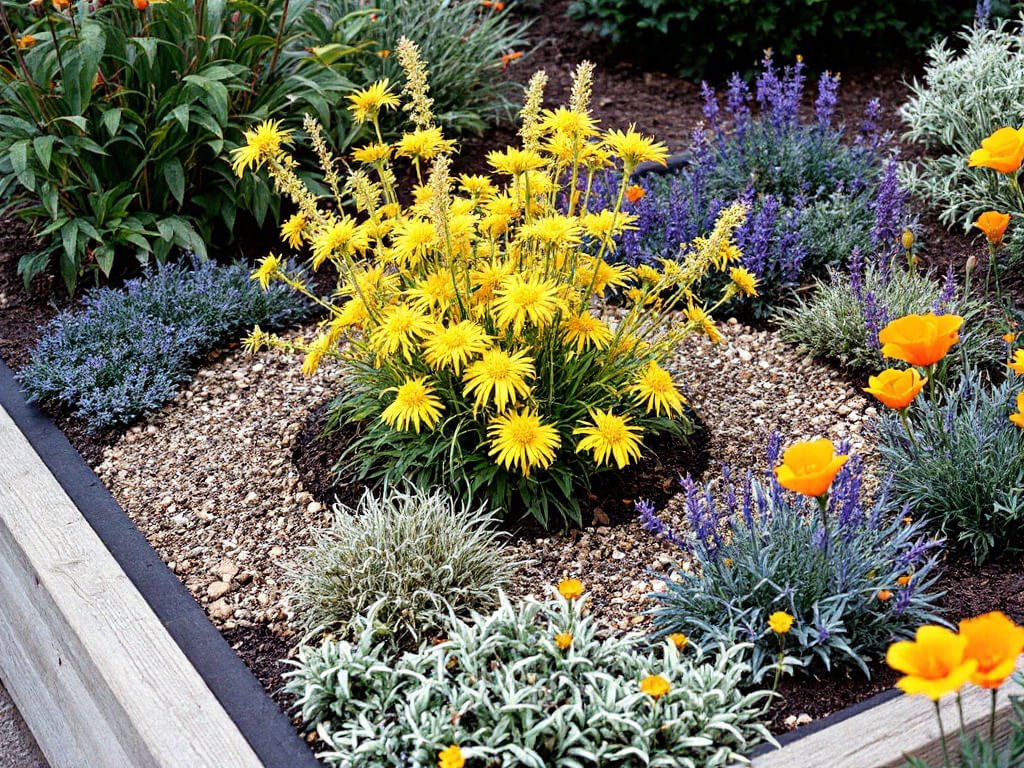
Put the kangaroo paw in the sunniest, fastest-draining part of the bed or container. Plant low, drought-tolerant companions around the outer edge, not crowding the crown. No fixed spacing formula is verified, so base distances on the mature size of the cultivars you buy.
Center: kangaroo paw, in the sunniest and best-drained spot
Middle ring: upright or mounded plants such as yarrow, penstemon, or salvia, spaced by their listed mature width
Outer edge: low plants such as thyme, oregano, or blue fescue, kept back from the crown
Seasonal fill: California poppy in open ground around the clump
Containers: only plants with similar drainage and watering needs, and a separate pot for anything that wants moist soil
FAQ
Can lavender grow with kangaroo paw?
Yes, it’s a reasonable match because both prefer full sun and well-drained soil. Set the spacing by the mature size of the cultivars you pick, since there’s no universal kangaroo paw rule.
What plants should not share wet soil with kangaroo paw?
Any plant that needs constantly moist or poorly drained soil. Kangaroo paw performs best in sharply drained soil and may suffer in persistent wetness.
Can kangaroo paw grow in containers with other plants?
Yes, as long as the container has excellent drainage and every plant has similar light and watering needs. Kangaroo paw is reported to do well in containers, but no universal container size or companion spacing is verified.