
Mustard Companion Plants: What to Grow Nearby
Picking mustard companion plants mostly comes down to one problem: flea beetles. Mustard is a cool-season leafy green in the cabbage family (Brassicaceae), and it is listed among the crops with high insect pressure. The right neighbors can help you manage that pressure, and the wrong ones can make it worse.
The evidence is thinner than most companion planting charts suggest. Extension sources back a handful of plants with specific roles, mostly in flea-beetle management, and they do not support long lists of proven mustard-specific pairings. This article sticks to what they do support and tells you where the gaps are.
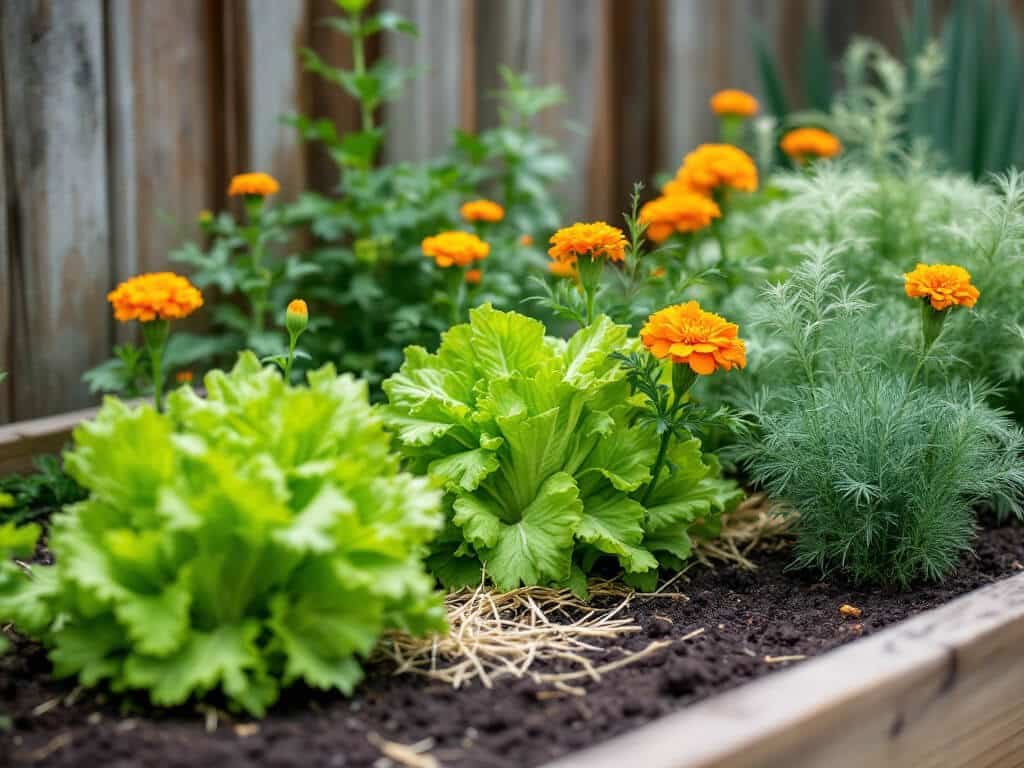
Why pairings matter for mustard
Mustard grows fast. You can start cutting leaves about 25–45 days after planting, and under good conditions you can keep cutting for roughly 2–3 weeks. That short window means flea beetle damage in the first few weeks matters a lot, because a young plant has little leaf to spare. Mustard also wants full sun, fertile well-drained soil, and steady water. Drought and heat stunt it and push it to bolt, so a neighbor that crowds it or competes for water works against you.
Two myths are worth clearing up. First, companion planting does not reliably repel every mustard pest. Extension guidance calls it “not a precise science,” with results that vary from garden to garden, and flea-beetle control often takes row covers, monitoring, sanitation, planting timing, or trap crops on top of any pairing.
Second, not every Brassica is a bad neighbor in some absolute sense. The evidence points to shared pests and diseases, not chemical incompatibility. The real concerns are packing too many susceptible hosts into one spot and growing the same family in the same soil year after year.
Best companion plants for mustard
None of these has a mustard-specific spacing figure in the research. Follow the seed packet or extension spacing for each plant, and give both crops room to reach their full size.
Radish
Radish can work as a flea-beetle trap crop when you plant it ahead of the main crop. The idea is that the beetles feed on the radish and leave more of the mustard alone. Use the spacing on the radish seed packet rather than a universal companion distance.
Daikon radish
Daikon is a documented flea-beetle trap crop. Plant it 2–4 weeks before the crop you want to protect, so it is up and attractive to beetles first. Space it according to daikon’s own guidance, since it is a bigger plant than a standard radish.
Chinese southern giant mustard
This is a trap crop, not a repellent. Its job is to concentrate flea-beetle feeding away from your edible mustard, so keep it separate from the plants you plan to eat. Use the cultivar’s seed packet for spacing.
Pacific Gold mustard
Pacific Gold is another documented trap-crop cultivar. Use it only as a deliberate strategy, with its own spot and its own cultivar-specific spacing. If you plant it mixed in with your eating mustard, you lose the point of a trap crop.
Pak choi
Pak choi is listed as a flea-beetle trap-crop option. It is also a Brassica, so it shares pest and disease risks with mustard. I’d treat it as a sacrificial planting kept apart from the mustard you want to harvest, not as a friendly neighbor.
Bunching green onions
Bunching onions are identified as a companion crop used in flea-beetle management. The source gives no mustard-specific distance, so go by the onion seed packet or sets. They are not Brassicas, which makes them a low-risk pick for a mixed bed or container.
Dill
Dill is also named as a companion crop in flea-beetle management. It gets tall, so check the mature size on the seed packet and keep it from shading or crowding the mustard. Like onions, it is a reasonable non-Brassica choice for a small planting.
Marigolds
Marigolds are named in flea-beetle management and are also flowers that may support beneficial insects. No mustard-specific spacing is verified, so use the spacing on the marigold packet or plant tag. Don’t expect them to protect the crop on their own.
Flowering plants adapted to your site
Companion plantings can support pollinators and natural enemies of pests when their bloom overlaps with the time the crop needs help. Choose species that are adapted to your area and follow each one’s spacing requirements. Your local extension office can tell you which natives suit your zone.
Peas
Peas and mustard are both cool-season crops, so their planting and growing windows can overlap. That is all the sources establish. No mustard-specific pest or yield benefit is documented, so plant peas nearby for the shared season, not for any protective effect.
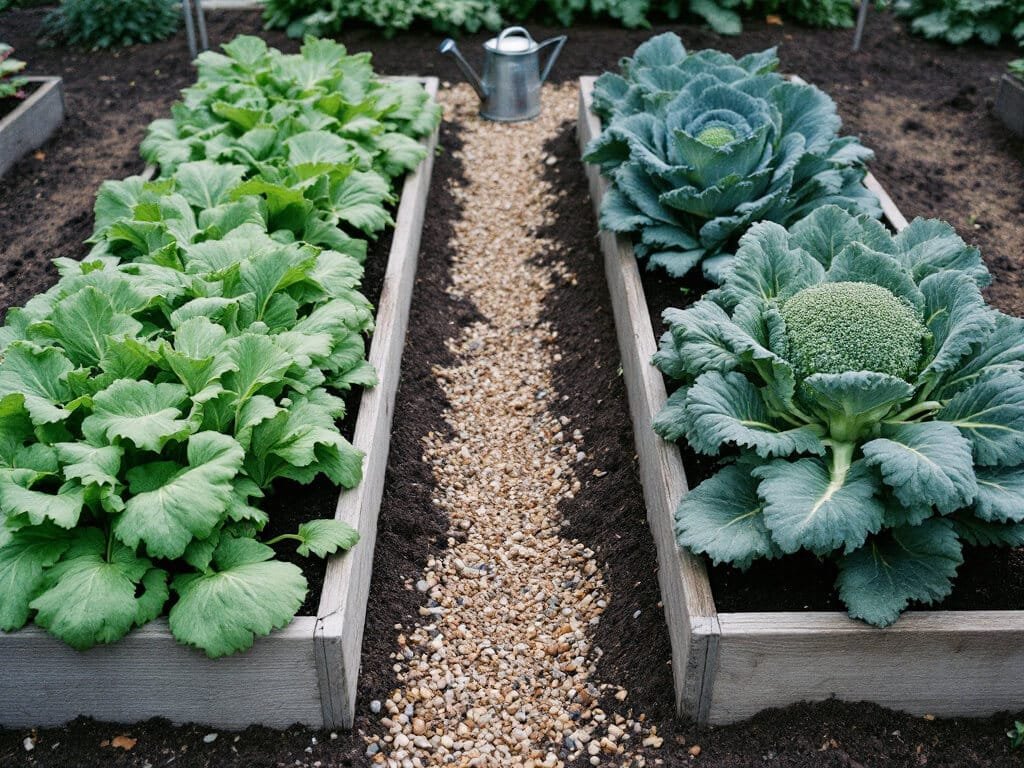
What not to plant with mustard
No source in the research establishes a definitive list of plants that are biologically incompatible with mustard. The strongest case is against combinations that intensify shared Brassica pests and disease, including Alternaria leaf spot and black rot.
Broccoli
Broccoli shares Brassica-family disease risks with mustard, and both crops can host flea beetles. Planting them side by side puts susceptible hosts in one place. If you have the space, put them in separate beds.
Kale
Kale shares the family, the flea-beetle susceptibility, and the disease exposure. Putting it next to mustard increases the number of compatible hosts in one area.
Cabbage
Cabbage shares Brassica diseases and flea-beetle susceptibility. It is not proven to be allelopathically incompatible with mustard, but a mixed planting makes pest and rotation management harder.
Collards
Collards share Brassica-family disease risks and flea-beetle susceptibility with mustard. Treat them the same way as kale and broccoli.
Cauliflower
Cauliflower shares Brassica-family disease risks and adds more susceptible leaf tissue to the same area. Alternaria leaf spot is among the diseases that affect Brassica crops.
Other Brassicas in a disease-prone bed
The bigger issue is time, not just neighbors. Extension guidance recommends waiting 2–4 years before planting a member of the same family in the same spot. If your bed has had black rot or leaf spot, rotating the family out matters more than anything you plant beside the mustard.
Layout and spacing
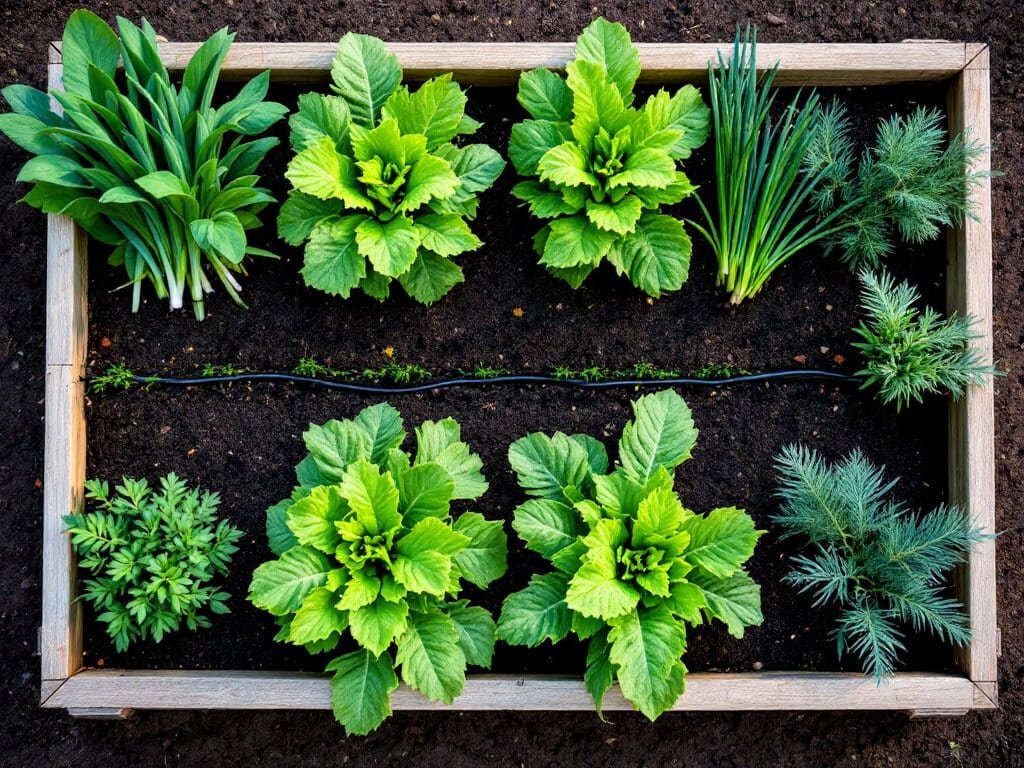
Keep it simple. Use mustard with a few companions at most, give every crop its recommended spacing, and avoid big blocks of Brassicas, which hurt airflow and concentrate pests. Put any trap crop in its own spot, planted ahead of the mustard.
– In a bed: space mustard about 6–8 inches apart in rows 18–24 inches apart, per the Utah planting chart.
– In a container: keep mustard about 3 inches apart, with 12 inches between rows if you are using rows.
– Companion choice for small spaces: pair mustard with one non-Brassica plant, such as bunching onion or dill.
– Trap crops: plant daikon 2–4 weeks ahead and keep it separate from the mustard you plan to eat.
– Other companions: follow each plant’s own seed packet spacing, since the research gives no mustard-specific figures.
– Backup plan: if flea beetles are heavy, add row covers and monitor the plants instead of relying on pairings.
FAQ
What is the best companion plant for mustard?
No single plant is proven best in every garden. Extension guidance points to radish, daikon, selected mustard cultivars, pak choi, bunching onions, dill, and marigolds in flea-beetle management, but results vary by site and strategy.
Can mustard be planted next to kale or cabbage?
It can be grown nearby, but these crops share Brassica pests and diseases, including flea beetles and several leaf and rot diseases. Space the plants for airflow and avoid planting Brassicas in the same soil year after year.
Do marigolds repel flea beetles from mustard?
Marigolds are cited as a companion crop used in flea-beetle management, but the source does not promise complete protection. Monitor your plants, and if flea beetles are a serious problem, add row covers or try a documented trap-crop approach.