
Euphorbia Companion Plants for Sunny, Dry Gardens
The best euphorbia companion plants are the ones that want the same thing euphorbia wants: full sun and soil that drains. Get that part right and most of the rest takes care of itself. Get it wrong and you end up with a euphorbia sitting in damp ground next to a plant that needs a soak every few days.
One catch before the plant list. Euphorbia is a huge genus that includes annuals, perennials, shrubs, succulents, and houseplants, so what suits one species may not suit another. This article focuses on sun-loving garden euphorbias, and it flags where shade-tolerant types differ.
Why pairings matter for euphorbia
Most of the trouble with euphorbia comes from water. Established, sun-loving types prefer well-drained soil and tolerate drought, but root and stem rot show up when conditions are too wet. Powdery mildew is tied to the same kind of problem: excess moisture and humidity. Aphids, mealybugs, spider mites, and scale can also turn up, but those are pests you manage, not something your neighbor plants cause.
That means a companion’s watering needs matter more than its color or height. A plant that wants regular irrigation drags the whole bed toward conditions euphorbia dislikes. Pick partners with matching drainage and light needs, and you can water for the plants in the bed instead of compromising between them.
A few details change the picture:
– Newly planted euphorbias and container plants need more regular watering than established ones, so the drought tolerance applies once they are settled in.
– Shade-tolerant euphorbias generally want fertile soil that does not dry out too much. They are a different match entirely, and the companions below assume the sun-loving kind.
– Hardiness varies. Many garden euphorbias handle temperate zones, but many succulent types are limited to USDA Zones 9–11. Check your cultivar’s hardiness before you plant.
– Bloom timing varies by species. Many flower in spring or early summer and some carry on into later summer, so read the cultivar description if you are planning a color sequence.
Best companion plants for euphorbia
Every plant here either shares euphorbia’s sun and drainage needs or appears in the Royal Horticultural Society’s mixed planting examples. For spacing, no universal figure exists for euphorbia, so the rule throughout is to use the mature spread printed on both plant labels.
Lavender
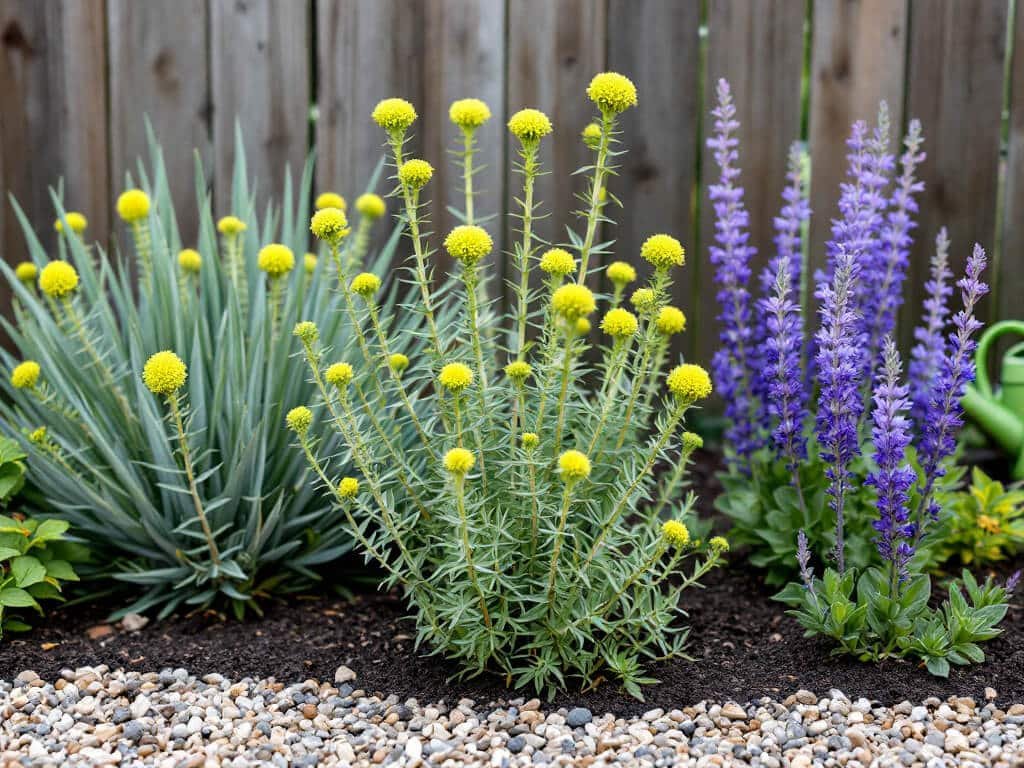
Lavender wants full sun and free-draining soil, the same as sun-loving euphorbia, so the two can share a watering routine. It adds contrasting foliage and flowers next to euphorbia’s form. Space them using the mature spread on both labels.
Salvia
Salvia suits the same sunny, well-drained setting and adds contrasting flower spikes against euphorbia’s rounder shapes. Check the mature spread for your specific salvia cultivar, since no single distance is verified. Allow each plant to reach its labeled size.
Hardy geranium
The RHS names hardy geranium as a compatible partner in mixed perennial planting. It adds contrasting foliage and flowers and works as a filler around euphorbia. Follow the mature widths of both cultivars when you set the spacing.
Shrub rose
Shrub roses appear in the RHS’s mixed planting examples and give the planting a taller structural layer. Keep each plant’s labeled mature spread in mind, and avoid crowding the euphorbia’s crown. A rose that leans over the euphorbia as it matures defeats the point of the pairing.
Phlomis
Phlomis suits Mediterranean-style and gravel gardens alongside sun-loving euphorbias. It is a good pick if you are building a dry bed from scratch and want plants with matching needs. Use the mature dimensions of the species you choose, as phlomis species differ in size.
Sedum
Sedum shares the dry-garden setting and brings contrasting succulent foliage. Its fleshy leaves look different enough from most euphorbia that the two read as separate plants rather than a blur. Spacing depends on the species, so go by the plant label.
Eryngium
Eryngium fits the same sunny, free-draining environment and adds upright, architectural flower heads. Allow for the mature spread of both plants. No general figure is verified, so the labels are your guide.
Cistus
Cistus suits Mediterranean-style planting and well-drained soil beside sun-loving euphorbias. It is a shrubby partner, so it gives the bed some body. Follow the cultivar-specific mature spread.
Allium
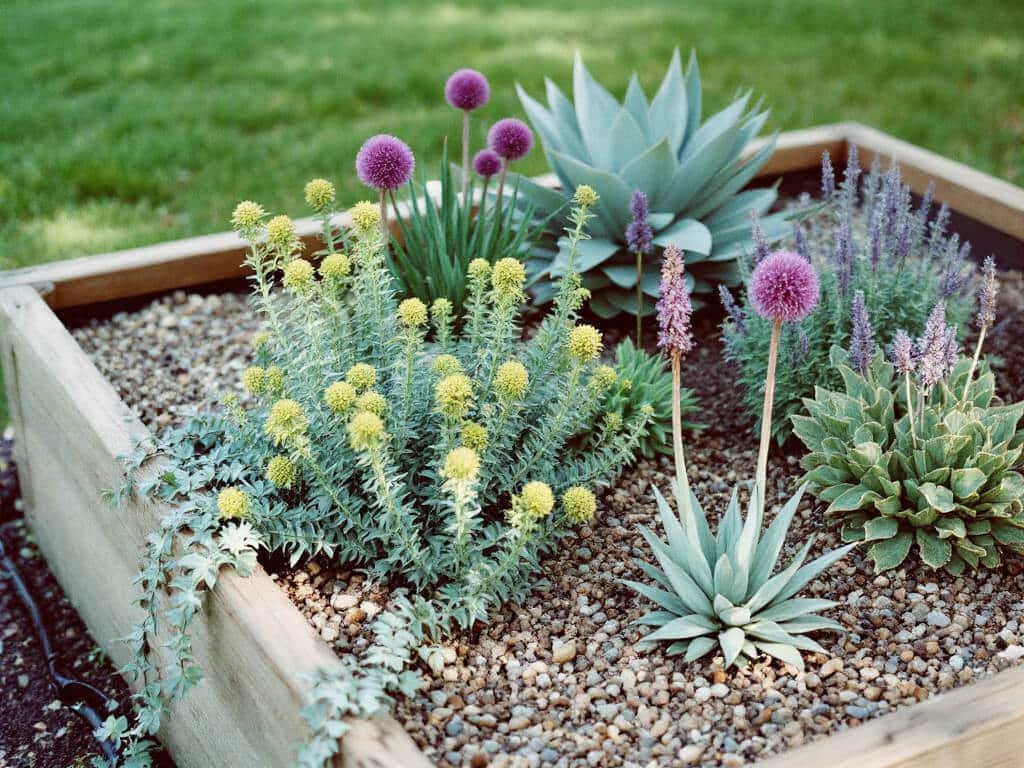
The RHS specifically lists alliums with the lower-growing Euphorbia myrsinites in gravel settings. Use the bulb-spacing guidance for your allium cultivar, and leave room for the euphorbia’s eventual spread so the bulbs are not buried under it.
Nerine
Nerines are also on the RHS list with lower-growing Euphorbia myrsinites in gravel. Follow nerine bulb-spacing guidance and the euphorbia’s mature spread. Like the alliums, they work as a bulb layer in a gravel planting.
What not to plant with euphorbia
The common thread is moisture. Most sun-loving euphorbias dislike wet soil, and winter wet is where they are most at risk. Anything that needs a constantly damp root zone belongs in a different bed.
Bog plants such as cattail
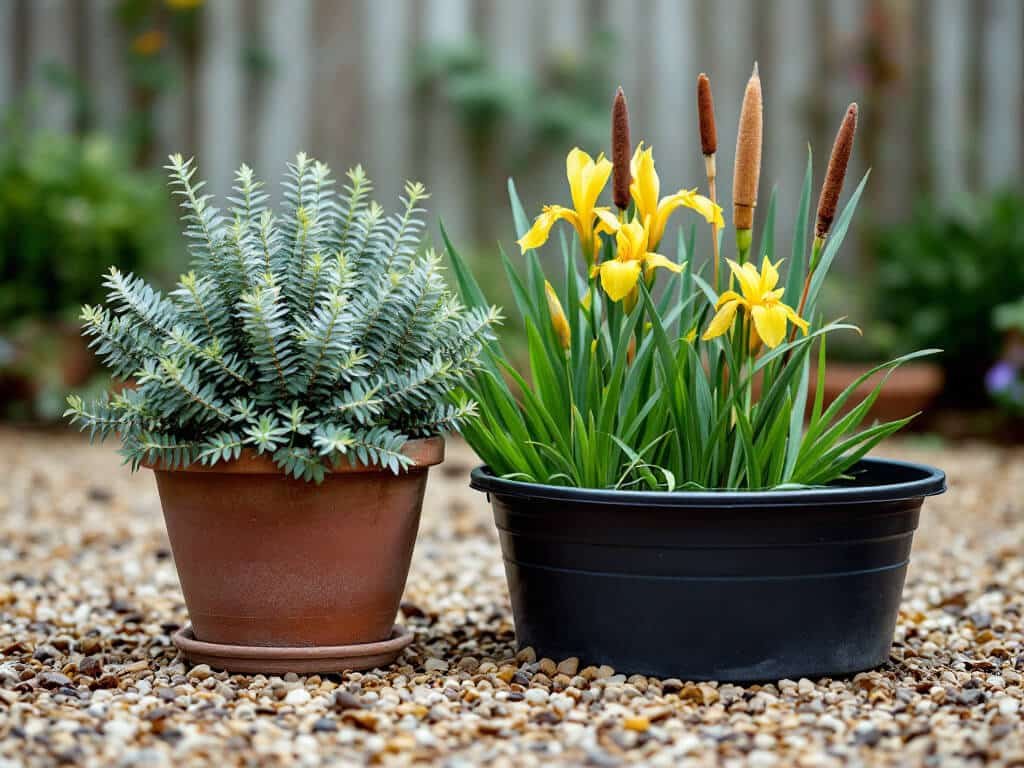
Bog plants need soil that stays wet, and sun-loving euphorbias want the opposite, particularly in winter. Planting them together means one of the two is always in the wrong conditions. Keep cattail and its relatives in a separate wet area.
Water iris
Water iris is happy in persistently wet soil, while most sun-loving euphorbias need free drainage. The moisture requirements simply do not overlap. If you want iris near euphorbia, you need a variety suited to dry ground, which is a different plant from water iris.
Water-loving annuals in constantly irrigated beds
A bed you irrigate often for thirsty annuals raises the risk of root and stem rot in euphorbia. The annuals are not the problem. The watering schedule they require is. Put euphorbia in a separate bed, or in a pot of its own, where you can water on its terms.
Dense, moisture-trapping plantings
This one is a layout problem, not a specific plant. Poor airflow and high humidity contribute to powdery mildew and other trouble. If you pack the bed so tightly that foliage stays damp and air cannot move, even a good companion becomes a bad neighbor.
Layout and spacing
Group by conditions first, then worry about looks. Plants that share sun and drainage go together, and everything else goes elsewhere. Spacing comes from the label, not from a rule of thumb, because euphorbia ranges so widely in mature size.
– Build the main planting around lavender, salvia, sedum, eryngium, and cistus, all of which share euphorbia’s light and drainage needs.
– Use a shrub rose as the taller structural layer, and keep it far enough back that the euphorbia’s crown is not crowded.
– For gravel plantings with lower-growing Euphorbia myrsinites, add alliums and nerines, and leave room for the euphorbia to spread.
– In containers, combine plants only when their watering needs match. Keep euphorbia away from anything that needs consistently damp compost.
– For every plant, read the label for mature height and spread, and give each plant the space it will actually need.
FAQ
What grows well with euphorbia?
Lavender, salvia, hardy geraniums, shrub roses, phlomis, sedum, eryngium, cistus, alliums, and nerines are listed or recommended by the RHS for compatible garden settings.
Can euphorbia grow with plants that need lots of water?
Usually not in the same consistently wet soil. Most sun-loving euphorbias need free drainage and may develop root or stem rot in wet conditions.
How far apart should euphorbia and its companions be planted?
There is no single reliable spacing, because the genus includes plants with very different mature sizes. Use the individual plant labels and allow each plant to reach its stated mature spread.