
Rutabaga Companion Plants: What to Grow Nearby
Choosing rutabaga companion plants is mostly a matter of avoiding mistakes, because the evidence for specific good partners is thin. Rutabaga is a cabbage-family root crop, usually planted in late spring or early summer and harvested from September into late fall. Its neighbors matter less for what they repel than for whether they share its pests, compete for water, or crowd the row.
This article sorts what the extension and research material supports from what is traditional practice, and shows you how to lay out a bed that works either way.
Why pairings matter for rutabaga
Rutabaga belongs to the Brassicaceae family, so it picks up the same troubles as cabbage and its relatives. The usual list is flea beetles, cabbage maggots (also called root maggots), aphids, and cabbage butterflies. Diseases include Alternaria leaf spot, black rot, and clubroot. Whatever you plant beside it either adds to that load or doesn’t.
The second concern is resources. Rutabaga wants full sun, fertile and well-drained soil with organic matter, a pH near 6.0 to 7.0, and steady moisture. About 1 inch of water per week during growth is a useful target. A neighbor that hogs water or shades the row works against all of that.
Now the myth. No extension source in the reviewed material verified a broad list of rutabaga-specific pest-repelling companions. If you read that a particular herb or flower reliably keeps pests off rutabaga, treat it as traditional practice, not established fact.
Best companion plants for rutabaga
Here is the honest picture. The sources include a few plants with a plausible benefit and several that appear in extension companion-planting and rotation guidance without a rutabaga-specific benefit being verified. None came with a rutabaga-specific spacing recommendation. So the rule for every plant below is the same: give it its own adjacent row, leave room to weed, and keep it from crowding the rutabagas.
Legumes such as fava beans or edamame
Legumes may contribute nitrogen over time when their roots stay in the soil after the plants are finished. That is a slow soil benefit, not an instant boost to the rutabagas next to them. Keep legumes in separate rows rather than interplanting them, and leave the roots in the ground when you clear the row.
Low clover living mulch
Clover sown between established rows may suppress weeds and could reduce pest pressure. The evidence is not strong enough to promise a rutabaga yield benefit. Sow it only between rows after the rutabagas are established, and mow or trim it if it starts creeping toward the crop.
Chives
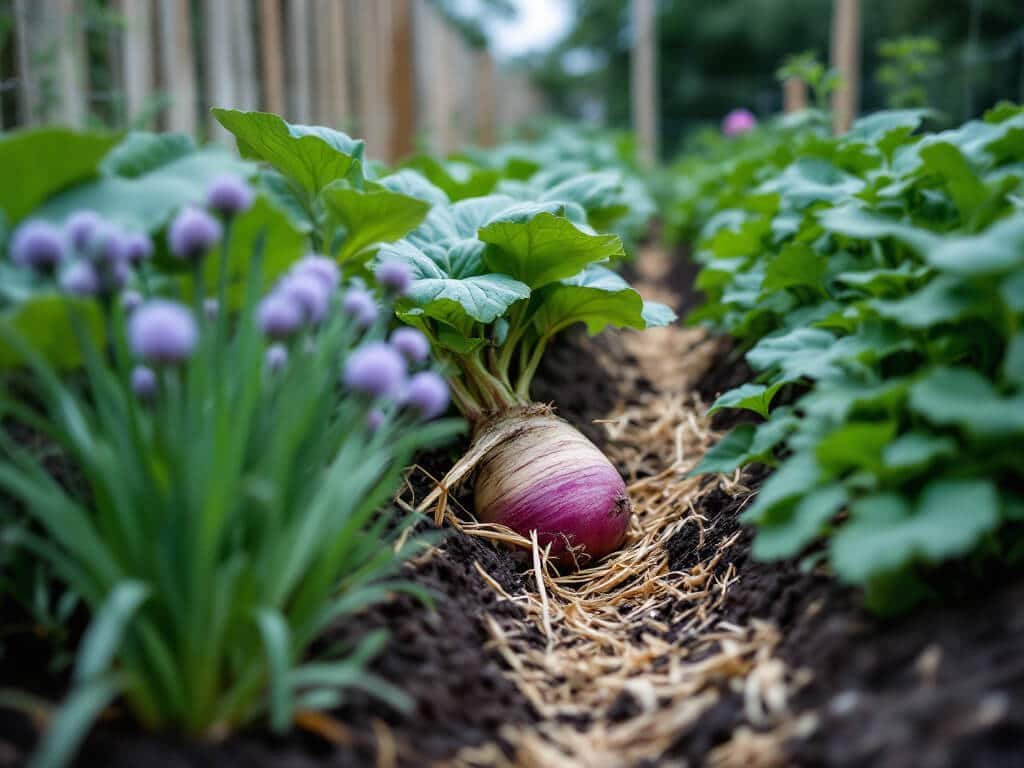
Chives appear in extension companion-planting guidance for vegetable-family rotations. A rutabaga-specific pest benefit was not verified. They are a reasonable, low-risk neighbor in an adjacent row, but don’t count on them to protect the crop.
Leeks
Leeks are in the same extension guidance, again without a verified rutabaga-specific pest benefit. Plant them in their own row beside the rutabagas, not tucked between individual plants. They are a fine choice if you simply want an onion-family crop in the same bed.
Green onions
Green onions fall in the same category as chives and leeks. The guidance lists them, but no rutabaga-specific benefit was verified. Give them a separate row and keep the rutabaga spacing intact.
Cucumbers
Cucumbers are listed in extension guidance for vegetable-family rotations, with no verified benefit to rutabaga. They are a practical neighbor mainly because they are not brassicas. Keep them in a separate row so their growth doesn’t crowd the rutabaga tops.
Carrots
Carrots are another non-brassica root crop included in the extension guidance, with no rutabaga-specific benefit verified. Put them in an adjacent row, not mixed into the rutabaga row. Both are root crops, so keep enough room between rows for weeding without disturbing either one.
Bush beans
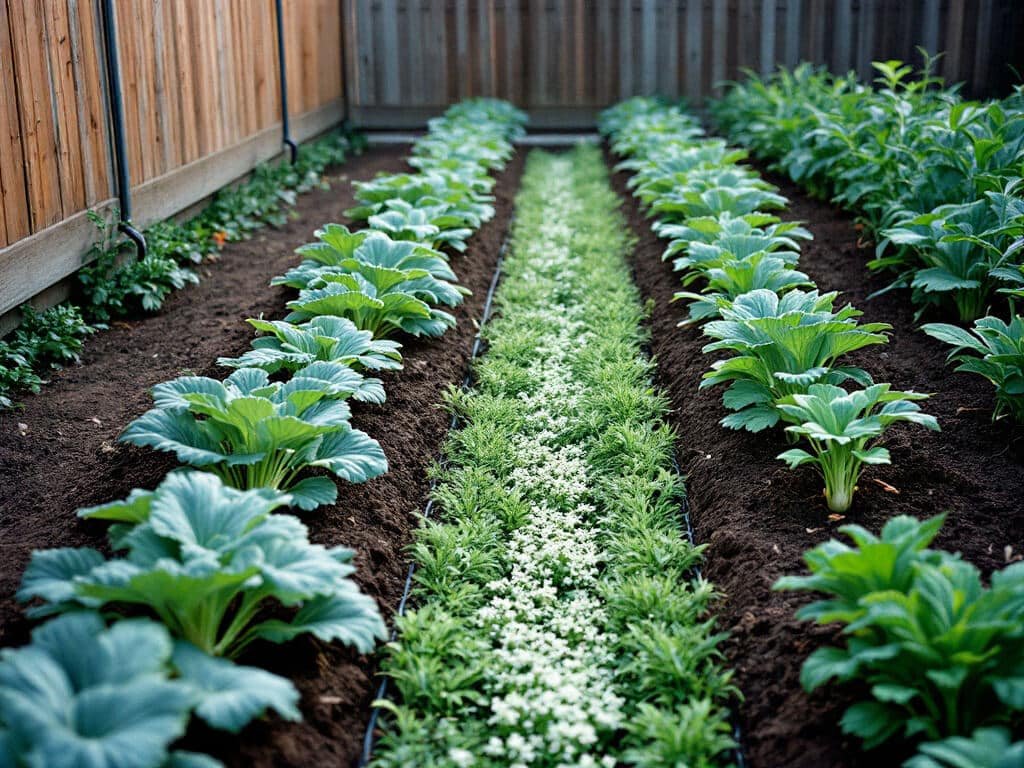
Bush beans are in the same extension guidance, and no rutabaga-specific benefit was verified. As with the other companions, plant them in a neighboring row and leave a working gap. Treat them as a compatible crop, not a protective one.
What not to plant with rutabaga
The clearest advice in the research is about what to keep away, and it comes down to family ties.
Other brassicas: broccoli, cabbage, kale, cauliflower, Brussels sprouts, collards, mustard, turnips, and radishes
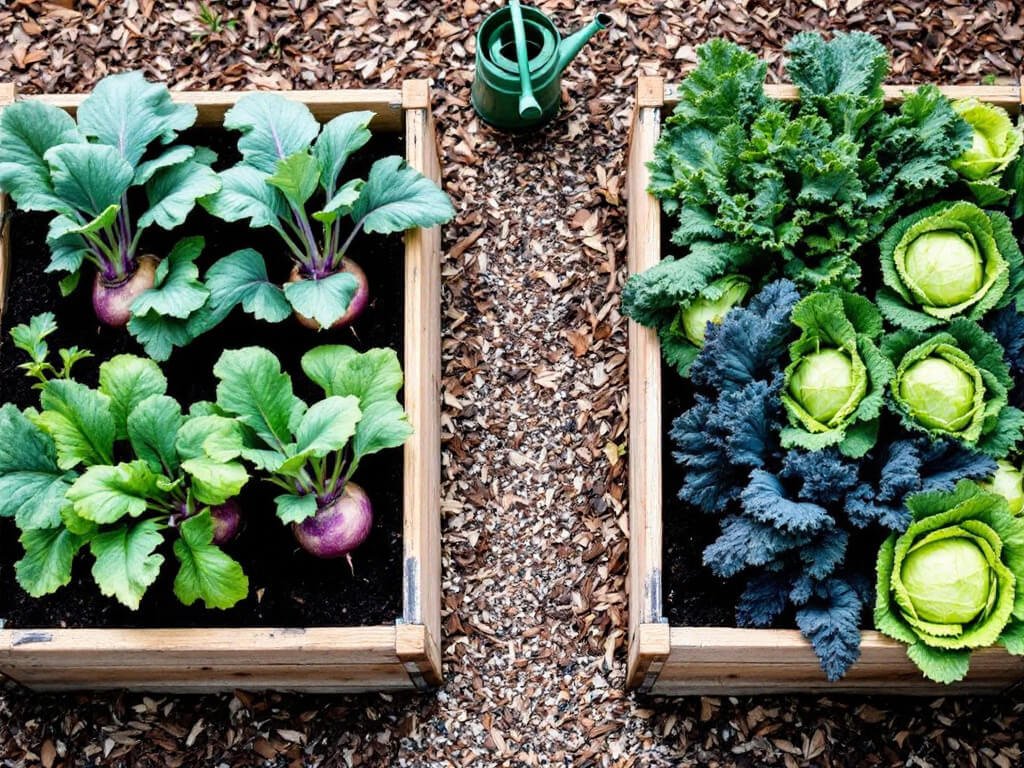
These are all fellow brassicas, and planting them repeatedly in the same area can maintain shared pests and diseases. Rotate the whole brassica group together instead of treating each one as an unrelated companion. If rutabaga went in a bed this year, don’t follow it with kale, radishes, or turnips there next season. Clubroot, black rot, and root maggots are the sort of problems that build up when the same family returns to the same ground.
Crowded brassica plantings
Even in a single season, packing brassicas together lets pests or diseases spread faster. Concentrated plantings of the same crop family are easier for a pest to move through. Give rutabaga its own adequately spaced row or block, and don’t squeeze other brassicas in beside it.
Plants with sharply different water needs
The extension sources did not name a specific rutabaga enemy, so I won’t invent one. What they do support is that rutabaga needs steady moisture. Avoid pairing it with plants that need substantially drier soil, because one of the two will be unhappy.
Layout and spacing
Plant rutabagas in a sunny, well-drained bed and thin them to about 8 to 9 inches apart, since the roots can get quite large. Put companion crops in adjacent rows, not between individual rutabaga plants, so everything has room and you can still reach the weeds.
– Choose a full-sun bed with fertile, well-drained soil that has organic matter worked in.
– Thin rutabagas to 8 to 9 inches apart in their own row or block.
– Put legumes, onion-family crops, cucumbers, carrots, or bush beans in neighboring rows, with enough gap to weed.
– Keep legume roots in the soil after the plants finish.
– Sow low clover only between established rows, as a controlled alley. Don’t use it as dense groundcover around young seedlings.
– Aim for about 1 inch of water per week and keep any neighbor from drying the soil out.
– Plan next year’s bed so no brassica returns to this spot.
FAQ
Can rutabagas grow with other brassicas?
They can share a garden, but they have many of the same pests and diseases. Rotate the brassica family and avoid planting these crops in the same bed year after year.
Does clover help rutabagas?
A low clover living mulch has been proposed for weed suppression and possible pest reduction, but the evidence isn’t enough to promise a rutabaga yield benefit. Sow it only after the rutabagas are established and keep it from competing with the crop.
How far apart should rutabagas be planted?
Thin them to about 8 to 9 inches apart. The reviewed sources give no universal companion spacing chart, so put companion plants in separate rows and hold that rutabaga spacing.