
How to Grow Roses in Pots
Learning how to grow roses in pots mostly comes down to three things: pick a compact rose, give it a deep pot, and keep up with watering. Container compost dries out much faster than garden soil, and that is where most pot-grown roses go wrong. Get those three right and the rest is routine.
This guide walks through choosing the plant, planting it, and the yearly upkeep that keeps it flowering.
What you need
– A patio or miniature rose, or another compact, less vigorous cultivar labeled for container growing
– A pot with drainage holes, about 9–14 in deep for patio or miniature roses, or 12–18 in deep for compact ground-cover or climbing roses
– Peat-free, well-drained potting mix suitable for established plants
– Granular rose fertilizer for spring feeding
– A watering can or hose
– Clean pruning shears
– About 2 in of well-rotted compost or manure for mulch
– A plant support, if you are growing a climbing cultivar
Choose the right rose and pot
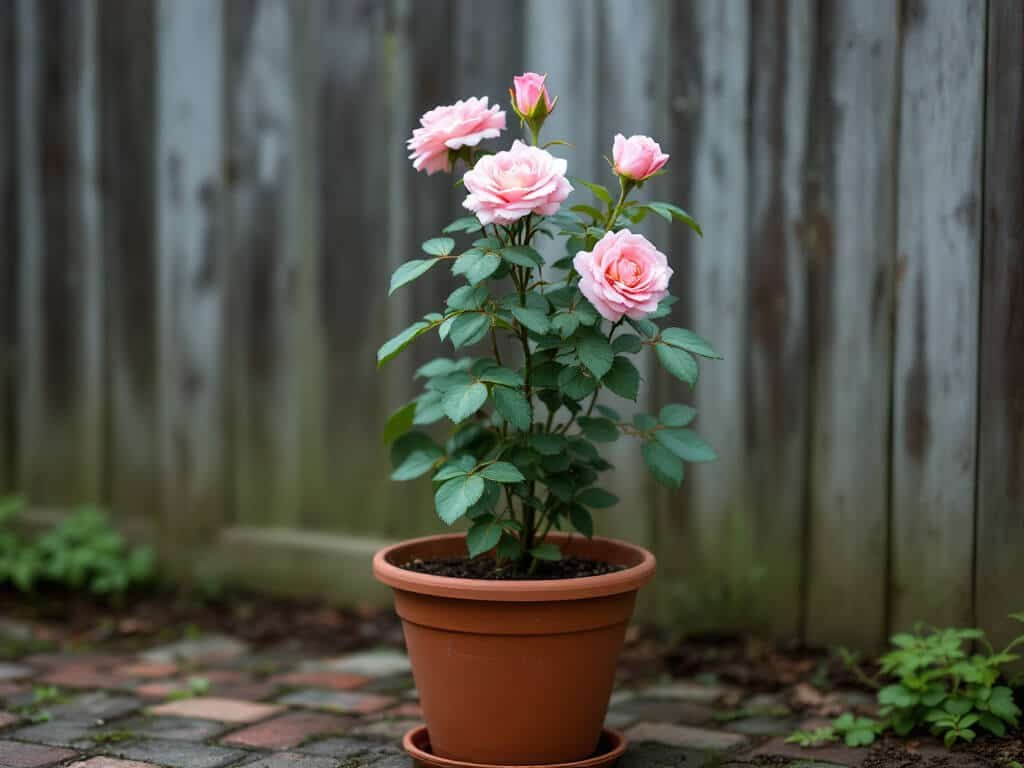
Pick a patio or miniature rose, and plan on 9–14 in of pot depth for either. Patio roses commonly stay around 1–2 ft tall, which suits a container. Compact ground-cover or climbing roses can also work, but they need a pot at least 12–18 in deep.
Not every rose belongs in a pot. Vigorous types outgrow containers and turn top-heavy, so skip them here. If you want a climber, choose a less vigorous one, and give it a big pot and a support from day one.
Hardiness varies by cultivar, so check the plant label for its USDA zone rating before you buy. Whatever you pick, the pot needs drainage holes. A rose sitting in waterlogged mix is a different problem from a dry one, and no better.
Position the container
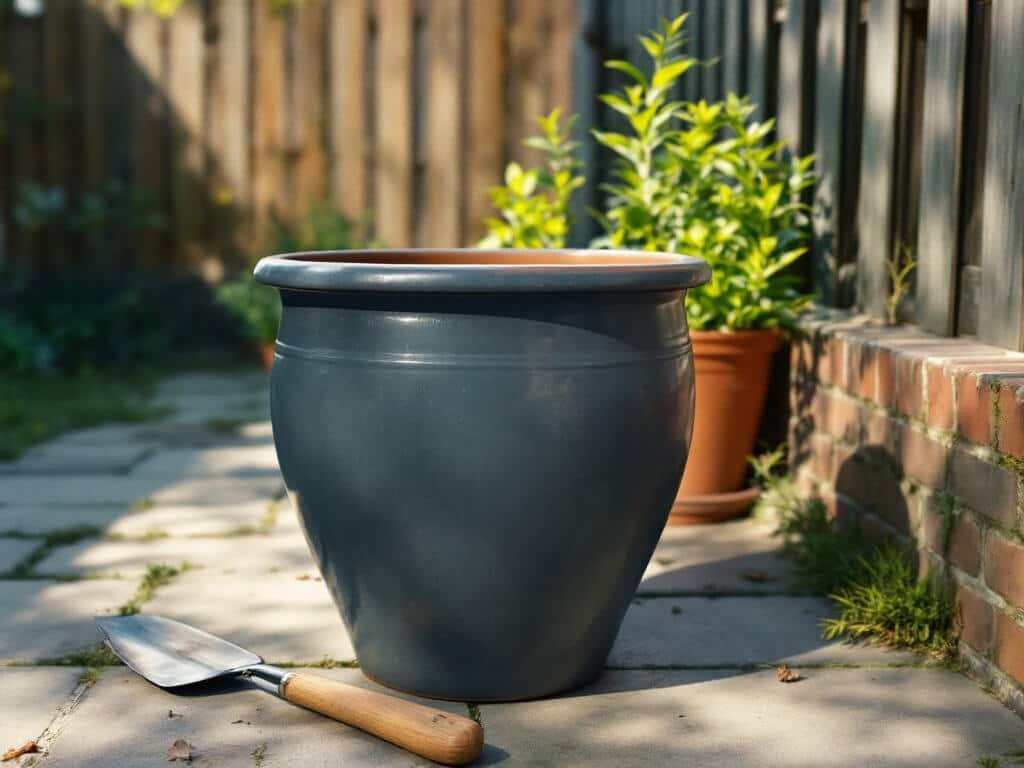
Set the empty pot where it will get at least 4 hours of sun a day. Full sun generally gives the best flowering, so give it more than the minimum if you can. Avoid exposed, windy spots.
Do this before you fill the pot. Once it is full of wet mix and a rose, it is hard to move. If you are unsure about a spot, stand there at a few different times of day and see how long the sun actually stays on it.
Plant in fresh compost
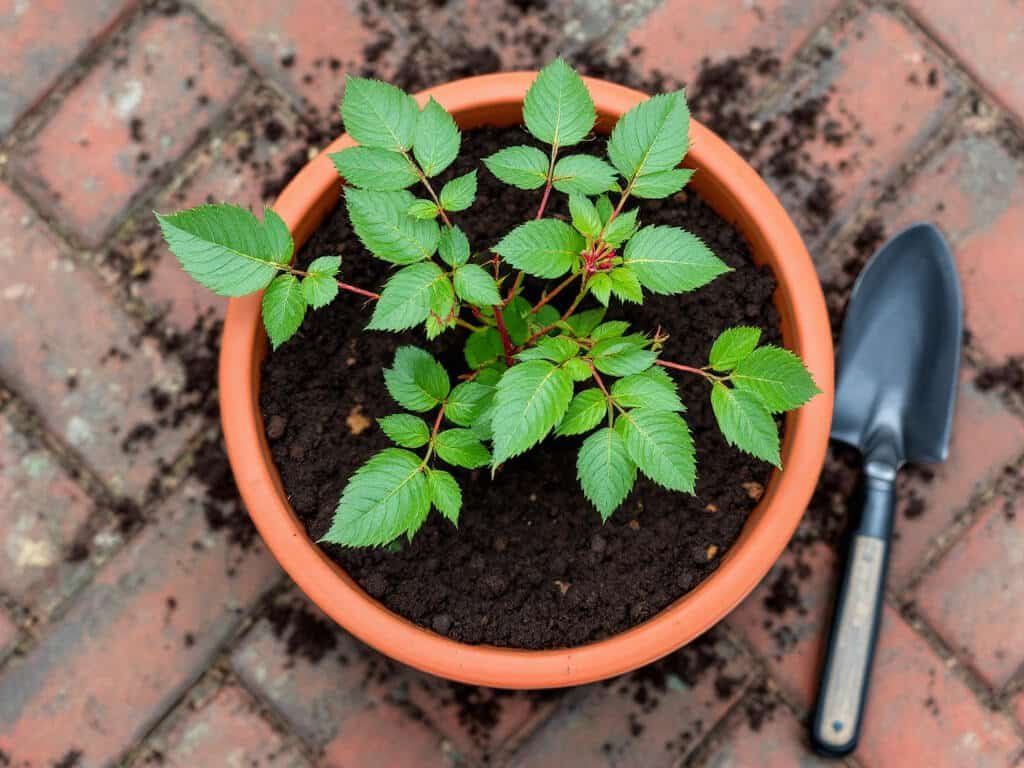
Fill the pot with fresh peat-free potting mix, which should be rich, humus-rich, moist but well-drained. Set the rose at the planting depth shown by its root ball or the plant label. This is not a number you need to guess at, since the label tells you.
Firm the mix around the roots, but don’t pack it down hard. Compacted mix drains poorly and starves roots of air. Leave a little room below the rim so water stays in the pot instead of running over the edge.
If you are planting a climber, put the support in at planting time rather than adding it later.
Water thoroughly
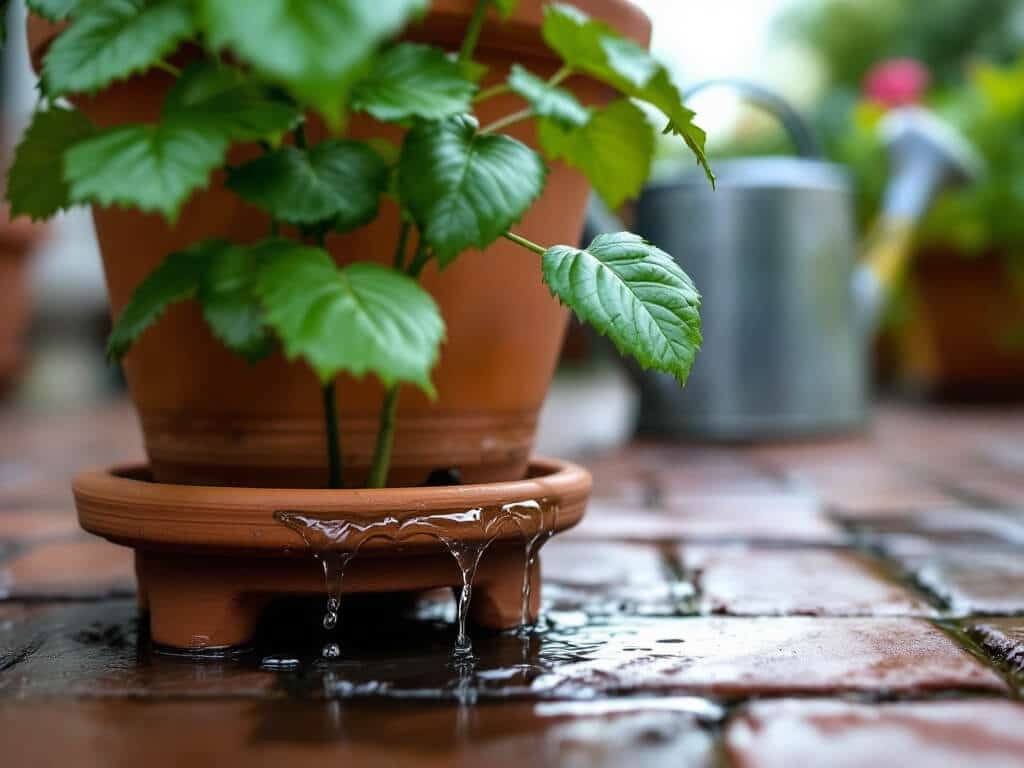
After planting, water until it runs out of the drainage holes. Then keep the mix from drying out completely. Water whenever the top of the mix begins to dry, and in hot weather that may mean every day.
Containers dry out faster than garden soil, so a rose in a pot needs more frequent watering than one in the ground. Check it often during the first growing season while the plant settles in. A rose that wilts between waterings is telling you the mix is drying too fast.
Steady moisture also protects against disease, because drought stress makes container roses more prone to powdery mildew.
Feed and mulch
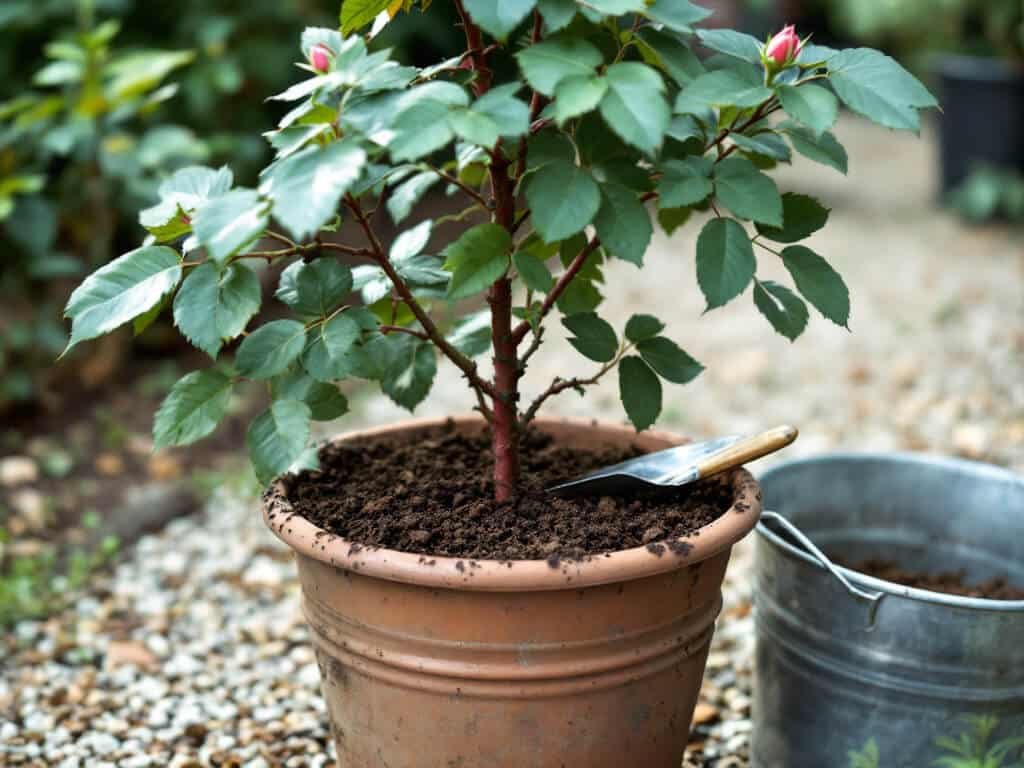
Top-dress with granular rose fertilizer in spring, following the directions on the product label. Container roses use up nutrients quickly, so don’t skip this. Then spread about 2 in of well-rotted compost or manure over the surface, keeping it off the stems.
Stop feeding after August. Late feeding pushes soft new growth that is more vulnerable to winter damage.
The mulch also helps the pot hold moisture between waterings, which is half the battle with container roses.
Deadhead and prune
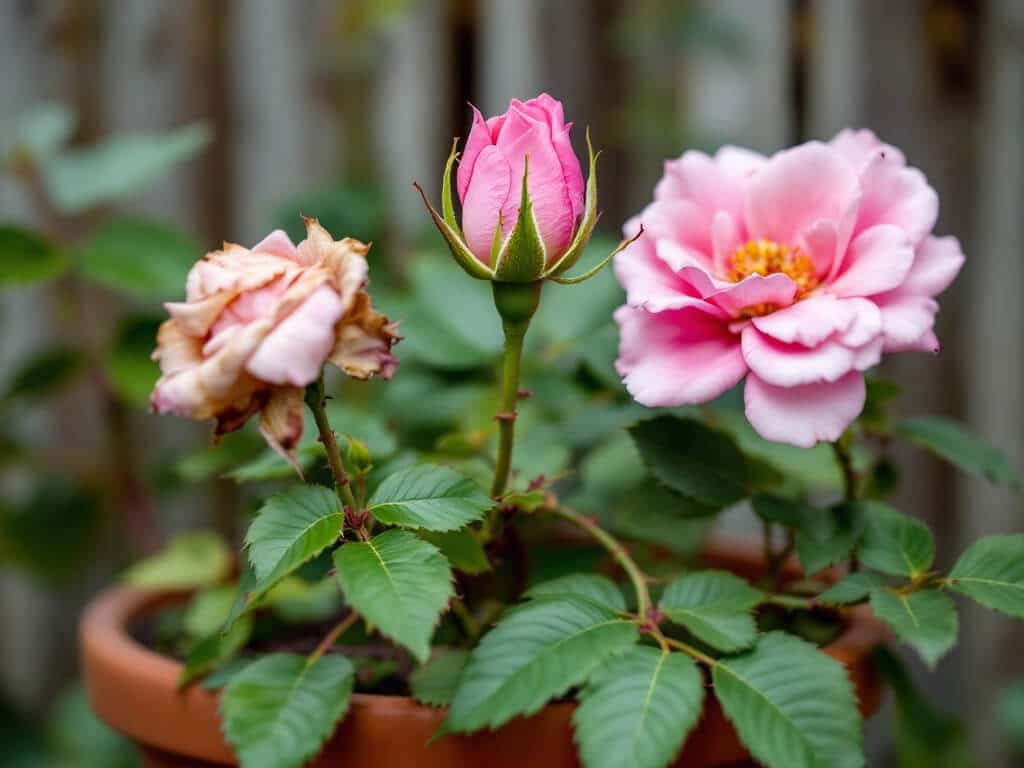
Remove faded flowers as they finish. Patio roses can flower throughout summer, and repeat-flowering cultivars may bloom again after deadheading. Use clean shears so you aren’t passing problems from plant to plant.
Prune established roses generally once a year, according to the rose type. Climbers, patio roses, and miniatures don’t all want the same cuts, so check the guidance for your specific cultivar. I’d rather you look that up than guess.
Refresh the compost
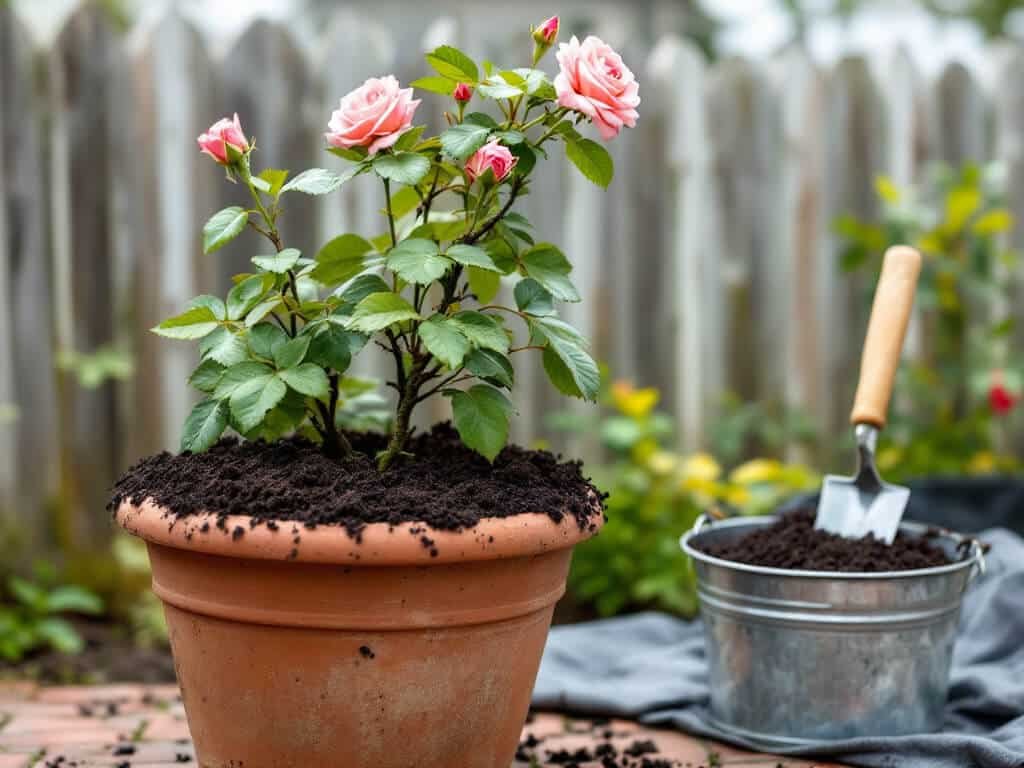
Every second year, scrape off and replace the top 2 in of potting mix. This restores some of the nutrients the rose has used up and keeps the surface in good shape. Add the fresh layer, then top it with mulch again.
Combine this with your spring fertilizer and you have the whole yearly maintenance routine. If the rose looks crowded or tips the pot over, it may have outgrown its container, and the answer is a deeper, heavier pot.
Common problems
– The rose wilts between waterings: the mix is drying too quickly. Water thoroughly and more often, especially in hot weather, and consider a larger pot if the plant is crowded.
– Powdery mildew develops: drought stress makes container roses prone to it. Keep the moisture even, improve air movement, and don’t tuck the pot into a cramped, stagnant corner.
– Few flowers appear: the cause may be too little light, a rose too big for the pot, drought, or too little feeding. Make sure it gets at least 4 hours of sun, and use a rose suited to containers.
– The plant is top-heavy: the pot may be too small, or the rose too vigorous. Move it to a deeper, heavier pot, and choose compact cultivars next time.
– Winter growth is damaged: late feeding can cause soft growth. Stop fertilizing after August, and shelter the pot from severe exposure where you can.
– The mix seems worn out: container roses use nutrients fast. Top-dress every spring and replace the upper 2 in of mix every second year.
When to expect results
Container-grown roses can be planted throughout the year when conditions are suitable. The Royal Horticultural Society recommends October through April for potting, with November ideal for bare-root plants. That is a UK recommendation, so adjust for your own climate and frost dates.
There is no fixed number of days for establishment, so watch moisture closely after planting and through the first growing season. Patio roses can flower throughout summer, though timing varies by cultivar and growing conditions. Deadhead during flowering, feed in spring, and prune each year according to the cultivar.
FAQ
What size pot is best for a rose?
Patio and miniature roses generally need a pot about 9–14 in deep. Compact ground-cover and climbing roses need at least 12–18 in of depth.
How often should roses in pots be watered?
Water whenever the mix begins to dry. Container roses need water more often than roses in the ground, and may need it daily in hot weather.
Can any rose grow in a pot?
No. Patio and miniature roses are the most reliable choices. Less vigorous ground-cover and climbing roses can work in larger containers, but vigorous types may outgrow pots.