
How to Grow Lavender in Pots
How to grow lavender in pots comes down to one problem: keeping the roots from sitting in wet mix. Lavender is a woody, aromatic shrub that wants sun and sharp drainage, and a container can give it both if you set it up right. Get the pot, the mix, and the watering right, and most of the rest takes care of itself.
This guide walks through choosing the plant, building the mix, planting, watering, pruning, and getting the pot through winter.
What You Need
Gather everything before you start, because the mix and the pot matter more than any later care.
– A container 30–40 cm (12–16 in) across with large drainage holes
– Peat-free multipurpose or loam-based potting mix
– Coarse horticultural grit, up to 25% of the mix by volume
– A healthy, labeled lavender plant, ideally a compact English lavender cultivar
– A watering can, hand trowel, and clean pruners
– A sheltered spot for winter, such as a cold frame, greenhouse, or a wall area that stays out of the rain (most important for less-hardy plants)
– Optional: pot feet or a stand to keep the drainage holes clear and keep the pot off cold, wet surfaces
Choose the Right Lavender and Pot
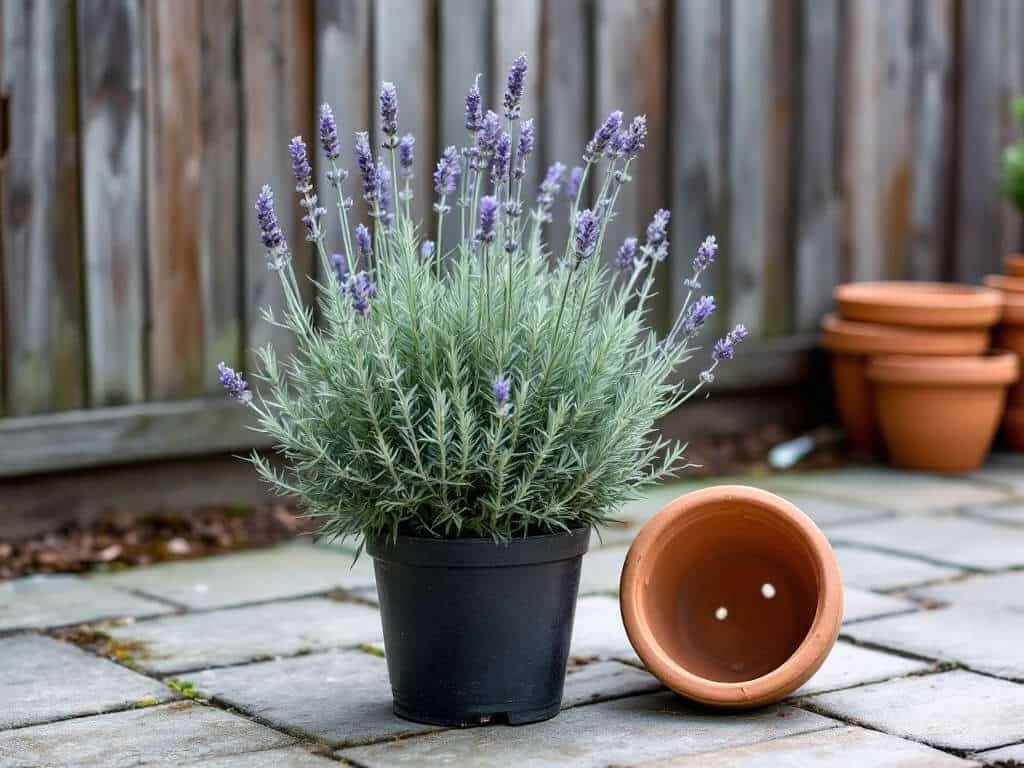
Pick a pot 30–40 cm (12–16 in) wide with large drainage holes, then choose a lavender whose mature size suits it. Lavender varies a lot in size by species and cultivar, so there is no single answer. For a container, a compact cultivar is the safer pick.
Type matters for winter. English lavender and lavandin are generally hardier. French lavender is less hardy and often shorter-lived, and it usually needs protection where frost is common. I’d start with a compact English lavender unless you have a frost-free spot for the plant over winter.
Check the plant label before you buy. A named cultivar tells you more about final size and hardiness than a tag that just says “lavender.” I can’t give you a firm USDA zone rating that applies across all types, so look up the specific cultivar for your area.
A pot with small drainage holes defeats the purpose. If the holes look undersized, don’t buy that pot.
Prepare a Fast-Draining Potting Mix
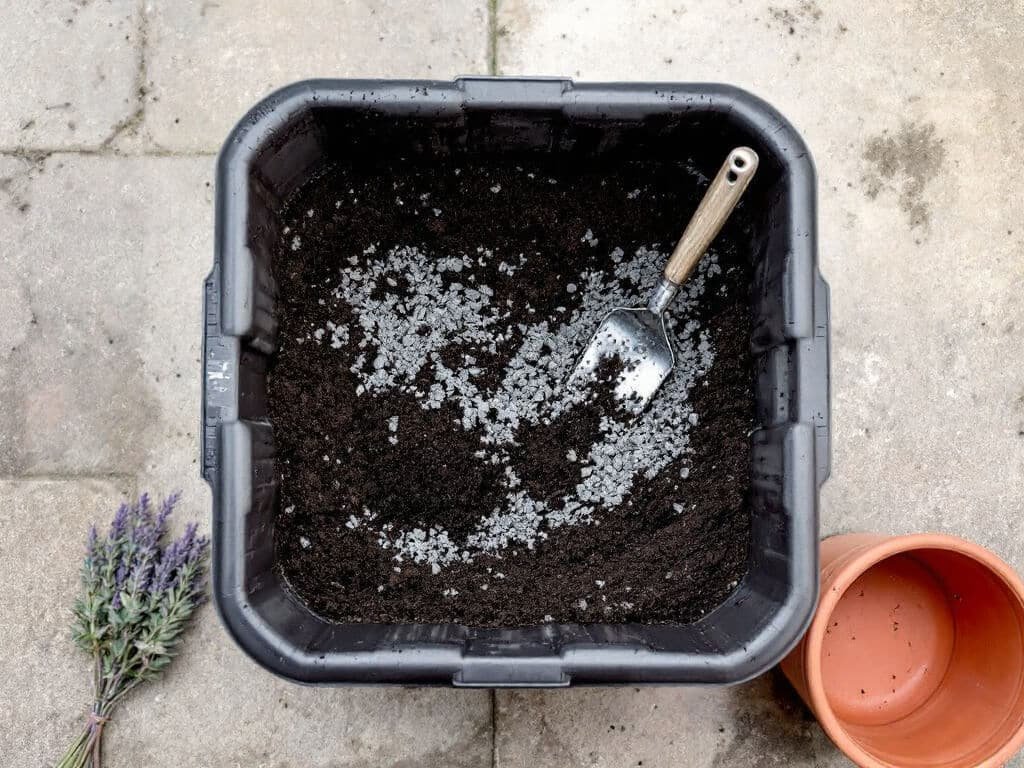
Mix peat-free multipurpose or loam-based potting mix with coarse grit, using grit at up to 25% by volume. That means roughly one part grit to three parts mix at the high end. Lavender prefers very well-drained, sandy or gritty soil that is moderately fertile or poor.
Don’t use a moisture-retentive mix, and don’t use a pot that drains poorly. Waterlogging is a major cause of lavender decline, so the mix is your main defense. Lavender likes neutral to alkaline conditions, though it tolerates some acidity, so you don’t need to adjust the mix for acidity.
Blend the grit through the whole volume rather than layering it at the bottom. Fill the pot before you plant so you can set the plant at the right height.
Position the Pot in Full Sun
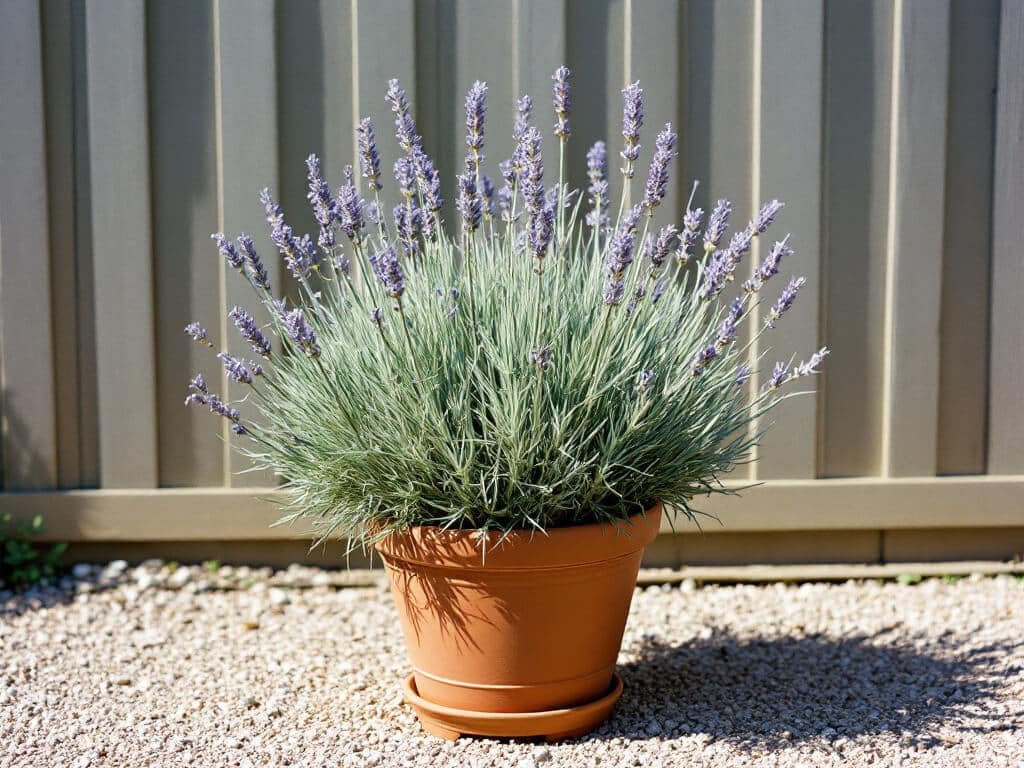
Put the container where it gets 6–8 hours of direct sun a day. Full sun is the requirement, and a pot in part shade tends to end up leggy and sparse.
Choose a spot with some shelter from persistent cold, wet weather. A pot that is sunny but sits in a rain-soaked corner will still struggle. If you have a wall that gives some rain protection while still getting sun, that is a good place for it.
If you use pot feet or a stand, set them up now. Moving a full pot later is a chore, and you want the drainage holes clear from day one.
Plant Lavender at the Correct Depth
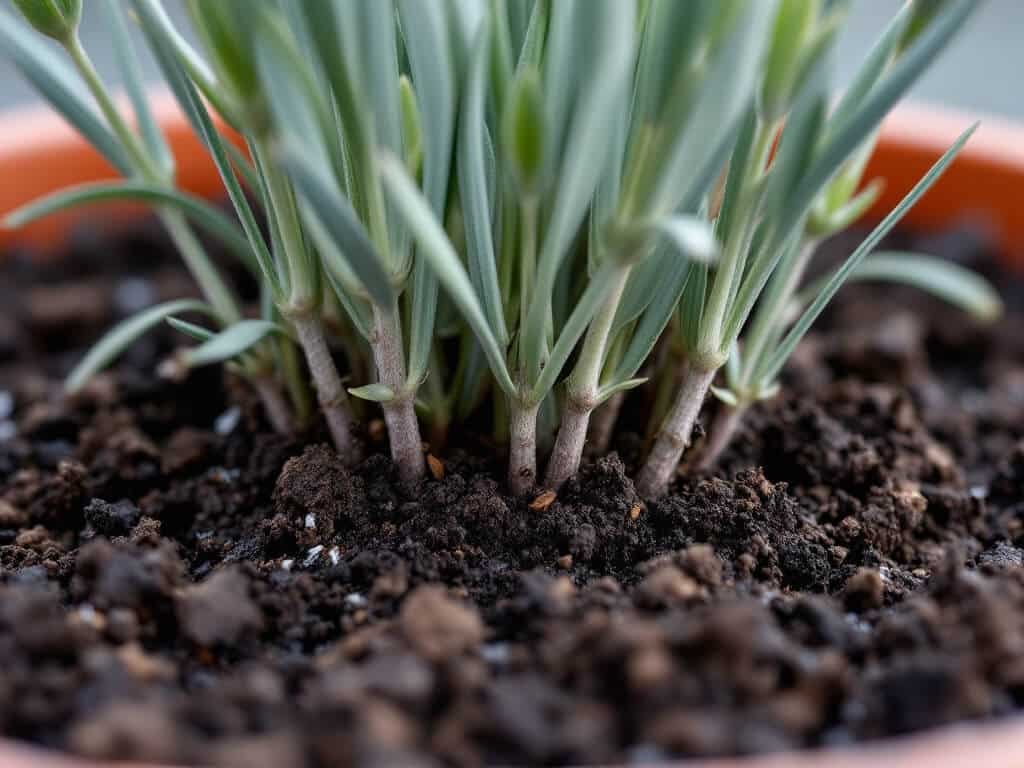
Set the plant at the same soil level it had in its original pot. Don’t bury the stem or the crown, because a buried crown invites rot.
Fill the new pot with your mix, set the plant in, and check the height before you finish filling. Add or remove mix underneath until the top of the root ball sits where it did before. Then fill around the sides.
Water thoroughly once after planting so the root ball and the surrounding mix are evenly moistened. Let the excess drain out fully before you move on.
Water Without Saturating the Roots
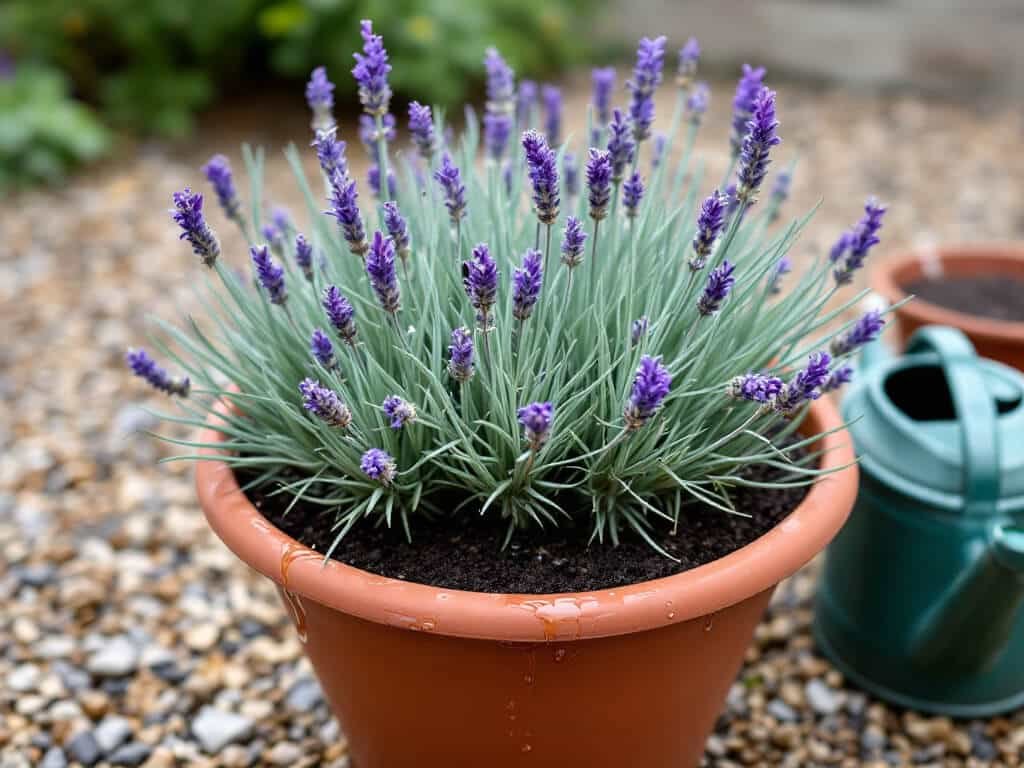
In hot summer weather, check the pot regularly and water when the mix begins to dry. The RHS gives once or twice weekly as a general guideline for containers, but treat it as a starting point, not a schedule. Weather and pot size change how fast the mix dries.
Lavender needs little water once established, but pots dry out much faster than ground soil. Water regularly through the first summer while the plant settles in. When you water, do it thoroughly and let the excess escape through the drainage holes.
Do not keep the mix wet. Wet mix is how most potted lavender dies. If the surface and upper mix are still damp, wait.
Feed Sparingly and Prune After Flowering
Lavender needs little fertilizer in a well-prepared mix, so skip routine feeding. Avoid high-nitrogen fertilizers and manure, which produce soft, floppy growth.
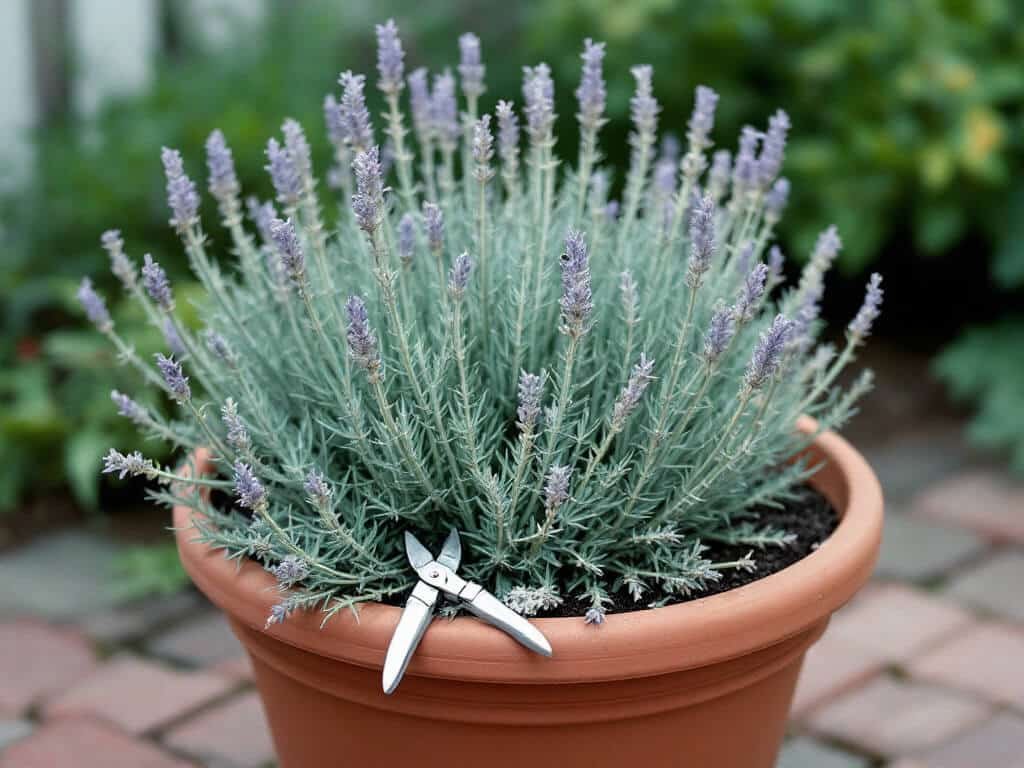
Prune in late summer, once flowering has finished. Remove the spent flower stalks and about 2.5 cm (1 in) of leafy growth. This keeps the plant compact and helps prevent it going leggy.
Never cut into old, bare wood. Stay within the leafy growth, and use clean pruners. If you’ve fallen behind on trimming, don’t try to fix it all in one go with a hard cut. Trim lightly after flowering and keep up with it each year.
Protect Potted Lavender in Winter
Container roots are more exposed to cold than roots in the ground, so a pot needs more care than a garden plant. Keep the mix relatively dry in winter and protect the pot from excessive rain and severe cold.
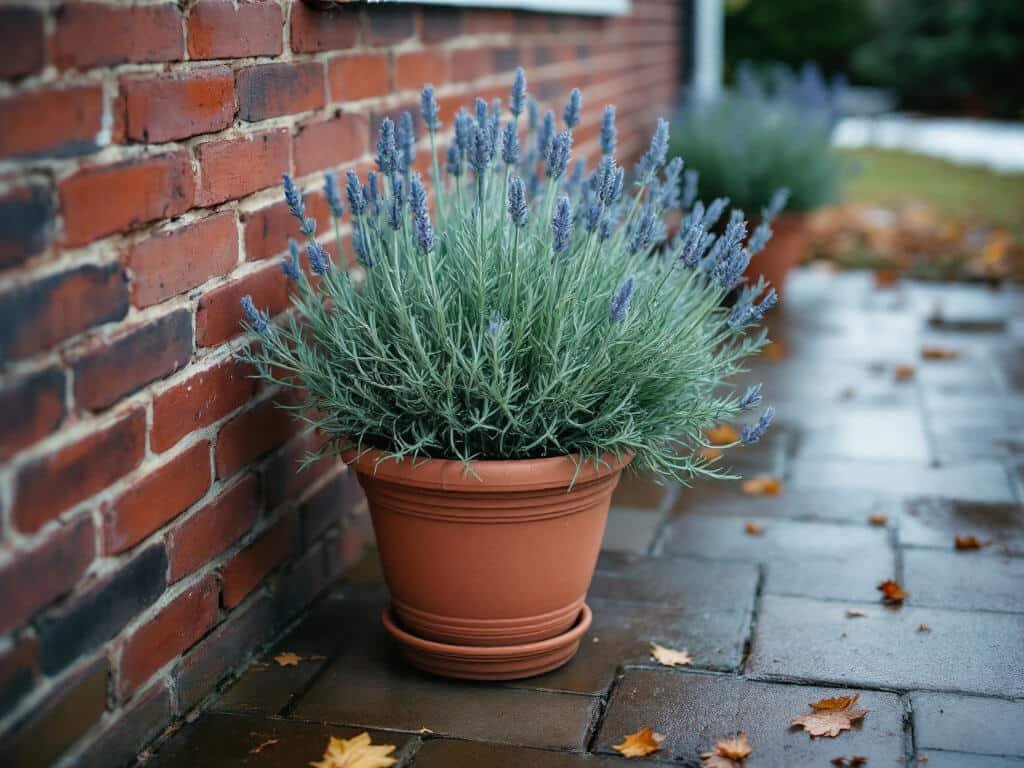
Hardier English lavender may stay outside if you protect it from severe cold and heavy rain. A spot against a wall that keeps off the rain works. Less-hardy French lavender is best moved to a frost-free or sheltered location, such as a greenhouse or cold frame, in frost-prone areas.
Pot feet help here too, since they keep the pot from sitting in cold standing water or on a frozen surface. Stop regular watering and only check that the mix hasn’t become fully saturated.
Common Problems
Root or crown rot
This is usually caused by wet mix or poor drainage. Move the plant to a pot with clear drainage holes, replace the saturated mix, and water only after the surface and upper mix have begun to dry.
Leggy, sparse growth
This often comes from too little sun or a lack of annual trimming. Move the pot into full sun and prune lightly after flowering. Don’t cut into old wood.
Wilting in summer
Containers can dry out quickly. Check the mix more often in hot weather, and water thoroughly when it begins to dry, letting the excess escape.
Gray mold
Improve airflow, keep foliage from staying wet, ease off the watering, and shelter the pot from persistent rain.
Winter damage
Roots in a pot take more cold than roots in the ground. Move the pot to a sheltered, rain-protected spot. French lavender may need a frost-free greenhouse or similar cover.
Floppy growth
Cut out high-nitrogen fertilizer and manure. They encourage soft, weak growth.
Pests
Rosemary beetle and froghoppers (also called spittlebugs) are the pests to watch for. Honey fungus can also be a problem depending on your region.
When to Expect Results
Timing varies by species, cultivar, climate, and planting date, so treat these as a rough sequence rather than a calendar.
– Planting: Spring is the preferred time. The RHS recommends April or May in its UK guidance. Elsewhere, wait until local conditions are suitable and severe frost has passed.
– Establishment: Water regularly through the first summer while the plant settles in.
– Flowering and harvest: Expect flowers and possible harvest during summer. The best cutting time depends on whether you want fresh flowers, dried flowers, or scent.
– Pruning: Trim in late summer once flowering is done.
– Winter care: Keep the mix relatively dry and protect the pot from heavy rain and severe cold.
FAQ
How large should a pot be for lavender?
Use a container about 30–40 cm (12–16 in) in diameter with large drainage holes. It has to drain freely, because lavender does not tolerate waterlogged conditions.
How often should lavender in a pot be watered?
Water when the mix begins to dry. In hot summer weather, the RHS suggests roughly once or twice weekly, but the real frequency depends on the weather and how fast the pot dries.
Can lavender stay outside over winter in a pot?
Hardier English lavender may stay outside if the pot is protected from severe cold and excessive rain, but container roots are more vulnerable than roots in the ground. In frost-prone areas, move less-hardy French lavender to a frost-free or sheltered spot.