
How to Grow Cucumbers in Pots
You can grow cucumbers in pots on a patio or balcony, but only if you pick a variety that suits the space and a container big enough to hold water. Cucumbers are tender, warm-season annual vines with shallow roots and high water needs. Get the pot, the support, and the timing right and the rest is routine.
This guide works for USDA zones 5 through 9, where cucumbers are grown as a warm-season annual and go outside only after frost danger has passed.
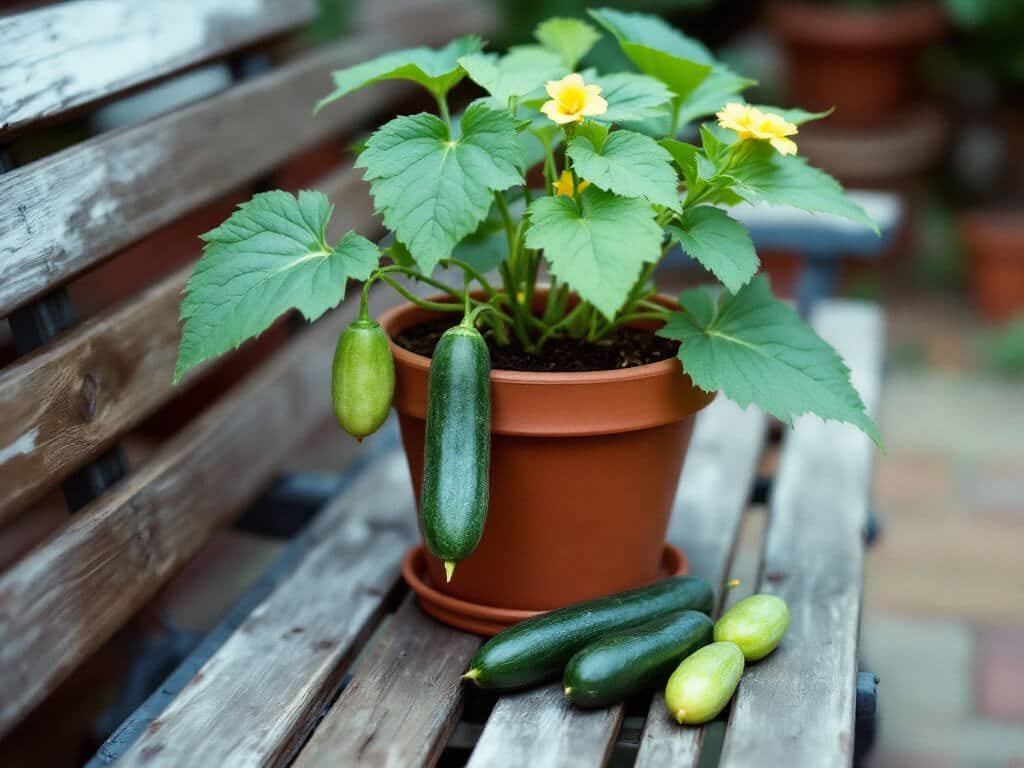
What you need
Gather everything before you plant. Most of the work happens in the first hour, and it’s much harder to fix a bad pot setup once the roots are in.
- A container at least 30 cm (12 inches) wide and deep, with drainage holes. Bigger is better, since a larger pot holds more soil and dries out more slowly.
- Soilless potting mix or peat-free multipurpose compost. Don’t fill the pot with ordinary garden soil alone.
- A bush, dwarf, or compact cucumber variety, or a vining variety plus room to train it upward.
- A sturdy trellis, cage, or other support for vining types. Fruiting plants get heavy.
- A watering can or hose, a balanced vegetable fertilizer, and a clean organic mulch to slow moisture loss.
- Optional: floating row cover for early-season protection and pest exclusion.
Choose a cucumber variety
Pick a bush or dwarf cultivar if your pot sits on a small balcony or you don’t want to build a trellis. These forms are bred to stay compact and are the easiest fit for a container.
Standard vining cucumbers grow fast and need a lot of room. They can still work in a pot if you give them something tall and strong to climb, so plan the trellis before you buy seed. I’d go with a bush type for a first container crop and save the vining types for when you have a proper support.
Choose the fruit type too. Slicing cucumbers are generally picked at 6–8 inches, and pickling types at about 2–4 inches.
Prepare the container
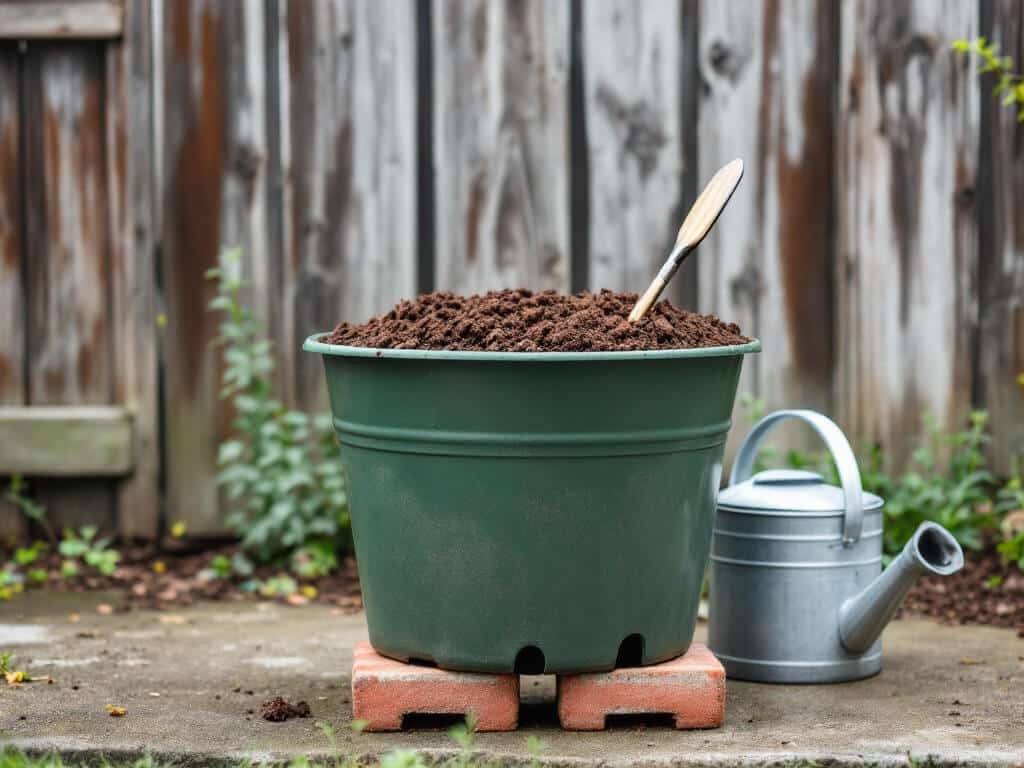
Use a pot at least 30 cm (12 inches) wide and deep with open drainage holes, and make sure nothing blocks them. Never use a pot without drainage holes, because standing water leads to root rot.
Fill the pot with potting mix or peat-free multipurpose compost. You want a fertile, well-drained mix that still holds some moisture, and compost is a good addition if your mix is thin.
If you have a choice between two pots, take the larger one. Container soil dries faster than garden soil, and extra volume gives you a buffer on hot days.
Wait for warm conditions
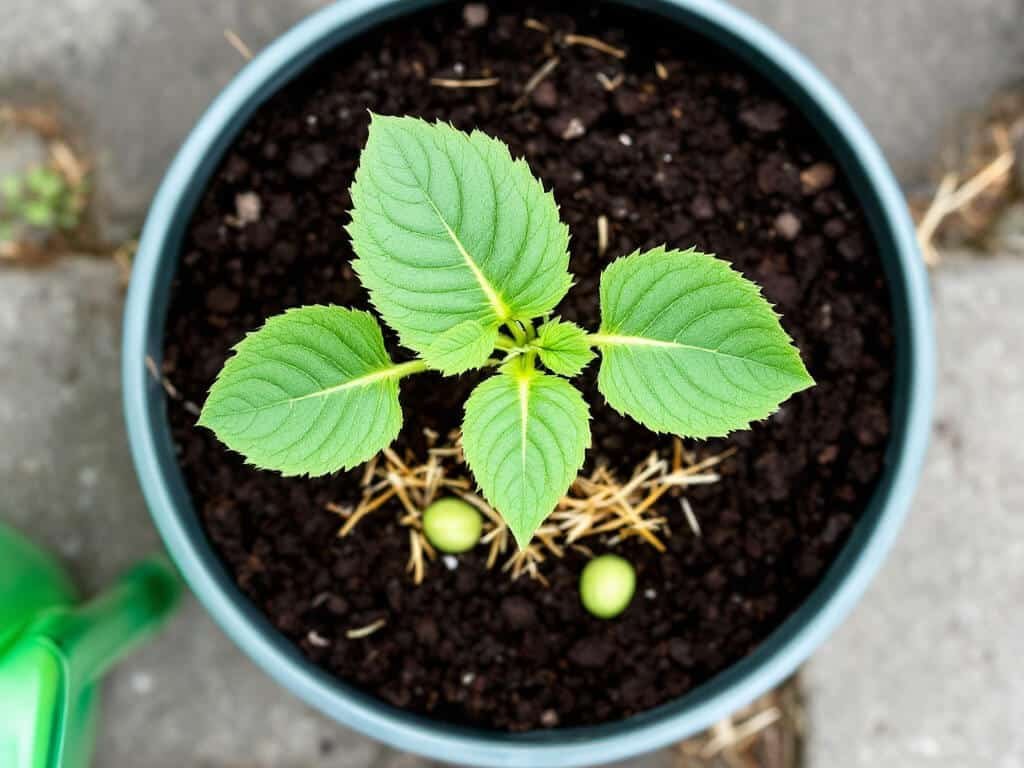
Plant outdoors only after frost danger has passed and the soil is about 60–70°F. Cucumbers need warm soil to germinate and grow, and a cold start leads to poor growth.
A pot sitting on a patio warms up on its own schedule, so don’t rely on the calendar alone. If the weather is still cool, hold off. If you want an early start, floating row cover can give young plants some protection.
If you plan to start seedlings indoors, begin them about 3–4 weeks before your frost-free date. That timing lets them reach transplant size right as it’s safe to move them outside.
Sow or transplant carefully
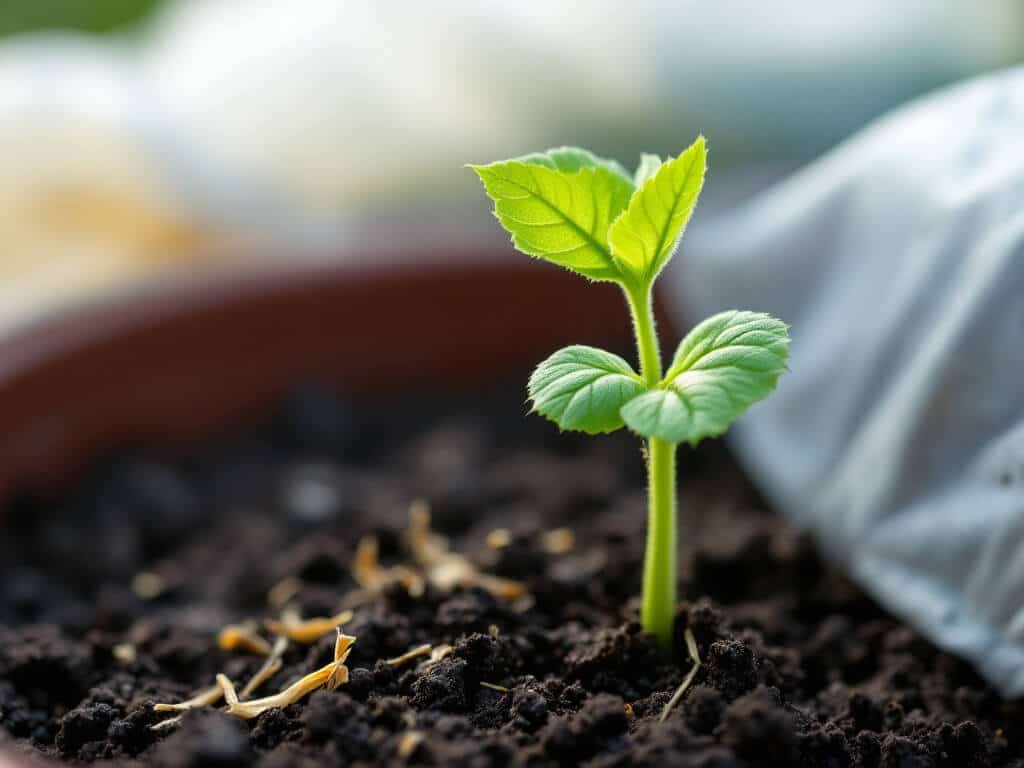
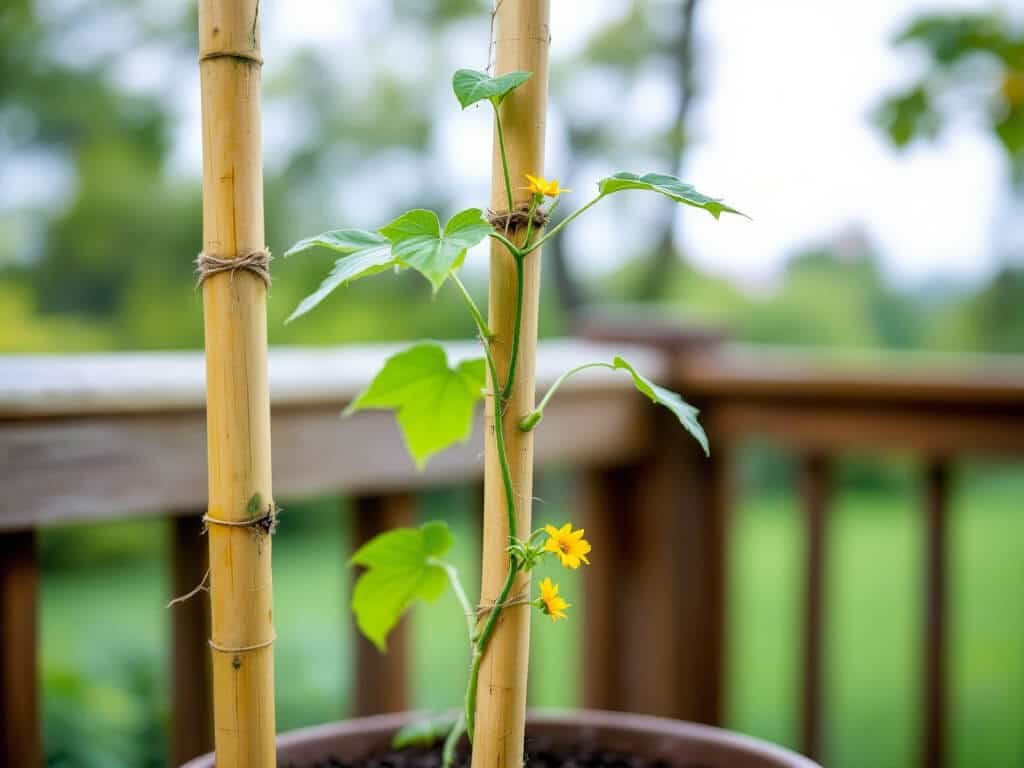
For direct sowing, plant seeds ½–1 inch deep in the prepared pot once the soil is warm. For transplants, move seedlings out when they have two to four true leaves.
Don’t let transplants get oversized in their starter containers. Plants that have outgrown their cells are harder to settle into a new pot, so transplant on time rather than waiting for a bigger seedling.
Handle the roots gently when you transplant. Cucumber roots are shallow, and any damage costs you growing time in a short season.
Add support early
For vining cucumbers, put the trellis or cage in at planting time. Pushing a support into a pot later risks damaging roots that have already spread through the mix.
Choose something sturdy. A vine loaded with fruit puts real weight on the support, and a flimsy stake will lean or collapse by midsummer.
As the stems grow, train them onto the support. A vine that climbs also stays off the soil surface, which helps with the weak, sprawling growth that unsupported plants tend to show.
Bush and dwarf varieties can do without a trellis, so skip this step if you chose one of those.
Provide full sun and even moisture
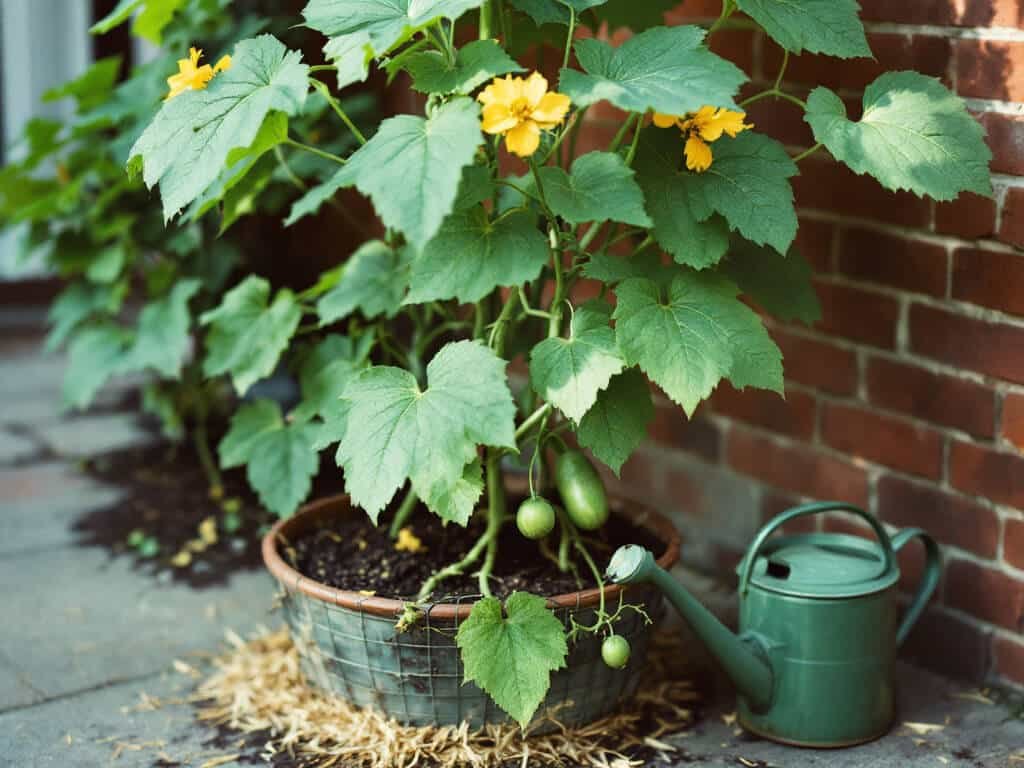
Put the pot in full sun and water whenever the mix begins to dry. Cucumbers have shallow roots and high water needs, and moisture matters most when flowers set fruit and the cucumbers are swelling.
Water at the base of the plant rather than over the leaves. Wet foliage invites fungal problems such as powdery mildew.
A layer of clean organic mulch on the surface cuts down on moisture loss. Check the pot often in warm weather, because a container can go from damp to dry faster than you’d expect. Uneven watering shows up as wilted plants and poor fruit development.
Feed during active growth
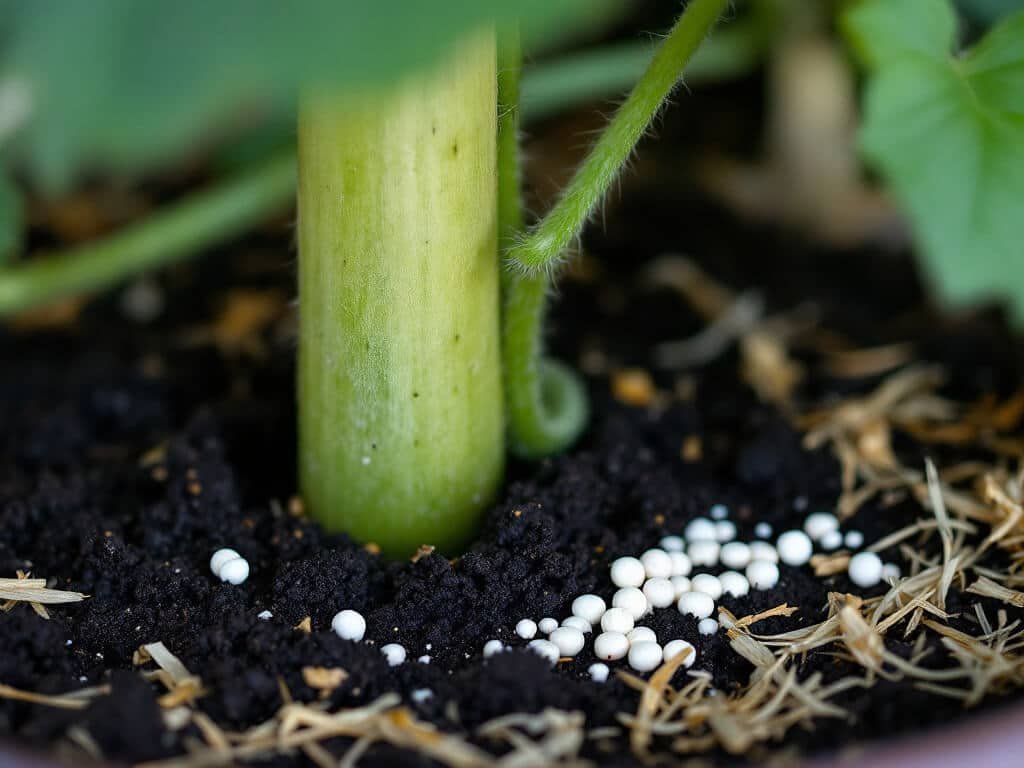
Use a balanced vegetable fertilizer and follow the label rates. Container plants depend entirely on what’s in the pot, so feeding during active growth makes sense.
University of Illinois Extension specifically recommends side-dressing with nitrogen when the plants begin to vine. That’s your cue: when the stems start running or climbing, feed.
Keep watering consistent after you fertilize. Feed on top of dry, stressed roots and you won’t get much benefit from it.
Harvest frequently
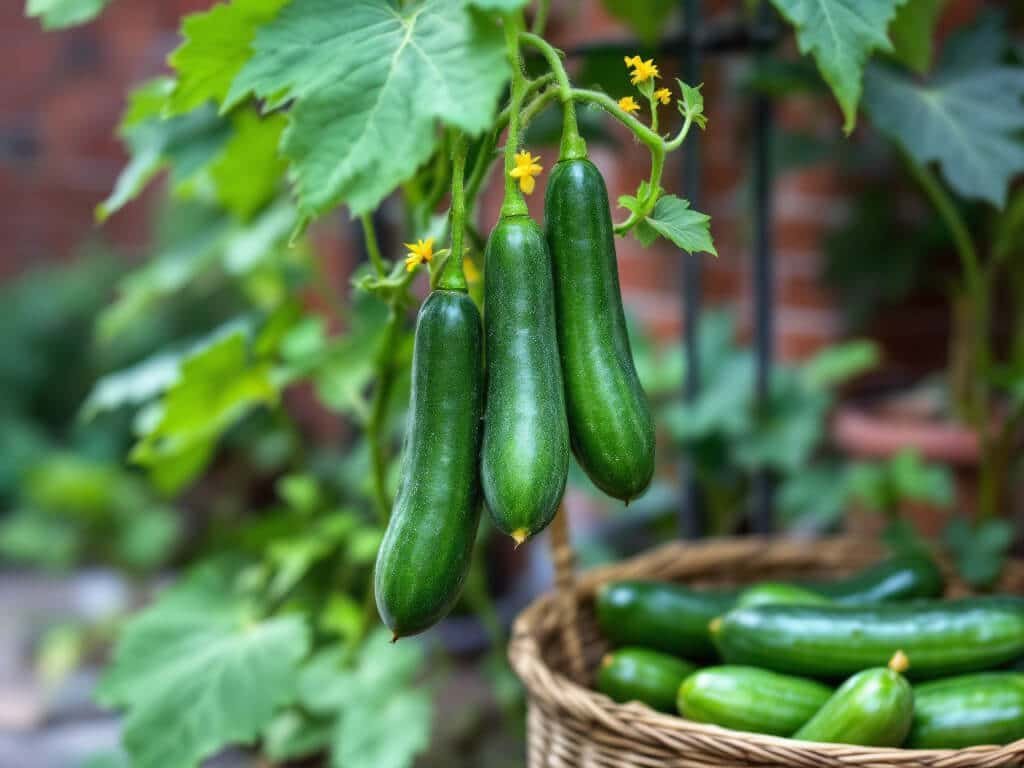
Pick cucumbers every 2–3 days, at the size you want. Slicing types are ready at roughly 6–8 inches, and pickling types at about 2–4 inches.
Remove any overripe fruit. Mature cucumbers left on the vine can slow production, so a fruit you forgot about is costing you the next ones.
Check under the leaves each time. Cucumbers can hide in the foliage, and the frequent picking schedule is what keeps a single pot producing through the summer.
Common problems
Most container cucumber trouble comes down to water, temperature, or support. Here’s what to look for and what to do.
- Pot dries out quickly: Move the plant to a larger container, add a surface mulch, and check moisture often.
- Poor growth in cool weather: Wait until frost danger has passed and the soil has reached about 60–70°F.
- Wilted plants or poor fruit development: Keep moisture even, especially during flowering and fruit enlargement.
- Cucumber beetle damage: Watch plants from the time seedlings emerge, and act promptly with physical or other pest-control measures.
- Powdery mildew or other fungal problems: Water at the soil surface, improve air circulation, and avoid wetting the leaves.
- Weak or sprawling vines: Give the plant a sturdy trellis or cage and train it as it grows.
When to expect results
Germination begins once the soil reaches about 60–70°F. I can’t give you a reliable day count, because the sources I work from don’t offer a verified number, so watch the pot rather than the calendar.
Growth speeds up in warm summer weather when moisture is adequate. There’s no fixed establishment period to point to, but a plant that’s warm, watered, and supported will move quickly.
Harvest starts in summer once fruits reach the right size. From then on, pick every 2–3 days.
FAQ
How big should a pot be for cucumbers?
Use a container at least 30 cm (12 inches) wide and deep, with drainage holes. Larger containers hold more soil and can reduce rapid drying.
Can cucumbers grow in pots without a trellis?
Yes, particularly compact or bush varieties. Standard vining cucumbers are more manageable in containers when trained on a sturdy trellis or cage.
How often should potted cucumbers be watered?
Water whenever the potting mix begins to dry, and keep moisture even, especially during fruit set and fruit development. Container plants may need frequent watering because potting mix dries faster than garden soil.