
How to Grow Onions in Pots
Knowing how to grow onions in pots starts with one number: 18 inches. That is the minimum width and depth for bulb onions, and a smaller pot is the most common reason a container crop ends up with small bulbs. Salad onions are far less demanding, so if you only have a modest pot, grow those instead.
Onions are biennials, but you grow them as annuals for the bulb or the leaves. They work as container vegetables across USDA zones 5 to 9, though exact planting timing depends on your variety and local climate. The steps below cover the pot, the mix, planting, watering, and getting bulbs out of the pot and into storage.
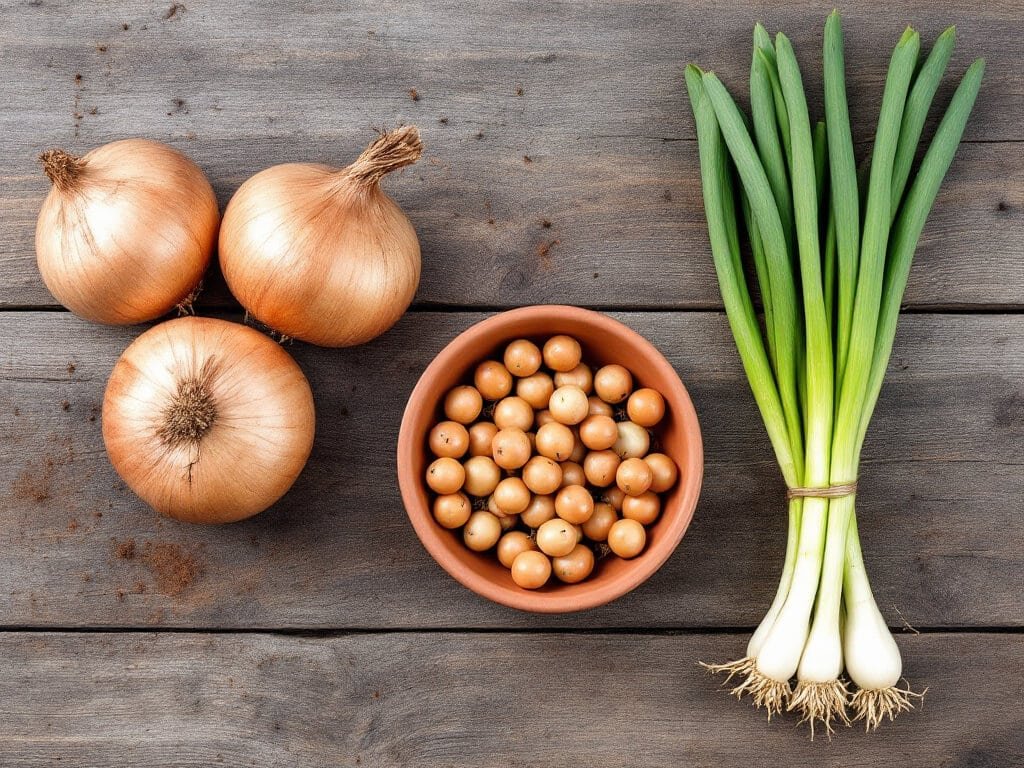
What You Need
Gather this before you plant:
– A container with drainage holes, at least 18 inches wide and 18 inches deep for bulb onions, or at least 12 inches wide for salad onions
– Sterile, peat-free potting compost; for bulb onions, a well-drained, soil-based or comparable container mix
– Onion seed, transplants, or sets (sets are small bulbs planted in spring)
– A watering can or hose with a gentle spray
– A general-purpose liquid fertilizer for feeding during the season
– Labels, and a dibber or pencil for making planting holes
Choose the Onion Type
Decide first whether you want bulb onions or salad onions, because that choice sets the pot size, spacing, and harvest date. Bulb onions give you mature storage bulbs. Salad onions give you quicker, smaller harvests and can be grown closer together.
You can start either type from seed, transplants, or sets. Sets are the simplest route for a first container, since you push a small bulb into the mix and let it grow. Transplants save time over seed but cost more per plant. Seed gives you the widest choice of varieties but needs the most lead time.
If you want onions to cure and keep, go with bulb onions. If you want something to snip into a meal within the season, and you only have a 12-inch pot, salad onions are the better fit.
Prepare the Container
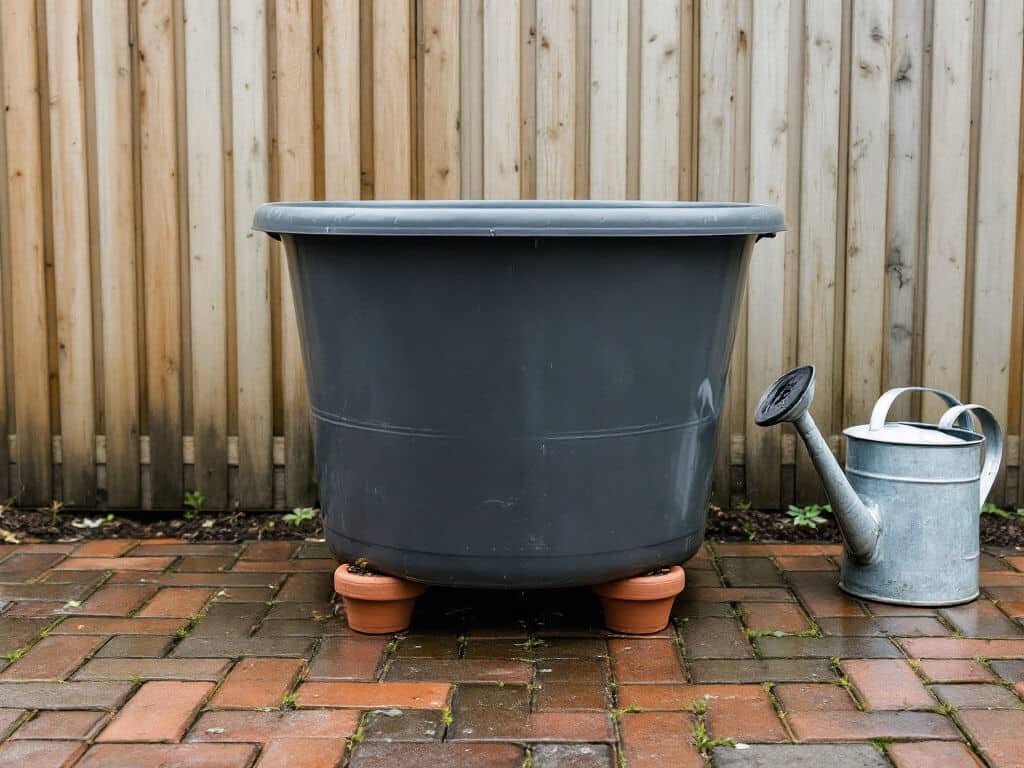
For bulb onions, use a pot at least 18 inches wide and deep. For salad onions, a pot at least 12 inches wide is enough. Check that the pot has drainage holes before you do anything else, and make sure excess water can leave freely.
Do not let the pot stand in a saucer of water. Onions want steady moisture but not prolonged waterlogging, and saturated compost causes root and bulb problems. If the pot sits on a deck or patio, raise it slightly so water runs out rather than pooling under it.
It is tempting to squeeze bulb onions into a smaller pot and plant them a bit closer. I’d skip that. Crowding limits bulb development, and a pot that is too small leaves you with fewer, smaller onions.
Fill the Pot With Suitable Soil
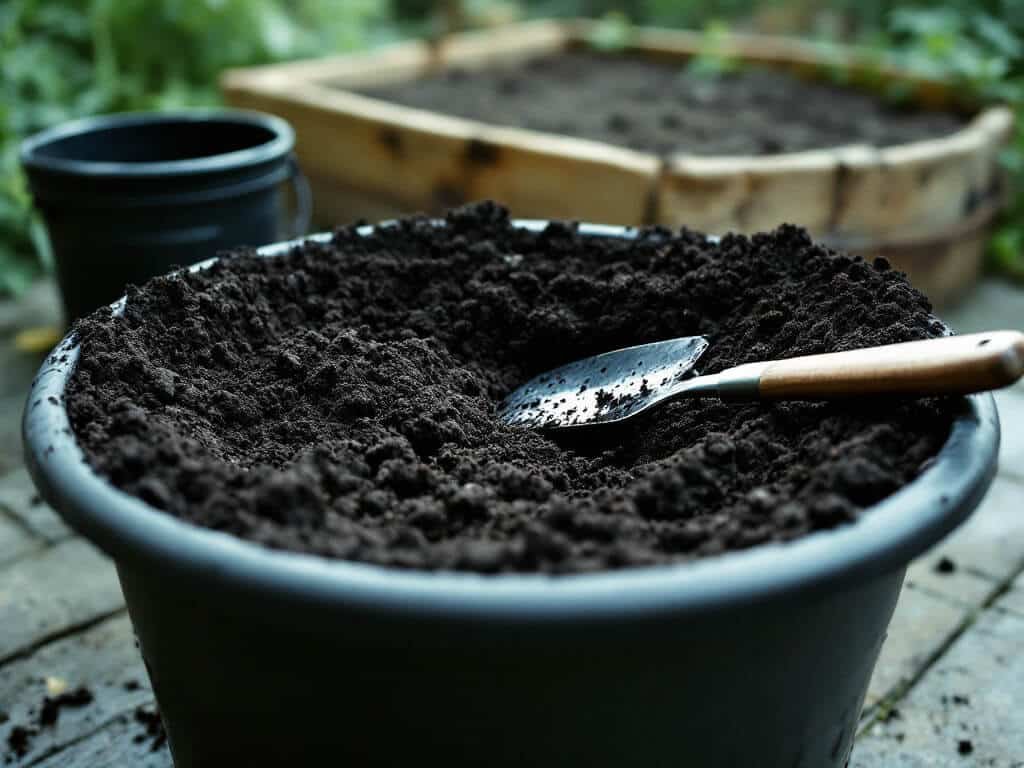
Onions do best in fertile, high-organic-matter, well-drained soil with a pH of 6.0 to 7.0. In a container, that means a good-quality potting compost rather than a lean or sandy fill. Use sterile, peat-free compost, and for bulb onions choose a soil-based or comparable mix that drains well.
Fill the pot to within a little of the rim, leaving enough room to water without it running over the edge. Firm the mix lightly, but don’t pack it down hard, since you want water to move through it.
Fertility matters more in a pot than in the ground, because the plants only have the mix you gave them. A fertile starting mix, plus regular feeding later, is how you avoid weak growth.
Plant Seeds, Sets, or Transplants
Plant sets as soon as spring soil is workable. If you are raising transplants from seed, start them indoors about 10 to 12 weeks before your outdoor planting date. Count backward from the time you expect to plant out, not forward from today.
For bulb onions, the spacing is the same whichever way you start them:
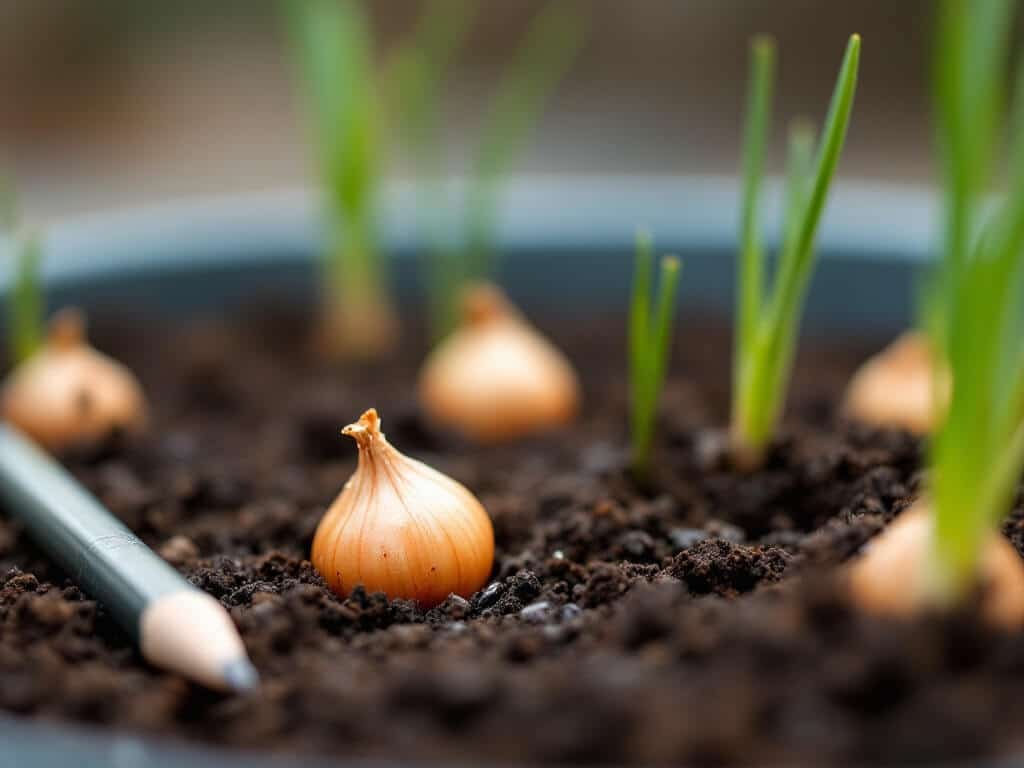
– Set transplants about 2 inches deep and 3 to 4 inches apart.
– If you sow seed directly in the pot, thin the seedlings to 3 to 4 inches apart.
Salad onions are sown shallower and closer. Cover the seed with about ½ inch (1 cm) of compost, then thin the seedlings to roughly 1¼ inches (3 cm) apart. Thinning feels wasteful, but crowded plants end up competing for the same compost and moisture.
Make planting holes with a dibber or pencil so the depth is consistent, and label the pot with the variety and date. Water gently after planting, and keep young plants watered until they are established.
Place the Pot in Full Sun
Onions need full sun, so put the container in the sunniest spot you have. A warm, sunny location with good drainage is the target. Check the spot before you fill the pot, because a pot with an 18-inch footprint full of wet compost is a chore to move once planted.
Keep an eye out for weeds that germinate in the mix. They compete with the onions for light and moisture, and in a crowded container that matters. Pull them as soon as you see them.
Water and Feed the Onions
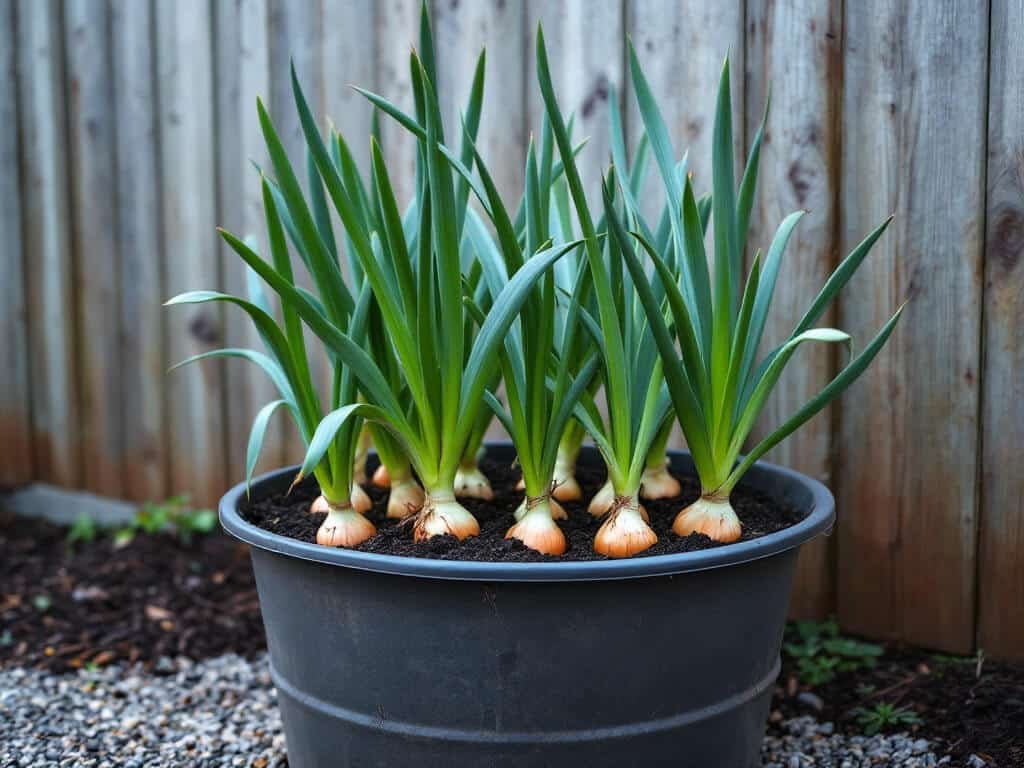
Keep the compost consistently moist without letting it stay saturated. Bulb onions need about 1 inch of water a week when rainfall is not enough, and containers dry out faster than garden beds, so check the pot often. Salad onions may need watering daily in dry conditions.
Water thoroughly when you do water, so moisture reaches the full depth of the pot, and let excess drain away. In dry weather, water more often. Inconsistent moisture is one of the main problems to avoid, so avoid long dry spells followed by heavy soaking.
If growth looks weak, or you want to keep the plants fed through the season, apply a general-purpose liquid fertilizer every two weeks. Container vegetables rely on you for feeding, since the mix only holds so much.
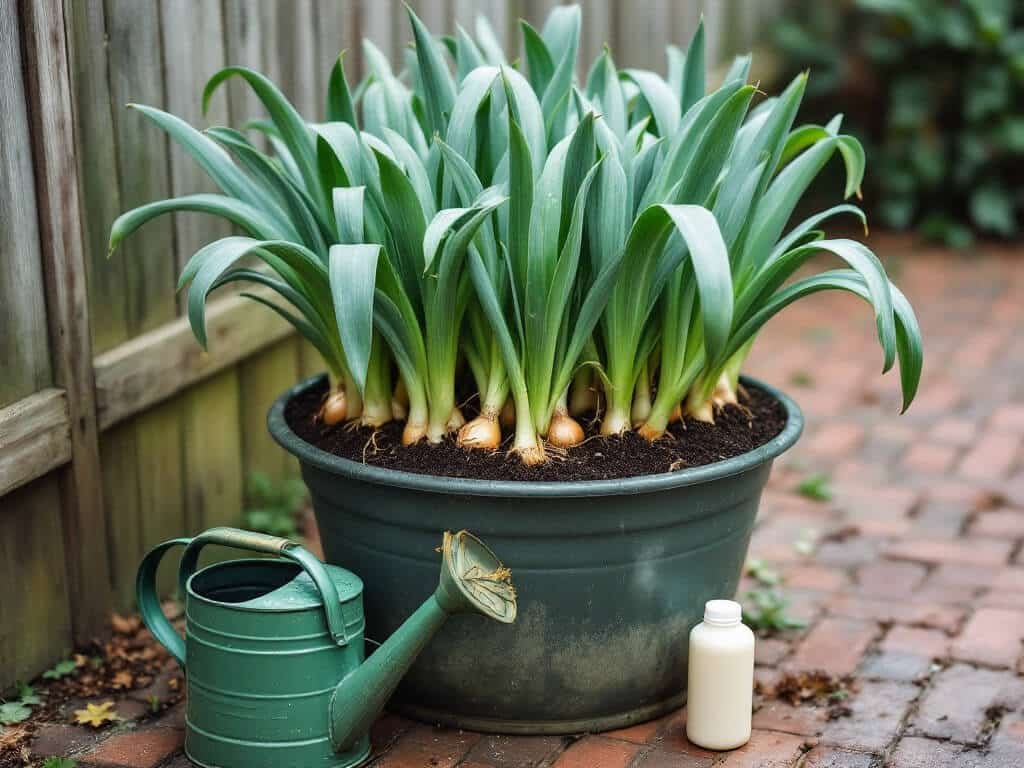
Stop watering bulb onions when the bulbs reach full size and the tops begin to fall. That is the signal they are finishing, and extra water at that stage does them no good.
Harvest and Cure the Crop
Harvest salad onions whenever they are large enough to eat. Repeated sowings can give you a supply from spring through autumn, so sow a little more every so often rather than all at once.
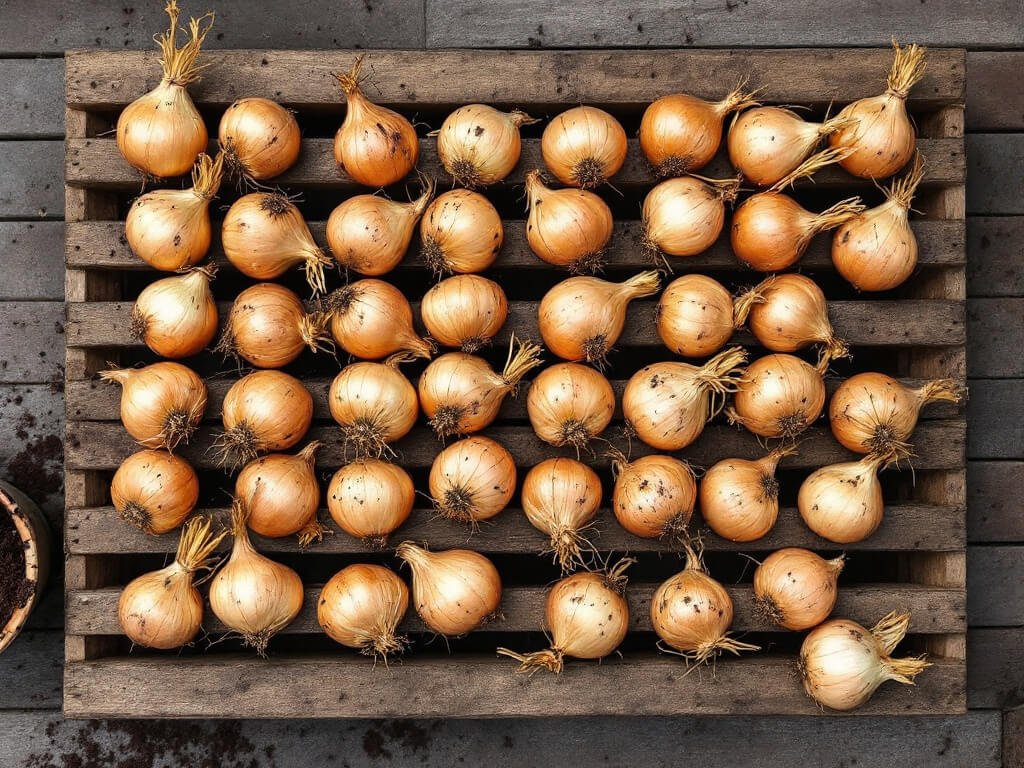
Bulb onions are ready in summer or early autumn, when about half the tops have fallen over and dried. Lift them, then cure them in a warm, well-ventilated place for two to four weeks before storage. Don’t pull them early because the pot looks crowded or the bulbs seem small. Bulbs lifted too soon haven’t finished and won’t cure properly.
Common Problems
– Small bulbs: Crowding is the usual cause. Thin seedlings or space transplants 3 to 4 inches apart for bulb onions.
– Wilting or dry compost: Containers dry faster than beds. Check moisture frequently and water thoroughly in dry weather.
– Root or bulb problems from saturation: Use a pot with drainage holes and a free-draining mix, and never leave it standing in water.
– Weak growth: Start with fertile potting mix and, if needed, feed with a general-purpose liquid fertilizer every two weeks.
– Weed competition: Remove weeds promptly, since they take light and moisture from the onions.
– Bulbs harvested too early: Wait until about half the tops have fallen over and dried, then lift and cure them.
The sources I worked from focus on these cultural problems. They don’t give a container-specific pest and disease list, so I won’t invent one here.
When to Expect Results
Timing depends on what you plant and when. Here is how the season runs:
– Indoor start: Sow seed indoors about 10 to 12 weeks before you plant out.
– Spring establishment: Plant sets when spring soil is workable, and keep young plants watered until they settle in.
– Salad onions: Harvest when plants reach an edible size, with repeated sowings giving crops from spring through autumn.
– Bulb onions: Expect harvest in summer to early autumn, once about half the tops have fallen and dried, followed by two to four weeks of curing.
I can’t give you a reliable germination range for bulb-onion seed, since the sources I reviewed don’t agree on one. Check your seed packet for the variety you bought.
FAQ
How deep should a pot be for onions?
For bulb onions, use a container at least 18 inches wide and deep. Salad onions can be grown in a container at least 12 inches wide.
How far apart should onions be planted in a pot?
Space bulb onions about 3 to 4 inches apart. Salad onions can be spaced about 1¼ inches (3 cm) apart.
How do you know when potted onions are ready to harvest?
Harvest salad onions when they reach an edible size. Lift bulb onions when about half the tops have fallen over and dried, then cure them in a warm, well-ventilated place for two to four weeks.