
Squash Companion Plants: What Helps and What Doesn’t
The best square companion plants are the ones that fill unused space, draw in pollinators, or cut down on pests, and the worst are the ones that crowd the vines or share their diseases. Squash is a warm-season annual in the cucurbit family, grown as an annual across zones 5 to 9, and it wants full sun and steady water. Anything you plant beside it has to live with those demands.
Below are the companions with research or a working track record behind them, the plants to keep away, and a layout for large beds and small ones. I’d also treat some popular claims with caution, and I flag those along the way.
Why pairings matter for squash
Squash has three problems a companion can help with. Its flowers are insect-pollinated, so fruit set depends on bees and other pollinators visiting. It attracts squash bugs, cucumber beetles, squash vine borers, and aphids. And it is prone to fungal and bacterial diseases, which spread faster when foliage stays wet and air doesn’t move.
A good companion addresses one of those without making another worse. Flowers near the bed bring in pollinators and beneficial insects. A tall crop like corn gives you vertical space above the sprawling vines. A fast radish crop uses the bare soil before the squash fills it.
A bad companion does the reverse: it shares pests, crowds the leaves, or competes for water. Squash needs to stay well-watered all season, and that is even more true in a mixed planting where neighbors are drinking from the same soil.
One myth is worth clearing up. The idea that any strongly scented herb or flower reliably repels squash bugs is not established. Utah State University Extension says there isn’t enough information to conclude that companion planting keeps squash bugs away, while University of Minnesota Extension points to research support for nasturtium specifically and study-based effects for marigold and sweet alyssum. Plant these for what they might do, not as a guarantee.
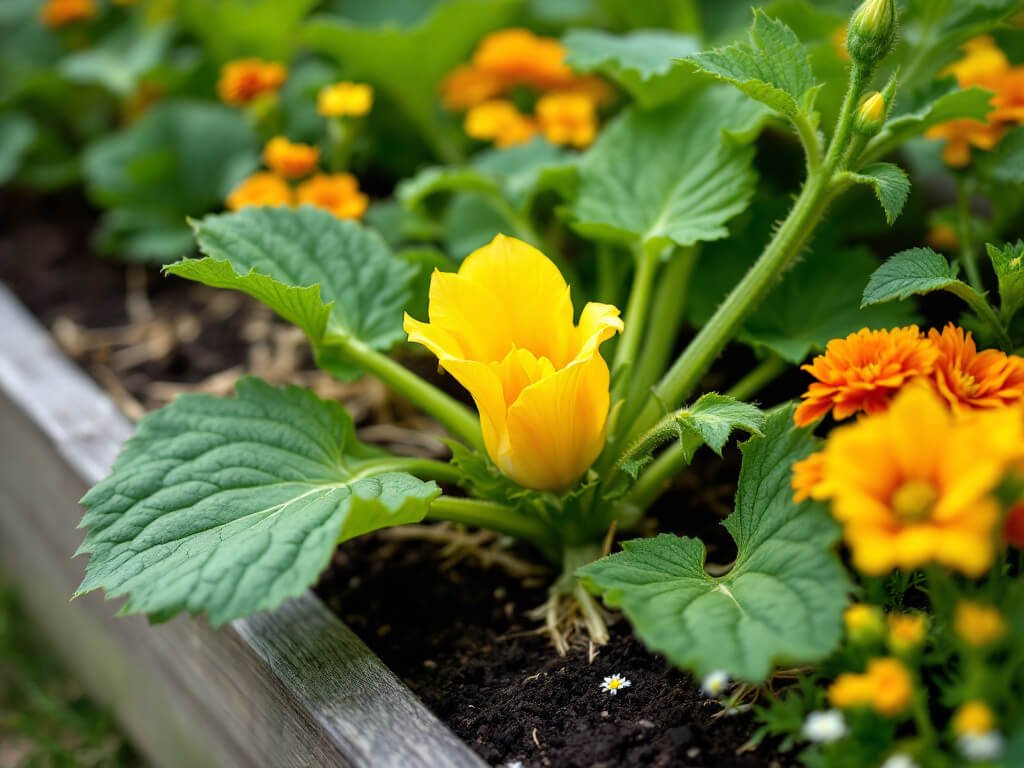
Best companion plants for squash
Nasturtium
Research supports nasturtium for reducing squash-bug populations, which makes it the strongest pest-related pick on this list. Plant it near the squash and let it spread, but don’t let it cover the squash flowers, since pollinators need to reach them. Spacing depends on your squash cultivar and how much room you have.
French marigold (Tagetes)
Studies found marigolds helped reduce squash-bug and cucumber-beetle damage. Use them as an edge plant along the bed rather than tucking them between vines, where they would crowd the squash. Follow the spacing on the marigold’s label.
Sweet alyssum
In a Florida squash study, sweet alyssum increased the natural enemies of aphids and had a slightly positive effect on yield. Put it where its flowers stay open and reachable for beneficial insects. Space it by its label, around the squash’s mature spread rather than inside it.
Sweet corn
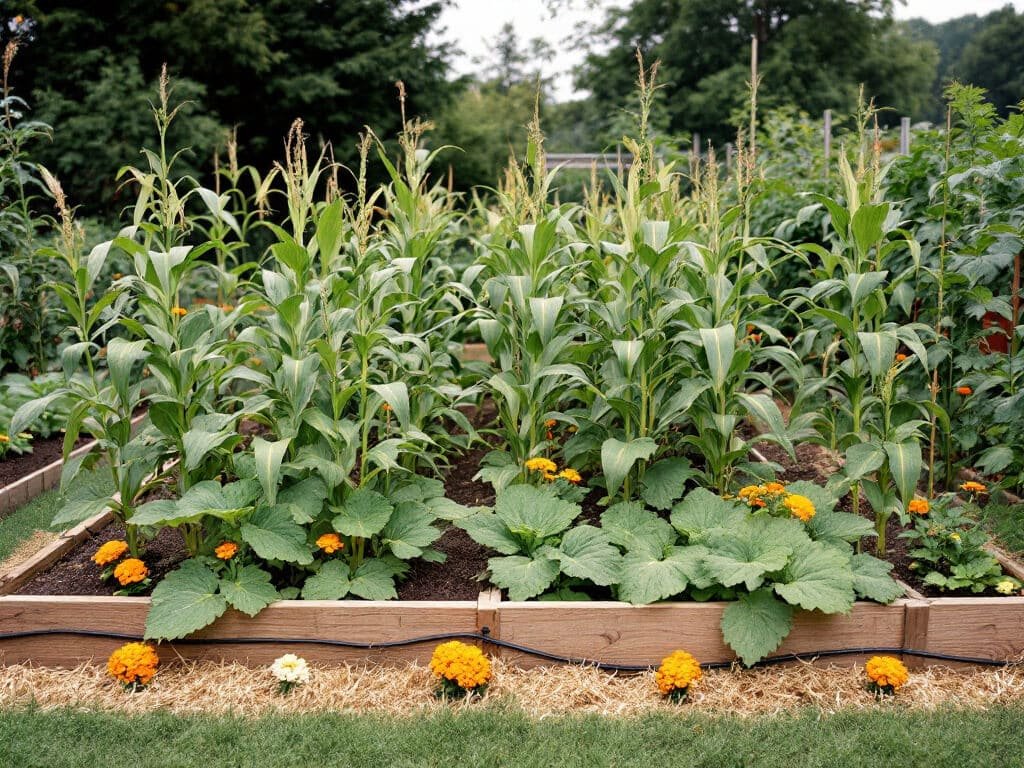
Corn is the backbone of the Three Sisters planting. It gives beans something to climb and acts as a visual barrier, while squash covers the ground layer below. Space corn 18 inches apart in a block, and set aside about 1 square yard for each complete Three Sisters unit.
Climbing French beans
Beans climb the corn and add nitrogen through their association with soil microbes. They also use the vertical space, so they don’t compete with squash on the ground. Sow them at the base of the corn once the corn reaches about 1 foot tall, and use the bean packet for spacing.
Sunflowers
Sunflowers attract pollinating insects and can support beans, adding height above the squash. The catch is shade, and squash needs full sun. Put them where they won’t shade the vines for much of the day, and follow the variety’s spacing instructions.
Lettuce
Lettuce is a short-season filler. Sow it early in the space the squash will eventually claim, and harvest it before the squash foliage gets dense. Use the variety’s label spacing and keep it clear of the squash crown.
Radishes
Radishes mature fast, which makes them another good use of bare soil early in the season. Pull them before the vines spread. Follow the packet spacing, and don’t plant where squash stems will get damaged when you dig the radishes later.
Cilantro
Flowering herbs support beneficial insects, though the effect isn’t specific to squash. Let cilantro bolt and flower rather than cutting it all back, and don’t crowd the squash with it. Follow the herb’s label spacing.
Other flowering plants
Consistent flowers give bumblebees and other pollinators habitat and food, and squash needs those visitors for fruit set. Choose non-invasive annuals that suit your site, space them by their mature size, and keep the flowers visible rather than buried under squash leaves.
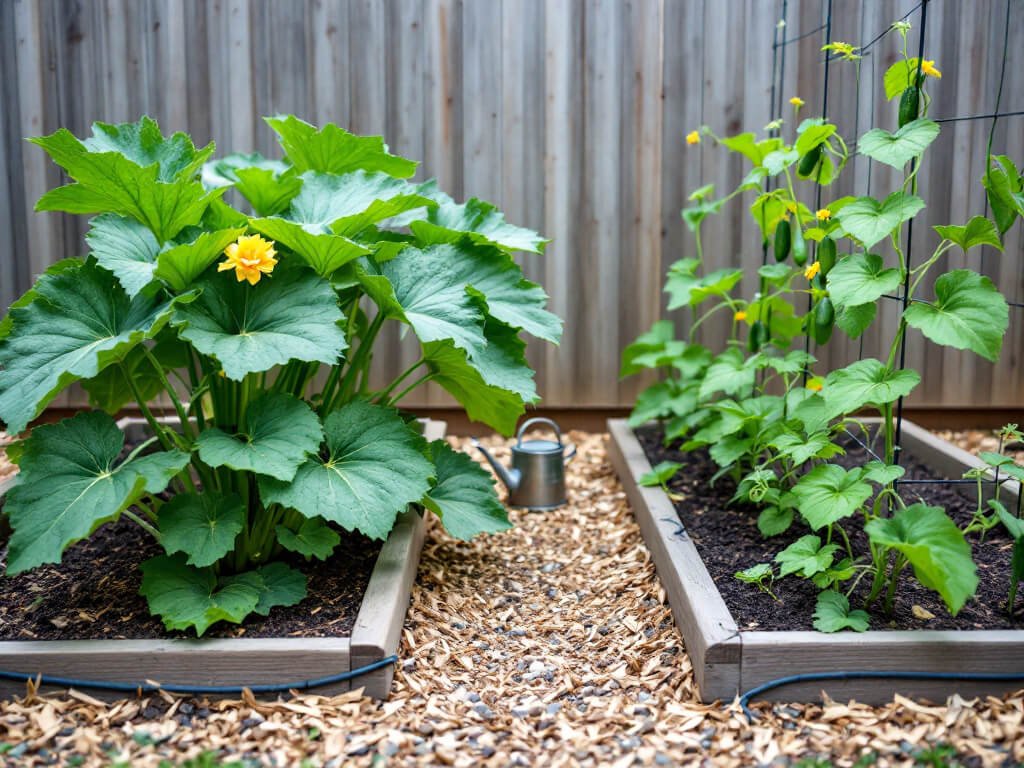
What not to plant with squash
The common thread here is shared problems. If a plant hosts the same pests and diseases as squash, putting them together concentrates the risk.
Cucumber
Cucumber is a cucurbit like squash and can share its pests and diseases. They can grow in the same garden, but don’t pack cucurbits into one bed, and be especially careful where disease has shown up before.
Pumpkin
Pumpkin overlaps with squash on squash bugs, cucumber beetles, vine borers, and disease. Mixing the two in one planting does not eliminate any of those pests. It just gives them more to eat in one spot.
Gourds
Gourds belong to the squash family and may share the same pest and disease pressure. Give them separation or rotate the family from year to year. Don’t rely on a pairing claim to make it work.
Other squash varieties
Planting several squash varieties together can increase the concentration of host plants for the same pests and pathogens. If you want more than one type, keep airflow open between them and rotate cucurbits when you can.
Dense, water-demanding plantings
Any companion that crowds squash can restrict airflow and make fungal or bacterial disease worse. Don’t use a fixed companion list as a substitute for mature-plant spacing. A good companion planted too tightly becomes a bad one.
Layout and spacing
Exact squash spacing depends on the cultivar, so go by the seed packet rather than applying Three Sisters spacing to every type. A vining squash can take up about 1 square yard in a Three Sisters planting, while bush types need less room. Keep the crown, flowers, and foliage open enough for air and pollinators to get in.
Large bed: Plant a block of sweet corn with plants 18 inches apart. Add climbing French beans at the base of the corn once it reaches about 1 foot. Let squash fill the ground layer, using about 1 square yard per complete unit.
Small bed or container: Grow one bush squash. Put low-growing flowering companions such as nasturtium, French marigold, or sweet alyssum at the edge, not against the crown.
Early filler: Sow lettuce or radishes in the open soil and harvest them before the vines spread.
Bed edge: Use flowering plants and cilantro around the perimeter, with spacing from each plant’s label.
Rotation: Don’t put squash, cucumber, pumpkin, or gourds in the same spot year after year.
FAQ
Do companion plants really repel squash bugs?
Evidence is mixed. UMN Extension cites research supporting nasturtium and reports reduced pest damage or more beneficial insects in studies with marigold and sweet alyssum, while Utah State says there isn’t enough information to conclude that companion planting reliably keeps squash bugs away.
Can squash, corn, and beans grow together?
Yes. The Three Sisters system combines squash, sweet corn, and climbing beans: corn supplies support, beans contribute nitrogen, and squash shades the soil. The RHS recommends 18-inch corn spacing and about one square yard for the complete scheme.
Can squash share a bed with cucumbers?
They can grow in the same garden, but both are cucurbits and can share pests and diseases. Crop rotation, good airflow, and keeping foliage dry are more dependable disease-management practices than treating the pairing as beneficial.