
Rosemary Companion Plants: What to Grow Nearby
Choosing rosemary companion plants comes down to matching water and sun, not chasing pest-repelling tricks. Rosemary wants dry feet, full sun, and sharp drainage, and anything planted beside it either respects that or works against it. Pick neighbors that like the same conditions and most of the work is done.
This guide covers the herbs that share rosemary’s conditions, the plants that don’t, and how to lay out a bed or pots so each gets what it needs.
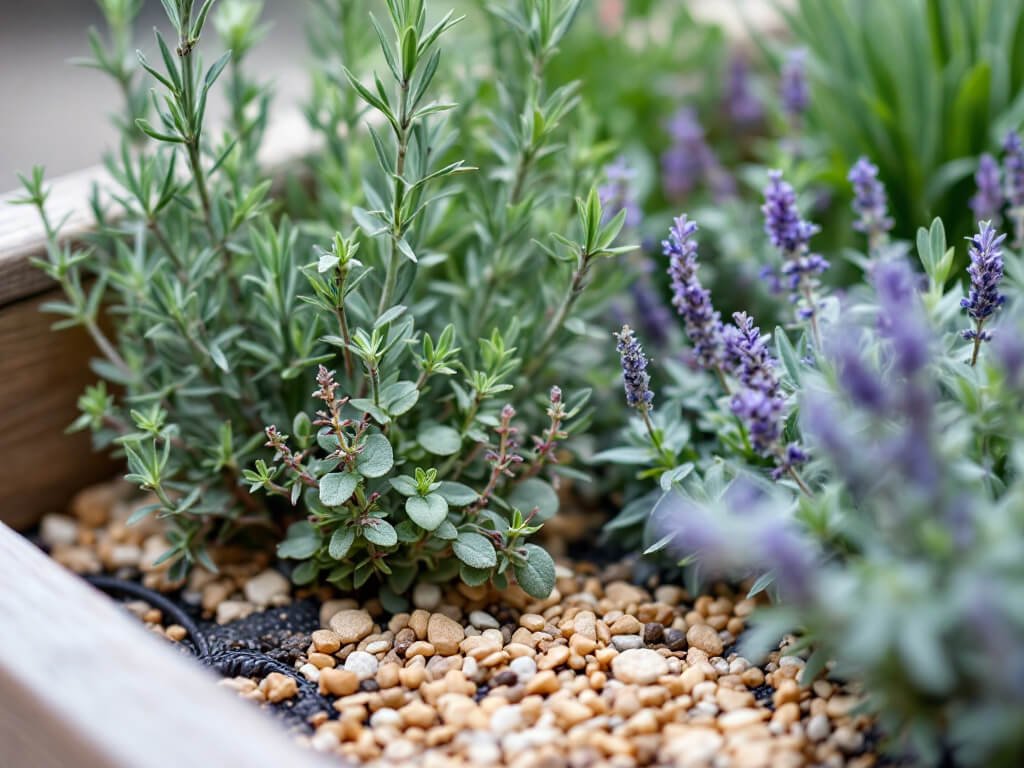
Why pairings matter for rosemary
Rosemary is a woody, evergreen perennial herb that grows like a small shrub. Some forms reach about 4 feet tall, though size varies by cultivar and climate. It is usually perennial in USDA zones 8–10. In colder zones, most gardeners grow it in a container or bring it indoors for winter, so if you garden in zones 5–7, your “companion planting” may mean what you put in the next pot over.
The soil it wants is light, free-draining, and neutral to alkaline. It is drought tolerant once established, and new plants only need water during dry spells. The real danger is wet roots, especially in winter. Rosemary is also prone to root rot, botrytis, and powdery mildew, plus aphids, spider mites, mealybugs, whiteflies, and scale.
That is why the watering schedule matters more than anything else when you choose neighbors. A plant that needs constant moisture will keep rosemary’s roots wetter than they should be, and that is how you lose it.
One myth is worth clearing up. You will see claims that certain rosemary pairings repel pests, and they are repeated everywhere. Controlled evidence for the commonly recommended combinations is limited or mixed, so don’t count on pest control as the reason to plant something. Pick neighbors for compatible sun, drainage, mature size, and watering, and treat any pest benefit as a bonus.
Best companion plants for rosemary
The first six plants below are the practical choices. They are Mediterranean-type herbs that want what rosemary wants. The last four are there mainly for the insects they attract.
I don’t have a verified spacing figure for any of these next to rosemary, so I won’t invent one. The safe rule is to read the mature spread on each plant’s tag and leave enough room for both plants to reach full size.
Sage
Sage likes full sun, sharp drainage, and relatively dry soil, which is the same list rosemary works from. It is one of the easiest herbs to water alongside rosemary because neither wants much. Leave room for each plant’s mature spread.
Thyme
Thyme is a compatible Mediterranean herb with similar sun, drainage, and watering needs. You can water both on the same schedule without compromising either. No rosemary-specific spacing figure exists, so plan around thyme’s mature spread.
Hyssop
Hyssop is a sun-loving, shrubby herb, and the RHS lists it as suitable alongside rosemary. Because it is shrubby, give it real room instead of crowding it against the rosemary. Use its mature spread to decide the distance, not a fixed number.
Marjoram
Marjoram works in a warm, sunny, well-drained planting, which is exactly the spot rosemary needs. It is a good low-fuss filler for the gaps between larger herbs. Leave room for its mature spread.
Oregano
Oregano can share a dry, sunny herb bed with rosemary. If you let it flower, it may also contribute to beneficial-insect habitat. Give it its mature spread so it doesn’t crowd the rosemary.
Lavender
Lavender shares rosemary’s preference for full sun and well-drained soil, so it is a natural partner in the driest corner of a bed. Treat the two as a pair on the watering schedule. Plan the gap around lavender’s mature spread.
Nasturtium
Nasturtium shows up often in companion-planting lists and may support pollination or beneficial insects. A rosemary-specific pest-control benefit has not been firmly established, so I’d treat it as optional. If you try it, give it room by its mature spread and watch that it isn’t pulling the surrounding soil toward wetter conditions than the rosemary likes.
Dill
Flowering dill can attract beneficial insects, including parasitoid wasps that help suppress some caterpillar pests. That is a reason to let a few plants bloom, not a guarantee of fewer pests. Space it by its mature spread.
Cilantro
Flowering cilantro can provide beneficial-insect habitat, and it is among the herbs associated with insect-management benefits. Like dill, it only helps if you let it flower. No rosemary-specific spacing figure exists, so go by its mature spread.
Fennel
Fennel flowers can attract beneficial insects. Its growth habit and allelopathy concerns make it a better fit at the edge of a planting than tightly interplanted with rosemary. If you grow it, give it its own corner and keep it from crowding anything.
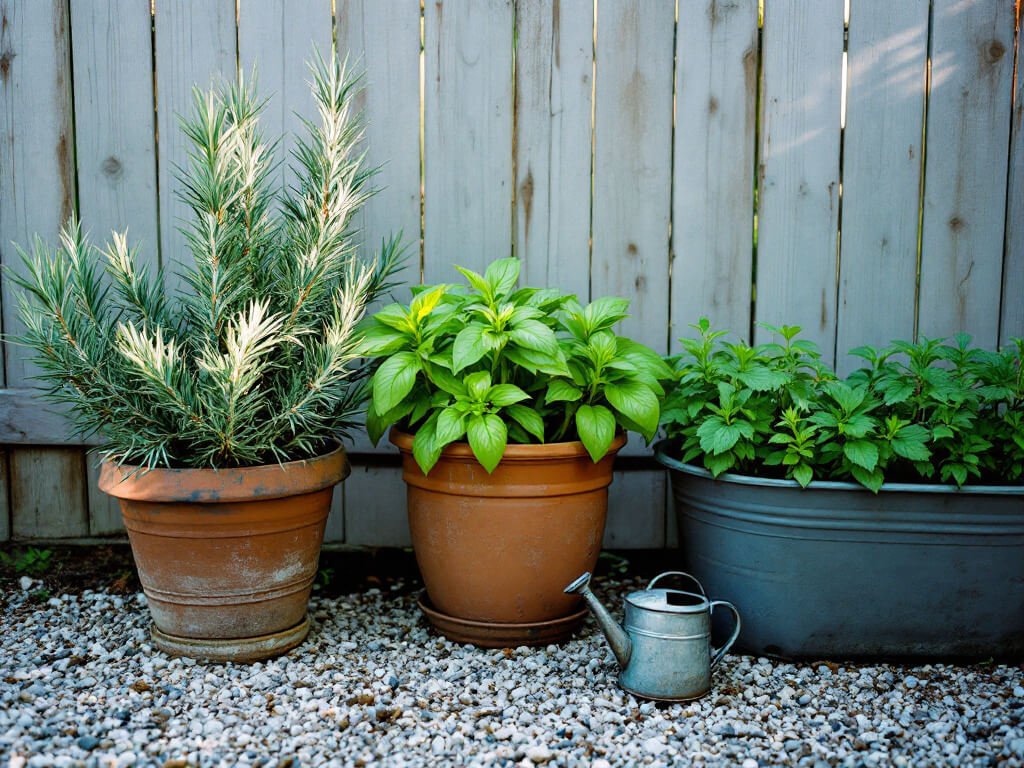
What not to plant with rosemary
The problems here are about water and space. None of these plants has a verified rosemary-specific allelopathy claim behind it. They simply want a different kind of care than rosemary.
Basil
Basil needs more consistently moist conditions than rosemary, and that creates an incompatible watering schedule. The two can be planted near each other, but you will end up watering for one and short-changing the other. Grow basil in a separate container or on a different irrigation zone.
Mint
Mint prefers more moisture than rosemary and spreads aggressively by rhizomes. That makes it a poor match for rosemary’s dry, sharply drained conditions and a competitor for space. Grow it separately in a container.
Cucumbers
Cucumbers generally need more consistently moist soil than rosemary. Putting them on the same irrigation schedule can encourage rosemary root problems, which is the exact outcome you are trying to avoid. Keep them on a separate watering line.
Melons
Melons need regular moisture and substantial room, so they cause both a water conflict and a space conflict with rosemary. They are one of the worst fits on this list for that reason. Plant them well away from the herb bed.
Layout and spacing
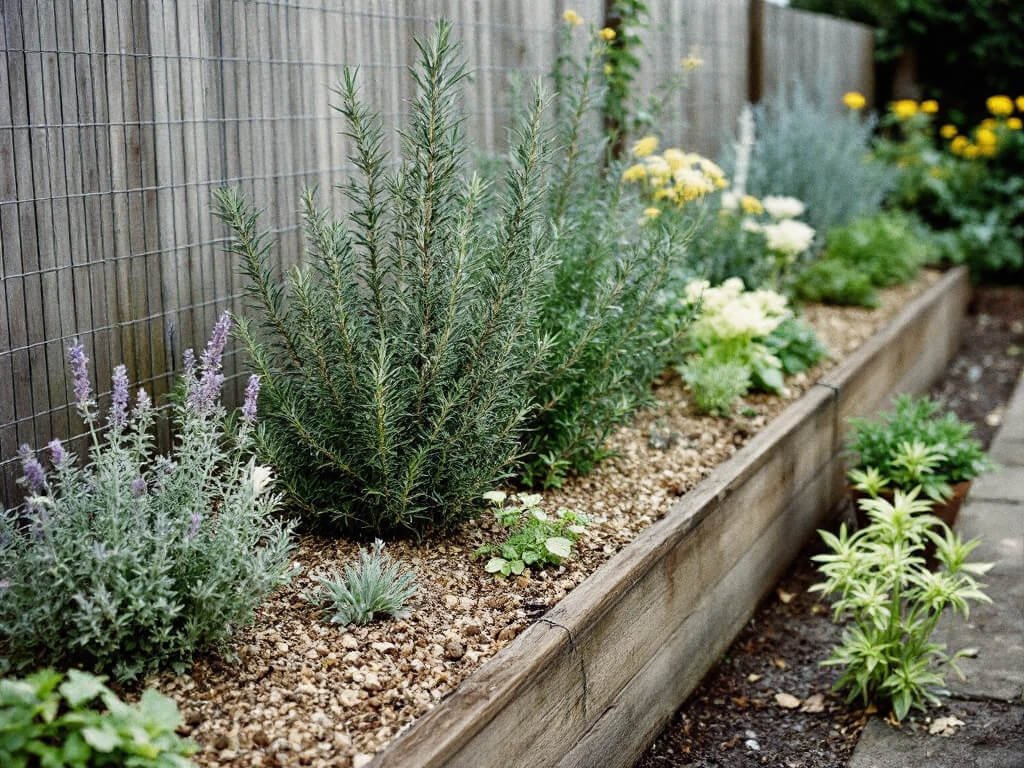
Put rosemary in the driest, sunniest part of the bed and group its compatible herbs around it. Anything that wants regular watering goes on a separate irrigation zone or into its own pot. Since I have no verified spacing figures, plan every gap around each plant’s mature spread.
Core group: rosemary with sage, thyme, hyssop, lavender, oregano, and marjoram in the driest, sunniest spot.
Edge placement: fennel at the edge of the planting, not tucked in among the others.
Separate watering: basil and cucumbers on their own irrigation zone or in their own containers.
Own container: mint, grown by itself.
Away from the herb bed: melons, because of their space and water demands.
Colder zones: rosemary in a container with excellent drainage, which you can move indoors for winter.
FAQ
Which herbs grow best with rosemary?
Sage, thyme, hyssop, marjoram, oregano, and lavender are strong practical choices. They share rosemary’s preference for sun and well-drained soil.
Can rosemary and basil grow together?
They can be planted near each other, but basil generally needs more consistent moisture while rosemary prefers soil that dries between waterings. Separate containers or irrigation zones are more reliable.
Does rosemary repel garden pests?
Rosemary’s volatile compounds are associated with insect deterrence in some companion-planting literature, and flowering rosemary can attract sweat bees. Specific pest-control claims for pairings remain mixed or insufficiently tested.