
Weigela Companion Plants for Sunny Garden Beds
Choosing weigela companion plants comes down to four things: light, moisture, room, and airflow. Weigela wants full sun and moist but well-drained soil, so anything you plant beside it should be happy with the same conditions. Get that right and the rest is mostly a matter of leaving enough space.
This guide covers ten plants that fit, five kinds of plants to keep away, and how to lay out the bed.
Why pairings matter for weigela
Weigela is a deciduous flowering shrub, commonly listed for USDA zones 5–8, though hardiness varies by species and cultivar. It flowers in spring and summer, and it blooms best in full sun. It will tolerate partial shade, but expect fewer flowers there.
The soil side is more forgiving than the light side. Weigela adapts to clay, loam, and sand, but it does best in moist, well-drained ground. Water it while it establishes and when the soil dries out, and don’t let it sit wet. Persistently soggy soil is where root problems start.
Weigela usually has few serious problems. The ones to know are deer damage, leaf and bud eelworms, gray mold, wood rots, and winter dieback. Gray mold and wood rots are moisture-related, which is where companions come in. A crowded bed with poor airflow holds moisture around the shrub, so what you plant next to it and how close you plant it affects disease risk.
Size is the other variable. Mature size varies a lot by cultivar. NC State lists ‘Sunset’ as compact, while a standard weigela can become a broad landscape shrub. Check the plant tag for mature width before you decide on any spacing in this article.
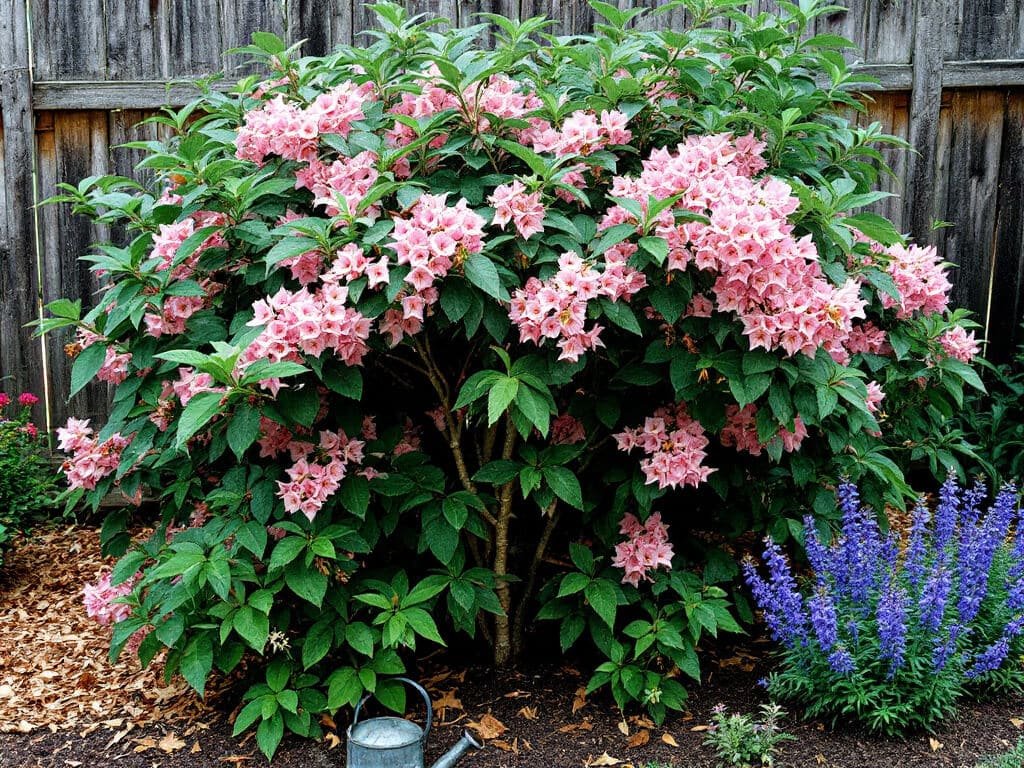
Best companion plants for weigela
The brief doesn’t give a fixed distance for any of these pairings, and I won’t invent one. For each plant, space by the mature widths on both plant tags.
Hydrangea
Hydrangea extends the flowering display into summer and can share the same moist, well-drained soil. Both are shrubs, so spacing matters more here than with perennials. Use the mature widths on both tags and keep the canopies from overlapping.
Lilac
Lilac is a compatible flowering shrub for a sunny site. Cultivar sizes vary, so work out the distance from the mature widths of both shrubs. Don’t guess from the size of the nursery pot.
Viburnum
Viburnum adds another flowering shrub and some seasonal structure to the planting. Use the combined mature spread of the two plants rather than a single number. Add the two widths together and plan around that.
Ninebark
Ninebark gives you a different shrub form and spring interest under the same sunny conditions. That contrast keeps a row of shrubs from looking like one repeated shape. Follow the mature spread of the specific weigela and ninebark cultivars you buy.
Echinacea (coneflower)
Echinacea adds summer flowers and fits a pollinator-oriented planting. Put it outside the weigela’s eventual canopy, using the mature widths listed for both plants. That means planting it where the shrub will be, not where it is today.
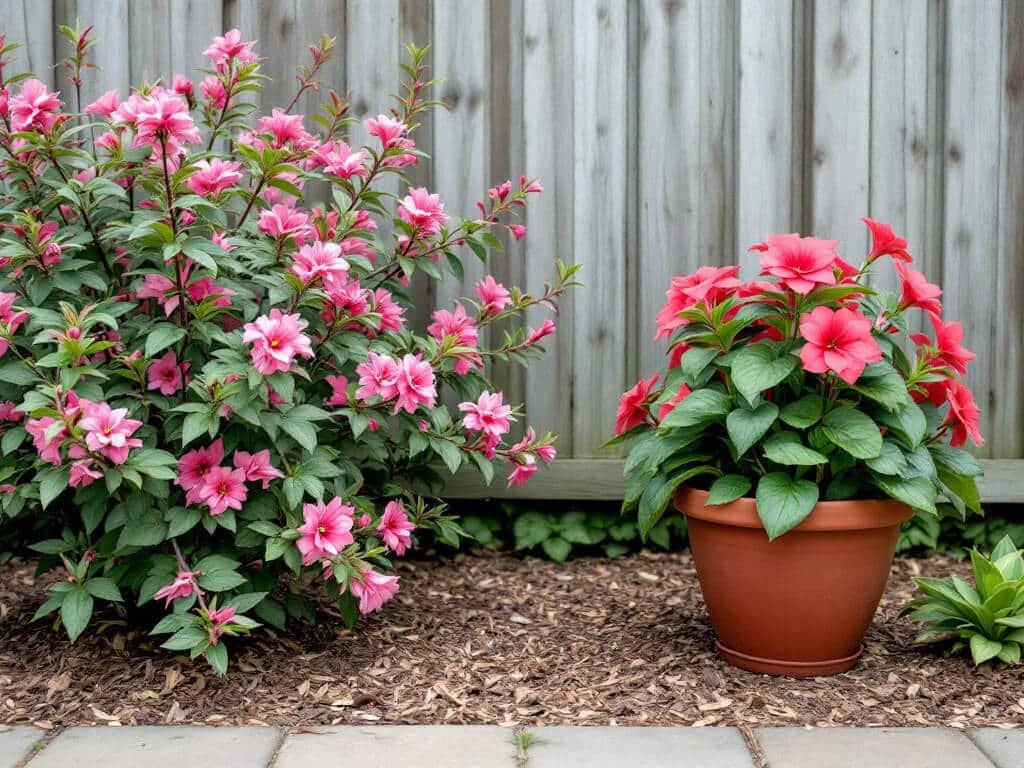
Salvia
Salvia is a flowering perennial that suits the same sunny conditions weigela prefers. Space it by the mature width of your salvia cultivar. Keep it clear of the shrub’s base.
Bee balm
Bee balm provides later-season flowers and a perennial layer in front of the shrub. Space it by the mature width of the bee balm you choose. Leave enough room that air can move around the weigela.
Peony
Peony adds a spring-flowering perennial layer in a compatible sunny planting. Use the mature widths on the plant labels rather than a fixed distance from a generic chart. Peonies are long-lived, so it pays to place them correctly the first time.
Barberry
Barberry offers foliage contrast and shrub structure beside weigela’s flowers. Choose a non-invasive, locally appropriate cultivar, since barberry varies in that respect. Space it by the mature widths of both shrubs.
Petunia
Petunia adds seasonal color wherever the planting gets enough sun. Keep annuals outside the weigela’s root flare and follow the recommended spacing for the petunia cultivar. This is the easiest swap if you want to change the look of the bed next year.
What not to plant with weigela
Plants that need full shade
Weigela wants full sun, and a shade plant next to it either gets more light than it can take or forces you to compromise on the shrub. Weigela tolerates partial shade but blooms less heavily there. Give shade plants their own bed.
Plants that need boggy or persistently wet soil
Their water needs conflict with weigela’s need for well-drained soil. Wet ground invites drowning, edema, and root-related problems in the shrub. If you have a low, wet spot, plant something else there.
Large, aggressive shrubs planted too close
Big shrubs planted tightly compete with weigela for light, water, and nutrients, and they restrict airflow. The fix is simple: space by mature width instead of filling the bed on day one. A bed that looks sparse at planting is fine for a few years.
Disease-susceptible plants in a poorly ventilated bed
Dense planting encourages moisture-related diseases such as gray mold and wood rots. A disease-prone plant packed in beside weigela adds to that risk. If a plant tends to get mildew or rot, give it open space and keep it out of the crowded corner.
Impatiens in full sun
Impatiens generally need partial sunlight, so an exposed spot beside weigela is a poor match. Save them for a shadier position. In a full-sun bed, use petunias instead.
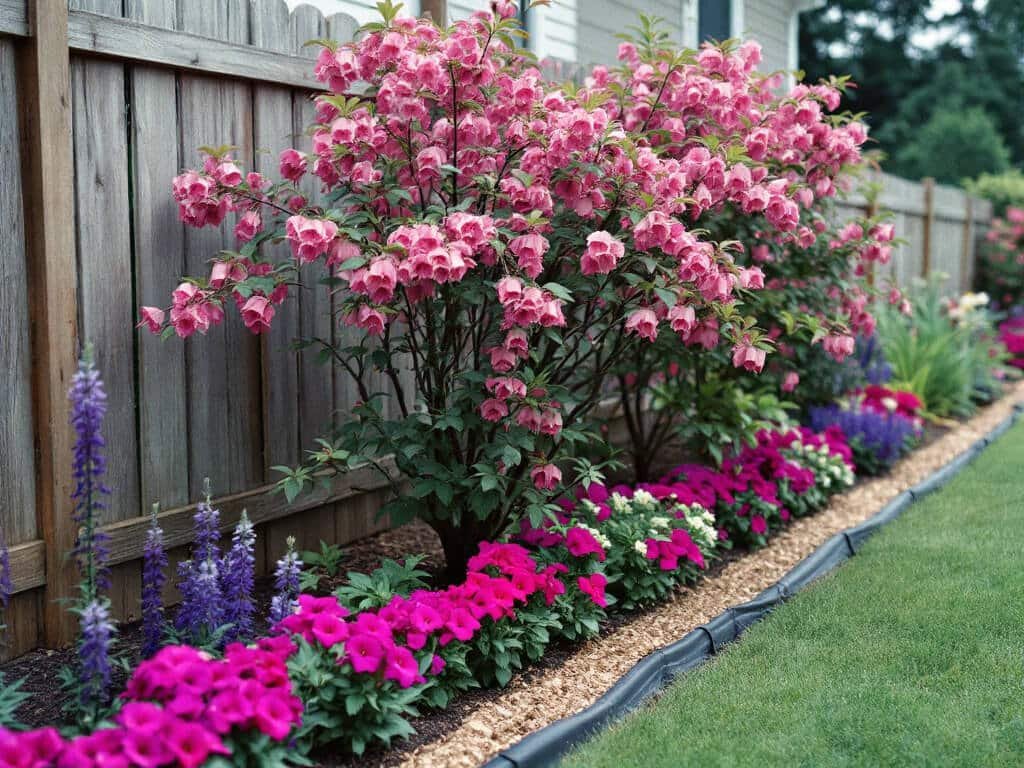
Layout and spacing
Weigela needs room to reach its mature width, so the bed should be planned around the shrub first and everything else second. Group plants that share the same full-sun, moist-but-well-drained needs, and keep everything else away from the shrub’s base.
– Place the weigela toward the back or middle of the bed so its mature width can develop without being crowded.
– Plant other shrubs (hydrangea, lilac, viburnum, ninebark, barberry) by the combined mature widths on the plant tags, with no canopy overlap.
– Set lower perennials (echinacea, salvia, bee balm, peony) around the shrub but not against it, outside its eventual canopy.
– Keep annuals such as petunias outside the root flare, at the spacing recommended for the cultivar.
– For containers, choose only a compact weigela cultivar and don’t use standard landscape-shrub dimensions.
FAQ
Can weigela grow with hydrangeas?
Yes. Gardening guidance commonly pairs the two, and both suit beds with moderate moisture and good drainage. Match cultivars by mature size and light needs.
Does weigela need full sun?
Full sun gives the best flowering. Weigela tolerates partial shade but may bloom less heavily there.
Can annual flowers be planted around weigela?
Yes, as long as the annuals match the site’s light and moisture. Petunias are listed as compatible, while impatiens belong in a shadier spot, not in exposed full sun.