
Cucumber Companion Plants: What Helps and What Doesn’t
Choosing cucumber companion plants is mostly a question of what to keep out of the bed, and the popular advice runs well ahead of the evidence. Cucumbers want full sun, steady moisture, and good airflow, and anything you plant beside them either supports that or gets in the way.
This guide sorts the options into plants with some research behind them, plants that only save space, and plants to avoid. Where the research is thin, I’ll say so. A pairing with a tidy-sounding reason isn’t necessarily a pairing that works.
Why pairings matter for cucumber
Cucumbers are warm-season annual vines, grown as a summer crop in zones 5 to 9. They aren’t frost hardy, so they go in after the soil passes 60°F and nights stay above 50°F. They like well-drained, moisture-retentive soil with a pH of 5.8 to 6.6, and they need consistently moist soil all season.
That last point drives most of the pairing decisions. Whatever shares the bed gets watered like a cucumber, and whatever crowds the vines holds humidity against the leaves. Cucumbers already have plenty of foliar disease and pest problems, including cucumber beetles, aphids, powdery mildew, downy mildew, bacterial wilt, and mosaic viruses.
One myth to clear up: no extension source in the reviewed material backed the broad claim that herbs or flowers repel cucumber beetles or raise cucumber yields across the board. The best evidence is crop-specific, and much of it comes from squash studies, not cucumber trials. Treat these pairings as reasonable bets, not guarantees.
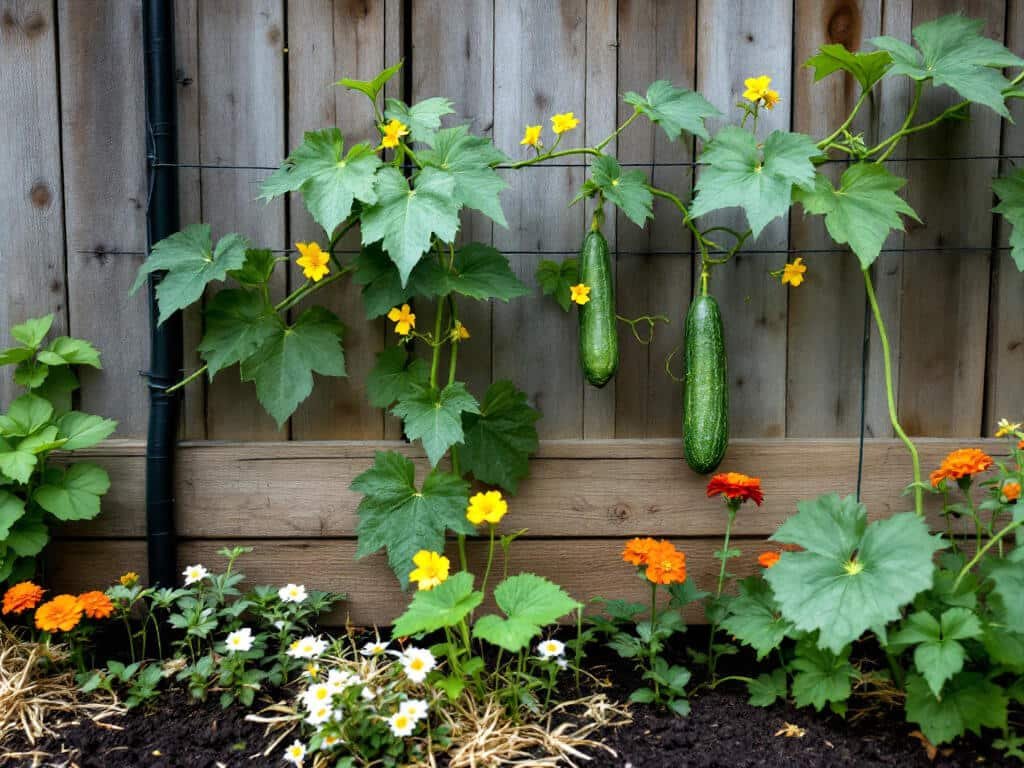
Best companion plants for cucumber
None of the plants below came with a verified cucumber-specific spacing. Where I give spacing guidance, it’s the general rule from the research: keep companions out of the cucumber’s vine and root space, and follow the companion’s own mature width.
Nasturtium
Research cited by UMN Extension found fewer squash bugs where nasturtium was planted. An Iowa study also reported less damage from squash bugs and cucumber beetles. Both results involve squash systems, so cucumber benefits are plausible, not proven.
Plant it outside the cucumber’s intended root and vine space. Nasturtium is a good first choice because it’s cheap and easy to tuck into an edge.
Marigold
The same Iowa study reported reduced damage from squash bugs and cucumber beetles with marigolds. In a Florida squash study, African marigolds also increased the natural enemies of aphids. That’s two possible jobs from one flower.
Space marigolds according to the mature width listed for your cultivar. Don’t let them crowd the cucumber leaves.
Sweet alyssum
Sweet alyssum increased natural enemies of aphids in the Florida squash study, mostly by giving beneficial insects a place to live. It’s a support plant, not a repellent. Aphids are on the cucumber pest list, so it earns its spot.
Use the plant’s mature spread to decide placement, and keep it from creeping into cucumber foliage.
Blue Hubbard squash
This one works as a trap crop. It can pull cucumber beetles, squash bugs, and squash vine borers away from other cucurbits. It isn’t a guaranteed cucumber protector, and it only helps if you watch it.
Give both plants room for their full mature vines, and check the trap crop often. A trap crop you ignore is just another pest nursery sitting next to your cucumbers.
Flowering plants generally
Steady flowers can support bumblebees and other pollinators, which helps cucurbit pollination. The benefit is strongest when the flowers bloom at the same time as the cucumbers. No cucumber-specific pest reduction was verified for flowers beyond the ones named above.
There’s no universal spacing. Put flowers where they won’t block airflow or make it hard to reach the vines.
Trellised climbing beans
Beans can share vertical space as another climbing crop. A cucumber-specific benefit wasn’t verified, so this is a space-saving arrangement and nothing more.
Use separate trellis sections unless the structure is clearly strong enough for the combined load. Two crops pulling on one flimsy frame is how a trellis ends up on the ground in August.
Trellised squash or pumpkins
Squash and pumpkins can climb a vertical structure in the right system. The verified benefit is saving space, not better cucumber health. These are also cucurbits, which puts them in the “what not to plant” category too.
If you try it, separate the vigorous vines so they don’t crowd each other. I’d skip it in a small bed.
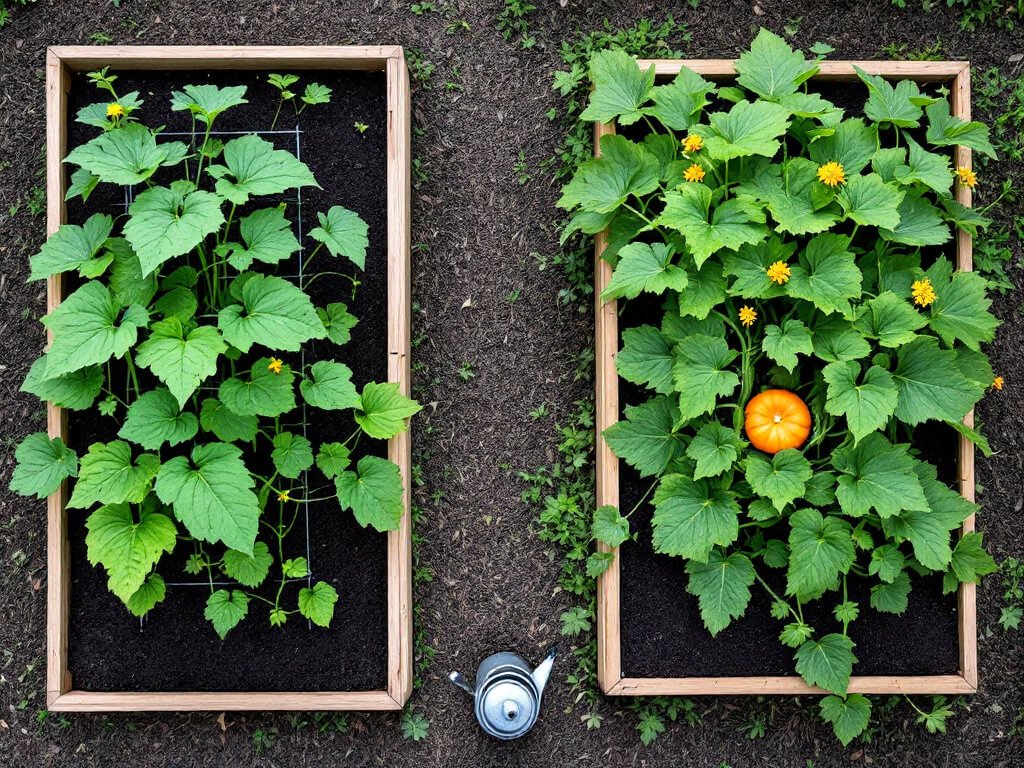
What not to plant with cucumber
The common thread here is shared problems and crowding. Plants that look compatible on paper can still raise disease pressure or fight for water.
Other cucurbits as a pest-management pairing
Cucumbers, squash, melons, and their relatives share major pests and diseases, including cucumber beetles, powdery mildew, and viruses. Grouping them doesn’t dilute those problems. It concentrates them.
Don’t count on another cucurbit to protect your cucumbers, because they share the same pests and diseases. The one exception is a deliberate trap crop like blue Hubbard squash, and even that needs close monitoring.
Squash or pumpkins planted too closely
Vigorous squash and pumpkin vines compete with cucumbers for growing room and cut down airflow. Shared pests also move easily from one crop to the other.
If you want both, give each its own space and its own support. Don’t weave the vines together.
Melons planted too closely
Melons share cucurbit pests and diseases with cucumbers, including powdery mildew and the cucumber beetle-associated risk of bacterial wilt. Planted tight, they raise the odds that one problem becomes two.
Keep melons in a separate area of the garden when you can.
Dense plants that block airflow
Crowding creates conditions that favor foliar diseases, and cucumbers have a long list of them, including powdery mildew, downy mildew, angular leaf spot, and anthracnose. Adequate spacing and airflow are the recommended prevention.
This applies to any companion, good or bad. A helpful flower planted too thick becomes a problem.
Drought-adapted plants
Cucumbers need a constant supply of moisture. A plant adapted to dry conditions won’t do well where cucumber irrigation keeps the soil persistently wet.
Match water needs before you match anything else. Drip irrigation helps keep cucumber foliage dry, but it still keeps the soil around the roots moist.
Layout and spacing
Grow cucumbers on a trellis or other support. It uses vertical space and improves airflow, which matters more for disease control than any companion plant does. Keep companions outside the main vine and root zone, and put flowers where they get enough sun.
– Trellis the cucumbers so leaves dry quickly and the vines stay off the ground.
– Plant flowers such as nasturtium, marigold, and sweet alyssum along an edge or in sunny gaps, not under the vines.
– Space each companion by its own mature width, since no cucumber-specific spacing was verified.
– Use separate trellis sections for climbing beans, squash, or pumpkins unless the structure can clearly handle the load.
– Avoid putting several sprawling cucurbits in a small bed or container.
– If you use a trap crop like blue Hubbard squash, give it its own space and check it regularly.
– Keep water-hungry and drought-adapted plants in separate parts of the bed.

FAQ
Do marigolds repel cucumber beetles?
An Iowa study cited by UMN Extension