
Kiwi Companion Plants: What to Grow Nearby
Choosing kiwi companion plants is mostly about what to keep away from the vine, because the list of verified partners is short. Kiwi is a big, woody, long-lived vine that wants full sun, steady moisture, and soil that drains freely. Anything planted beside it has to fit those terms without crowding the trunk.
This guide covers what to plant, what to avoid, and how far apart to put everything. Spacing for the low plants below is a practical layout recommendation, not a number from kiwi research, so adjust it to your trellis and site.
Why pairings matter for kiwi
A mature vine can reach 15 feet or more and needs a sturdy arbor or T-bar trellis. It is perennial, so whatever you plant at its base shares the ground with it for years. Pick poorly and you are digging around a woody root system later.
Water is the main constraint. Kiwi needs consistent moisture through the growing season, but standing water and overwatering raise the risk of root rot. A companion that needs frequent watering, or one that holds the soil soggy around the trunk, works against the vine.
Access matters too. You need open space at the base for watering, pruning, and checking for pests. Kiwi can pick up verticillium wilt on susceptible sites, thrips on some hardy kiwiberries, and spotted-wing drosophila around overripe fruit. Deer and rabbits will browse the plant and damage the bark.
One myth is worth clearing up. Plenty of online lists call grapes, raspberries, currants, catnip, clematis, and ajuga proven kiwi companions. The extension sources behind this article do not establish any benefit, spacing, or compatibility for those pairings, so treat them as unverified. Raspberry is also on the avoid list below, for a different reason.
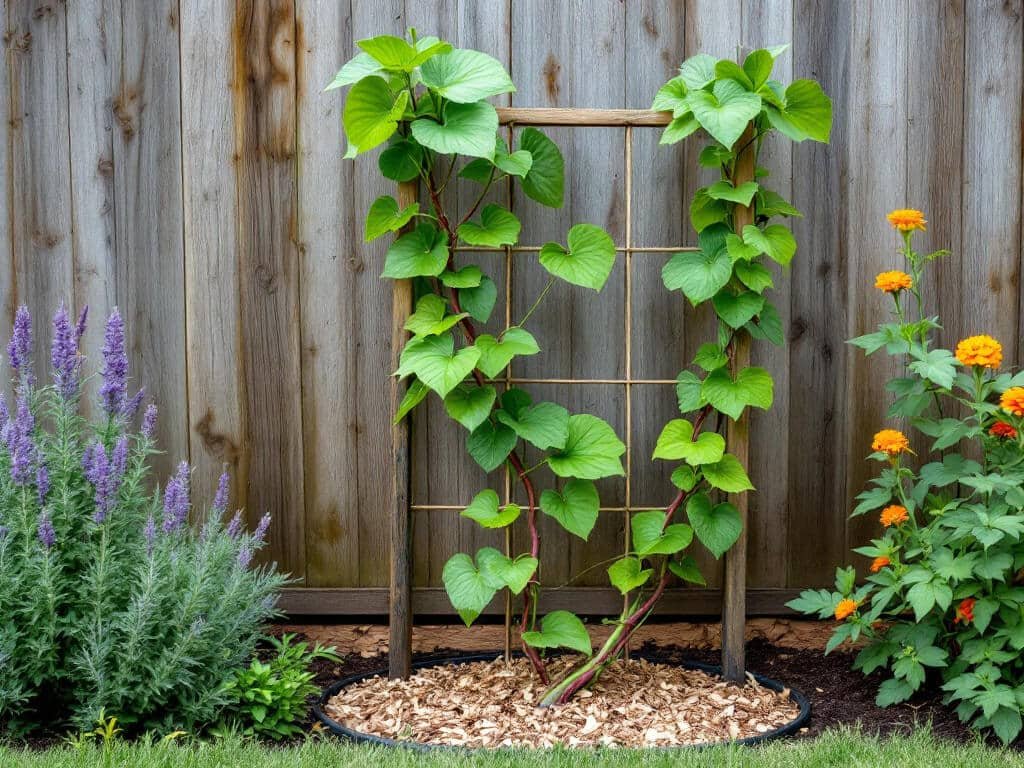
Best companion plants for kiwi
The first two entries are the only plants kiwi truly needs. The rest are low plants that fill the layer under the trellis without competing with the vine.
Male kiwi vine
Most kiwi plants are either male or female, and the female only sets fruit with pollen from a male of the same species. Plant them about 10 to 15 feet apart, depending on the cultivar and your trellis design. If you want to skip the second vine, look for a self-fruitful cultivar.
Female kiwi vine
The female produces the fruit and uses the same trellis, soil, and irrigation as the male, so one watering setup covers both. Space the vines about 10 to 15 feet apart. If you are planting more than one female, the same spacing applies.
Blueberry
Blueberry also likes acidic, well-drained soil, and it stays low enough to sit beside the trellis. Keep at least 6 feet between blueberry crowns and kiwi trunks so the roots and your work area stay separate. Check that your kiwi species and cultivar suit the acidic soil blueberries need before pairing them. Kiwi is comfortable at a pH of roughly 5.5 to 7.5.
Lavender
Lavender flowers offer resources for pollinators around kiwi bloom, and the plant likes dry soil. Put it at least 3 feet from kiwi trunks. Keep irrigation from soaking the lavender crown, since kiwi’s watering schedule will be wetter than lavender wants.
Lemon balm
Lemon balm flowers support pollinators, and its low foliage sits in a different layer from the vine. Plant it at least 3 feet from kiwi trunks. It spreads aggressively, so grow it in a contained spot or a buried pot, or it will wander into the trunk zone.
Marigold
UGA Cooperative Extension lists marigold among the herbs and ornamentals that may attract pollinators or deter pests. The source does not establish a specific pest-repellent effect, so don’t count on it to protect the vine. It works well as a seasonal border at least 2 feet from the trunks, and you can pull it out each year.
Geranium
Geranium is listed as an ornamental option near kiwi and fits in the low space under a trellis. Keep plants or containers at least 2 feet from the trunks so the base of the vine stays reachable. Containers are handy because you can move them when you need to prune or inspect.
Clover
Clover may support soil health and pollinators as a managed groundcover. Keep it mowed or contained, and leave at least 2 feet of bare or mulched ground around each trunk. Without that gap, clover becomes one more thing between you and the base of the vine.
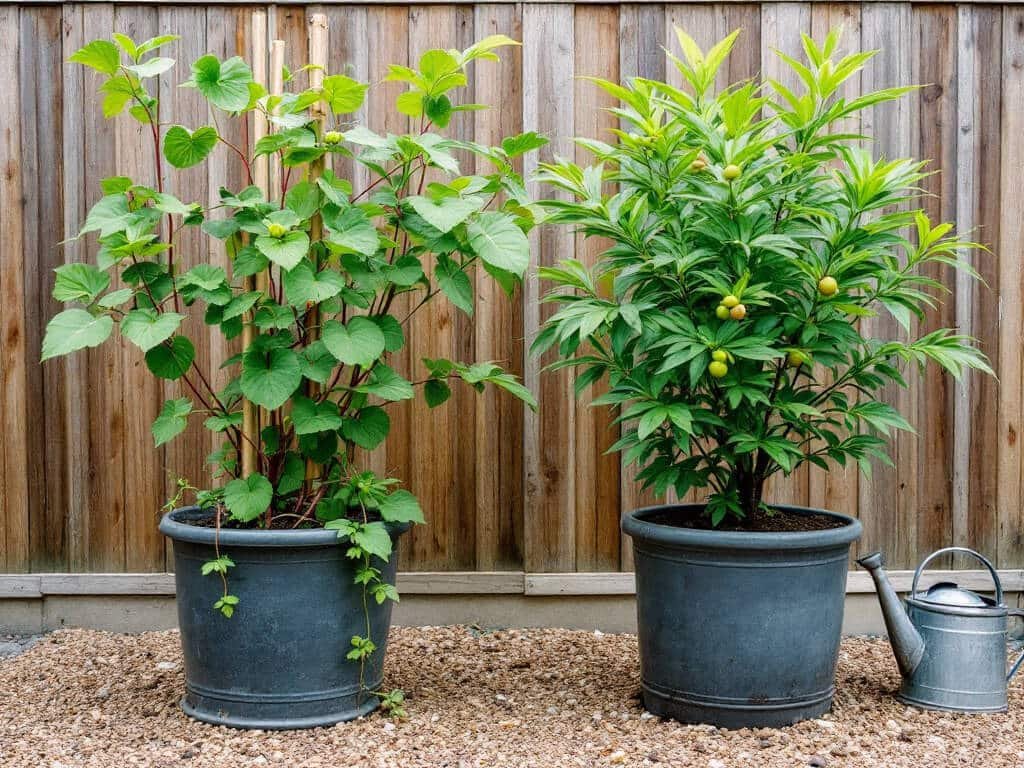
What not to plant with kiwi
Two entries below are plants to keep out of the neighborhood. The rest are crops that previously grew on the site and can leave disease behind.
Black walnut
Do not plant kiwi near black walnut. University of Minnesota Extension says juglone from the soil and roots can kill kiwiberry vines. If you have a black walnut nearby, move the kiwi to another part of the yard.
Hickory
The same extension source advises against planting kiwiberry near hickories, because juglones in the soil may kill the vines. Treat hickory the same as black walnut and choose a site away from it.
Strawberry
Strawberry can share verticillium wilt risk with kiwi. OSU Extension advises avoiding sites where strawberries or other susceptible crops grew during the previous 5 years. If your best sunny spot used to be a strawberry bed, pick another or wait.
Raspberry
Raspberry is on the same list of crops to avoid before kiwi where verticillium carryover is possible. This is a site-history issue. Don’t plant kiwi where raspberries recently grew, and don’t assume raspberry is a good neighbor just because it appears on some companion lists.
Potato
Potato can leave verticillium wilt in the soil. If potatoes grew in a spot, keep kiwi out of it for 5 years. A former vegetable bed is a common trap, because the soil is usually sunny, loose, and tempting.
Tomato, pepper, or eggplant
These are also listed as verticillium-susceptible crops to avoid in the 5 years before you plant kiwi. If your vegetable garden has been rotating through all three, that bed is a poor choice for a kiwi trellis. Look for a spot with no history of these crops.
Layout and spacing
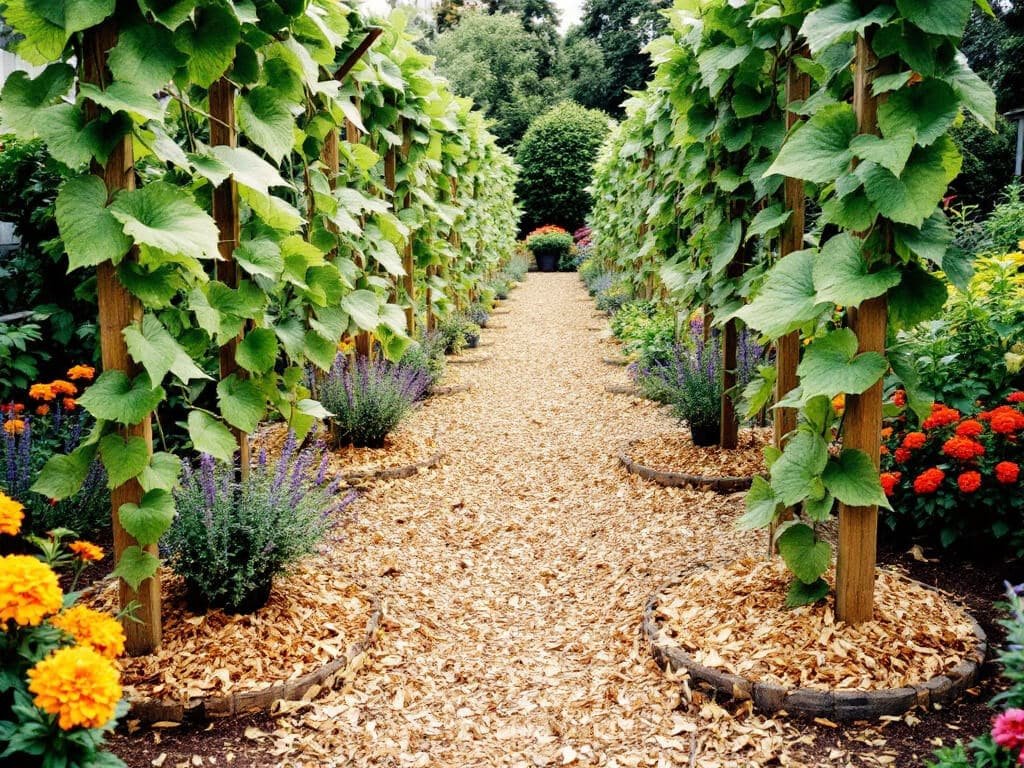
Treat kiwi as the structural crop and plan everything else around it. Install the trellis first, plant the vines 10 to 15 feet apart, and keep the trunk zone open for watering, pruning, and pest inspection. Put the low companions outside the main root and work area.
Trellis: a sturdy arbor or T-bar, built before planting.
Male and female vines: 10 to 15 feet apart, same species.
Blueberry: at least 6 feet from kiwi trunks, only where its acidic-soil needs match your kiwi.
Lavender and lemon balm: at least 3 feet from trunks, with lemon balm contained and lavender kept out of wet irrigation zones.
Marigold, geranium, and clover: at least 2 feet from trunks, with clover mowed and the ground right at the trunk left bare or mulched.
Trunk zone: open and reachable for watering, pruning, and checking for pests.
FAQ
Can blueberries grow near kiwi?
UGA Cooperative Extension lists blueberries as a possible companion because they can grow in similar conditions. Their acidic-soil needs still have to match your kiwi species and cultivar, and the plants should not be crowded around the kiwi trunk.
Should kiwi be planted near black walnut?
No. University of Minnesota Extension advises not planting kiwiberry near black walnuts or hickories, because juglones in the soil can kill the vines.
Do kiwi vines need a companion plant to produce fruit?
Usually, yes, but the companion is another kiwi vine, not an unrelated plant. Most kiwi plants are male or female, so you generally need at least one of each of the same species for pollination. Self-fruitful cultivars are the exception.