
Quince Companion Plants: What to Grow Nearby
Choosing quince companion plants is mostly a process of elimination. The tree wants full sun, steady water, and clear air around the trunk, and most of what people plant under fruit trees interferes with at least one of those. The good news is that the short list of plants that work is easy to follow.
This article covers fruiting quince (Cydonia oblonga), the deciduous tree grown for fall fruit, generally in USDA zones 4 to 9 depending on cultivar and rootstock. Japanese quince (Chaenomeles spp.) is a separate ornamental flowering shrub. Don’t mix the two up when you read planting advice, because a lot of online guidance blurs them together.
One caution up front: the evidence for quince-specific companion benefits is thin. Most of what follows is about what plants do in general (feed pollinators, cover bare soil) and what to keep away from the tree. I’ll flag where a claim is unverified.
Why pairings matter for quince
Quince has a relatively shallow root system and suffers in drought, so anything planted nearby competes with it for water in the exact layer where its roots sit. It also wants consistent moisture without chronically waterlogged soil, which limits how much extra irrigation a companion can demand.
Light matters just as much. Quince needs at least 8 hours of direct sun for productive growth, flowering, and fruiting, so a companion that casts shade on the canopy costs you fruit. The preferred soil is moderately fertile, well-drained loam, and one nursery source gives a pH of 6.3 to 6.8.
Then there is disease. Fire blight is the major concern for quince, and the tree can also get powdery mildew, rust, leaf and fruit spots, aphids, scale, and mites. A good companion doesn’t fix any of that. A bad one can make it worse by adding shade, crowding the trunk, or hosting a disease.
The myth to drop: you will see claims that garlic, chives, and other aromatic plants reliably repel quince pests. The sources reviewed did not verify that. Plant them for what they actually do (cover ground, feed beneficial insects when they flower), not as pest control or a substitute for watching your tree.
Best companion plants for quince
None of these is a proven quince booster. They earn their place by staying out of the way and, in most cases, supporting pollinators and predatory insects.
Chives
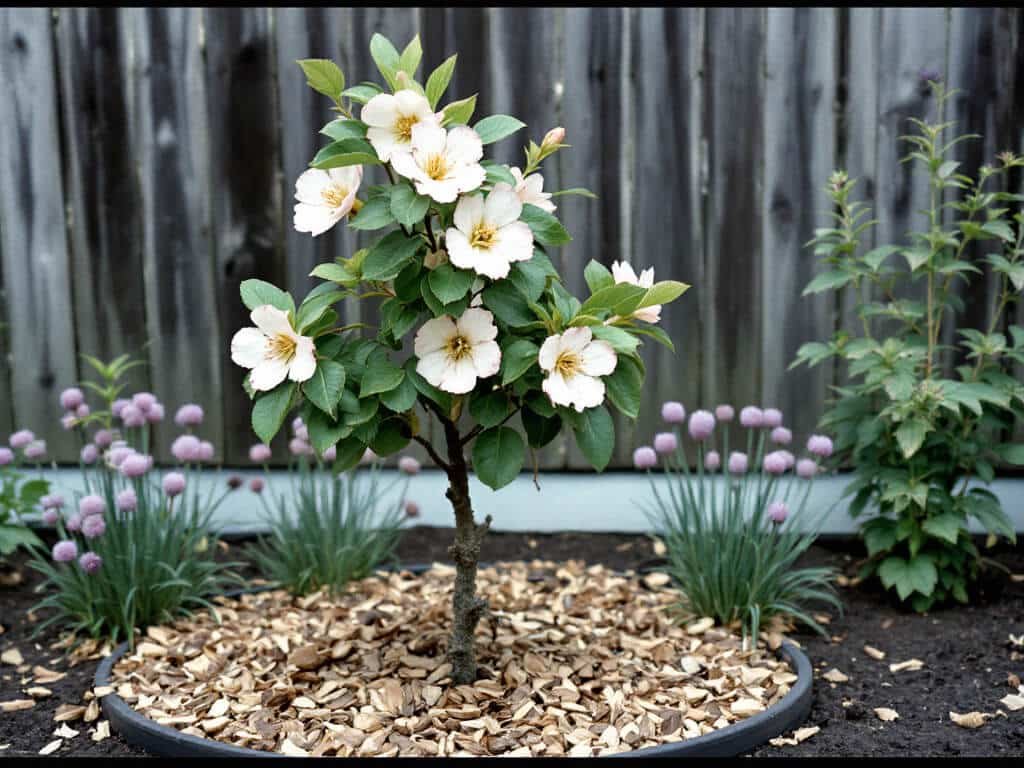
Chive flowers provide nectar for pollinators and beneficial insects. No quince-specific pest-repellent effect was verified, so treat it as a flowering border plant. Set chives outside the tree’s main root and trunk zone, with spacing based on the chive cultivar and local planting guidance.
Garlic
Garlic uses the low space beneath a young tree and can contribute flowers for beneficial insects if you let it bloom. A quince-specific pest-control benefit was not verified. Keep it in a sunny spot beyond the trunk’s immediate mulch ring.
Comfrey
Comfrey has deep roots, and gardeners cut its leaves for nutrient-rich mulch. Its flowers also attract insects. Evidence for a direct quince yield benefit is lacking, and comfrey is a big plant, so I’d use it only where it won’t crowd the trunk or compete for irrigation. Quince’s shallow roots and drought sensitivity make that competition a real cost.
Native flowering plants
A mix of native bloomers gives pollinators and predatory insects habitat and nectar across the season. They are not proven pest repellents, so don’t expect fewer aphids on that basis alone. Choose species suited to your site and keep the mature plants outside the tree’s immediate root flare.
Low-growing groundcovers
Groundcovers can fill open soil, which cuts bare-ground weed growth and slows evaporation. No quince-specific groundcover was verified, so pick by your site rather than a “quince” label. Keep a vegetation-free ring around the trunk, and avoid dense planting where the soil runs dry.
Pollinator-friendly annual flowers
Annuals extend the seasonal flower supply near the tree. The sources support the general pollinator function, not a guaranteed increase in quince fruit set. Place them where they get full sun and don’t shade the quince.
Native spicebush (Lindera benzoin)
Spicebush has been proposed as a structurally different shrub that supports shared pollinators, but quince-specific compatibility evidence is limited. That recommendation came from forest-garden design advice, not fruit-tree trials. Use it only where its mature size and moisture needs fit the site, and keep it from shading the tree.
Pawpaw (Asimina triloba)
Pawpaw shows up in forest-garden designs as an upper-layer tree that gives filtered shade as it matures. That is design advice, not verified quince research, and filtered shade is exactly what a fruiting quince doesn’t want. I’d skip it unless you have a lot of room and can keep it from shading the canopy.
What not to plant with quince
Juniper
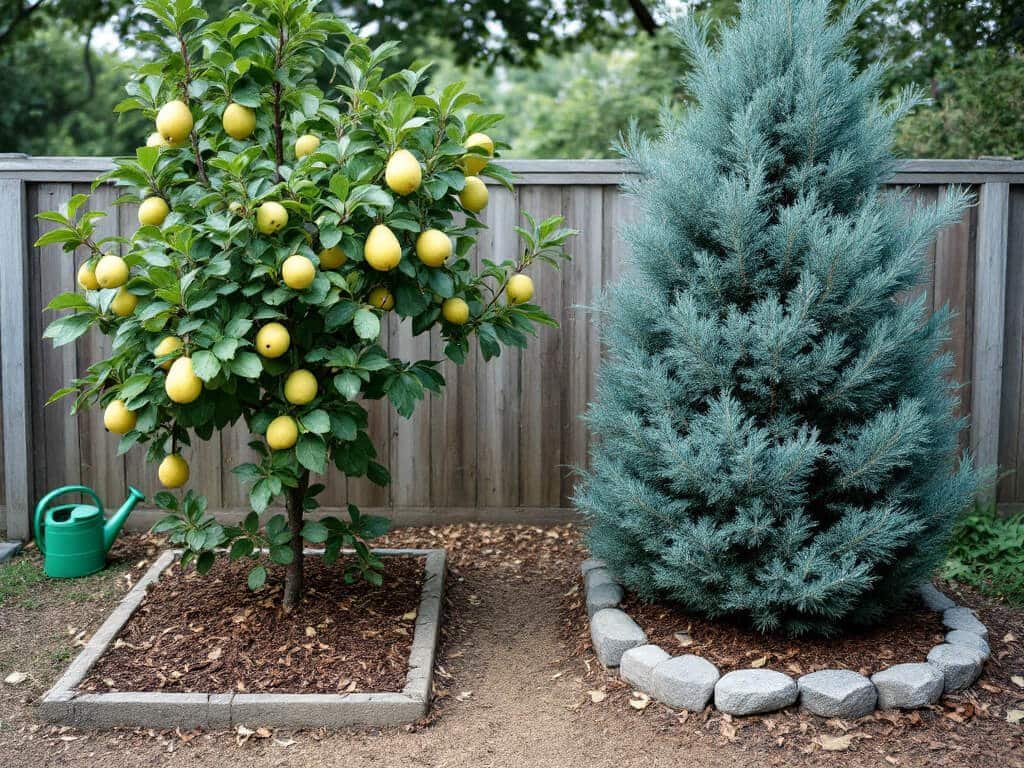
Don’t plant juniper (Juniperus spp.) near quince. Juniper may host cedar-quince rust, so having it close can add disease pressure where that disease occurs. The risk depends on local conditions, but separating the two removes a possible source of infection.
Large, thirsty shrubs or trees
Big water users compete with quince for moisture and root-zone resources. That matters more than usual here because quince roots are shallow and the tree is drought-sensitive. If a neighbor’s hedge or a mature tree already sits close, expect to water the quince more carefully.
Dense groundcovers against the trunk
Groundcover is fine in the open. Pushed up against the trunk, it restricts air circulation and makes it harder to inspect the trunk and root flare. Quince does better with a clear, mulched area and nothing touching the bark.
Plants that shade the canopy
Anything tall enough to cut the canopy’s sun lowers growth, flowering, and fruiting. This includes tall perennials, shrubs, and trees on the south or west side. Keep companions low, or put them where their shadow doesn’t reach the tree.
High-nitrogen companion plantings or heavy nitrogen fertilization
Excess nitrogen pushes soft, leafy growth, and that can increase fire-blight susceptibility. The sources don’t point to a specific plant as the cause, so the practical takeaway is to avoid heavy feeding around the tree. This also applies to any companion bed you fertilize heavily near the trunk, since the quince’s roots will pick it up.
Layout and spacing
Plan the tree first and the companions second. Give the quince its normal spacing for its cultivar and rootstock, and don’t squeeze it to fit a companion scheme. Then fill the space beyond a clear trunk ring with low, sun-loving plants.
– Standard trees: allow about 15 feet between trees.
– Dwarf or high-density trees: about 10 to 15 feet.
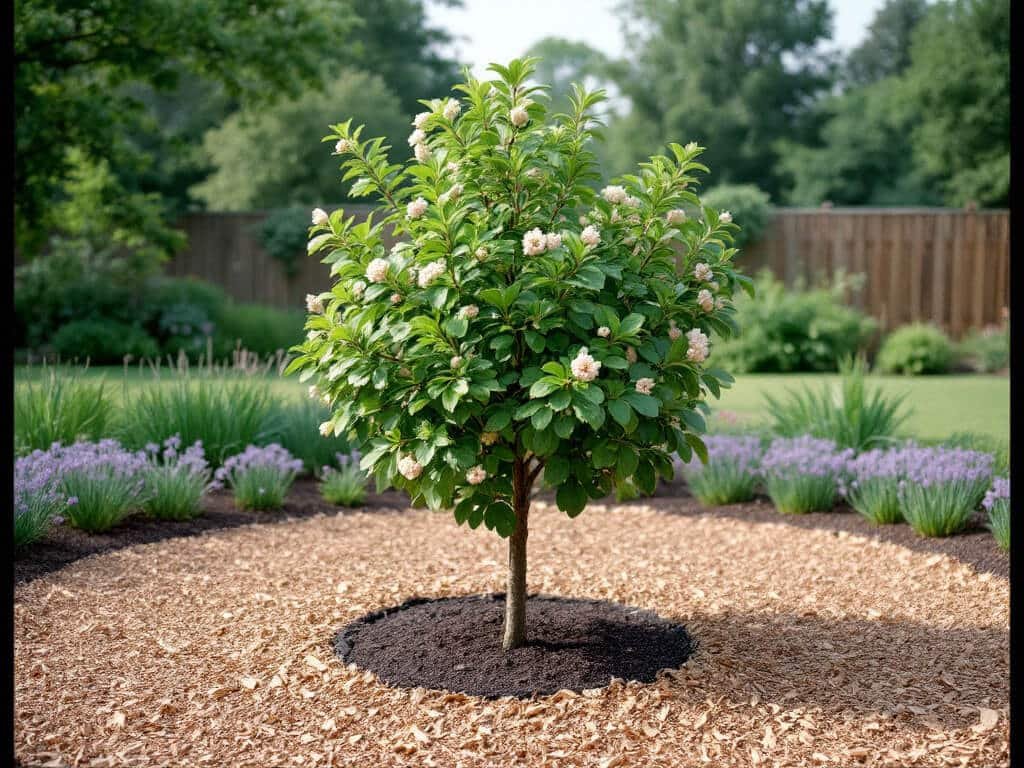
– Trunk: keep a broad, vegetation-free mulch ring, with nothing touching the bark.
– Companions: plant herbs and flowers beyond that ring, outside the shallow root zone.
– Sun side: use low plants on the sunny side so they don’t shade the canopy.
– Water: size each companion’s irrigation to its own needs, and don’t let it pull from the quince’s share.
No universal distance between quince and a companion was verified. Use the mature size of each plant and the open space around the tree to decide.
FAQ
Can herbs prevent pests on quince?
Garlic and chives are sometimes recommended near quince, but the sources don’t verify reliable quince-specific pest repellency. Their more defensible roles are covering low ground and, when flowering, supporting beneficial insects.
How far should companion plants be from quince?
No universal spacing was verified. Keep plants outside the trunk’s clear mulch ring, preserve full sun and airflow, and follow each companion’s mature size and watering needs rather than a fixed distance.
Can quince grow near juniper?
It’s safer to keep them apart, because juniper may host cedar-quince rust. The risk depends on the disease and local conditions, but separation removes a potential source of infection.