
Bamboo Companion Plants: What to Grow Nearby
Choosing bamboo companion plants is mostly a design decision, not a science one, because no extension or botanical-garden source has tested which plants help bamboo grow. What exists is gardening guidance on which plants look right beside it and tolerate similar conditions. This article sticks to that and tells you where the evidence stops.
Bamboo is a perennial evergreen or semi-evergreen grass, and the species vary a lot. Some are clumping, some are running. Some stay container-sized, while others are large screening plants. Hardiness varies by species and cultivar too, so check the label on the bamboo you bought before you plan anything around it.
That variation is the main thing to settle before you pick neighbors. A small clumping bamboo in a large pot is a very different planting partner than a running bamboo with spreading rhizomes. Know which one you have, then choose companions to suit.
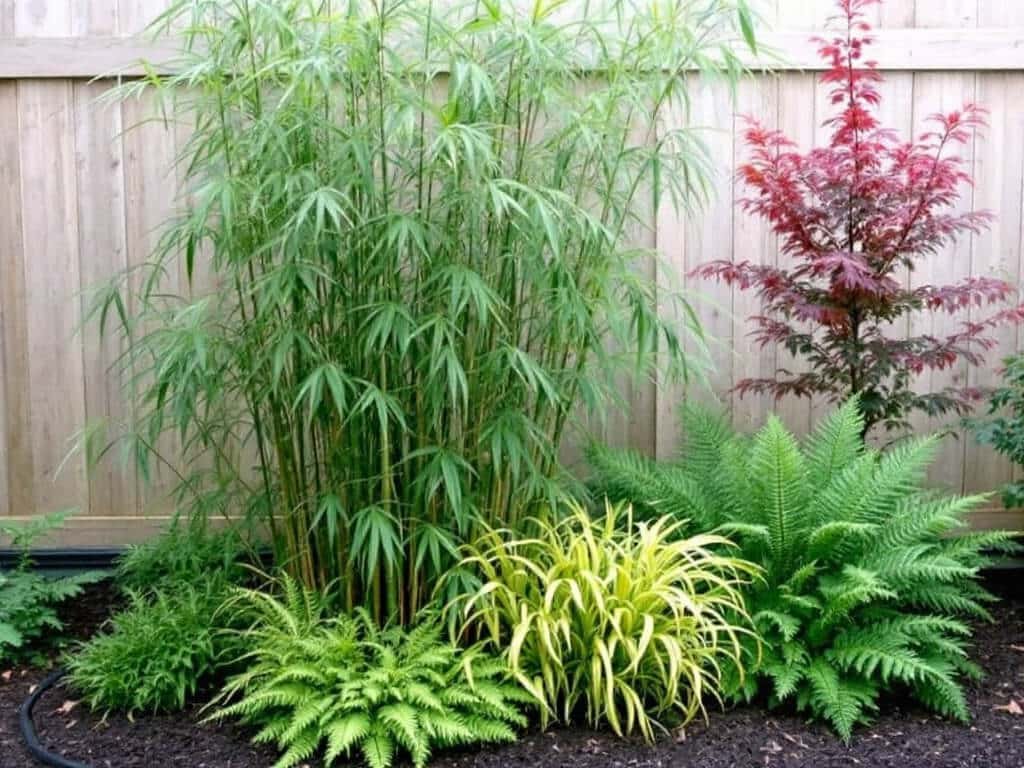
Why pairings matter for bamboo
Don’t expect companions to improve bamboo’s health. I’d treat bamboo as a structural or screening plant, the backbone of the bed, and choose the other plants to suit it, not the reverse.
Bamboo prefers a sheltered, sunny spot with even moisture and fertile, free-draining soil. Mature plants cast shade and take up a lot of root space, so whatever you plant nearby has to cope with that. The pairings below are chosen on that basis: shade-tolerant foliage and shrubs that fit a Japanese-style or woodland-style planting.
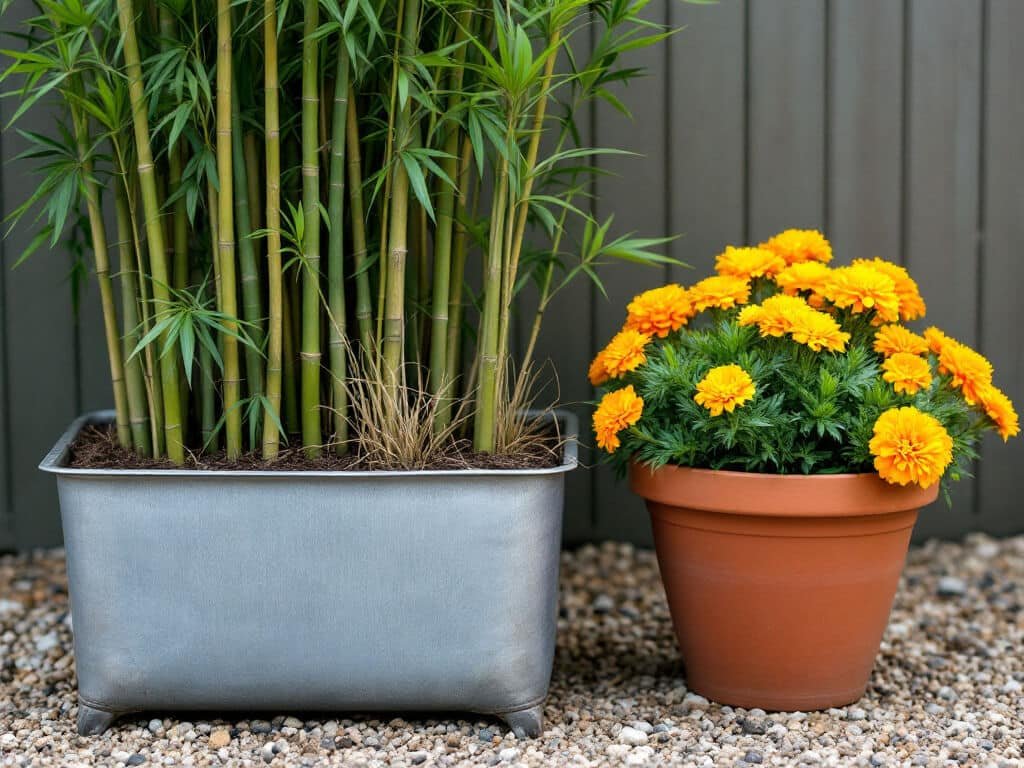
One myth is worth clearing up. Lists online say marigolds, herbs, and other common companions repel bamboo pests or boost bamboo growth. No extension source verifies that. Bamboo can get aphids, rust, and root rots, and the sources don’t show any companion plant preventing them. Good drainage and a sensible spot do more for you than a border of marigolds.
Best companion plants for bamboo
These plants are documented in gardening guidance as visually or culturally compatible with bamboo. None has a verified spacing recommendation from bamboo, so I won’t give you numbers that would be made up. Leave room for each plant’s mature size and for your own access, and adjust once you see how your bamboo grows.
Japanese maple
Japanese maple suits the woodland-style, partial-shade conditions that develop as bamboo matures. It’s a pairing for looks and atmosphere, not a known benefit to the bamboo. There’s no verified spacing, so set it back far enough that a spreading bamboo doesn’t crowd its trunk.
Hakonechloa
Hakonechloa fits the Japanese-style planting that bamboo anchors, and it handles partial shade. It works as a low, arching grass at the base of taller culms. No spacing is verified, so plant it outside the area where you’d need to dig out rhizomes.
Ophiopogon
Ophiopogon is another Japanese-style choice and a tidy edging plant beneath bamboo. It contrasts with bamboo’s height without competing for the same visual space. There’s no verified spacing for it either, so give it a clear margin from the bamboo’s base.
Ferns
Ferns are shade-compatible foliage plants that sit beneath or near taller bamboo. They suit the dappled light a mature stand creates. No spacing is verified, so plant them where you can still reach the bamboo for pruning and watering.
Azalea
Azalea is a flowering shrub used in bamboo combinations. It adds seasonal bloom to a planting that otherwise stays green and fine-textured. Spacing isn’t verified, so allow for its mature spread and keep it clear of the bamboo’s root zone.
Hydrangea
Hydrangea is another flowering shrub that appears in bamboo combinations. It gives you a heavier, rounder form next to the bamboo’s vertical lines. There’s no verified spacing, so check the plant tag for mature width and add room for airflow.
Edgeworthia
Edgeworthia is a seasonal flowering shrub used with bamboo. It’s a reasonable choice if you want something to look at while the bamboo itself is doing little. Spacing isn’t verified, so treat it like the other shrubs and leave generous room.
Climbing nasturtium
This one comes with a caveat. Climbing nasturtium can draw blackfly aphids away from beans when grown with bamboo cane supports. That is not evidence that it helps living bamboo. If you’re using bamboo canes in a vegetable bed, it’s a handy trick. If you’re planting around a living bamboo clump, skip it on those grounds.
What not to plant with bamboo
No reputable source in the research establishes a list of plants that are bad companions for bamboo. So I won’t give you one. What follows are the real mistakes to avoid.
Small or delicate plants right beside running bamboo
Running bamboo should not be planted casually beside smaller plants, because its rhizomes spread. Anything tucked close to an uncontained runner will eventually be competing with it, or be dug up when you remove stray rhizomes. If you want companions at the base, choose a clumping type or install containment first.
Plants chosen because a list said they repel pests
Marigolds, herbs, and similar plants are often listed as bamboo protectors. No extension source verifies that they repel bamboo pests or improve growth. Plant them if you like them, but don’t count on them to keep aphids or rust off your bamboo.
Plants avoided because of claimed allelopathy
You may see claims that bamboo poisons the soil for certain plants, or that specific plants are incompatible with it. The research doesn’t support named incompatibilities or allelopathy claims, so I’d ignore them. The real constraints are shade, root competition, and spread.
Layout and spacing
Since no verified spacing exists, plan by habit and access. Contain the bamboo first, then place companions outside its spread, leaving room to walk in, water, and pull rhizomes if needed. Keep the planting open enough for airflow, since rust and root rots are known bamboo problems.
Choose a contained clumping cultivar, or install appropriate containment for running bamboo, before placing anything else.
Put the bamboo where it gets shelter and sun, with even moisture and free-draining soil.
Place shade-tolerant plants (ferns, Hakonechloa, Ophiopogon) closest, as the bamboo matures and casts more shade.
Set shrubs (Japanese maple, azalea, hydrangea, Edgeworthia) farther back, using each plant’s tag for mature size.
Leave a path or gap for irrigation and for removing spreading rhizomes.
FAQ
Can bamboo grow with other plants?
Yes, but it depends on the bamboo’s species, growth habit, mature size, and containment. Most bamboos prefer moist, fertile, well-drained soil, and mature plants create shade and take up a lot of root space.
What plants look good with bamboo?
Japanese maple, Hakonechloa, Ophiopogon, ferns, azalea, hydrangea, and Edgeworthia are documented as compatible visual combinations. Exact spacing and competitive effects depend on the plants and the bamboo cultivar.
Should bamboo be planted in a container or with a root barrier?
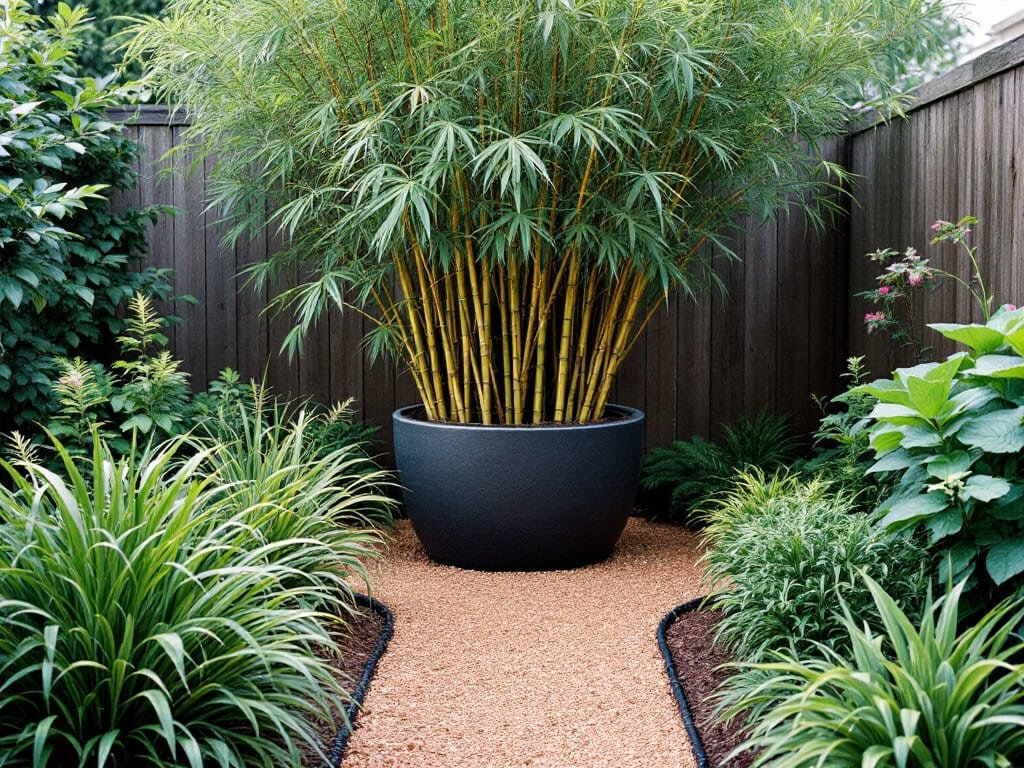
Running bamboo shouldn’t go in casually beside smaller plants, so choose a clumping type or use a containment strategy. Large containers are also used for some bamboo specimens, including Fargesia.