
Avocado companion plants are less about what you add and more about what you keep off the roots. The tree has shallow feeder roots, wants steady moisture, and needs soil that drains freely. Anything planted close that hogs surface water or holds the ground wet works against it.
Outdoors, avocado is generally a zone 8 to 11 tree. If you garden colder than that, you can grow one in a container and protect it indoors, and the same root logic applies. Give it full sun, at least 6 hours of direct light, and soil around pH 6.0 to 7.0.
Below are the plants that make reasonable neighbors, the ones to avoid, and a layout that keeps the root zone clear.
Why pairings matter for avocado
The big risk to an avocado is not a shortage of friendly neighbors. It is Phytophthora root rot, which gets worse when soil stays waterlogged. Anything that crowds the root zone, holds moisture, or shares a wet, poorly drained bed with the tree is a liability. That is the filter for every plant on this list.
Companions can still help in two modest ways. Flowers bring in bees, hoverflies, and other beneficial insects, and warm conditions plus bee activity improve fruit set. A compatible second avocado can also help with cross-pollination.
You will see claims online that comfrey “mines” nutrients for avocado, or that basil, garlic, and marigolds reliably repel avocado pests. None of that holds up in the sources I trust. Spend your effort on drainage, grass control, correct mulching, and pollinator flowers instead.
Best companion plants for avocado
I don’t have a verified spacing from the research for any of these plants against an avocado trunk. The common rule is to keep the trunk zone clear and plant at the outer canopy or in a nearby bed, using the label or seed packet spacing. Treat these as flowering helpers at the edge, not as a groundcover under the tree.
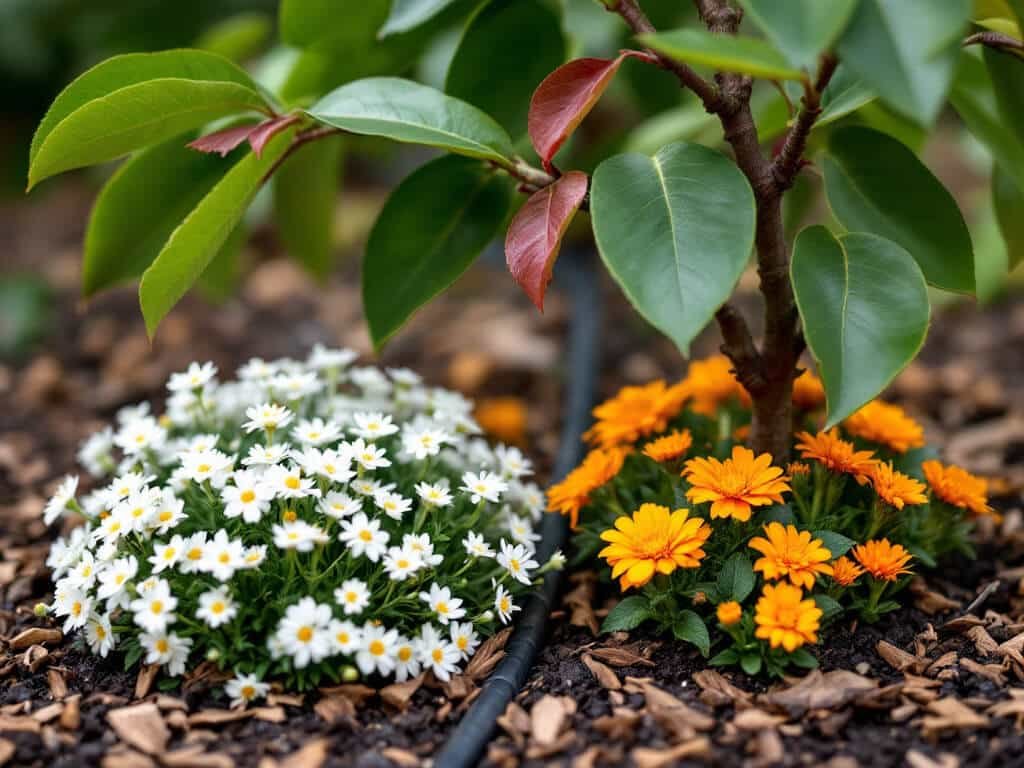
Sweet alyssum
The flowers give nectar to hoverflies and other beneficial insects. Use it as a managed planting near the tree, not against it. Place it near the outer canopy or in a nearby bed.
Borage
Bees and other pollinators go for the flowers. Borage can get big, so keep it out of the immediate trunk zone. The drip-line edge or a separate bed is the right spot.
Calendula
Calendula supplies flowers for pollinators and beneficial insects. Use it as a seasonal edge plant, not a dense carpet. Follow the seed packet spacing and keep the trunk zone clear.
Yarrow
The flower clusters support beneficial insects. The risk is letting it knit into a dense, unmanaged mat among the feeder roots. Plant it near the canopy edge or in an adjacent bed, and cut it back if it spreads inward.
Chives
Flowering chives offer nectar and take up a small footprint. They should not replace the weed-free root zone right around the tree. Use the label spacing and keep them near the outer canopy.
Basil
Flowering basil feeds bees and hoverflies. Treat it as a sunny-edge annual, not a pest repellent. Give it a separate pocket near the drip-line edge.
Parsley
Let parsley flower and it supports beneficial insects. Keep irrigation and soil competition low around young trees, since they are the most vulnerable to a crowded root zone. Use the label spacing and stay outside the clear trunk area.
Cilantro
Flowering cilantro attracts small beneficial insects. Succession-sow it in a nearby sunny bed rather than packing it under the canopy. Follow the packet spacing and keep it away from the trunk.
Managed clover
A low legume cover may add some nitrogen as the plant material breaks down, but it also competes for surface moisture. I’d only use it where you can watch both irrigation and competition, and only beyond the immediate root collar. If you can’t monitor it, skip it.
A second avocado cultivar
A compatible A-type or B-type cultivar gives you more chance at cross-pollination. A lone avocado can still produce fruit, so this is an improvement, not a requirement. Place it according to that cultivar’s mature size and site needs. Size varies a lot by cultivar and rootstock, and the research doesn’t establish one home-garden spacing, so check the tags before you plant.
What not to plant with avocado
Most of these fail for the same reason: they compete with shallow roots or share a wet bed with a root rot problem.
Grass lawn
Turf competes directly with the feeder roots for water and nutrients. Replace it under the canopy with coarse mulch. Lawn is the most common mistake near backyard avocado trees.
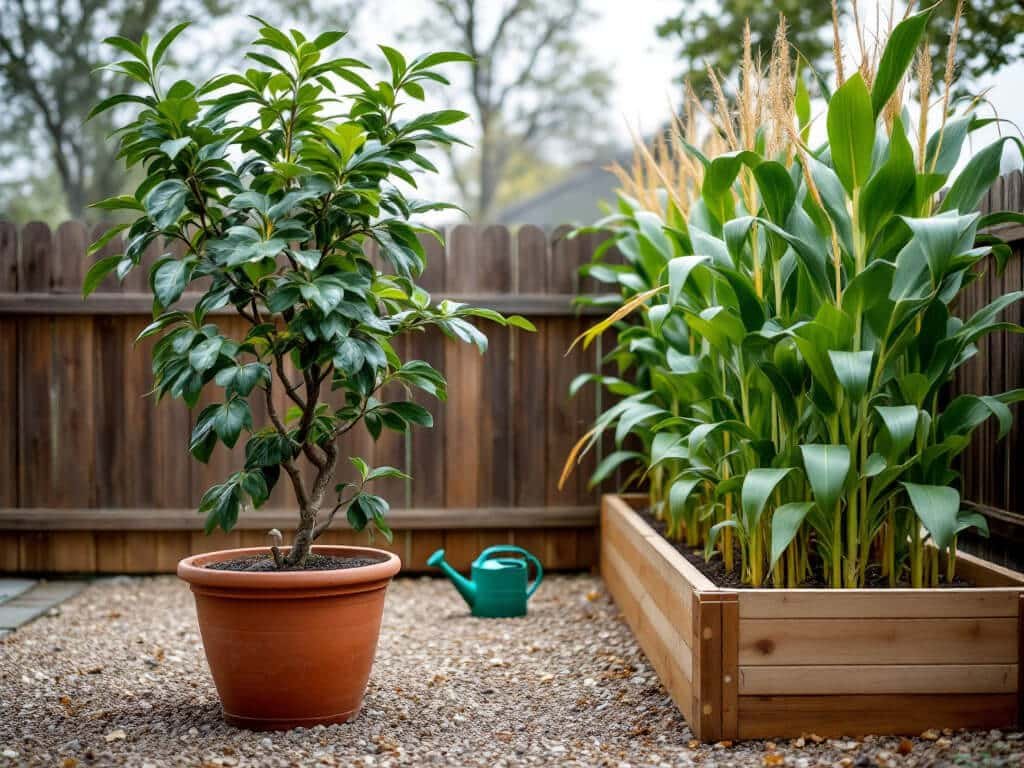
Corn
Corn is a thirsty, shallow-rooted crop that can pull surface moisture during dry spells. Grow it well away from the avocado root zone.
Aggressive groundcovers
These compete with shallow roots, get in the way of irrigation, and hide pests. Use coarse mulch, or a sparse, managed planting, instead.
Raspberries and blueberries in shared, poorly drained soil
The concern is Phytophthora. Both are susceptible to it, so putting them where infected, wet soil is shared is asking for trouble. If your drainage is poor, keep them in a different bed.
Eggplant, peppers, and strawberries in the same disease-prone bed
These crops are possible hosts for Verticillium, which also affects avocado. Don’t combine them with an avocado where soil and drainage are shared.
Eucalyptus
Eucalyptus is reported to compete for water and may have allelopathic effects. Don’t plant it close to an avocado.
Layout and spacing
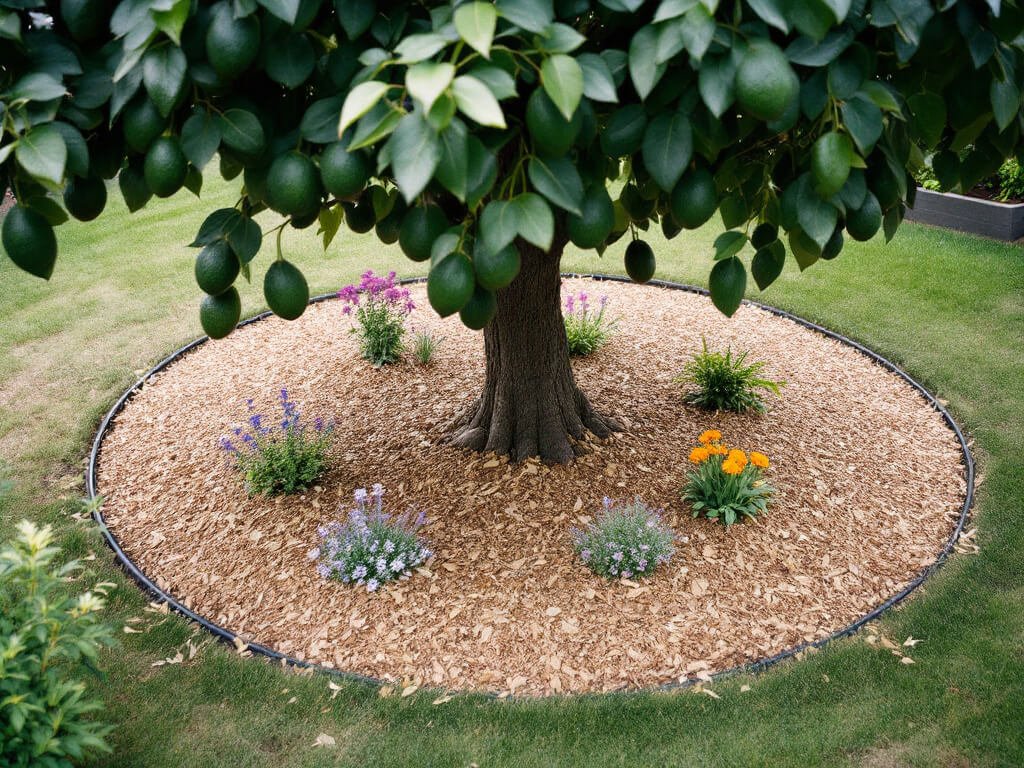
Think in rings. The trunk zone stays open, the area under the canopy gets mulch, and the flowers live at the edge or in a nearby bed. None of this requires exact measurements, only a clear root zone and easy irrigation.
Trunk zone: open, weed-free, and easy to water.
Under the canopy: coarse organic mulch, kept several inches away from the trunk.
Canopy edge or separate bed: flowering herbs and insectary plants such as alyssum, borage, calendula, yarrow, chives, and basil, at label spacing.
Annual herbs: parsley and cilantro in a sunny bed nearby, sown in succession.
Clover: only beyond the root collar, and only if you will monitor moisture.
Second cultivar: sited by its own mature size, not squeezed into the first tree’s root zone.
FAQ
Can I plant flowers under an avocado tree?
Yes, but keep the trunk zone and immediate root area simple. Flowering plants are best at the canopy edge or in a nearby bed so they don’t compete heavily with the shallow feeder roots.
Does an avocado need another avocado tree for pollination?
No. A single avocado can produce fruit, but a compatible second cultivar with overlapping flowering can improve cross-pollination and sometimes fruit set.
What is the most useful “companion” for an avocado tree?
Coarse organic mulch is more reliably useful than any specific plant. It suppresses grass and weeds, protects shallow roots, and supports better soil conditions. Keep it several inches from the trunk and avoid waterlogged soil.