
Aloe Vera Companion Plants: What to Grow Together
Choosing aloe vera companion plants comes down to water, not looks. Aloe wants full sun, gritty soil, and a dry spell between waterings, so anything sharing its pot or bed has to want the same. Get that match right and the rest is mostly about leaving enough room.
One more thing up front: aloe can’t take freezing temperatures. In zones 5–9, treat it as a container plant, which means any pot of companions will also need to move when the weather turns.
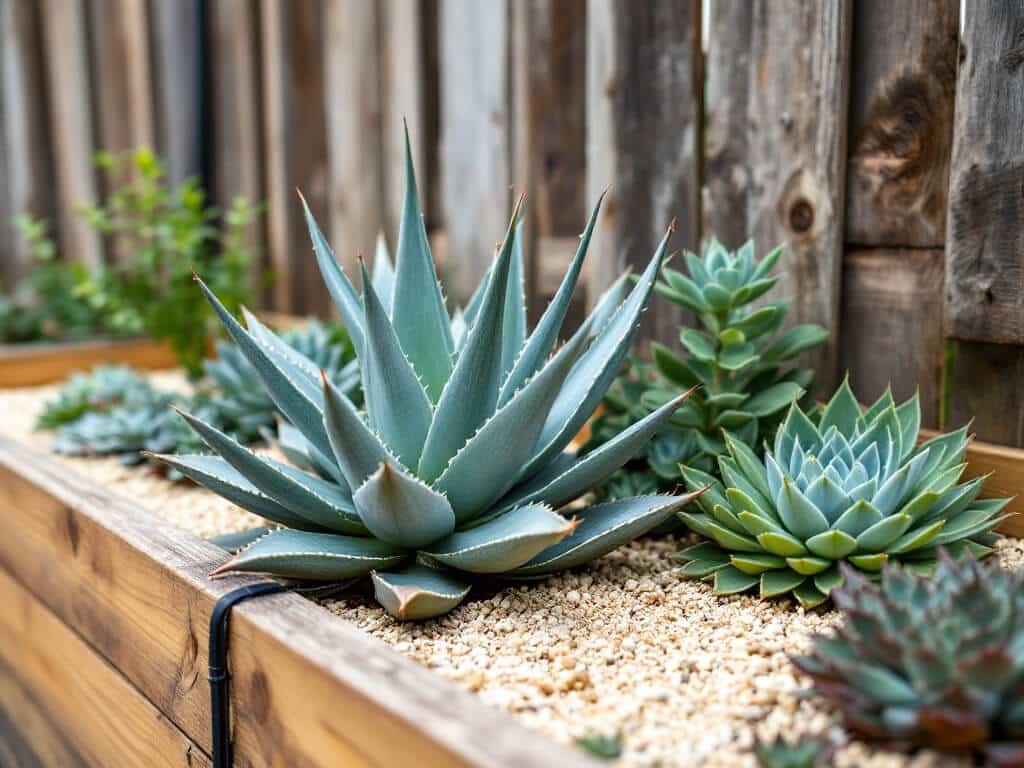
Why pairings matter for aloe vera
Aloe is an evergreen succulent that forms rosettes and grows to about 2 feet tall. In summer or autumn it can send up flower stems around 3 feet tall. It likes full sun outdoors and bright light indoors, and it wants a very well-drained mix, such as cactus or succulent soil, or loam amended with horticultural grit.
Water is where mixed plantings fail. Aloe gets moderate water during active growth and very little in winter, and the soil should dry out before you water again. Continuously wet compost leads to root rot, so a thirsty neighbor on the same schedule is a real threat to the aloe.
A word on pest control: you’ll see marigold, garlic, chives, and basil recommended as aloe companions that keep bugs away. No reliable source I found backs that up for aloe, and the same goes for the idea that aloe improves the growth of nearby plants. Pick companions for matching conditions, and inspect for scale, mealybugs, and red spider mites yourself.
Best companion plants for aloe vera
None of the companions below has a verified aloe-specific spacing figure. Where I say to space them by mature size, that’s the honest answer: check the tag on each plant, and keep rosettes and foliage from overlapping.
Agave
Agave shares aloe’s love of bright light and sharply drained soil, so the two can sit on the same watering routine. There’s no verified standard spacing for the pair. Use the mature size of both plants and keep the rosettes from overlapping.
Sedum
Sedum tolerates the same dry, well-drained conditions aloe does. It makes a reasonable filler in a gritty mix. No verified spacing exists, so size it against the aloe’s footprint and keep it from crowding the base.
Yucca
Yucca suits sunny, dry, sharply drained spots, which makes it a fit for a bed with aloe on a raised section. It can get large, so give it room based on its mature size. No aloe-specific spacing figure has been verified.
Echeveria
Echeveria is a compact succulent with light, soil, and watering needs that line up well with aloe’s. It’s one of the easier partners for a shared pot. Spacing isn’t verified, so leave enough gap that neither rosette shades the other.
Haworthia
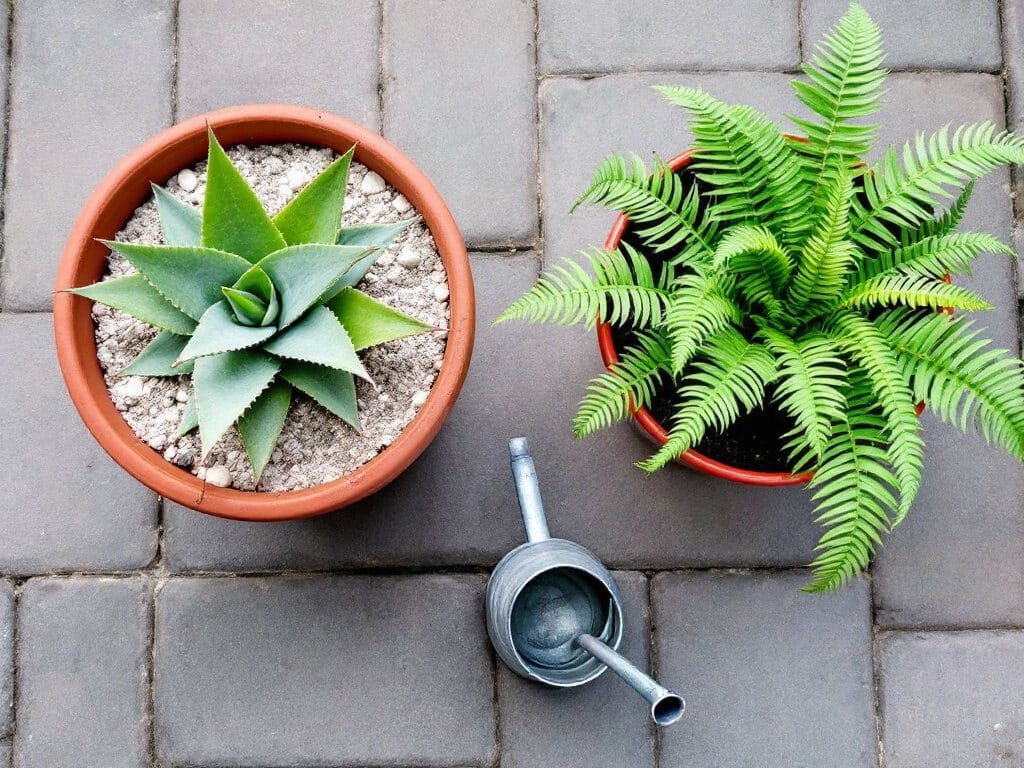
Haworthia is compact and does well in containers with gritty, fast-draining soil, the same setup aloe wants. That makes it a safe small companion at the pot’s edge. No verified spacing figure exists, so plant it based on mature size and avoid crowding.
Lavender
Lavender tolerates full sun and soil that drains freely and dries out between waterings. That covers the basics aloe needs. There’s no verified spacing, so keep it far enough away that its foliage doesn’t shade the aloe.
Rosemary
Rosemary suits sunny, well-drained sites and fairly dry watering. It’s a good herb partner in a bed or a large pot. Spacing isn’t verified, so judge it by mature size and keep it from crowding the rosette.
Thyme
Thyme is a low-growing herb suited to sunny, dry, well-drained sites. Because it stays low, it’s less likely to shade aloe than taller herbs. No aloe-specific spacing has been verified, so leave a gap around the aloe’s base.
Sage
Sage tolerates full sun and free-draining soil that isn’t kept continuously wet. That puts it in the same water category as aloe. No verified spacing exists, so size the planting to the mature plants and avoid overlap.
Marigold
Marigold can tolerate sunny, fairly dry conditions and adds flowers. That’s the whole case for it. A reliable source didn’t verify that it repels aloe pests, and no aloe-marigold spacing was verified either, so plant it for color and nothing else.
What not to plant with aloe vera
The common thread here is moisture. Each of these plants wants more water than aloe can handle, and sharing a pot or a watering schedule means one of them loses.
Boston fern
Boston fern prefers higher moisture and conflicts with aloe’s need for dry periods. Putting both on one schedule stresses one of them. Keep it in a separate pot.
Peace lily
Peace lily generally needs more consistently moist conditions than aloe. That’s an incompatible water-needs match, and the aloe is the one that suffers when the soil stays damp.
Spider plant
Spider plant has higher moisture requirements than aloe, which makes shared watering difficult. If you want both, grow them in separate containers and water each on its own timing.
Lucky bamboo
Lucky bamboo prefers consistently moist conditions, the opposite of aloe’s sharply drained, dry-root environment. Don’t put it in the same mix.
Mint
Mint commonly prefers more moisture and can spread aggressively. That creates competition for space and makes it hard to keep separate watering zones. If you grow it at all, give it its own pot.
Parsley
Parsley prefers more consistently moist soil than aloe, so their watering needs don’t match. Grow it somewhere you can water it freely without wetting the aloe’s soil.
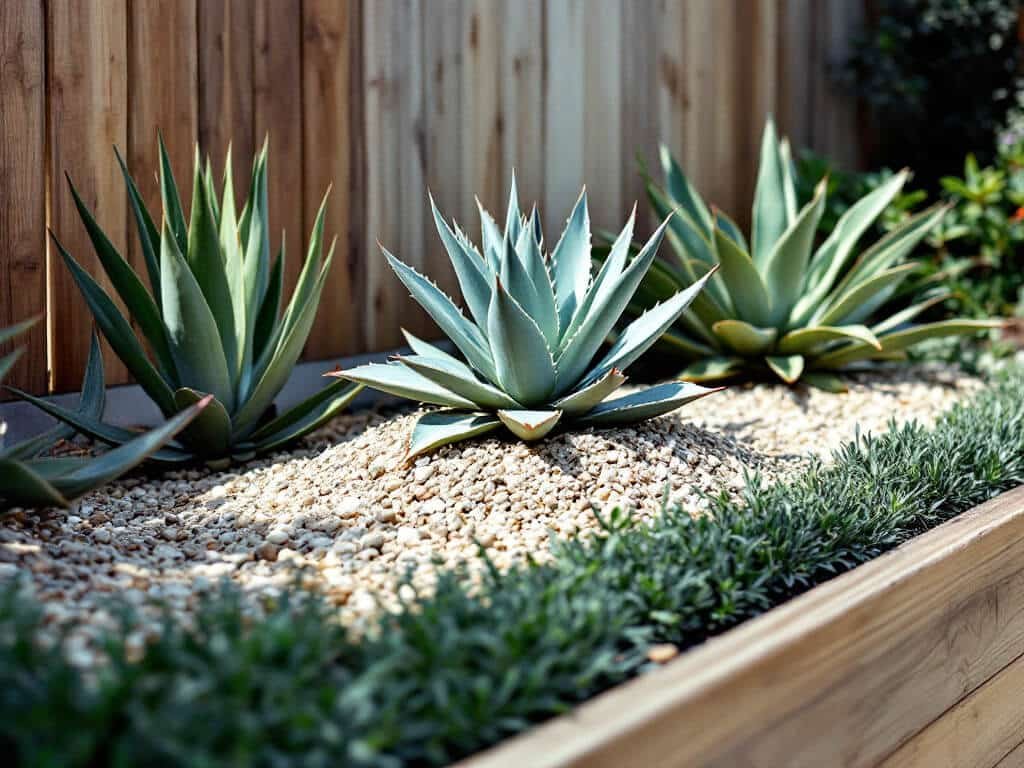
Layout and spacing
For containers, keep it simple: one pot with drainage holes, a gritty cactus or succulent mix, and compact succulents only. In beds, put aloe on a raised or especially well-drained section in full sun, and keep larger or spreading companions far enough away that they don’t shade the rosette or keep its soil wet with their irrigation.
– Container: aloe plus echeveria or haworthia, in a pot with drainage holes and gritty mix. No plants that need frequent watering.
– Bed: aloe on a raised or well-drained spot in full sun, with agave, yucca, or sedum nearby but not touching.
– Herb edge: lavender, rosemary, thyme, or sage placed at a distance, sized by their mature spread, so their foliage doesn’t shade the aloe.
– Water zones: keep anything that needs regular watering out of the bed or in its own pot.
– Spacing: there are no verified aloe-specific spacing numbers, so plan around the mature size of each plant and don’t let rosettes overlap.
FAQ
Can aloe vera grow with other succulents?
Yes. Compact succulents such as echeveria and haworthia can share aloe’s bright light, gritty soil, and low-water conditions, as long as the container drains freely and the plants aren’t crowded.
Can herbs grow in the same container as aloe vera?
Dry-site herbs such as lavender, rosemary, thyme, and sage have broadly compatible needs. Plan the container around each plant’s mature size and avoid crowding, since no universal aloe-herb spacing has been verified.
Does aloe vera repel pests from nearby plants?
No reliable source I found verifies aloe as a general pest-repellent companion. Aloe itself can get scale, mealybugs, and red spider mites, so inspect your plants regularly rather than counting on companion planting.