
Bougainvillea Companion Plants for Sunny, Dry Gardens
The best bougainvillea companion plants are the ones that want the same hot, sunny, sharply drained spot, and that rules out a lot of ordinary bedding. Most pairing mistakes here come from water. Put a thirsty plant next to bougainvillea and one of them loses.
This guide covers ten plants that share bougainvillea’s light and drainage needs, five kinds to keep away, and a simple layout that keeps the climber accessible. Bougainvillea is hardiest in USDA Zones 9 to 11, so if you garden in Zones 5 to 8 you are most likely growing it in a container with winter protection or indoor culture. The same pairing logic applies either way.
Why pairings matter for bougainvillea
Bougainvillea is a thorny, woody climber that wants at least six hours of direct sun to flower well. It also wants fertile, well-drained soil. The RHS recommends a loam-based mix for containers and warns that poor drainage causes root rot. Poor drainage and chronic overwatering are the fastest ways to lose this plant.
That makes companion choice mostly a watering decision. Plants that need regular moisture pull you into irrigating the whole bed or pot on their schedule. Plants that tolerate dry, sunny conditions let you water the bougainvillea when it needs it and leave everything else alone.
Space is the second issue. Bougainvillea ranges from about 3 to 40 feet tall depending on species and cultivar, and climbing forms need a trellis, wall, or other sturdy support. You also need room to prune around those thorns, so companions should sit back from the base.
One thing the pairings will not do: no source I’m working from shows that any companion repels bougainvillea pests or improves flowering by sharing nutrients. Bougainvillea is generally disease-free but can get aphids, whiteflies, mealybugs, spider mites, scale, caterpillars, and occasional powdery mildew. Plant companions for shared conditions and looks, and keep checking the leaves yourself.
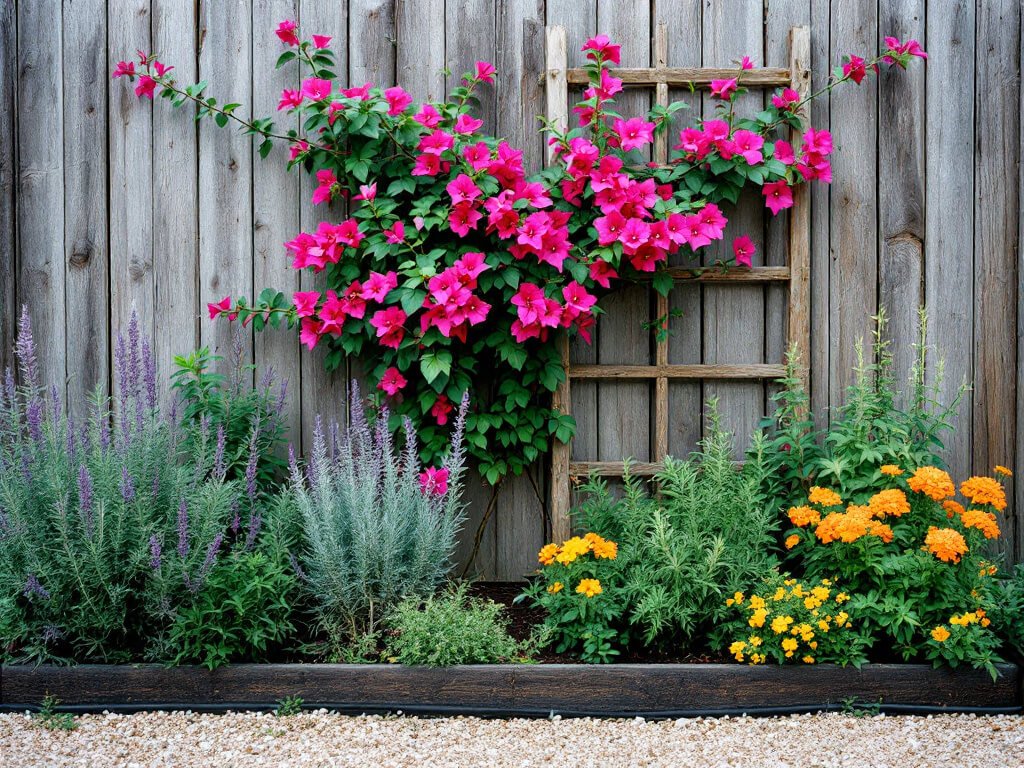
Best companion plants for bougainvillea
The spacing below is a conservative layout recommendation based on access and mature spread. It is not a published bougainvillea-specific standard, so adjust it to the cultivar you buy.
Lavender
Lavender wants full sun and dry, well-drained soil, which is exactly what bougainvillea wants. Its flowers also give pollinating insects something to visit. Plant it at least 2 feet from the base, and farther if your cultivar spreads wide.
Rosemary
Rosemary is evergreen and drought-tolerant, and its aromatic foliage contrasts with bougainvillea’s papery bracts. It shares the same sunny, dry requirements. Plant it at least 2 feet from the base and keep its woody stems clear of the thorny branches.
Lantana
Lantana tolerates heat and sun and adds flowers that pollinators use. It sits comfortably in the same dry position. Plant it 2 to 3 feet from the bougainvillea, and give spreading cultivars more room.
Coreopsis
Coreopsis is a full-sun flowering plant of low to medium height, so it fills the middle layer without needing shade. It also adds seasonal pollinator value. Plant it about 18 to 24 inches from the base, adjusting for the cultivar’s mature width.
Verbena
Verbena is a flowering filler that suits sunny displays and occupies the lower space around a supported climber. Keep it at least 18 inches away so you can still water and prune without pushing through it.
Thyme
Thyme is a low, sun-loving herb that works at the front edge of a bed or container. Its water needs line up far better with bougainvillea’s than those of moisture-loving bedding plants. Plant it 12 to 18 inches from the base, depending on variety.
Agave
Agave brings strong architectural shape and low water needs, a good match for a sharply drained site. Plant it at least 2 feet away. Skip varieties whose leaves or spines would block your access to the bougainvillea, since you already have thorns to work around.
Aloe
Aloe is a low-water succulent that suits a warm container or a desert-style bed. Give it fast-draining soil and plant it 18 to 24 inches from the bougainvillea.
Pennisetum
Pennisetum is an ornamental grass that adds movement and a softer texture against the bougainvillea’s stiff, thorny structure. Let the grass’s listed mature width set the spacing. Keep it outside the bougainvillea’s main root and pruning area.
Muhlenbergia
Muhlenbergia is a fine-textured grass for sunny, dry-style plantings, and it is useful for filling open ground away from the climber’s support. As with pennisetum, use the cultivar’s mature width instead of a universal number. Leave clear access around the bougainvillea.
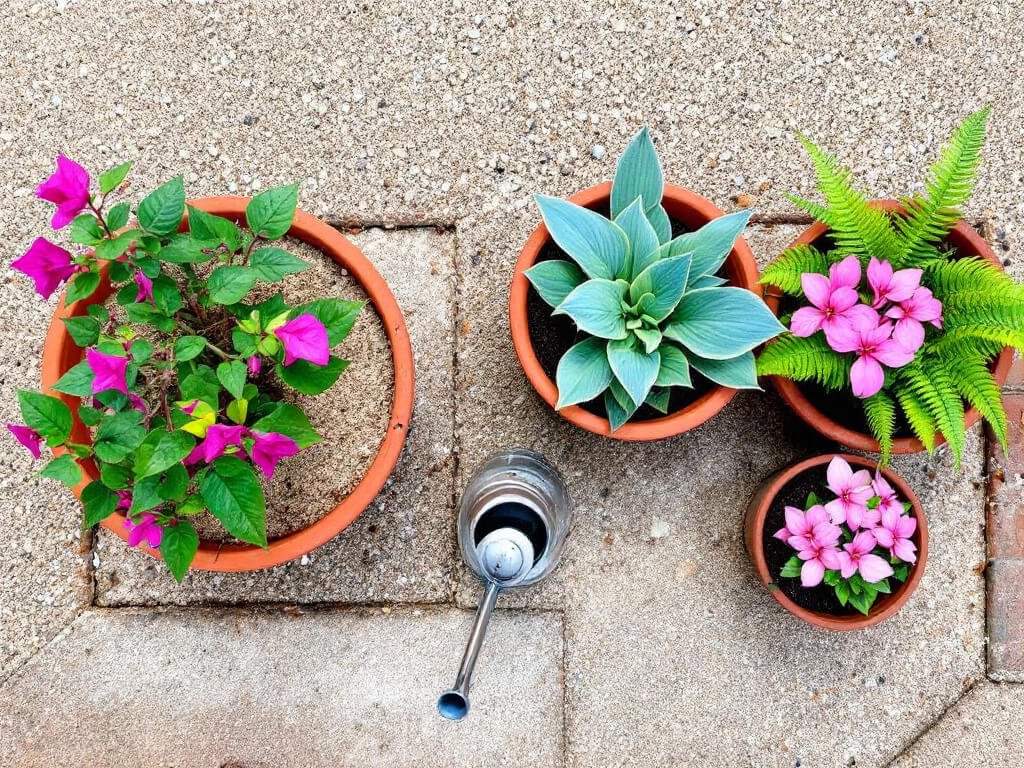
What not to plant with bougainvillea
The pattern is simple. Anything that wants shade, steady moisture, or a lot of root space will fight the way bougainvillea needs to be grown.
Hosta
Hosta needs a shadier, consistently moist spot. That conflicts with bougainvillea’s full sun and sharp drainage. One of the two will always be in the wrong place.
Fern
Ferns generally prefer shade and more evenly moist soil. A dry, sunny bougainvillea site is a poor match for them in both respects.
Impatiens
Impatiens needs more regular moisture than a bougainvillea planting should get. If you water enough to keep impatiens happy, you risk the root problems that poor drainage causes in bougainvillea.
Hydrangea
Hydrangea typically needs dependable soil moisture and can compete for water in a shared bed. Its light and watering needs do not line up with a dry bougainvillea position. I’d keep it in a separate bed with its own irrigation.
Large, aggressive-rooted plants
Plants with invasive or aggressive root systems can compete with bougainvillea for water, nutrients, and root space. The sources advise avoiding them but do not give a species list, so judge by habit. If a plant is known for running or crowding out neighbors, leave it out of this planting.
Layout and spacing
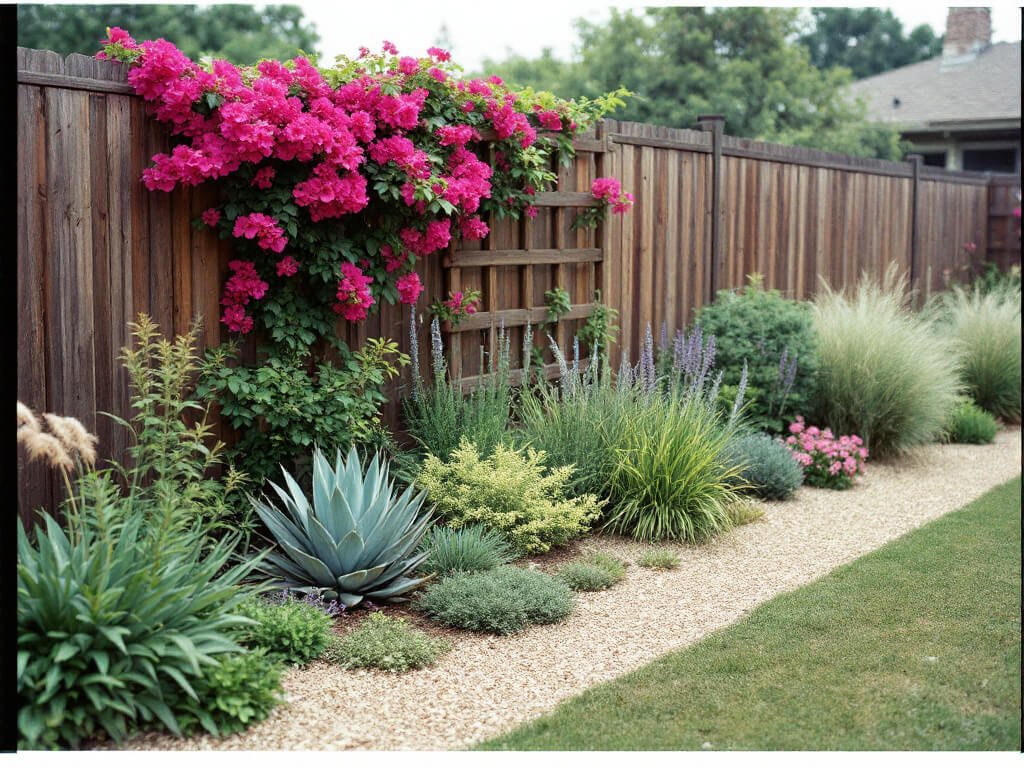
Treat bougainvillea as the tallest structural plant, set against a trellis, wall, or sturdy support, and put lower companions toward the front or outer edge. Keep the root crown and the area where you prune open, and group plants that share sun and drainage needs. Don’t place anything that would make you water the bougainvillea more often than it wants.
Back, against the support: bougainvillea, with the root crown and pruning area kept clear.
Middle, 2 to 3 feet out: lavender, rosemary, lantana, or agave, spaced by mature width.
Front edge, 12 to 24 inches out: thyme, verbena, coreopsis, or aloe.
Open ground to the side: pennisetum or muhlenbergia, outside the root and pruning zone.
In a container: use a loam-based mix with excellent drainage and choose smaller, dry-site companions such as thyme or aloe, leaving room for the roots and the support.
FAQ
Can lavender grow with bougainvillea?
Yes, lavender is a reasonable combination where both plants get full sun and grow in sharply drained soil. The pairing rests on compatible conditions, not a verified pest-repellent effect.
Can bougainvillea share a container with other plants?
It can, but the container needs excellent drainage and enough room for the bougainvillea’s roots and support structure. Smaller, dry-site companions work better than plants that need consistently moist soil.
What plants should be avoided near bougainvillea?
Avoid shade- and moisture-loving plants such as hostas, ferns, and impatiens, along with plants that have aggressive root systems. Their water, light, or space needs conflict with what bougainvillea prefers.