
Lavender Companion Plants for Dry, Sunny Gardens
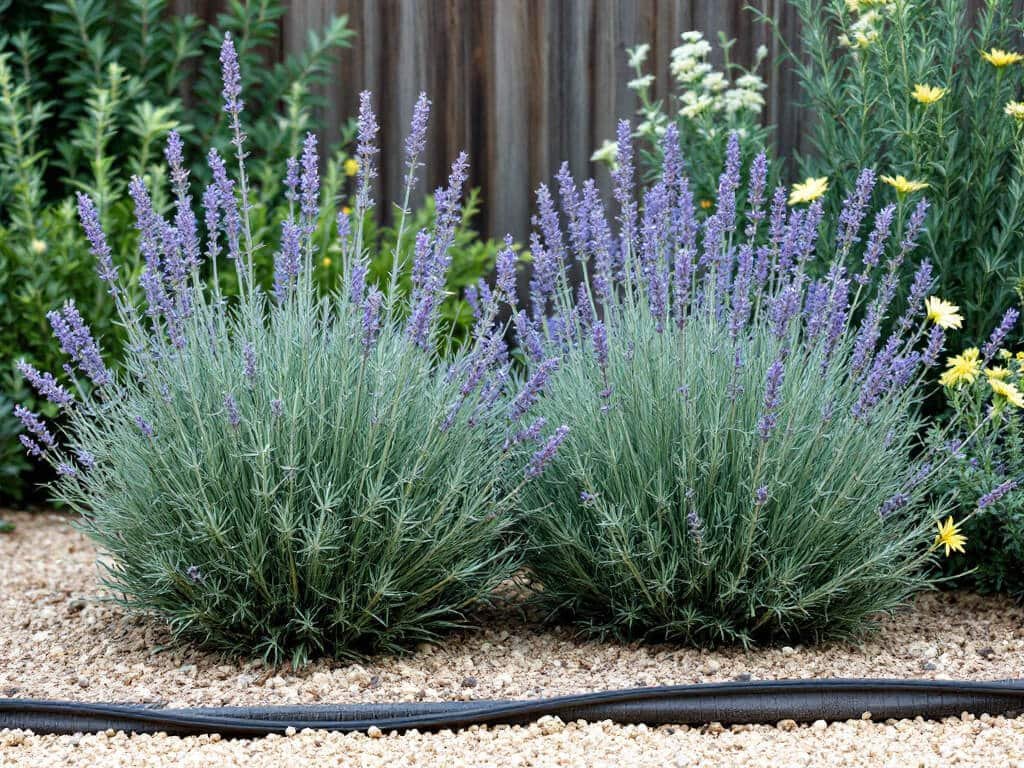
Choosing lavender companion plants is mostly a question of water, light, and drainage, not looks. Lavender is a woody, evergreen subshrub that wants full sun, low water once established, and light, sandy or gravelly soil at a pH of about 6.5 to 7.5. English lavender is generally hardy in USDA Zones 5 to 10, though that varies by species and cultivar.
Any plant you put beside it has to be comfortable with those conditions. The ten below are, and the six after them are not.
Why pairings matter for lavender
Lavender rarely fails from neglect. It fails from too much moisture, which leads to root problems and gray mold, and poor drainage is especially damaging. That means a neighbor’s watering habits matter as much as its flowers or foliage.
Do not plant lavender where a thirstier neighbor’s watering will keep its roots wet.
One popular claim is that lavender repels garden pests and protects everything planted near it. The sources I’m working from describe lavender as aromatic, drought-tolerant, and good for pollinators, but they don’t establish broad pest protection for neighboring plants. Pick companions for their growing conditions, and treat the pest-repellent idea as unverified.
Best companion plants for lavender
Rosemary
Rosemary shares lavender’s taste for full sun, sharply drained soil, and low water. It also adds evergreen structure to the bed through winter. Plant it about 24 inches from lavender, and adjust for how large your rosemary gets.
Sage
Sage suits a sunny, well-drained, relatively dry bed and gives you edible foliage. It fits the same Mediterranean-style planting as lavender without asking for extra water. Leave 18 to 24 inches between plant centers, based on mature spread.
Thyme
Thyme is a low edging plant with the same sun, drainage, and water needs as lavender. It fills the front of the bed without shading the lavender behind it. Keep it at least 12 to 18 inches from lavender’s crown, depending on how far your cultivar spreads.
Oregano
Oregano is an edible, sun-loving perennial that tolerates lean, well-drained soil. It fills a lower layer in the bed, beneath and in front of taller plants. Allow about 18 to 24 inches from lavender, adjusted for your oregano cultivar.
Catmint
Catmint is a long-flowering, drought-tolerant border perennial that adds pollinator resources and softens lavender’s upright shape. It’s a good pick if your bed looks stiff. Space it roughly 18 to 24 inches between centers and keep air moving between the plants.
Yarrow
Yarrow is a drought-tolerant pollinator plant that does well in sunny, well-drained spots. It adds a taller, flat-flowered form that contrasts with lavender’s spikes. Allow about 18 to 24 inches from lavender, or more for large cultivars.
Coneflower
Coneflower is an upright pollinator plant for full sun. It can handle a slightly more moisture-retentive spot than lavender, so give it its own section of the bed. Keep it about 24 to 36 inches from lavender and irrigate it separately if it needs more water.
Rudbeckia
Rudbeckia is a full-sun perennial that’s listed among suitable low-water companions for English lavender. It adds upright seasonal color behind or beside the lavender. Space it by the cultivar’s mature width, commonly about 18 to 24 inches from lavender.
Salvia
Salvia is an aromatic, sun-loving plant often paired with lavender in cottage-garden plantings. It copes with well-drained soil, so it won’t pull the bed toward wetter conditions. Allow about 18 to 24 inches between centers, according to mature size.
Sedum
Sedum is a low, heat-tolerant filler with relatively low water needs. It works at the bed edge, where it won’t crowd lavender’s woody base. Place it about 12 to 18 inches from lavender, depending on the sedum’s mature spread.
What not to plant with lavender
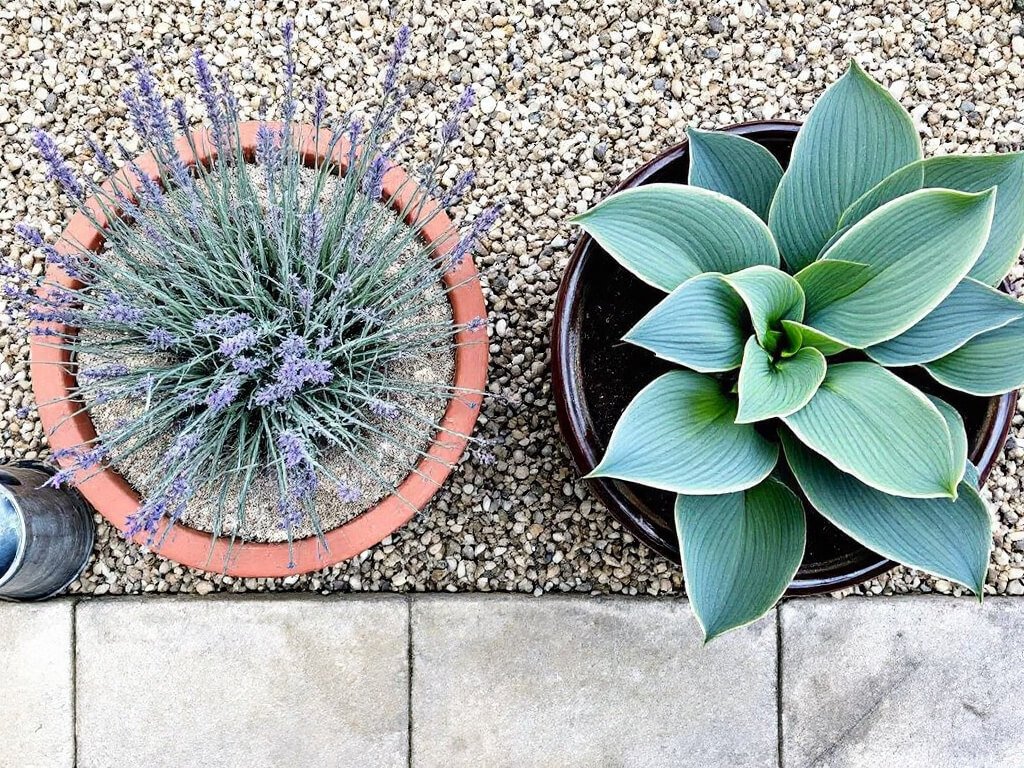
Hostas
Hostas need shade or partial shade and more consistently moist soil than lavender tolerates. Watering them can keep lavender’s root zone too wet. The light and water needs both conflict, so this pairing fails on two counts.
Ferns
Ferns generally prefer shadier, evenly moist conditions. Lavender wants a full-sun, sharply drained site. There’s no spot in the same bed that suits both.
Mint
Mint typically prefers more moisture and can spread aggressively. That means competition for space and a bed that stays damper than lavender wants. I’d keep it in its own pot, well away from the lavender.
Impatiens
Impatiens need more moisture and usually do best with some shade. Lavender needs the opposite. Put impatiens where the light is softer and the watering is regular, and keep them out of the lavender bed.
Hydrangeas
Hydrangeas generally need richer soil and more regular moisture. If they share irrigation with lavender, the lavender can end up too wet. Separate them, or skip the pairing.
Blueberries
Blueberries require acidic soil, while English lavender grows best around pH 6.5 to 7.5. You can’t satisfy both in one planting area. Give blueberries their own bed with soil matched to them.
Layout and spacing
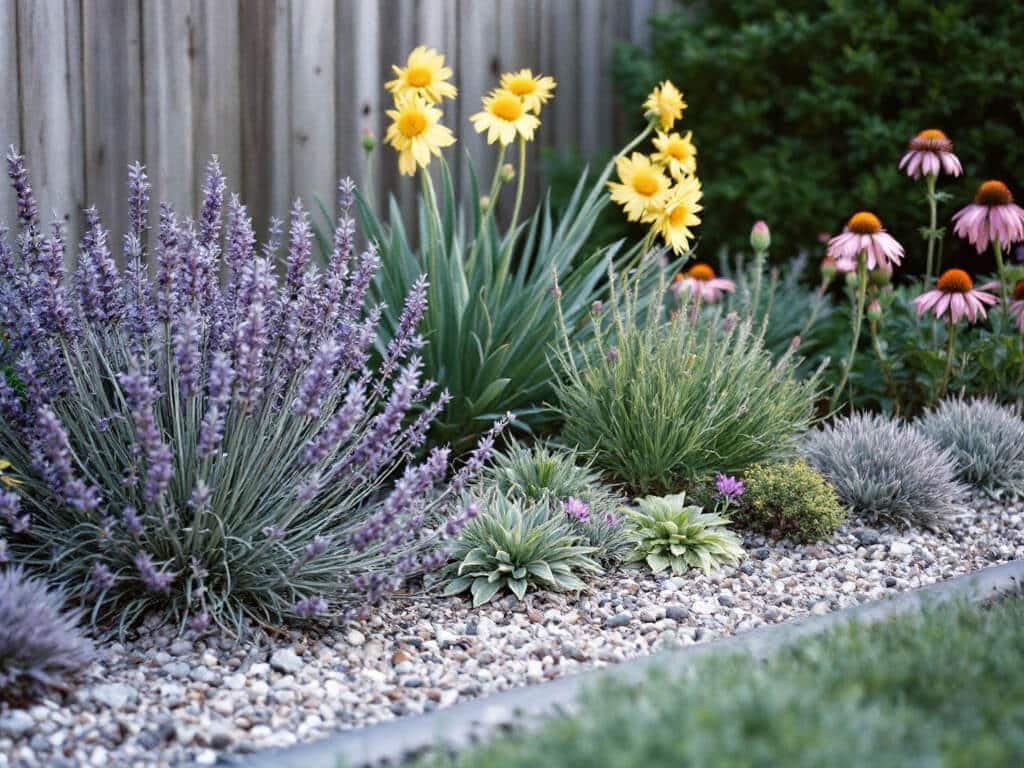
Put lavender in the sunniest, highest, fastest-draining part of the bed, then arrange companions by height and water need. Leave enough room for each plant’s mature spread so air moves through the planting, since cramped, damp foliage invites the gray mold you’re trying to avoid. English lavender itself is commonly spaced 18 to 24 inches apart, with more room for larger types.
– Front edge: thyme or sedum, 12 to 18 inches from lavender’s crown.
– Middle: lavender, with rosemary, sage, oregano, catmint, or salvia at 18 to 24 inches (rosemary closer to 24 inches).
– Back or side: yarrow or rudbeckia at 18 to 24 inches, or coneflower at 24 to 36 inches.
– Separate zone: anything that needs more water, such as coneflower, on its own irrigation.
FAQ
Can roses grow beside lavender?
Yes, but placement matters because roses generally need richer soil and more regular moisture than lavender. Keep irrigation zones separate where possible, and don’t let rose watering saturate the lavender’s soil.
How far apart should lavender and companion plants be?
No single distance fits every cultivar. English lavender is commonly spaced 18 to 24 inches apart, and mixed plantings should be adjusted for each plant’s mature spread and airflow. Larger shrubs need more room.
Can lavender grow with herbs?
Rosemary, sage, thyme, and oregano are among the better choices because they share full sun and well-drained, relatively dry soil. Mint is a poor match because it generally needs more moisture and can spread aggressively.