
Onion Companion Plants: What to Grow Nearby
Choosing onion companion plants comes down to two questions: what can share the bed without shading the onions, and which pairings have any evidence behind them. Onions are grown as annuals across USDA zones 5-9, they need full sun, and they don’t compete well with anything that crowds them. That narrows the field quickly.
Below are ten plants worth growing nearby, a short list of things to keep apart, and a layout that works in a row bed. Some of the pairings are well supported and some are really just good use of space. I’ll say which is which.
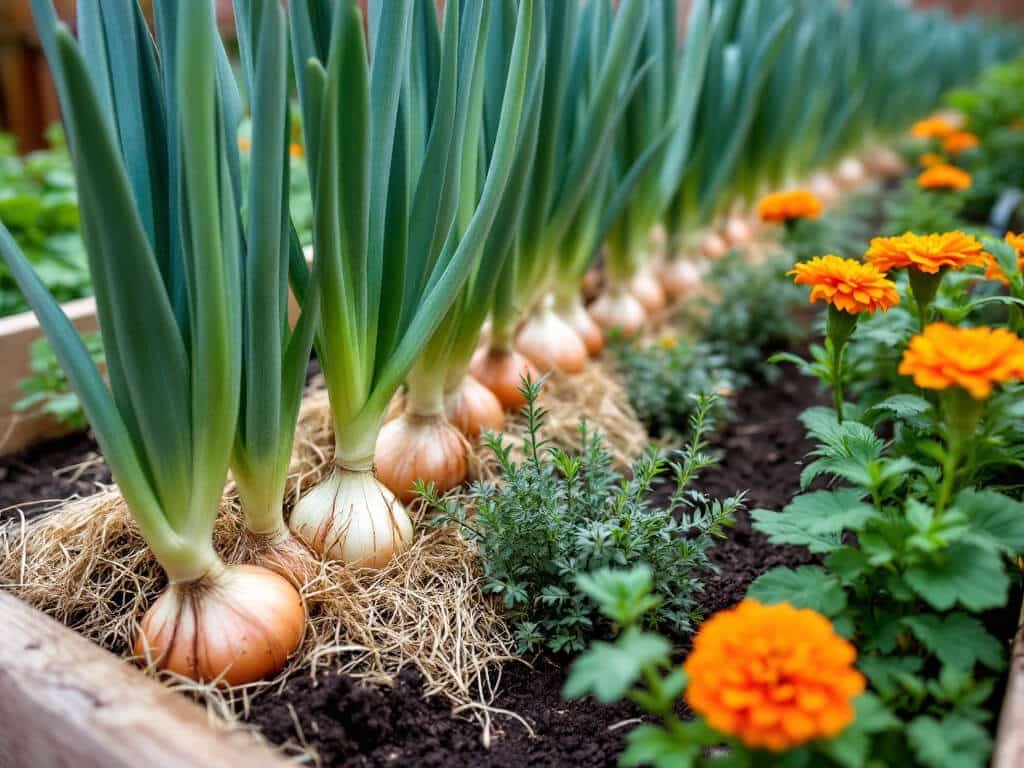
Why Pairings Matter for Onion
Onions are shallow, slow, and upright, so they leave a lot of open ground and sunlight early in the season. That makes them easy to pair with faster or lower crops, as long as nothing grows tall enough to block the light. Onions also want fertile, free-draining soil that stays weed-free, so a pairing that adds weeds or shade costs you more than it gives.
The pest angle is real but modest. Onion scent may make carrots harder for carrot root fly to find, and a few Iowa studies found less cabbage looper and imported cabbageworm damage in plantings that included onion. But extension guidance says many popular pairings have limited or contradictory research, and companion planting should back up weed control, crop rotation, and regular monitoring, not replace them.
That includes the claim that marigolds ward off insects everywhere. University of Minnesota Extension reports that marigolds sometimes help and sometimes don’t, and the evidence for broad insect control is thin. Plant them because you like them, not as pest insurance.
Best Companion Plants for Onion
Carrots
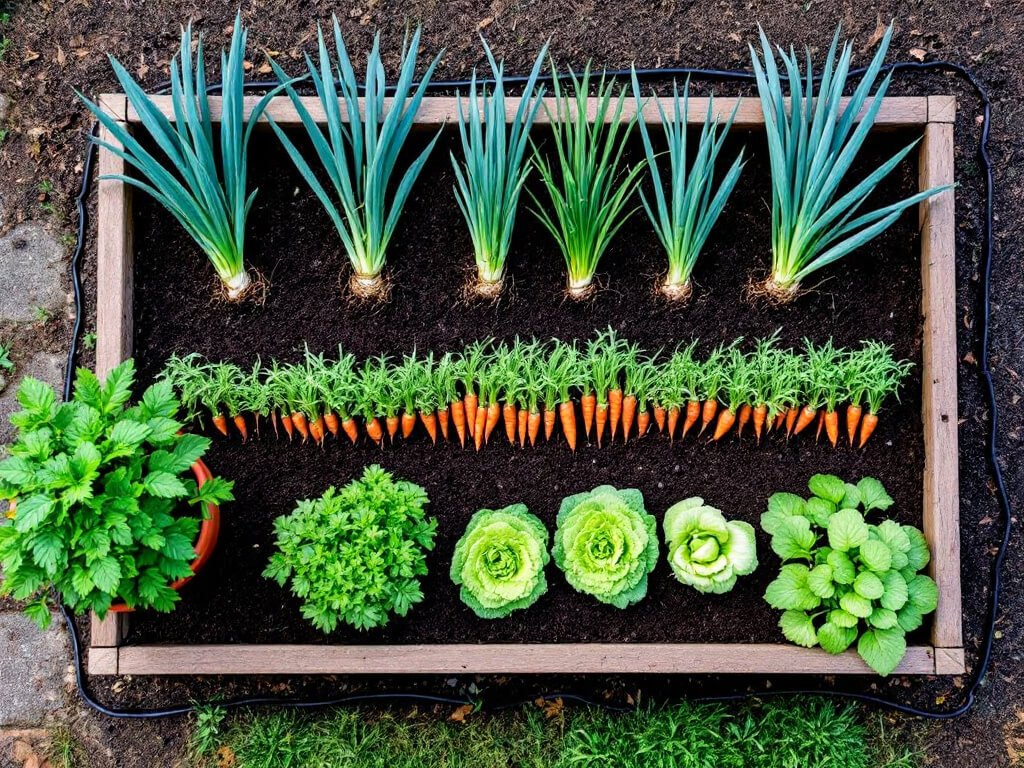
This is the best-known pairing, and it’s the one I’d start with. Onion scent may help mask carrots from carrot root fly, and the two crops root at different depths, so they don’t fight over the same soil. Keep onion sets 4-6 inches apart and run carrot rows between onion rows without crowding either crop.
Cabbage
An Iowa study found that plantings including onion had less cabbage looper and imported cabbageworm damage. The benefit here mostly runs to the cabbage, but the onions don’t mind the company. Give onions their usual 4-6 inch spacing and space the cabbage separately, according to its own recommendation.
Broccoli
Same study, same result: plantings that included onion saw less cabbage looper and imported cabbageworm damage on broccoli. Broccoli gets big, so put the onions around the edge of its mature canopy rather than inside it. That keeps the onions in full sun, at their normal 4-6 inch spacing.
Thyme
An Iowa study found that thyme and onion together helped reduce cabbage looper and imported cabbageworm damage in broccoli. Thyme is low and tidy, so it won’t shade onions. Keep onions at 4-6 inches apart and give the thyme well-drained soil, which onions like too.
Nasturtium
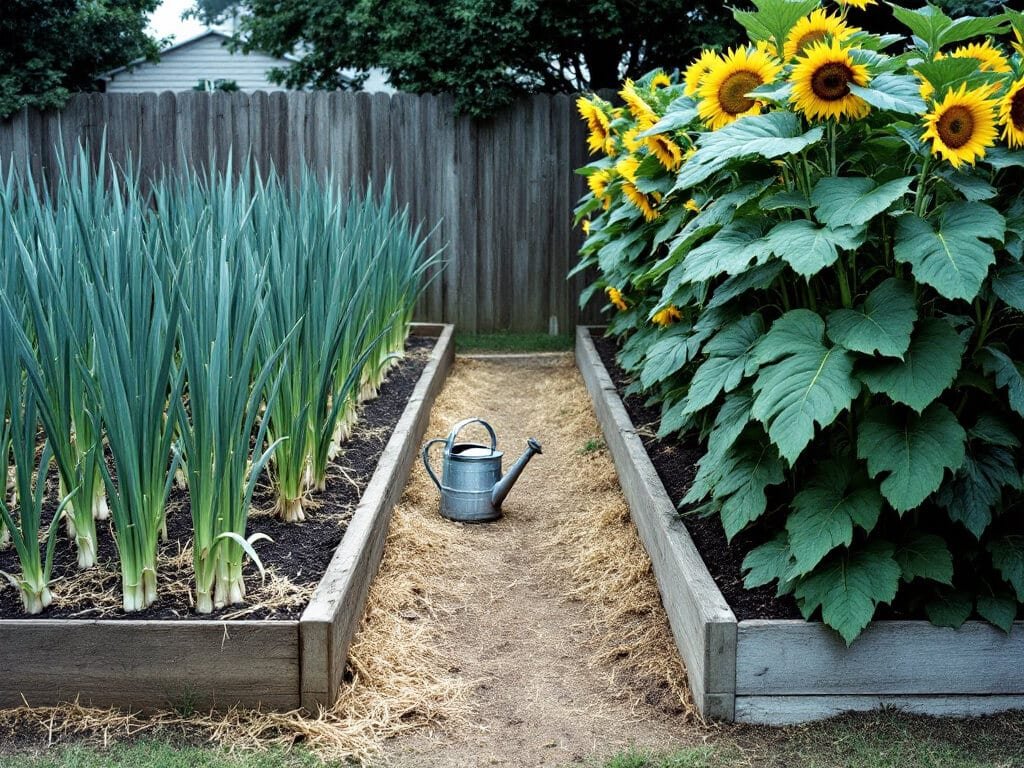
In the same Iowa work, onion and nasturtium together helped reduce cabbage-worm damage in broccoli and cabbage. Nasturtiums trail, and that is the one thing to watch. Plant them where their growth won’t spread over the onions and shade them.
Marigold
An Iowa study found marigold and onion helped reduce cabbage-worm damage in cabbage, though as noted above, marigolds don’t work reliably everywhere. Give each marigold room for its mature spread and keep the onions in full sun. Onion spacing stays at 4-6 inches.
Mint
The RHS lists mint as a companion that may deter onion fly. Grow mint in a container, never in the ground beside the onions, because it spreads aggressively. Keep the pot near the bed, and keep onions 4-6 inches apart within their own row.
Lettuce
Lettuce is a smaller, faster crop, so it can fill space before larger plants take over. Put it where it won’t shade the onions, and follow the onion’s 4-6 inch spacing. This is a space-saving pairing, not a pest-control one.
Radish
Radish matures quickly and suits the gaps between slower crops. Harvest it before it starts competing with the developing onion bulbs, which should stay 4-6 inches apart. Think of it as a short-term filler.
Peas
Legumes can contribute nitrogen to garden systems, but that doesn’t add up to a special onion-specific benefit. If you grow peas nearby, keep the supports from shading the onions and hold the onions to 4-6 inches apart. I’d treat peas as a neighbor, not a partner.
What Not to Plant With Onion
Here’s the honest answer: the extension and RHS sources don’t identify any plant that onions should never grow beside. Lists that claim otherwise aren’t backed by what’s available. What you can do is avoid two practical problems.
Plants that shade or outcompete onions
Onions need full sun and a weed-free bed. Anything tall, dense, or fast-spreading that casts shade over them or crowds their roots will slow them down. This is a layout problem, not a documented incompatibility, so the fix is simply to place big plants on the north side or give them their own bed.
Plants with incompatible moisture needs
Onions want fertile soil that stays moist but well drained. Don’t put them in the same container as plants that need constantly wet soil or very dry conditions. One side of the pot will always be unhappy, and wet soil is also what contributes to bulb rot.
Layout and Spacing
Plant onions in sunny rows or blocks, and treat everything else as something that has to fit around them. Companions should be spaced by their own mature size, and none should crowd or shade the bulbs.
– Onion sets: 4-6 inches apart in the row.
– Rows: 8-12 inches apart.
– Carrots: in rows between or beside onion rows, as long as their growth doesn’t shade the onions.
– Radish and lettuce: as short-term fillers, with radish harvested before it competes with the bulbs.
– Cabbage and broccoli: onions around the edge of the mature canopy, not underneath it.
– Thyme: at the bed edge, in well-drained soil.
– Nasturtium: where its trailing growth won’t reach the onions.
– Mint: in its own container, kept apart from the row.
FAQ
Can onions and carrots grow together?
Yes. The RHS and Utah State University both describe carrots and onions as a useful pairing, because onion scent may make carrots harder for carrot root fly to find and their roots sit at different depths.
Do onions repel pests from every nearby plant?
No. Some studies report less damage in particular onion-containing mixtures, but extension guidance cautions that many companion-plant claims are inconsistent or weakly supported.
How close should onions be planted to companion crops?
Plant onion sets about 4-6 inches apart, with rows 8-12 inches apart. Space companion crops by their own mature size, and don’t let any of them shade or crowd the onions.