
How to Fix Leggy Seedlings and Prevent Stretching
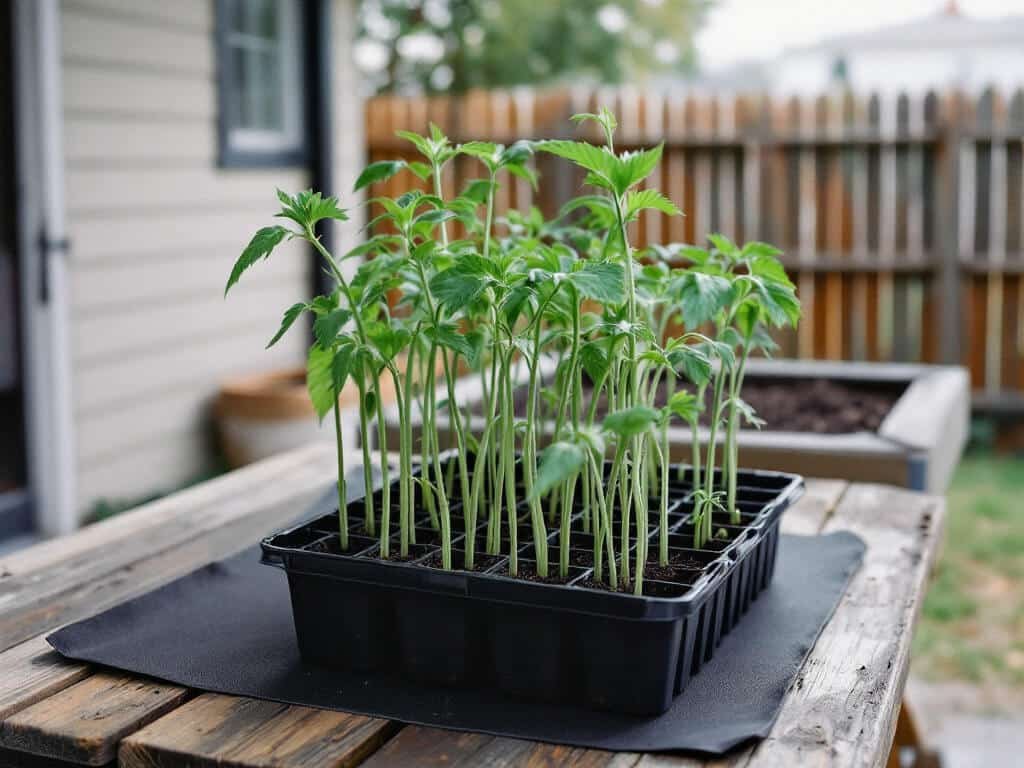
Leggy seedlings have long, thin, floppy stems, and the cause is almost always the growing conditions, not the seed. Too little light and too much warmth are the two most directly linked to weak, stretched growth. Fix those two and most seedlings that are still upright can be strengthened and planted out.
This guide walks through diagnosing the stretch, correcting it, potting on, and hardening off. It also covers when a seedling is past saving.
What you need
Most of this is standard seed-starting gear. The one item worth spending on is the light.
– Seedling tray or small individual containers with drainage holes
– Clean, well-drained seed-starting mix
– A grow light, or a fluorescent or LED shop light, rated at least 2,000 lumens and 5,000 K or higher
– An adjustable fixture that can sit 2–3 inches above the seedlings
– A small fan for gentle air movement
– Labels, a dibber or pencil, and a clean watering can or mister
– Larger containers for potting on seedlings that have established roots
– An outdoor tray, cold frame, or sheltered spot for hardening off
Diagnose the cause
Start by checking light and warmth, because those are the two conditions most directly associated with leggy growth. Seedlings that lean hard toward a window or stretch while sitting on a heat source are telling you which one it is.
Ask yourself two things. Are the seedlings getting 14–16 hours of strong light a day? Are they still sitting on germination heat after they’ve sprouted?
A sunny interior window can look bright to you and still be too weak for seedlings. If your seedlings are in one, assume the light is the problem until you’ve tried a proper fixture.
Also look at the base of the stem. A thin stem that’s still standing is a stretch problem you can correct. A stem pinched and collapsed at the soil line is a different problem, covered under common problems below.
Move seedlings into stronger light
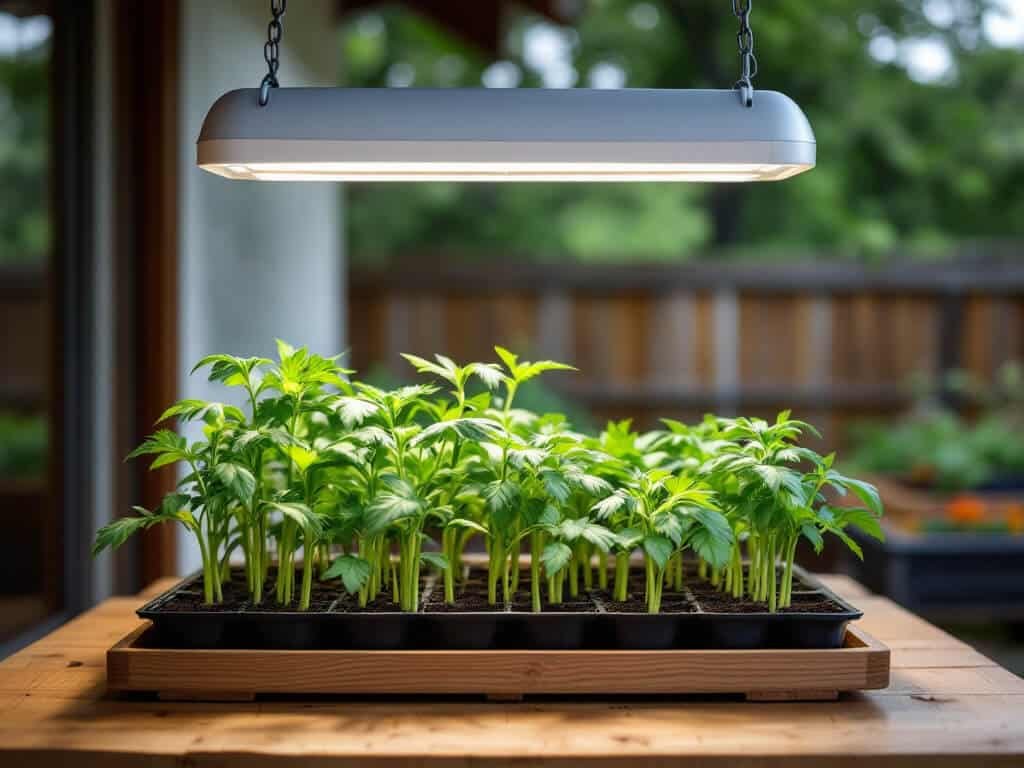
Give seedlings 14–16 hours of light daily, with the fixture sitting about 2–3 inches above the foliage. That is the University of Maryland Extension recommendation for indoor starts, and it is closer than most people expect.
Move them under the light as soon as they emerge, not after they’ve already stretched. Since the seedlings will grow toward the light, you’ll need to raise the fixture as they gain height, so an adjustable setup matters. Chain-hung shop lights work well for this.
Use a light rated for the job. The extension guidance calls for at least 2,000 lumens at 5,000 K or higher, which points you toward a cool white or daylight bulb.
Moving a leggy seedling under a good light won’t shrink the stem you already have. It stops the stretching and lets new growth come in sturdier. That’s why the potting-on step below matters.
Correct excess warmth
Take seedlings off germination heat as soon as roots emerge and before shoots appear. Continuously high temperatures can produce leggy transplants, even when light is decent.
If your seedlings are stretching under adequate light, warmth is the likely culprit. Turn off the heat mat once seeds have sprouted. Then use a cooler day and night cycle suited to the crop you’re growing, since the right range differs between tomatoes, brassicas, and flowers.
Cool doesn’t mean cold and wet. Cold, soggy mix raises the risk of damping-off, so you’re aiming for a cooler room with a well-drained mix, not a damp, chilly one.
Improve airflow and watering
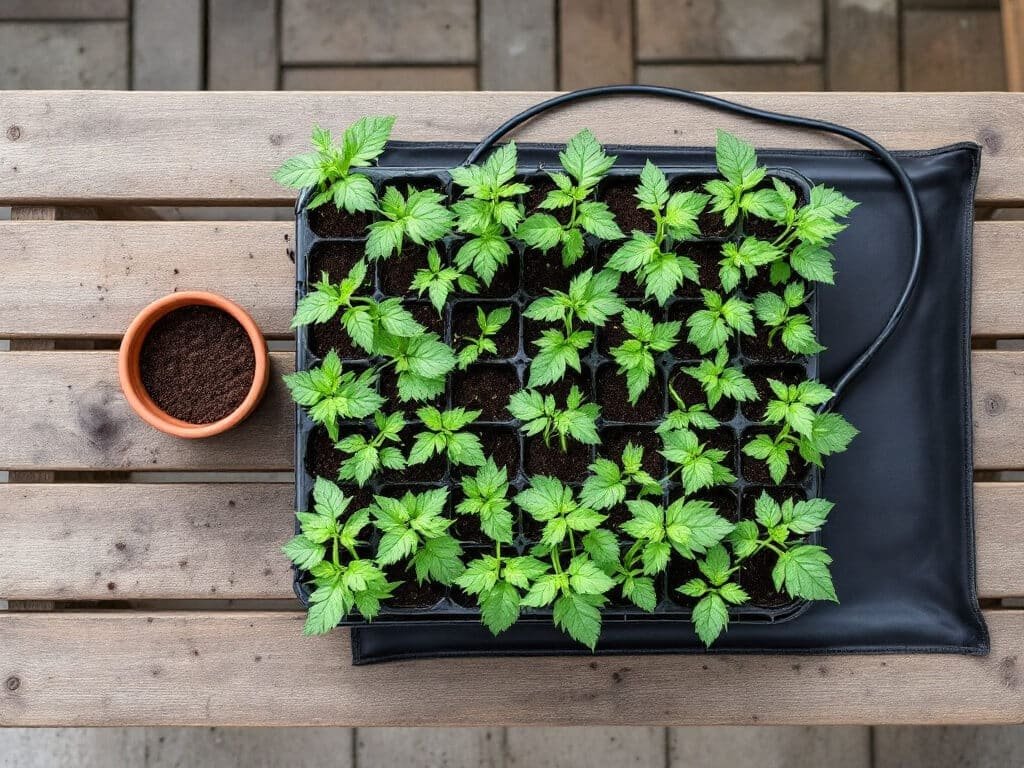
Run a small fan gently near the seedlings. Moving air helps toughen the growth, and it also helps with the disease risk that comes with crowded, humid trays.
Keep the fan gentle. You want stems to sway a little, not leaves to flap or the mix to dry out in a day.
Water evenly. Seedlings shouldn’t swing between bone dry and soaking. Overwatering, low light, cool soil, and excess fertilizer are all associated with greater damping-off risk, so skip the extra feeding as a fix for weak seedlings. Weak stems from low light won’t be cured by fertilizer, and it can make things worse.
Use a clean seed-starting mix and containers with drainage holes. If the tray sits in water, tip it out.
Pot on leggy seedlings safely
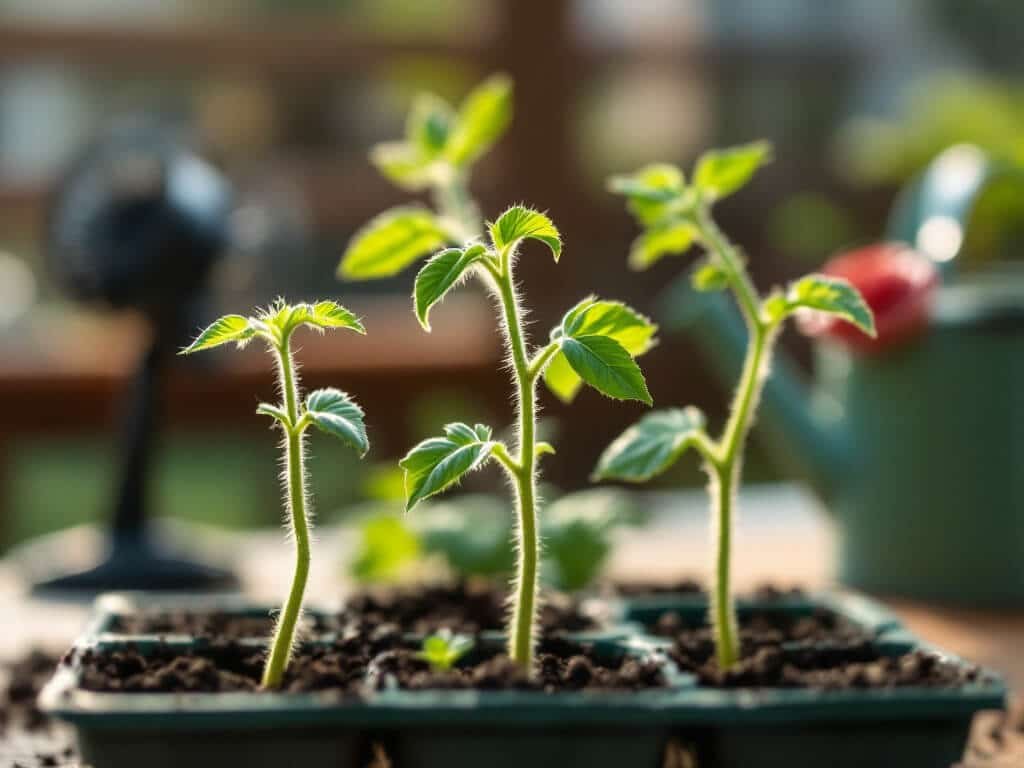
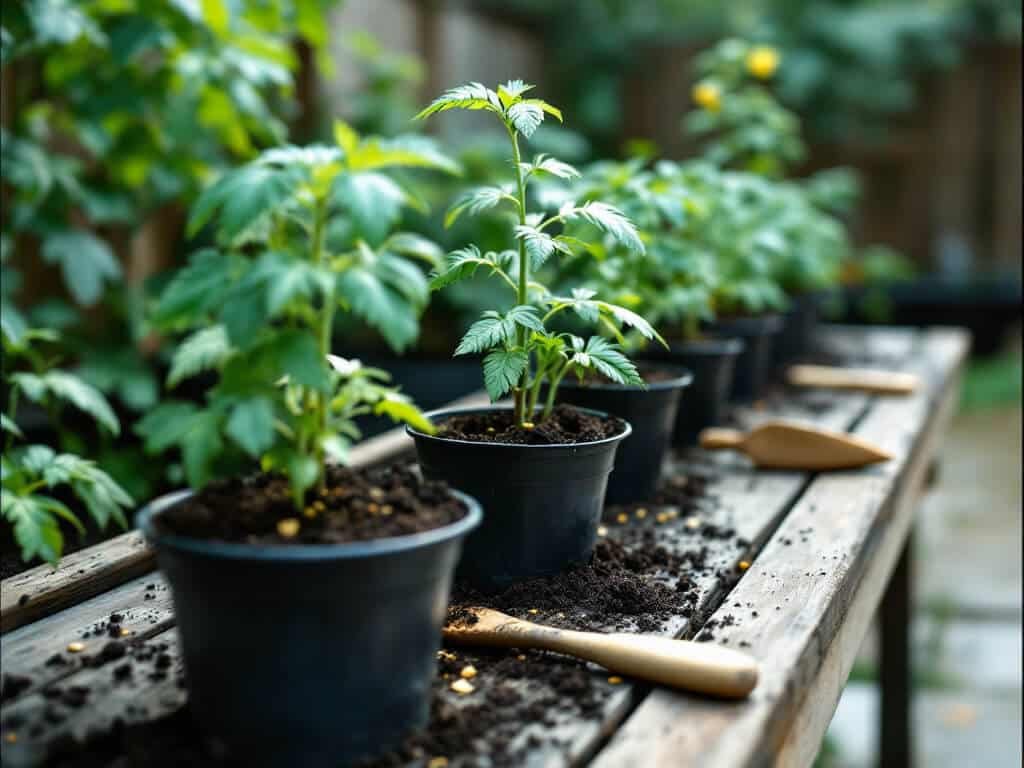
Transplant seedlings into larger containers once the first true leaves have emerged, and handle the roots gently. Pick up seedlings by a leaf, not the stem, and keep as much root intact as you can.
Pot on only seedlings with established roots. The exact timing varies by crop and conditions, so go by the true leaves, not the calendar.
Here’s the part people get wrong. Don’t bury every leggy seedling deep. Planting depth depends on the plant, and for most crops the rule is the same depth as in the seed flat.
Tomatoes are the exception. A leggy tomato can be replanted with the first pair of leaves just above the compost surface, and University of Maryland Extension notes tomatoes can be planted up to the top two leaves. Don’t carry that treatment over to peppers, brassicas, or flowers just because they’re tall.
Harden off before planting outdoors
Start hardening off 1–2 weeks before setting plants out. Extension guidance gives a range of 5–14 days, so go longer for tender plants or if your weather is unsettled.
Here’s how to do it:
1. Put seedlings outdoors in shade and shelter first.
2. Increase sunlight gradually over the following days.
3. Bring tender seedlings indoors at night.
4. Keep them out of wind and away from temperatures below 45°F.
5. Cut back watering frequency, but don’t let plants wilt.
Indoor-grown seedlings scorch if you put them straight into full sun. Take the gradual route even if the forecast looks perfect.
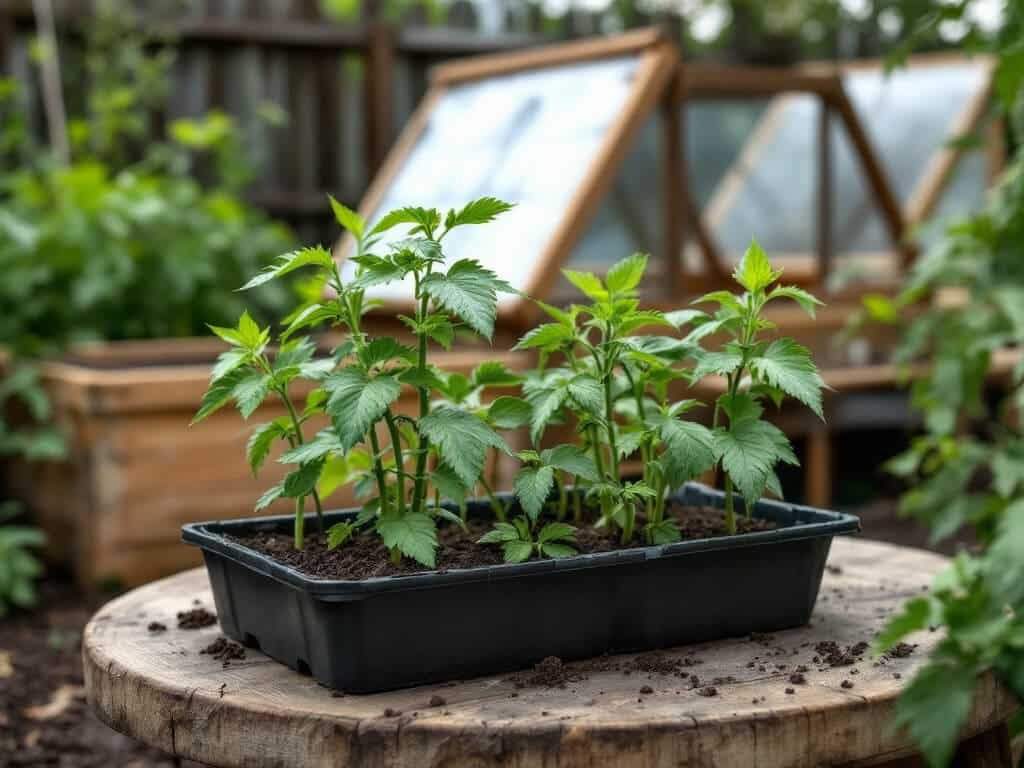
Use an outdoor tray, a cold frame, or any sheltered spot. A tray is easiest because you can carry the whole thing in at night.
Common problems
– Seedlings are still thin after moving to a window. The window probably doesn’t provide enough intensity or duration. Use a supplemental light 2–3 inches above the foliage for 14–16 hours a day.
– Stems stretch even with good light. Excess warmth can promote lanky growth. Turn off germination heat after emergence and use a cooler day and night cycle suited to the crop.
– Seedlings collapse at the soil line. Suspect damping-off. Improve drainage and airflow, ease off the watering, and make sure light is adequate.
– Transplants wilt outdoors. They likely weren’t hardened off. Return them to a sheltered spot and repeat the gradual exposure over 5–14 days.
– Seedlings scorch after going outside. Increase sun exposure gradually instead of moving indoor-grown plants into full sun.
– A seedling is too weak to recover. If the stem is badly damaged or the plant has collapsed from disease, replace it. Pruning won’t fix it, and the sources don’t give a universal point at which a seedling is beyond help, so judge by whether it’s still upright and firm.
When to expect results
Light correction starts the day you diagnose the stretch. Move seedlings under the light as soon as they emerge, and don’t wait for them to flop.
Potting on happens once the first true leaves have emerged. How long a seedling takes to establish afterward varies by crop and conditions.
Hardening off takes 5–14 days before planting, with extension guidance often describing 1–2 weeks. One vegetable-transplant schedule from University of Maryland Extension uses about 4–6 weeks from sowing to a well-rooted transplant, though that varies by crop.
There’s no single harvest or bloom date here, because leggy seedlings could be vegetables, herbs, or flowers. Timing depends on what you’re growing.
FAQ
Can leggy seedlings be saved?
Often, yes, if they’re still upright and healthy. Improve the light, correct excess warmth, and pot on when the first true leaves emerge. Seedlings that have collapsed may have damping-off and are less likely to recover.
Should every leggy seedling be planted deeply?
No. Tomatoes are the exception, and they can be planted up to the top two leaves. Other transplants should generally go in at the same depth as in the seed flat.
How close should a grow light be to seedlings?
Keep fluorescent or LED lights about 2–3 inches above the seedlings and run them for 14–16 hours daily. Raise the fixture as the plants grow.