
Eucalyptus Companion Plants: What to Grow Nearby
Choosing eucalyptus companion plants mostly comes down to water, light, and room for roots. Eucalyptus wants full sun and well-drained soil, and it does not tolerate waterlogging. Anything you plant beside it has to be fine with those terms.
The good news is that a lot of familiar sun-loving perennials and herbs fit. This guide covers which ones, which to keep away, and how to lay out the bed so a young tree gets established without competition.
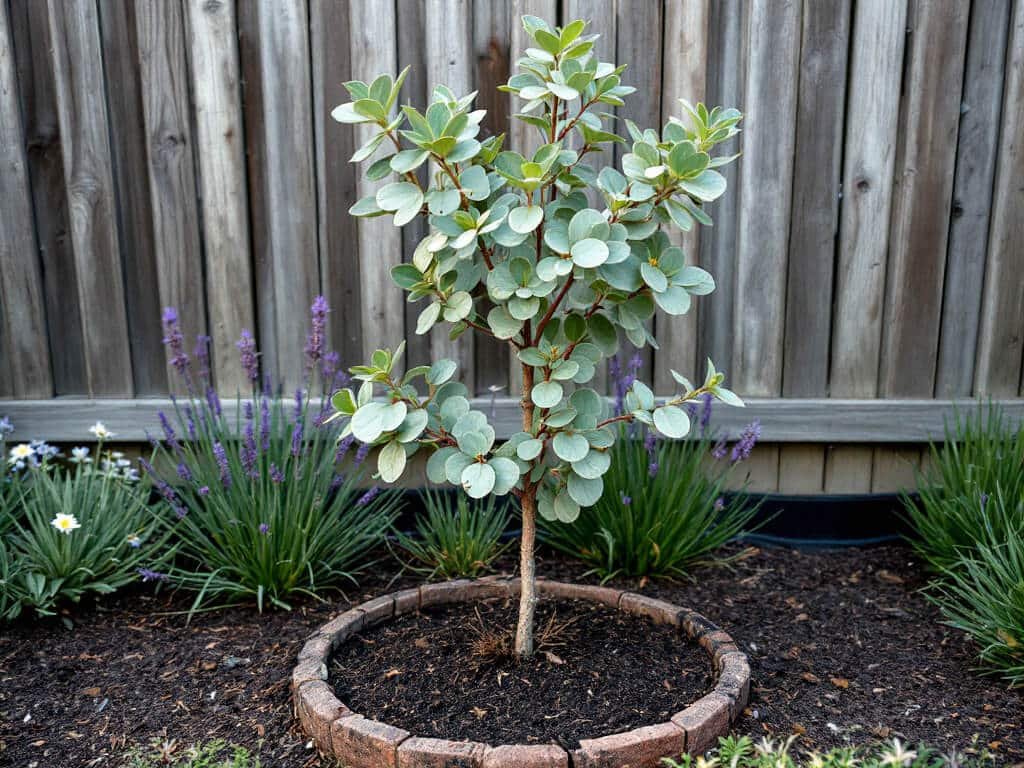
Why pairings matter for eucalyptus
Eucalyptus is picky in two directions at once. Newly planted trees need regular watering while they establish, but an established tree is generally drought tolerant and sulks in soggy ground. A companion that needs constant moisture pulls you toward overwatering, and that is how you end up with problems like oedema, which is linked to waterlogged conditions.
Space matters too. Mature size varies a lot by species, from container-grown shrubs to large trees, so check the mature dimensions of yours before you plant anything around it. An established tree can also dry out the soil around it, which makes it a poor neighbor for thirsty plants.
Hardiness is part of the picture. Eucalyptus cinerea is listed for USDA Zones 8a to 11b, and NC State notes that many species are prone to dieback in Zone 7a and colder. If you garden in zones 5 to 7, many gardeners grow eucalyptus as an annual or in a container, and that changes how you plan the surrounding planting. Container growing is covered under layout below.
One myth to clear up: eucalyptus is not a proven insect-repelling companion. The extension and RHS sources I reviewed document eucalyptus pests and growing needs, but nothing shows that planting it protects neighboring plants from insects. Choose companions for matching conditions, not for pest control.
Best companion plants for eucalyptus
The thread running through this list is shared conditions: full sun, good drainage, and low water once established. No source gives a universal spacing figure for any of these plants next to eucalyptus. The workable rule is to use each plant’s mature width, keep the trunk zone open while the tree is young, and plant outside the roughly 1 m weed-free circle described in the layout section.
Lavender
Lavender wants the same full sun and sharply drained site that eucalyptus does, so it won’t tempt you into extra watering. Use the mature width of both plants to set the distance, and keep the area around a young trunk open.
Rosemary
Rosemary is a natural fit for a dry bed with full sun and well-drained soil. Give it room to reach its mature spread without crowding the eucalyptus or its neighbors.
Sage (Salvia officinalis)
Sage likes sunny, well-drained conditions and doesn’t take up much room. Plant it outside the eucalyptus’s roughly 1 m weed-free establishment circle.
Thyme
Thyme is a low groundcover for a sunny, well-drained spot, which makes it a good edge plant. Keep it outside the establishment circle and away from the trunk.
Yarrow (Achillea millefolium)
Yarrow suits sunny, relatively dry gardens and adds flowering habitat. Space it by the mature width of the cultivar you buy, not by the eucalyptus.
Coneflower (Echinacea purpurea)
Coneflower is a full-sun perennial that gives pollinators flowers to visit. Follow the cultivar’s mature spread, and stay out of the eucalyptus root zone while the tree establishes.
Black-eyed Susan (Rudbeckia hirta)
Black-eyed Susan is a sunny space-filler for a dry-to-moderate garden. Use the mature width of the cultivar you choose to set spacing.
Sedum
Sedum takes little water, likes sun, and does well in well-drained soil, which makes it useful for lower planting layers. Keep it clear of the trunk and allow its full mature spread.
Blue fescue (Festuca glauca)
Blue fescue is compact, sun-loving foliage that fills a lower layer beneath taller plants. Space it by the cultivar’s mature clump width.
Oregano
Oregano is a drought-tolerant, sun-loving herb that covers ground-level space. Plant it beyond the young eucalyptus’s weed-free zone.
If you want a short list to start with, I’d pick one herb (thyme or oregano), one flowering perennial (yarrow or coneflower), and one foliage plant (blue fescue or sedum). That covers the layers without crowding the tree.
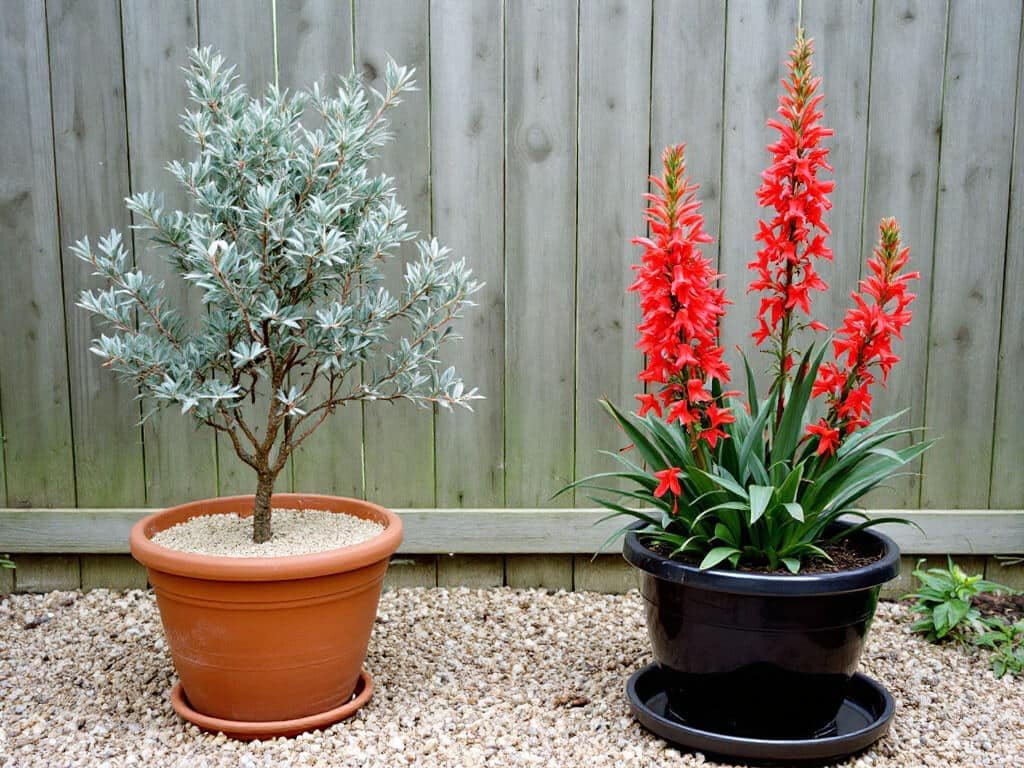
What not to plant with eucalyptus
The one rule worth remembering: do not plant moisture-loving species near eucalyptus, because it dislikes waterlogged soil and a wet-site companion will keep the ground wetter than it can handle.
Water-loving plants such as cardinal flower (Lobelia cardinalis)
Eucalyptus prefers free-draining soil, while wet-site plants need consistently moist conditions. You can’t satisfy both in one bed, so give cardinal flower its own spot elsewhere.
Bog plants such as papyrus (Cyperus papyrus)
Papyrus wants wet feet and eucalyptus needs drainage. The water needs are simply incompatible.
Large, thirsty plants placed close to eucalyptus
Established eucalyptus can dry the surrounding soil, and RHS recommends keeping a bare circle around young trees. A big, water-hungry plant crowded near the trunk competes for both water and root space, and the tree usually wins at the neighbor’s expense.
Shade plants under a dense canopy
Eucalyptus prefers full sun, and most species dislike shade. Anything that needs shade will struggle under a dense eucalyptus canopy and may not get the light it needs.
Plants that need frequent soil enrichment near the trunk
RHS advises against enriching the planting soil with manure or garden compost for eucalyptus. A plant that wants regular feeding and rich soil right at the trunk conflicts with that. Keep the hungry plants in a separate bed.
Layout and spacing
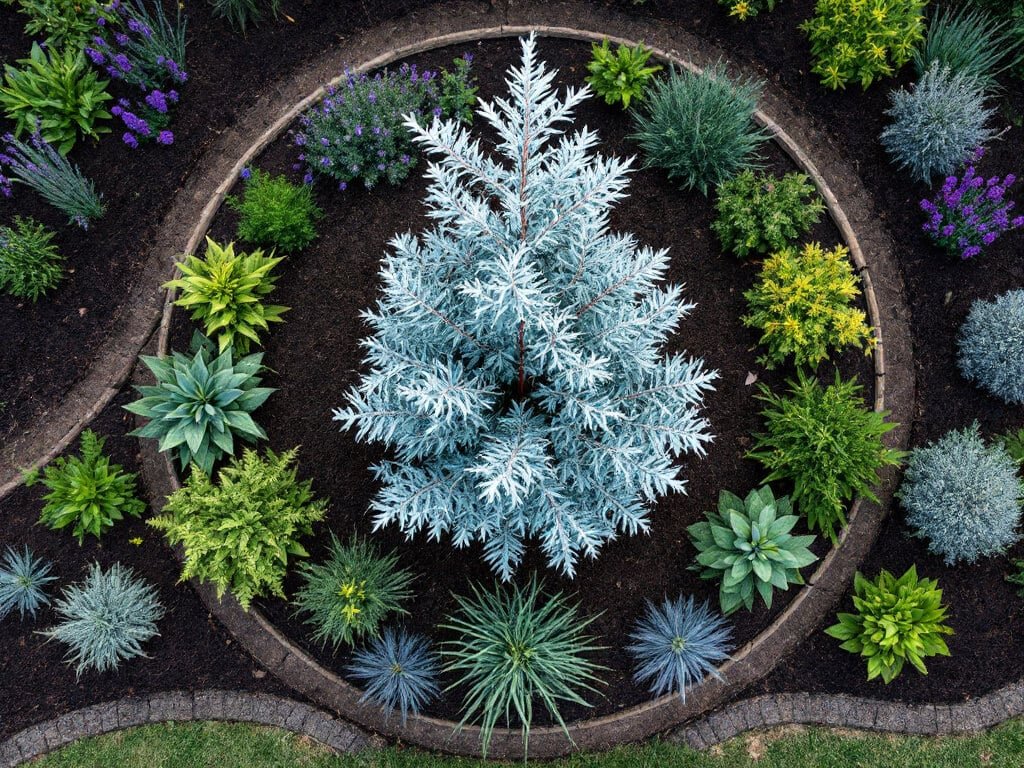
Treat eucalyptus as the tallest, sunniest focal plant in the bed, and keep drought-tolerant, sun-loving companions outside a bare zone around the trunk. RHS recommends roughly 1 m of bare soil around the trunk during the first few years. Leave room for the tree’s eventual canopy and roots, and check the mature size of your species before you finalize anything.
Center: eucalyptus, with about 1 m of weed-free bare soil around the trunk for its first few years.
Beyond the circle: sun-loving, drought-tolerant companions such as lavender, rosemary, sage, yarrow, coneflower, and black-eyed Susan, spaced by their own mature widths.
Edge of the bed: low plants such as thyme, oregano, sedum, and blue fescue.
Containers: use a large pot, and don’t combine eucalyptus with plants that need substantially more water.
FAQ
Can eucalyptus grow with other plants?
Yes, but young eucalyptus benefits from a weed-free circle around the trunk. Companions should tolerate full sun, well-drained soil, and the relatively dry conditions around an established tree.
What should not be planted beside eucalyptus?
Avoid plants that need boggy or consistently wet soil, since eucalyptus dislikes waterlogging. Also avoid crowding the trunk with large, thirsty plants that compete for water and root space.
Does eucalyptus repel pests from companion plants?
The RHS and extension sources I reviewed don’t verify eucalyptus as a dependable pest-repellent companion. They list eucalyptus-specific pests and stress site, drainage, and cold-hardiness requirements instead.