
How to Grow Petunias in Pots
Petunias in pots usually fail for one of three reasons: too little sun, a pot that stays soggy, or a pot that dries out faster than you water it. Get those three right and the rest is routine feeding and trimming. This guide walks through the setup and the upkeep in the order you’ll do them.
Petunias are tender perennials, but in most of USDA zones 5 to 9 you should treat them as summer annuals. Perennial survival is limited to warm, frost-free climates, so plan on replanting each year.
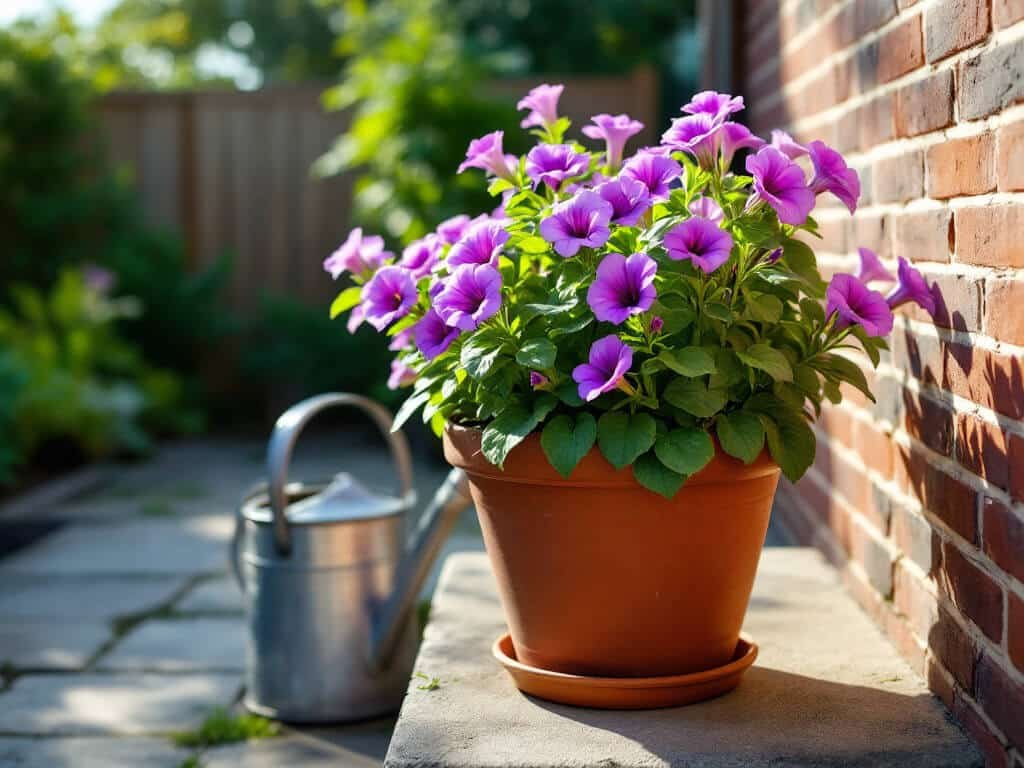
What you need
Most of this is likely already in your shed. The one item worth checking before you buy anything is the pot itself.
– A container with drainage holes. Patio pots, window boxes, and hanging baskets all work. The sources don’t give one universal minimum size, so pick a pot that holds enough mix to go more than a few hours between waterings in summer.
– Peat-free, general-purpose potting compost, or another light, fertile, well-drained container mix.
– Petunia plants or seeds.
– A watering can or hose with a gentle setting.
– Timed-release fertilizer, or a liquid fertilizer made for flowering plants.
– Hand pruners or scissors for deadheading and pinching.
– If starting from seed: a clear plastic cover and a bright, warm spot.
Choose a sunny container location
Give petunias at least 5 to 6 hours of direct sun, and more if you can. Full-day sun generally produces the best flowering, so put the pot on the sunniest part of the patio, deck, or steps rather than wherever it looks best.
Where you have a choice, pick a sheltered spot. Hanging baskets and small pots dry out especially fast, and wind makes that worse. Since a container can be moved, treat the first few weeks as a test. If the plants are leggy or flowering poorly, the pot probably needs more light.
Prepare the container
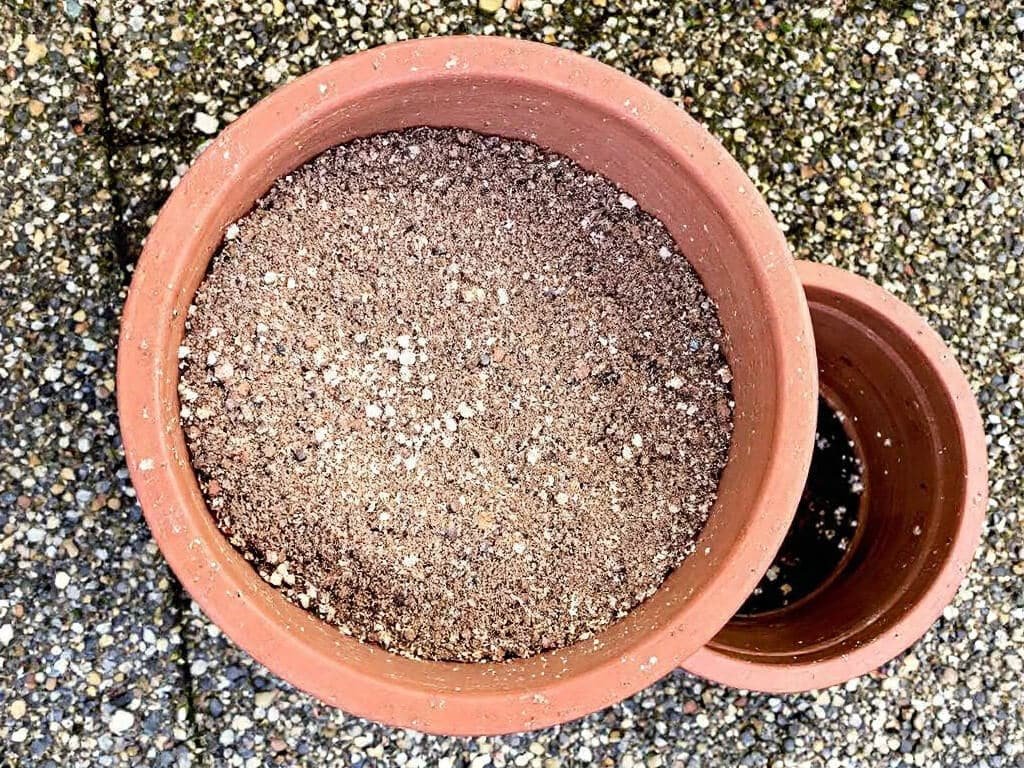
Check that the pot has drainage holes before you fill it. Petunias dislike poorly drained conditions, and a pot without holes turns into a bucket of wet compost around the roots.
Fill the pot with a light, fertile, well-drained potting compost. Don’t use compacted soil from the garden bed, and don’t reuse mix that has set hard from last season. If you plan to use timed-release fertilizer, mix it into the compost now, following the label rate. Water the filled pot once and let it drain so you know water actually runs through.
Plant after frost danger has passed
Wait until local frost danger is over and the soil is about 60°F before moving petunias outdoors. Cold damage is the quickest way to lose a pot of petunias, so don’t plant early just because the nursery has them out.
Young plants need hardening off first. Over several days, set them outside for a little longer each day so they adjust to sun, wind, and cooler nights. Then plant at the same depth they were growing in their nursery pot. If a cold night turns up after planting, protect the plants or bring the pot inside.
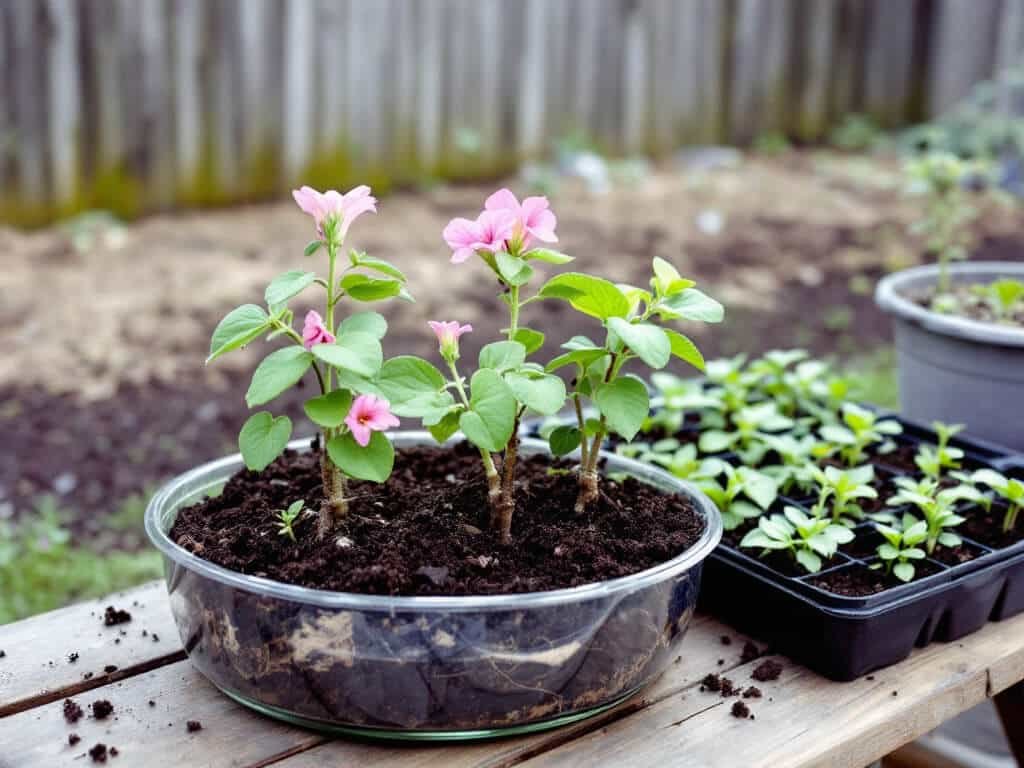
If you’re starting from seed, sow on the surface of damp potting material. Don’t bury the seed. Cover the tray with clear plastic and keep it bright and warm but out of direct sun. Move seedlings into individual pots or packs once they have three true leaves, then harden them off as above.
Set plants close enough for a full display
Container petunias are planted closer together than bed-grown plants, so a pot can look full sooner. The sources I have don’t give one spacing number that fits every variety and pot size, and I’m not going to invent one.
What you can use is plant size. Trailing Surfinia types may reach about 16 in (40 cm), and some trailing forms spread 30 to 40 cm. So the plant tag matters more than any rule of thumb. A vigorous trailing type needs more room per plant than a compact one, and cramming too many into a small pot means more competition for water and nutrients.
My suggestion: start with fewer plants than you think you need, especially with trailing types, and let them fill in.
Water thoroughly and monitor often
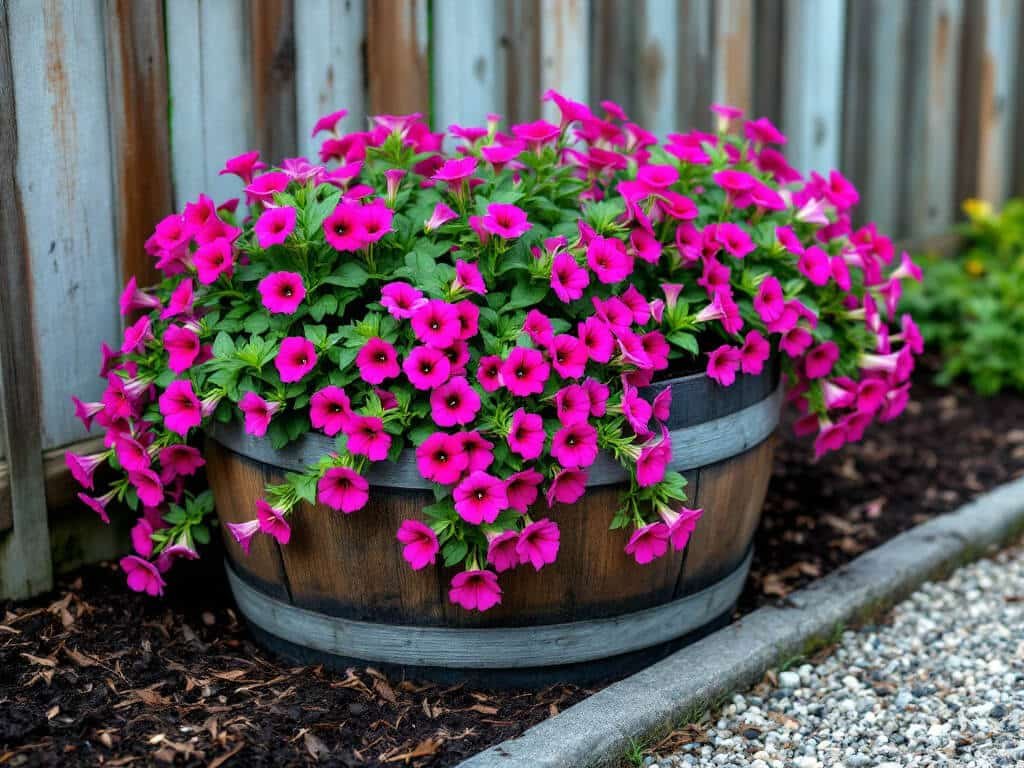
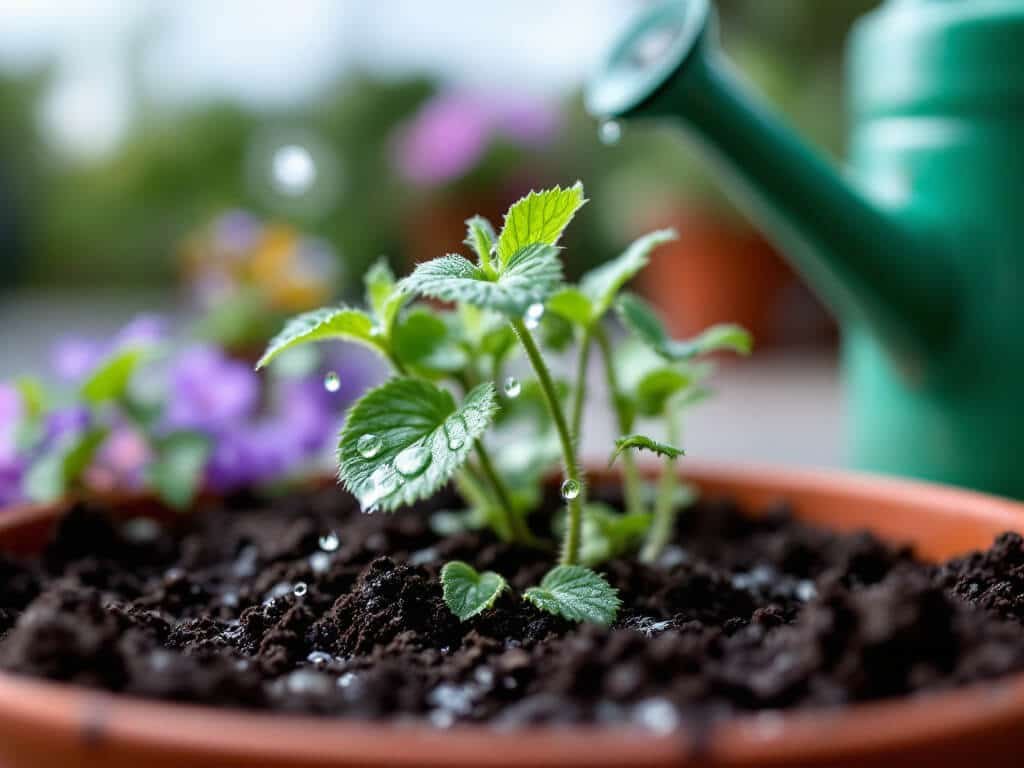
Petunias are moderately drought-tolerant once established, but a pot is not a garden bed. Containers can need thorough watering as often as daily, depending on pot size, weather, and how much mix is in there.
Water when the mix begins to dry, and water until it runs out the bottom. Don’t keep the mix saturated. In hot or windy weather, check every day. Hanging baskets and small pots are the first to wilt, so check those first.
A quick test: push a finger into the mix. If it’s dry below the surface, water. If it’s still damp, wait.
Fertilize during active growth
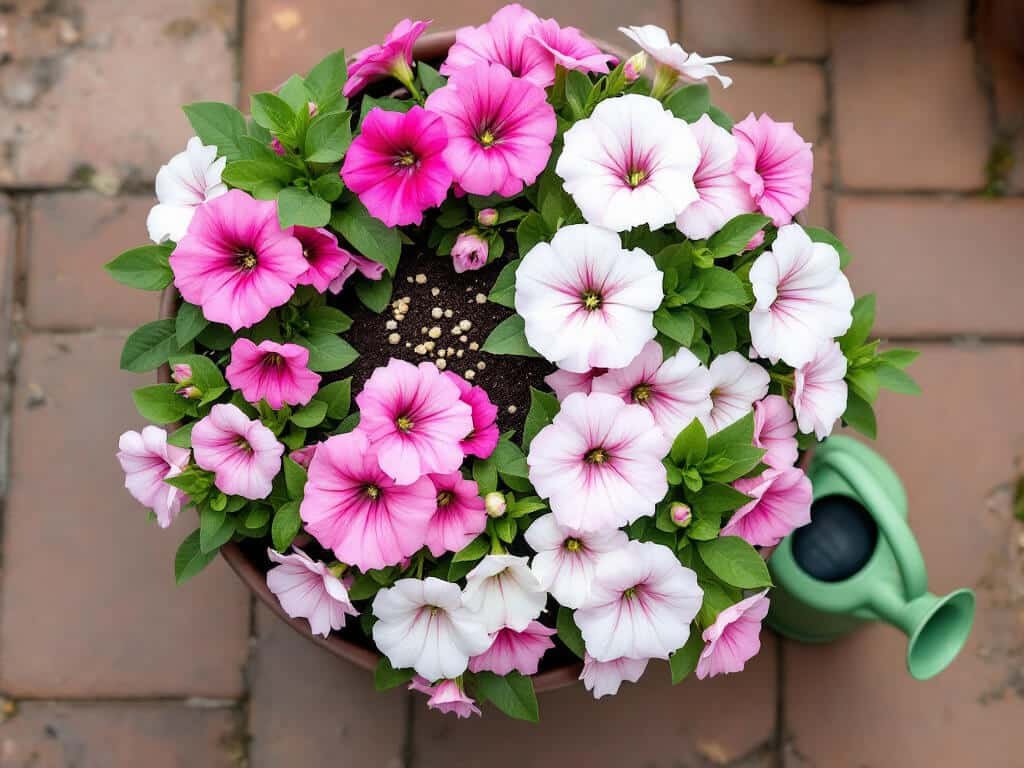
Petunias in pots need feeding, because the mix holds a limited amount of nutrients and frequent watering flushes it through. You have two options. Either mix timed-release fertilizer into the compost at planting, or use a liquid fertilizer formulated for flowering plants.
If you go the liquid route, University of Minnesota Extension suggests feeding about every two weeks later in the season. Spreading types need feeding more often than that. If the display starts to fade in midsummer, a lapse in feeding is one of the first things to check.
Deadhead faded flowers
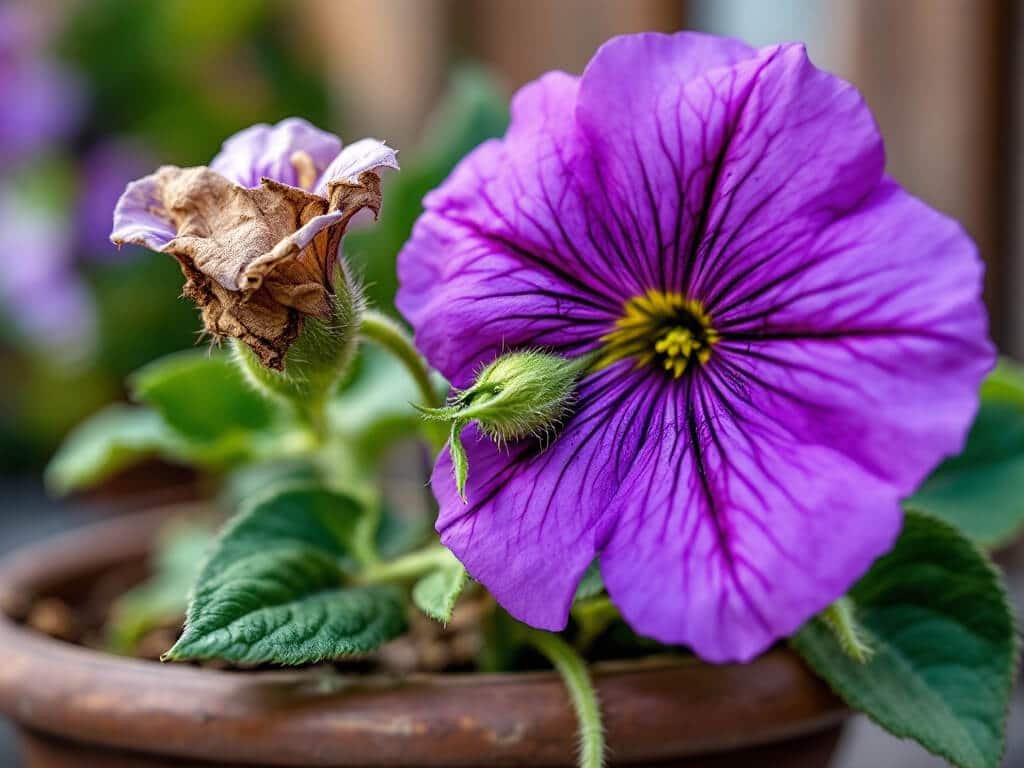
Pinch off spent blooms regularly. Where practical, remove the developing seed portion just below the flower as well, not only the petal. This keeps the plant tidy and encourages it to keep flowering instead of putting energy into seed.
Make it a habit when you water. A minute with scissors or your fingers every few days is enough, and it’s far easier than a big cleanup once the plant is overgrown.
Pinch only suitable types
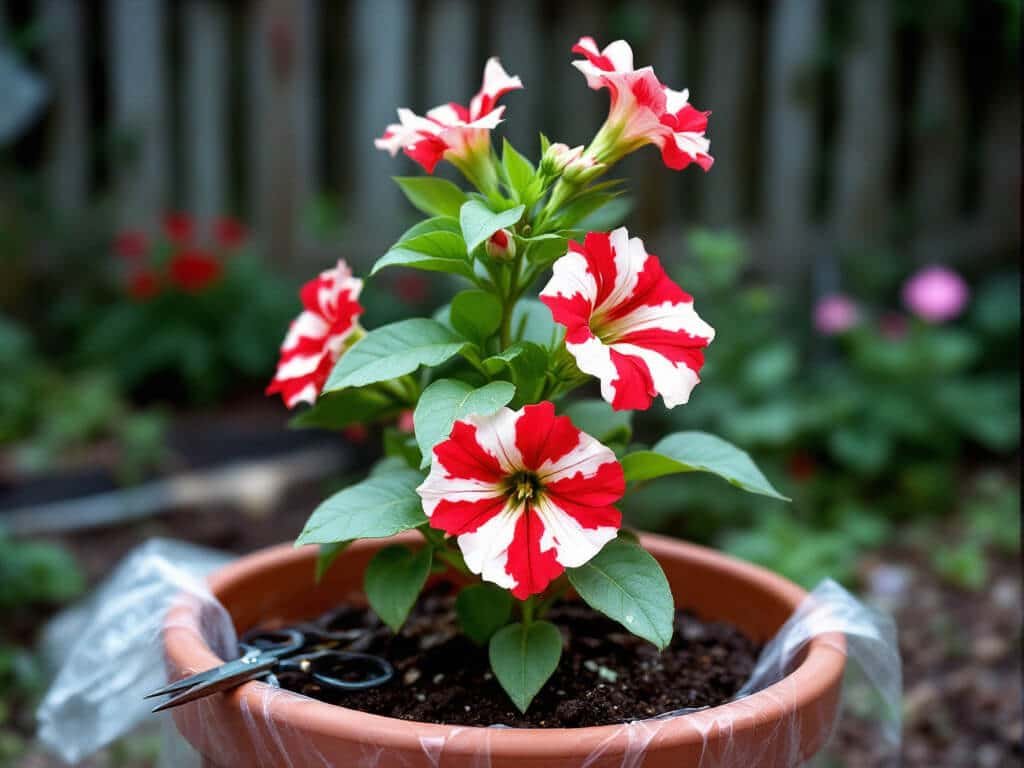
Pinching means removing the growing tip to push the plant to branch. It works on some petunias and not on others. Pinch grandiflora and multiflora types when they’re about 6 in tall to encourage branching.
Do not pinch milliflora or spreading types. If the tag doesn’t say which type you have, look it up before you reach for the pruners. Leave an unidentified plant alone and increase the light instead.
Common problems
The available sources focus on drainage, light, and watering, and they don’t give a verified list of pests and diseases. So this section sticks to the problems with a clear fix.
– Few flowers: Move the pot somewhere with at least 5 to 6 hours of direct sun.
– Wilted plants or fast-drying compost: Water more often and check daily in hot or windy weather. Hanging baskets and small pots dry quickest.
– Root problems or persistently wet compost: Use a container with drainage holes and a well-drained mix. Avoid waterlogged soil.
– Leggy or sparse growth: Increase light. Pinch grandiflora and multiflora types at about 6 in tall, but not milliflora or spreading types.
– Declining flower display: Deadhead regularly and keep feeding during active growth.
– Cold damage after planting: Protect plants and hold off planting until frost danger has passed.
When to expect results
Timing depends on whether you start from seed or buy plants, and on the cultivar.
– Seed germination: Usually 7 to 10 days at 70 to 85°F, with seed on the surface of damp mix, kept bright but out of direct sun.
– Seedling transplanting: When seedlings have three true leaves.
– Outdoor establishment: Harden off over several days, then plant once frost danger has passed and soil reaches about 60°F.
– Flowering: Generally starts in late spring or early summer and continues into autumn or until the first frost. Some cultivars keep flowering through the first frosts when regularly maintained.
FAQ
How much sun do petunias in pots need?
Give petunias at least 5 to 6 hours of direct sunlight. Full sun generally produces the strongest flowering.
How often should potted petunias be watered?
Check containers frequently and water as needed. Hanging baskets and other containers may need watering daily, depending on size, amount of mix, and weather.
Should every petunia be pinched back?
No. Pinch grandiflora and multiflora types at about 6 in tall, but UMN Extension advises not pinching milliflora or spreading petunias.