
Spirea Companion Plants for Sunny Garden Beds
Choosing spirea companion plants comes down to matching sun, water, and mature size, because spirea varies a lot from one cultivar to the next. Some stay under 20 inches tall. Others reach 8 feet and sucker. A pairing that works for one will crowd or shade out another, so the shrub on your plant tag decides the rest of the bed.
This article covers ten plants that fit a sunny mixed border with spirea, the conditions that cause trouble, and how to lay it out.
Why pairings matter for spirea
Spirea is a deciduous flowering shrub, and the range inside the group is wide. Compact cultivars run about 4 to 20 inches tall. Larger species and hybrids can reach roughly 5 to 8 feet. Hardiness also varies by species and cultivar, so check the tag for the one you bought before you plant anything beside it.
Sun and soil are more consistent. Spirea flowers best in full sun, though many types tolerate light or partial shade. It does well in fertile, moist, well-drained soil. Some species handle wetter ground, and many cultivars prefer it well drained.
Bloom timing matters too. Spring-flowering forms bloom on older wood. Many Japanese and other summer-flowering forms bloom in mid to late summer on the current season’s growth. If you have a spring bloomer, the shrub is finished by the time summer perennials take over, so you can plan the bed around that handoff.
Spirea is generally pest-free and disease-free, with honey fungus as an occasional problem and powdery mildew listed for some cultivars. That means companions are about sharing conditions and giving the shrub room, not about pest defense.
Check the specific cultivar’s mature size, sun needs, and hardiness on its tag before you choose companions, because every spacing decision below depends on them.
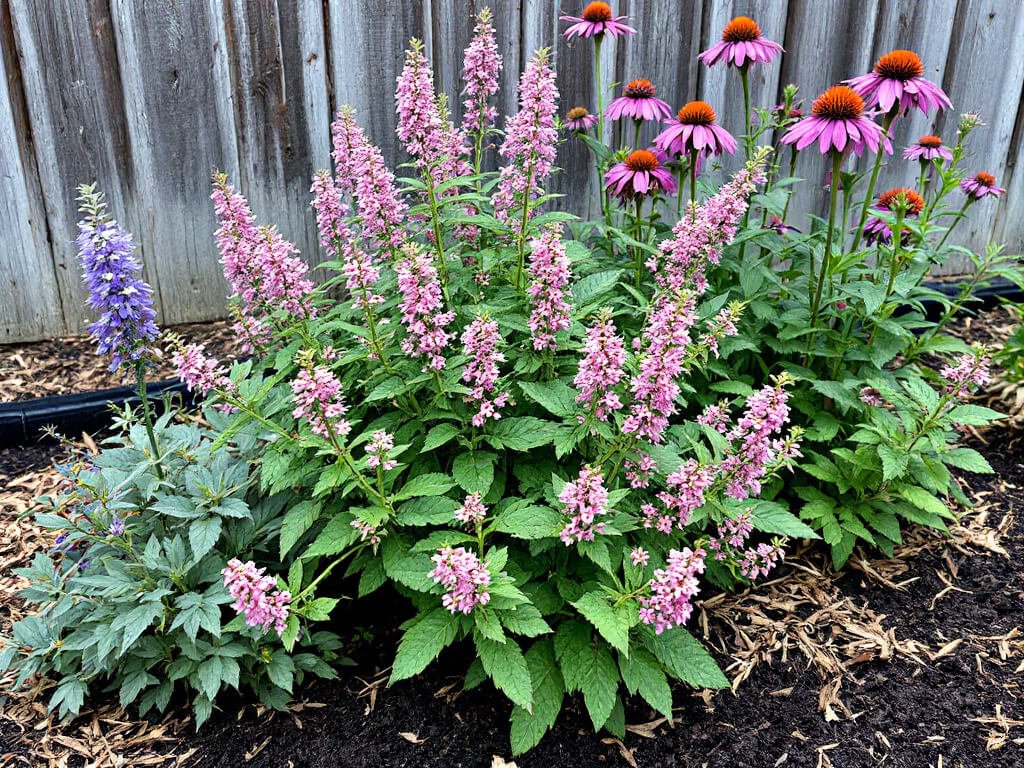
Best companion plants for spirea
None of the sources I reviewed give a universal spacing between spirea and any of these plants. The practical rule for every one of them is the same: use the mature width of both plants, and keep foliage from touching.
Catmint (Nepeta spp.)
Catmint is a full-sun, drought-tolerant plant that fills the space below the shrub. I wouldn’t plant it for pest control, since there’s no verified evidence for that. Set it back so its mature spread doesn’t touch the spirea’s foliage.
Lavender (Lavandula spp.)
Lavender gives you a low, sunny edging layer with contrasting foliage. It needs sharper drainage than spirea does, so put it at the front edge of the bed where water runs off, not tucked beside a moisture-loving spirea. Follow the lavender cultivar’s mature width for spacing.
Salvia (Salvia spp.)
Salvia adds a lower flowering layer in the same sunny-border setting spirea likes. Allow for the salvia’s full mature spread, and leave clear airflow around the spirea itself. Crowding the shrub base is the mistake to avoid.
Coneflower (Echinacea spp.)
Coneflower brings a taller herbaceous layer and summer flowers to a full-sun border. It works best beside or behind compact spirea cultivars. Use the mature widths of both plants instead of a fixed distance.
Black-eyed Susan (Rudbeckia spp.)
Black-eyed Susan supplies summer color and vertical contrast in a sunny mixed bed. Plant it outside the spirea’s mature spread so the shrub doesn’t shade it as it grows. That matters most with the larger spirea types.
Yarrow (Achillea spp.)
Yarrow is a lower-to-medium-height flowering layer for sunny beds. Use the yarrow cultivar’s mature width for spacing, and keep it from crowding the base of the shrub. Leave the shrub’s lower stems open.
Coreopsis (Coreopsis spp.)
Coreopsis is a low flowering layer for a sunny border, and it doesn’t need a woody framework to look right. It’s a good front-of-border filler in front of a taller spirea. Follow the selected cultivar’s mature spread.
Ornamental onion (Allium spp.)
Allium adds a vertical flower form, and its seasonal growth pattern differs from the shrub’s, so the two aren’t competing for the same space at the same time. Plant bulbs at the spacing on the label for the species or cultivar you chose. No spirea-specific distance exists to override it.
Daylily (Hemerocallis spp.)
Daylily fills the lower border with clumping foliage and flowers, and it suits a moist-but-drained garden setting like the one spirea prefers. Give the clump its full mature width. Daylilies are a sensible choice if your spirea sits in soil that stays on the moist side.
Heuchera (Heuchera spp.)
Heuchera is a low foliage layer for partial-shade positions, so it’s the one on this list for spirea cultivars that tolerate less than full sun. Preserve airflow around it, and don’t bury the crown under mulch. If your spirea is in full sun, pick something else from this list.
What not to plant with spirea
No specific plant can be reliably called a bad companion for all spirea. Species and cultivars differ too much in size, moisture tolerance, sun needs, and bloom season. What I can point to are three kinds of conflict.
Plants that need permanently dry soil
RHS guidance commonly recommends moist soil for spirea, so a plant that insists on bone-dry conditions can end up in a water conflict with it. This is a watering mismatch, not a demonstrated chemical effect from either plant. It matters most when the spirea is a moisture-tolerant type growing in consistently moist ground.
Aggressive, spreading plants
Spreaders can compete for water, nutrients, and space around smaller spirea cultivars. The reverse also happens, because larger spirea can be vigorous or suckering themselves. Judge each plant’s behavior case by case, and skip anything that spreads faster than you want to manage.
Anything planted so tight it blocks airflow
Dense planting increases the risk of foliar disease in susceptible cultivars, including powdery mildew. This is a layout problem, not a proven clash between named plants. The same companion that works at proper spacing can cause trouble when packed in.
Layout and spacing
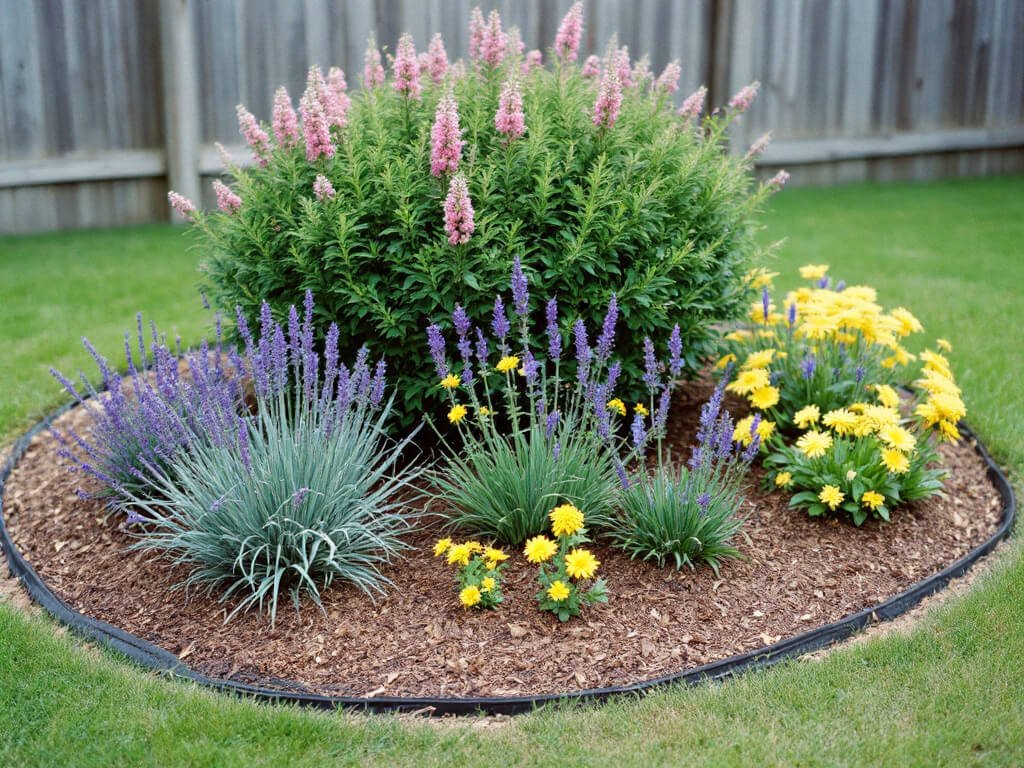
Put the spirea where its mature height and spread won’t shade or overtake the lower plants around it. Because no verified spacing figure exists for any pairing here, plan from the mature size listed for each plant, and leave open soil or mulch around the shrub for airflow and maintenance.
Front of the bed: low plants such as lavender, coreopsis, catmint, or heuchera (in partial shade).
Middle layer: salvia, yarrow, and daylily, set back by their mature width.
Beside or behind compact spirea: taller perennials such as coneflower and black-eyed Susan, outside the shrub’s mature spread.
Bulbs: allium, planted at the spacing on the label.
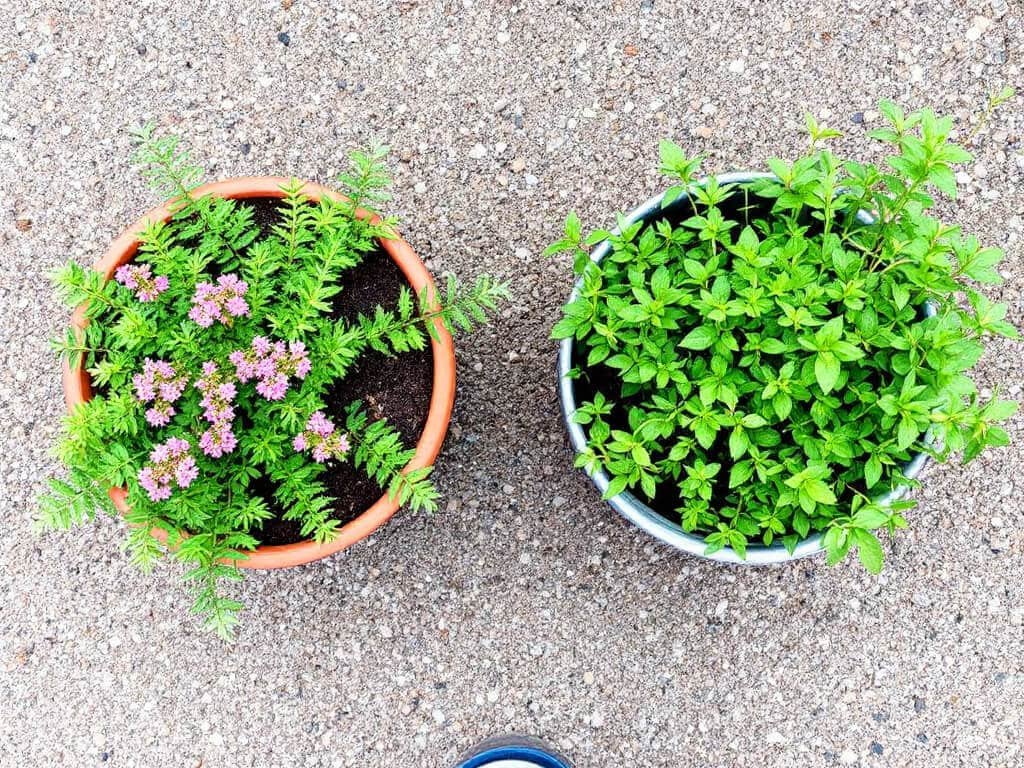
Containers: a compact spirea cultivar with plants that share the same drainage and watering needs. Don’t combine a moisture-loving selection with plants that need very dry soil.
FAQ
Can roses be planted with spirea?
The sources I reviewed don’t establish roses as either a special help or a harm to spirea. Consider them only if sun, soil moisture, mature size, and airflow needs line up with your spirea.
Does spirea repel pests from nearby plants?
No source I reviewed supports a general pest-repellent effect from spirea or a companion-planting pest-control relationship. Spirea itself is generally described as pest-free.
Can spirea grow in partial shade?
Many spirea types tolerate partial or light shade, but full sun is commonly recommended and generally gives better flowering. Let the specific cultivar decide where you place it.