
Lantana Companion Plants: What to Grow Nearby
Choosing lantana companion plants comes down to matching conditions, not chasing folklore. Lantana wants full sun and soil that drains well, so anything you plant beside it needs to be happy with the same setup. The pest-repelling pairings you’ll see online are a different matter, and I’ll cover those below.
Why pairings matter for lantana
Lantana is a tender perennial shrub or trailing plant. In frost-prone regions it’s usually grown as summer bedding, and most commonly grown forms need frost-free conditions to get through winter. The sources I’m working from don’t confirm a single hardiness range that covers every lantana type, so check the tag on the specific plant you buy.
What the sources do agree on is the growing conditions. Lantana wants full sun and fertile soil that’s moist but well drained during active growth. Established plants and some cultivars tolerate drought, and it handles chalk, clay, loam, and sandy soils. What it doesn’t handle is waterlogging.
That makes the real test for a companion simple: can it live on the same light and water schedule? A neighbor that wants constant moisture will either drown the lantana or go thirsty. A neighbor that wants shade will get scorched or crowd out the sun.
One claim to set aside: no source I found supports the idea that a particular companion reliably repels lantana pests. Lantana is generally resilient, but whiteflies, red spider mites, and powdery mildew can show up, especially under glass. Pick companions for compatible growing conditions and treat any pest benefit as a bonus you can’t count on.
Size is the other thing to plan around. It varies a lot by species and cultivar. In RHS trials most entries stayed below 30 cm (about 12 inches), though some grew taller. Check the tag for your cultivar’s mature height before deciding what goes in front and what goes behind.
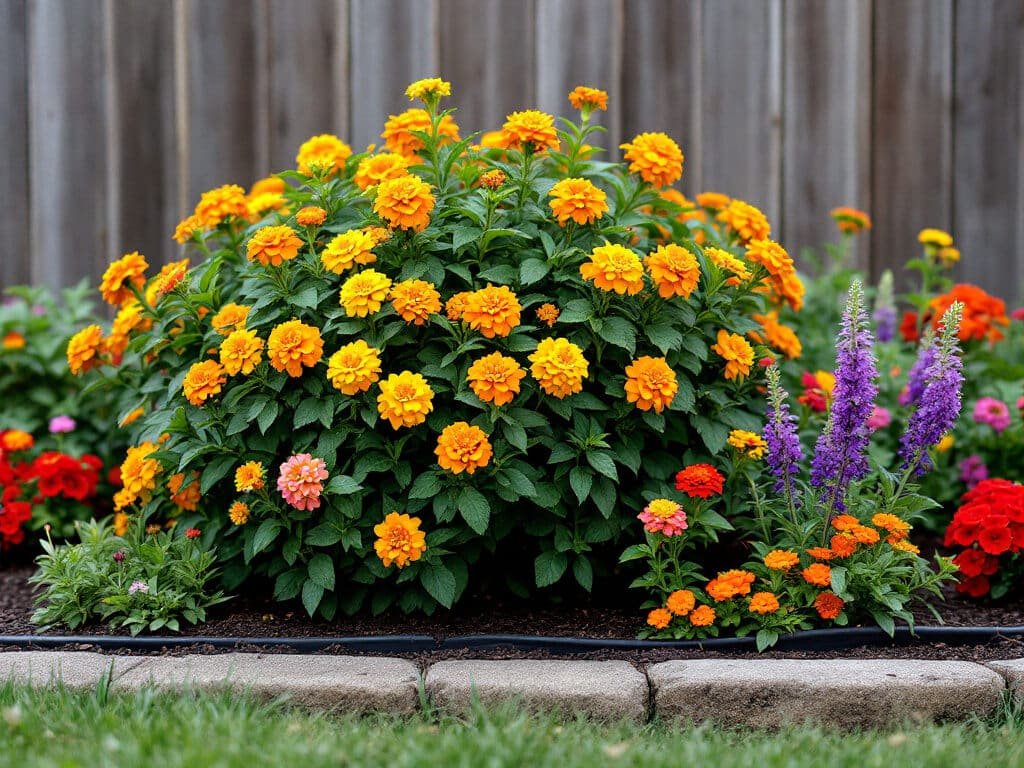
Best companion plants for lantana
Every plant below shares lantana’s preference for sun and well-drained soil. For spacing, no source gave a lantana-specific figure for any of these, so go by the spacing on each plant’s label.
Zinnia
Zinnia shares lantana’s full-sun conditions and its moisture needs, which makes it an easy bed neighbor. Use the spacing printed on the zinnia’s plant label, since no lantana-specific figure exists to improve on it.
Marigold
Marigold fits a sunny, well-drained bed, and that’s the reason to plant it. The claim that marigolds protect neighboring plants from pests wasn’t verified in the sources, so don’t count on it as pest control. Space it per the label.
Salvia
Salvia gives you a second sun-loving flowering layer next to lantana. Both do well in the same bright, well-drained spot. No lantana-specific spacing was verified, so follow the label.
Verbena
Verbena matches lantana’s full-sun, well-drained requirements and can extend a low flowering display along the edge of a bed. Follow the label for spacing, since nothing specific to lantana was verified.
Calibrachoa
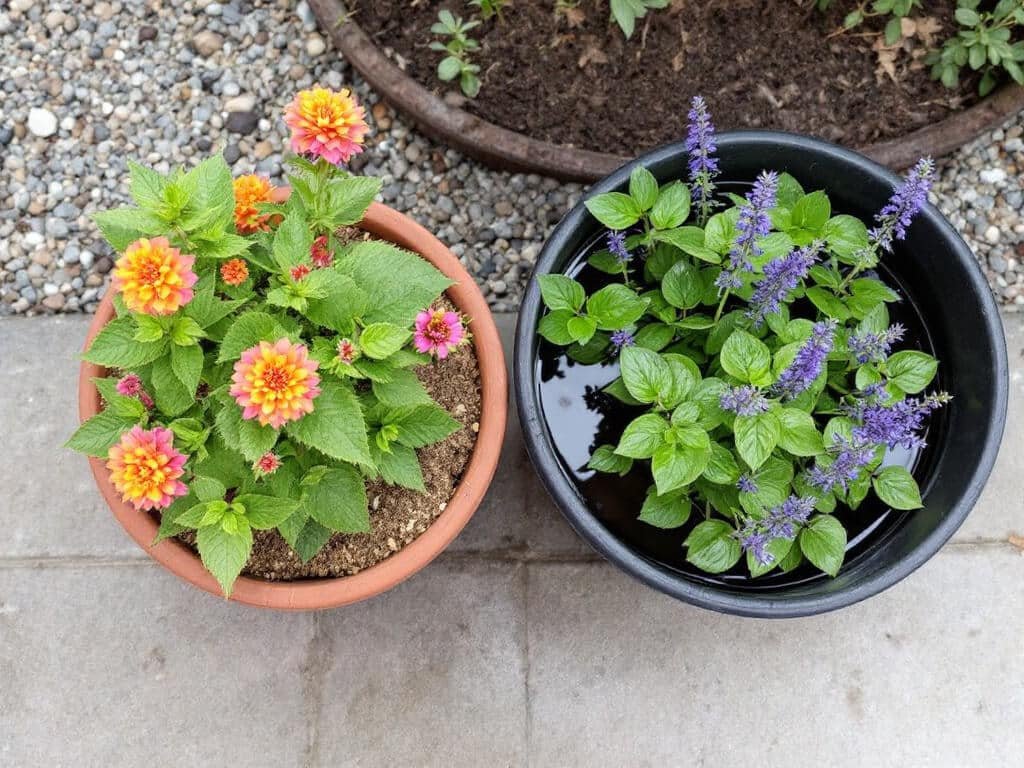
Calibrachoa suits a sunny container with well-drained potting mix, the same setup lantana likes. No shared-container spacing was verified, so either give it its own pot or follow both plants’ label spacing if you combine them.
Portulaca
Portulaca fits hot, sunny conditions and a well-drained bed or container. It’s a good pick for the driest, brightest corner of the planting. Spacing isn’t verified for lantana, so use the label.
Angelonia
Angelonia adds an upright flower form beside lantana’s mounded or trailing habit. It tolerates the same general sunny, frost-free bedding conditions. Use label spacing, because no lantana-specific figure was verified.
Pentas
Pentas suits a sunny seasonal planting and adds contrasting flower clusters. Like lantana, it works as summer color in a bed or pot. Follow the label for spacing.
Rosemary
Rosemary can take up a nearby dry, sunny spot. Don’t treat it as proven lantana pest control, because the sources don’t support that. Separate watering zones may work better, since lantana wants moisture during active growth and rosemary generally doesn’t.
Thyme
Thyme fits a sunny, well-drained edge and takes up little vertical space, so it won’t compete with lantana for light. No lantana-specific spacing was verified, so use the label figure.
What not to plant with lantana
The pairings to avoid are the ones where the conditions fight each other.
Water-loving bog plants
Bog plants need consistently wet soil, and lantana is susceptible to waterlogging. Don’t put lantana in soil that stays soggy, and don’t plant it beside anything that needs it to. One of the two will lose.
Shade plants
Dense shade conflicts with lantana’s full-sun requirement and can reduce growth and flowering. If a companion needs shade to look good, it belongs somewhere else in the yard, not in the lantana bed.
Plants that need constantly moist, poorly drained soil
This overlaps with bog plants but covers a wider group, including anything you’d water heavily and often because it sulks when dry. Lantana’s well-drained culture doesn’t match that regime. If you can’t water one plant without drenching the other, they shouldn’t share a container or a bed section.
Plants prone to whitefly, red spider mite, or powdery mildew in the same protected space
This one is a management concern, not a proven bad pairing. Lantana can be affected by whiteflies, red spider mites, and powdery mildew, especially under glass. If you’re overwintering plants in a greenhouse or packing a container display tightly, adding other plants that attract the same problems makes them harder to manage. In open beds with good airflow, it matters less.
Layout and spacing
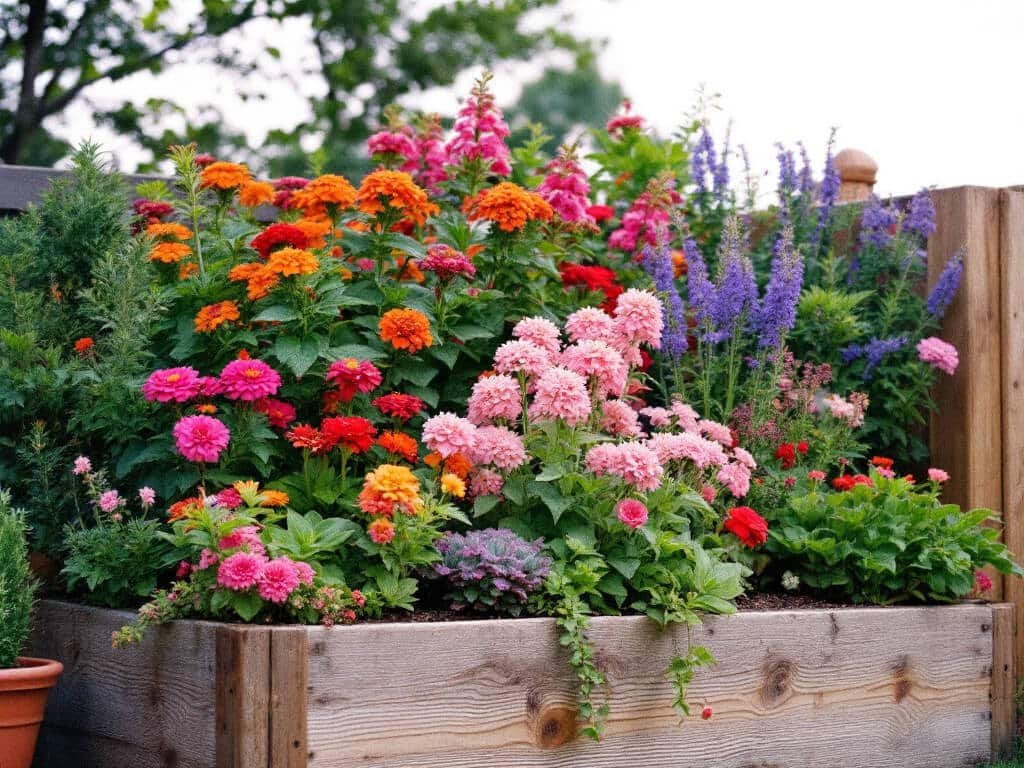
Put lantana in the sunniest part of the bed or container, and group the plants around it by water needs, not just by color. Leave room for airflow, and rely on each plant’s label for spacing. The only spacing figure the sources verify is 50 cm (about 20 inches) in one RHS trial, and it shouldn’t be applied to every cultivar or companion.
Center or back of the bed: lantana, in the spot that gets the most sun.
Beside it: sun-loving flowering plants with similar water needs, such as zinnia, salvia, angelonia, and pentas.
Front edge: low growers like verbena, portulaca, and thyme.
Dry corner or separate pot: rosemary and other herbs, watered on their own schedule.
Containers: calibrachoa in well-drained mix, in its own pot or spaced per both plants’ labels.
FAQ
Can lantana grow with herbs?
Yes, herbs such as rosemary and thyme can suit lantana’s sunny, well-drained setting. Manage their watering separately where you need to.
Does lantana repel pests from nearby plants?
No reliable lantana-specific pest-repellent claim was verified in the sources. Lantana itself is generally resilient, though whiteflies, red spider mites, and powdery mildew can occur, particularly under glass.
How much sun do lantana companions need?
Choose companions that tolerate full sun and well-drained soil, because that’s where lantana performs best. Shade-loving or wet-soil plants are poor matches.