
Geranium Companion Plants for Beds and Containers
Choosing geranium companion plants is harder than it should be, because much of the advice online claims more than anyone has tested. No extension or botanical source I’d trust publishes a verified list of plants that help geraniums, repel their pests, or need an exact number of inches between them. What you can do is match growing conditions: sun, drainage, and water. That’s the approach here.
Every plant below is a compatible design choice, not a proven biological partnership. Treat the list as a way to avoid mistakes, and check each plant’s label for its mature size.
Why pairings matter for geranium
“Geranium” means two different things in most gardens. The tender kind, usually sold in pots and window boxes, is really Pelargonium. In cold climates it’s grown as an annual or overwintered indoors, since it isn’t frost-hardy. The hardy kind is a true Geranium, an herbaceous perennial, and its light needs run from full sun to partial shade depending on the species.
Both types want well-drained soil. For containers, water when the top 1–2 inches of soil is dry, and don’t let the pot stay wet. A companion that wants constant moisture forces you to choose between its needs and the geranium’s, and the geranium loses.
Tender geraniums also do best in full sun, so a companion that shades them will cost you flowers. Size varies a lot by species and cultivar, which is why the plant label matters more than any rule of thumb.
One myth to set aside: geraniums are often said to repel pests from neighboring plants. The extension and RHS sources reviewed don’t support that claim, and no species-specific trial evidence backs it. Plant geraniums for their flowers and don’t count on them to guard the bed.
Crowding does have a documented cost. Packed plantings and infected debris raise general pest and disease pressure. Geraniums can pick up vine weevil, geranium sawfly, slugs and snails, powdery mildew, downy mildew, botrytis, and viruses, so airflow and cleanup matter.
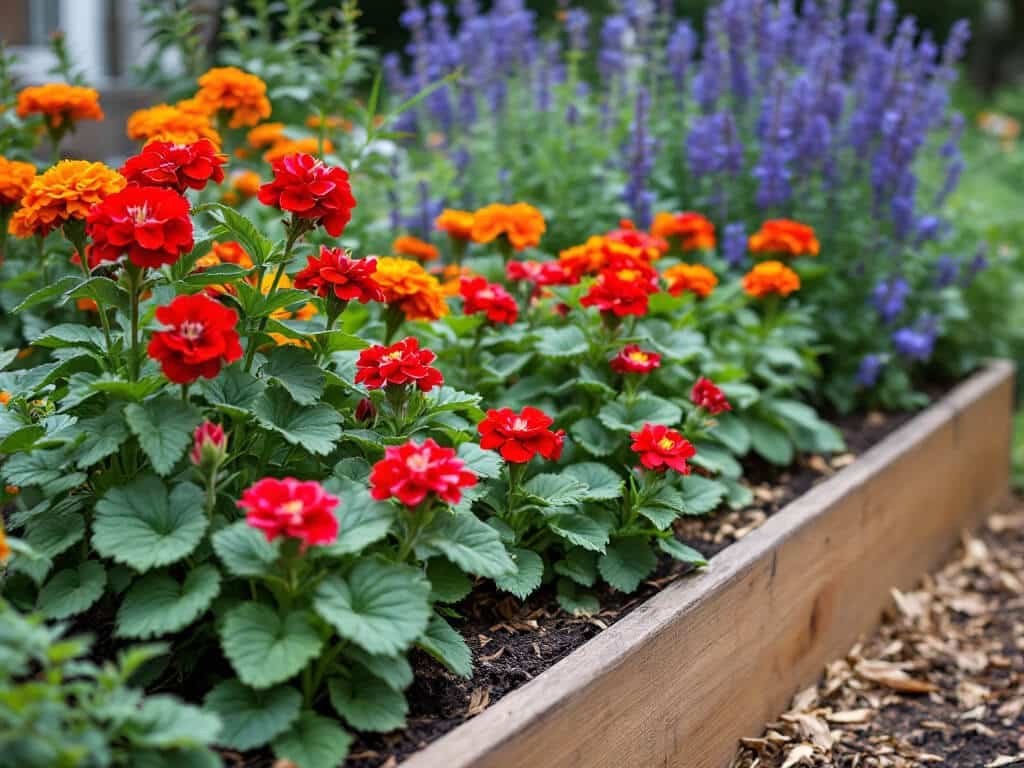
Best companion plants for geranium
These ten share geranium’s need for sun and drainage, or sit in a different layer of the planting. Space each one by its own label, not by a fixed geranium rule.
Marigold
Marigolds use the same full-sun, seasonal-annual setup as tender geraniums and fill a separate color layer. They don’t need shade or constantly wet soil. Use the marigold label’s mature width, and leave the geranium enough room to reach its labeled spread. Don’t expect a special pest-control benefit, because the sources don’t verify one.
Salvia
Salvia shares the full-sun annual-bed setting and adds vertical structure above the lower geranium foliage. It works well toward the back of a planting. Space it by its own mature width, not by a geranium spacing figure.
Snapdragon
Snapdragon is a seasonal flowering annual that does fine in a sunny bed. It adds height and a contrasting flower form next to the rounder geranium bloom. Follow the cultivar’s recommended mature width and height.
Cosmos
Cosmos suits sunny annual plantings and can use the taller space behind compact geraniums. Put taller cultivars at the back so they don’t shade the geraniums. For spacing, follow the seed packet.
Lantana
Lantana likes the same warm, sunny conditions and works as a larger accent in a container or border. It gets big, so allow the cultivar’s mature spread. Otherwise it will shade or crowd the geraniums.
Coleus
Coleus gives you foliage contrast in containers or beds, which helps when the geraniums are the only thing flowering. Pick a cultivar whose light needs match the site. Use shade-tolerant types only where the arrangement won’t cut into the geranium’s sun.
Begonia
Begonias work in mixed seasonal displays when their light and moisture needs match the geranium you chose and the site. Check the specific begonia before buying. Skip any moisture-loving begonia placement where the geranium’s soil would stay wet.
Rosemary
Rosemary can share a sunny, well-drained spot with tender geraniums and adds contrasting evergreen foliage. It has different long-term size and hardiness requirements, though. Give it its own pot or plenty of room.
Thyme
Thyme fits a sunny, sharply drained container or rock-garden arrangement with compatible small geranium types. Use it only where your geranium cultivar also tolerates sharp drainage. Follow the thyme label for spacing.
Hardy geranium cultivars
Different hardy geraniums can be planted together when their light, soil, and moisture preferences match. Hardy geranium size varies widely, so confirm each cultivar’s mature spread before you place them. Rock-garden types need especially sharp drainage, which makes them poor partners for the ones that tolerate richer soil.
What not to plant with geranium
No reputable source I found names a plant that is universally bad for geraniums through allelopathy or any proven species-specific clash. The problems are practical and come from site conditions that conflict with what geraniums need.
Plants requiring permanently wet soil
Geraniums need well-drained soil, and wet conditions can raise the risk of root rot. Don’t pair geraniums with anything that needs constantly wet soil. Hardy types also dislike winter waterlogging, so a bog-style planting is wrong for them too.
Large, aggressive groundcovers
A vigorous groundcover competes for space, moisture, and nutrients, and it can overgrow smaller geraniums. If you want something at ground level, choose a low plant with a defined mature width.
Dense tall plants directly in front
Tall, dense plants on the sunny side cut the light that tender geraniums need, and flowering drops. Put height behind the geraniums, not in front of them.
High-water-demand plants in the same container
Geraniums tolerate dry soil better than overly wet soil. If a companion needs frequent watering and shares the pot, you’ll end up overwatering the geranium. Give the thirsty plant its own container.
Plants with severe shared pest or disease problems
Crowded plantings and infected debris increase general pest and disease pressure. Avoid planting geraniums beside anything with a serious ongoing problem. Remove affected material promptly and don’t overcrowd.
Layout and spacing
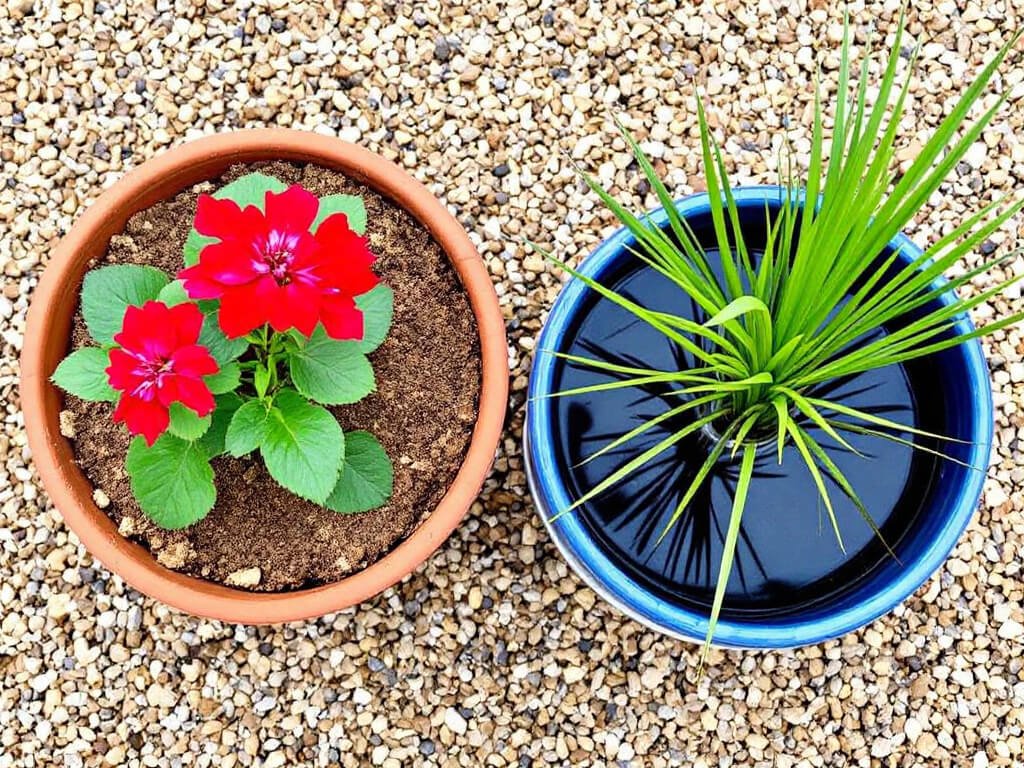
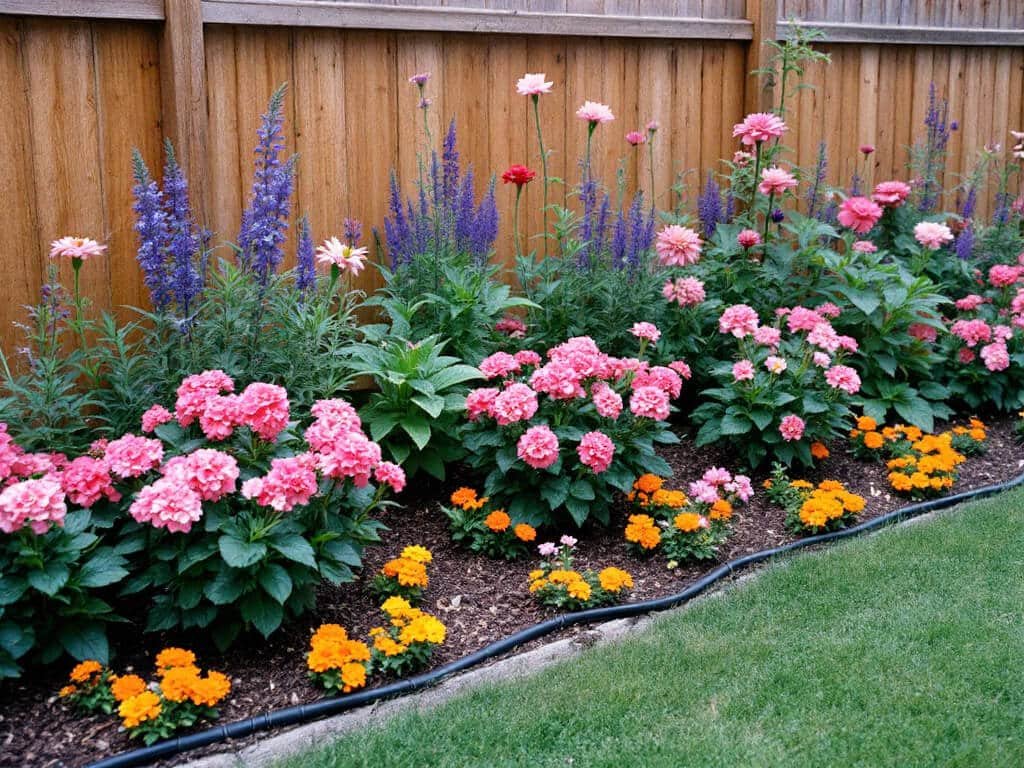
The sources give no single spacing figure for geraniums and their companions, so use the mature width on each plant label and leave room for air to move. The goal is a planting where nothing shades the geraniums or sits in wet soil.
In beds: put geraniums where they get full sun. Place taller companions such as salvia, snapdragon, or tall cosmos behind them, and low-growing plants along the edges.
In containers: combine only plants with similar light, drainage, and watering needs. Use a pot with drainage holes.
When needs differ: use a separate pot. Rosemary, thirsty begonias, and anything with a different moisture requirement are safer on their own.
Before you buy: check the label for each plant’s mature width, since geranium size varies by species and cultivar.
FAQ
Can geraniums and marigolds be planted together?
Yes, they can share a sunny seasonal bed if you allow for each one’s mature size and watering needs. The reviewed sources don’t verify any special geranium-specific pest-control benefit.
What should not be planted beside geraniums?
Avoid plants that need permanently wet soil and aggressive plants that crowd geraniums out. Geraniums do best in well-drained soil and can be harmed by excess moisture.
How far apart should geranium companion plants be?
No single evidence-based spacing number fits every geranium and companion pair. Use the mature width on each plant label, leave room for airflow, and avoid arrangements that shade full-sun geraniums.