
Nasturtium Companion Plants: What to Grow Nearby
Choosing nasturtium companion plants means sorting out two things: which crops might benefit from having nasturtium nearby, and which plants want growing conditions that clash with it. The research gives a short list of reasonable pairings, mostly brassicas, squash-family crops, and a few herbs and flowers. It does not give a long list of rules.
Nasturtium is a warm-season annual in most US gardens and grows as a summer annual in zones 2 through 11. It only persists as a perennial in frost-free climates, generally zones 9 through 11. That makes it an easy plant to tuck into a bed each spring, as long as you know what to put next to it.
Why Pairings Matter for Nasturtium
Nasturtium has fairly specific needs. It wants full sun, meaning at least 6 hours of direct light, though light afternoon shade can help in hot climates. It prefers poor to average, well-drained soil, and it tolerates occasional dry spells. Extra fertilizer, especially nitrogen, gives you leaves instead of flowers.
Size matters too. Bush forms are about 12 inches tall and up to 2 feet wide. Trailing forms can run 6 to 10 feet, which is enough to smother a neighbor.
The pest story is where most advice goes wrong. The claim that nasturtium repels insects across the board is not supported. Extension research reports reduced damage in particular brassica, squash, pumpkin, and cucumber studies, but nasturtium can also attract aphids and cabbageworms. Treat nasturtium as one tool in the bed, not as your only defense against cabbageworms or squash bugs.
Nasturtium itself can get bacterial leaf spot and wilt, especially with poor airflow or wet foliage. Good spacing helps both the nasturtium and the crops beside it.
Best Companion Plants for Nasturtium
The pairings below come from research on pest damage, mostly in brassicas and the squash family. Where the research gave no exact spacing, I say so and point you to each crop’s own recommendation.
Broccoli
In an Iowa study, nasturtium plantings reduced cabbage looper and imported cabbageworm damage on broccoli. It is one of the better-supported pairings here, so start with it. Space according to the nasturtium form you grow, with about 12 inches between compact plants and nearby crops where you have room.
Cabbage
Research found reduced cabbageworm damage when nasturtium was planted with cabbage. Keep the nasturtium out of the area where the head will fill in, and allow at least 12 inches for a compact plant.
Kale
Kale is a brassica that faces the same cabbageworm pressure, so the same strategy may help. No kale-specific nasturtium spacing was verified, so follow the kale’s label or extension spacing. Keep the nasturtium from touching the kale plants.
Collards
Collards are another brassica worth trying alongside nasturtium where cabbageworms are a problem. Use the recommended collard spacing and keep the nasturtium off the leaves. Don’t count on the pairing to control pests by itself.
Squash
Research supports reduced squash bug populations with nasturtium, and an Iowa study also found reduced squash bug and cucumber beetle damage. Plant trailing nasturtiums at the edge of the bed, not in the squash’s crown. Give the squash its full recommended spacing first and fit the nasturtium around it.
Pumpkin
Nasturtium has been associated with fewer squash bugs in research covering squash and pumpkin plantings. Pumpkin vines need a lot of room, so keep the nasturtium on the perimeter of the patch. Don’t let the two vines tangle.
Cucumber
An Iowa study found reduced cucumber beetle damage when nasturtium was used with marigolds. The study did not establish a set distance, so place the nasturtium outside the cucumber’s main root and vine zone. A trellis for the cucumbers makes this easier.
Thyme
Thyme and nasturtium both reduced cabbage looper and imported cabbageworm damage in the Iowa broccoli study. Thyme wants a sunny, sharply drained spot, and nasturtium also wants well-drained soil, so the two suit each other. Keep thyme in its own pocket, away from crops you water often.
Onion
Onion and nasturtium helped reduce cabbageworm damage in studies involving broccoli and cabbage. Use the spacing recommended for your onion variety. Leave roughly 12 inches for a compact nasturtium.
Marigold
Marigold and nasturtium together reduced cabbageworm damage in cabbage, and reduced squash bug or cucumber beetle damage in an Iowa study. No standard nasturtium-to-marigold spacing was established. Go by each plant’s mature width and avoid crowding them.
What Not to Plant With Nasturtium
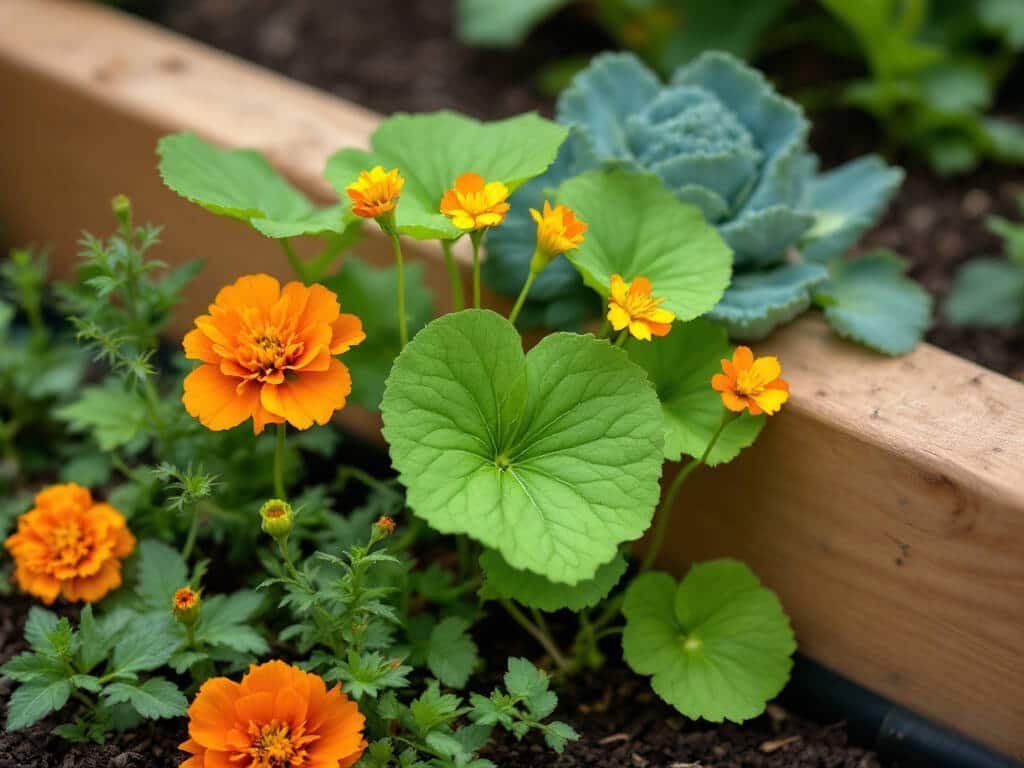
The research does not name any plant that should never grow next to nasturtium. The conflicts that do exist are about management: feeding, watering, and shared pests.
No plant is verified as universally incompatible
Extension research identifies several useful pairings but does not give a dependable list of plants to avoid. If a gardening site gives you a firm “never plant” list for nasturtium, ask what it is based on. The conflicts below are the ones worth planning around.
Plants that need rich, nitrogen-fed soil
Nasturtium flowers best in poor to average soil. Heavy feeding pushes it toward foliage at the expense of blooms. This is a conflict of care, not a proven incompatibility. If you feed a neighboring crop heavily, keep the nasturtium a bit apart, or grow it in a separate container.
Plants that need consistently wet soil
Nasturtium prefers well-drained soil and tolerates some dryness. A plant that needs saturated conditions may need its own watering zone. No specific pairing was verified as harmful, but separate zones make it easier to water each plant properly.
Crops vulnerable to shared aphid pressure
Nasturtium can attract aphids, so watch nearby plants rather than assuming it always drives pests away. A shared-pest conflict is possible, though it was not documented as a universal problem. Check the leaves of neighboring crops regularly, especially early in the season.
Layout and Spacing
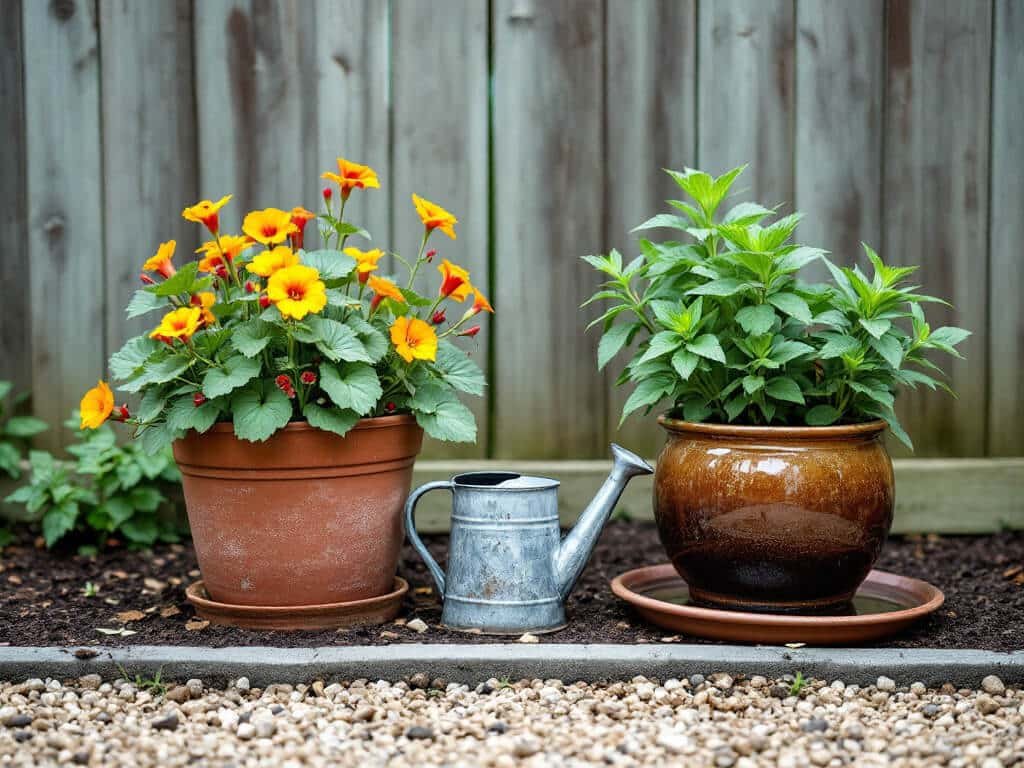
The research does not give one spacing number that works for every pairing, so the safest approach is to give the crop its full recommended room and fit the nasturtium around it. Keep the edges open for airflow, and keep vines from covering crop foliage.
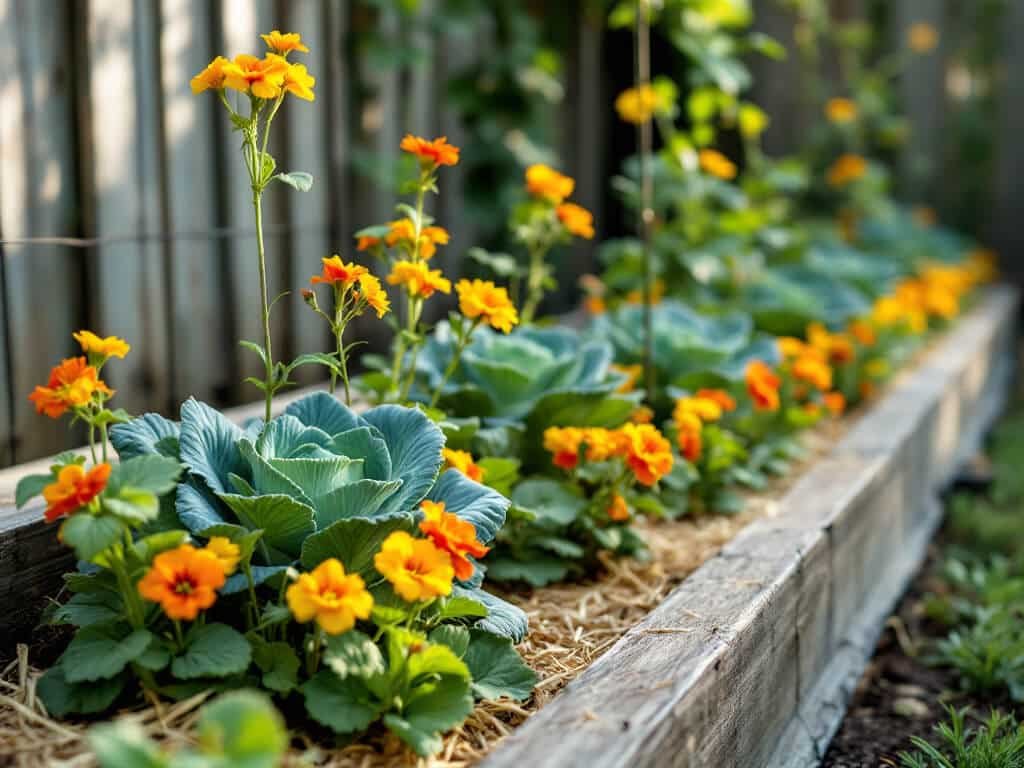
– Plant bush nasturtiums at the edge of a brassica, squash, or cucumber bed, leaving room for the mature width of both plants.
– Allow about 12 inches for compact nasturtiums, and much more for trailing types.
– Train trailing forms onto a trellis, or let them spill over the side of a container, so they don’t smother crop leaves.
– Keep nasturtium from touching kale or collards, and keep it out of the head area of cabbage.
– For squash, pumpkin, and cucumber, use the bed perimeter rather than the crown or main root zone.
– In containers, combine nasturtium only with plants that tolerate the same well-drained soil and watering pattern.
FAQ
Does nasturtium really repel pests?
Not universally. Research cited by university extension sources found reduced damage in particular broccoli, cabbage, squash, pumpkin, and cucumber studies, but nasturtium can also attract aphids and cabbageworms.
Can nasturtiums grow beside tomatoes?
The extension sources I found do not verify a specific benefit or problem between nasturtium and tomatoes. They can share a sunny, well-drained bed if their mature sizes and watering needs fit together, but don’t count on the pairing for pest control.
How far apart should nasturtiums be planted from companion crops?
A single spacing figure for every pairing is not supported by the research. Compact nasturtiums commonly need about 12 inches of room, while trailing types need much more. Use each companion crop’s recommended spacing, and keep vines from covering neighboring plants.