
What You Need
Gather everything before you open the seed packet:
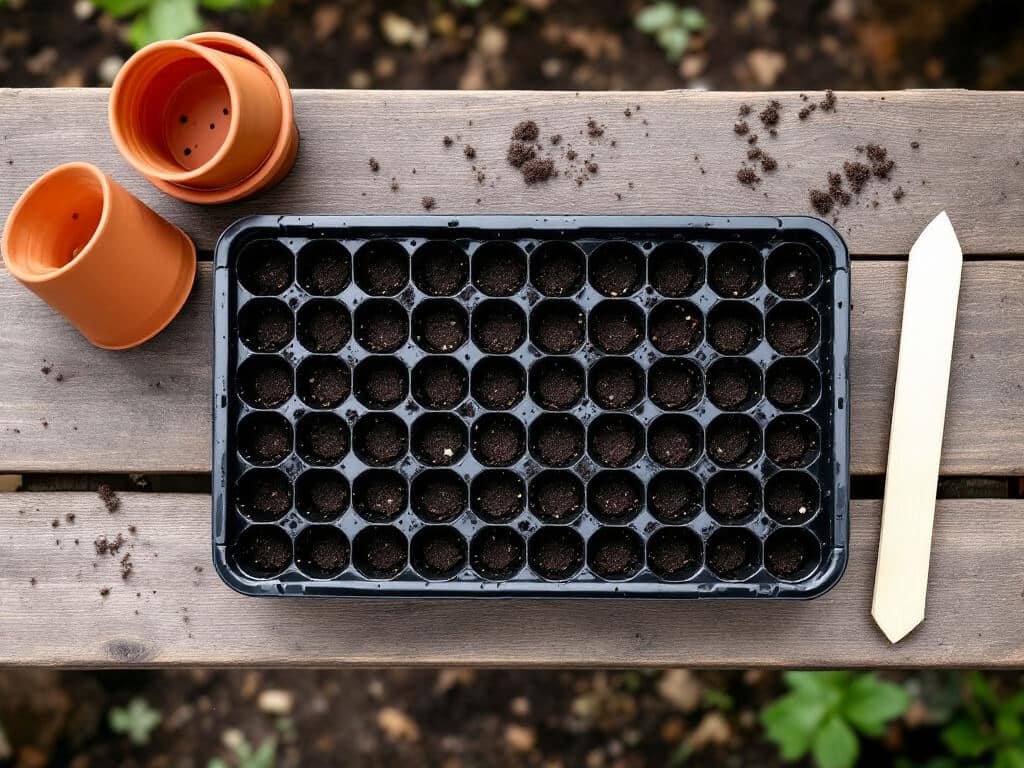
– Seed-starting cells or a small container with drainage holes
– Fresh, free-draining seed-starting mix (a peat-free seed compost or a comparable commercial mix)
– Basil seeds
– A plant label and pencil
– A watering can with a fine rose, or a spray bottle
– A bright window, grow light, or greenhouse space
– One 3-inch pot for each seedling group or transplant
– A container at least 8 inches wide and deep for mature plants, or a garden bed with fertile, well-drained soil
Skip the garden soil and the old bag of mix from last year. Seedlings are fragile, and a clean start is cheap protection.
Fill the Containers
Pick cells or a small container with drainage holes, and keep 3-inch pots handy for the move-up later. Moisten the seed-starting mix before you fill, so it’s damp throughout rather than wet on top and dry underneath.
Fill the containers and level the surface. Wash any reused containers first. Write the variety on a label now, because two basils look identical at the seedling stage.
Sow the Seeds
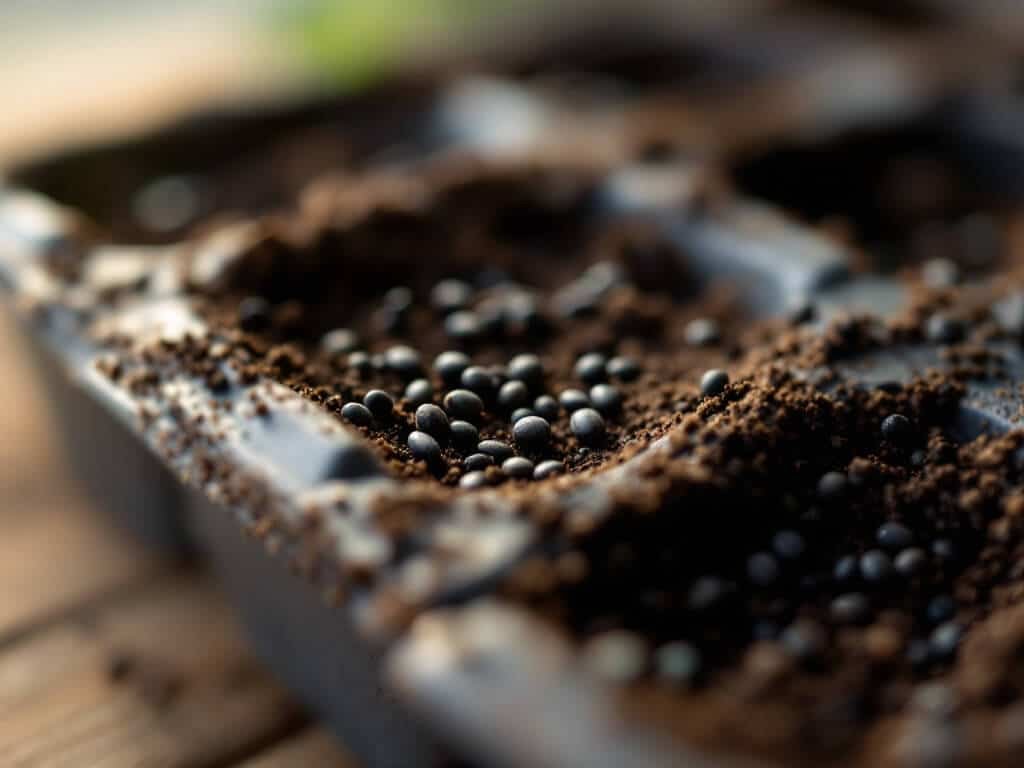
Sow on the surface and leave the seeds uncovered, or cover them with no more than 1/4 inch of mix. The two main sources disagree slightly, and both approaches work. I’d go with surface sowing for simplicity, and if you cover the seeds, keep it a light dusting.
Sow a few seeds per cell, since you’ll thin or separate the seedlings later. Don’t bury them deeply to be safe. Deep sowing is how you end up with a tray of nothing.
Provide Warmth and Light
Keep the mix at about 70°F or warmer. Basil germinates best around 68–70°F, and under those conditions you should see sprouts in about 5–7 days. If nothing has come up and the tray sits in a cool room, warmth is the first thing to fix.
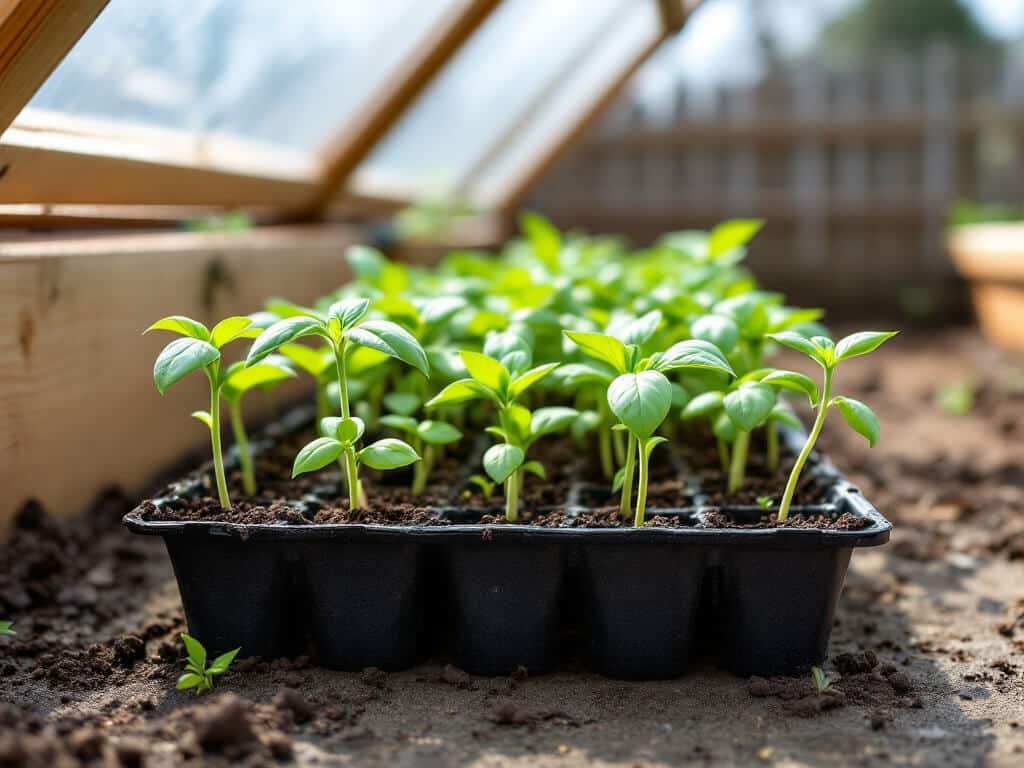
Once seedlings emerge, give them bright light right away. A very bright window, a grow light, or greenhouse space all work. Pale, leggy seedlings are asking for more light, so move them closer to the source or upgrade the source.
Water Basil Seedlings Carefully
Keep the mix moist but not waterlogged, using a fine rose or a spray bottle so you don’t flatten the seedlings. Overwatering is what invites damping off, the fungal problem that makes seedlings collapse at the soil line.
Drainage holes, a free-draining mix, and some air movement all help. So does spacing: crowded seedlings hold moisture around their stems. Poor air movement can also bring on fungal diseases such as gray mold, so don’t tuck the tray into a stuffy corner.
Thin and Transplant Seedlings
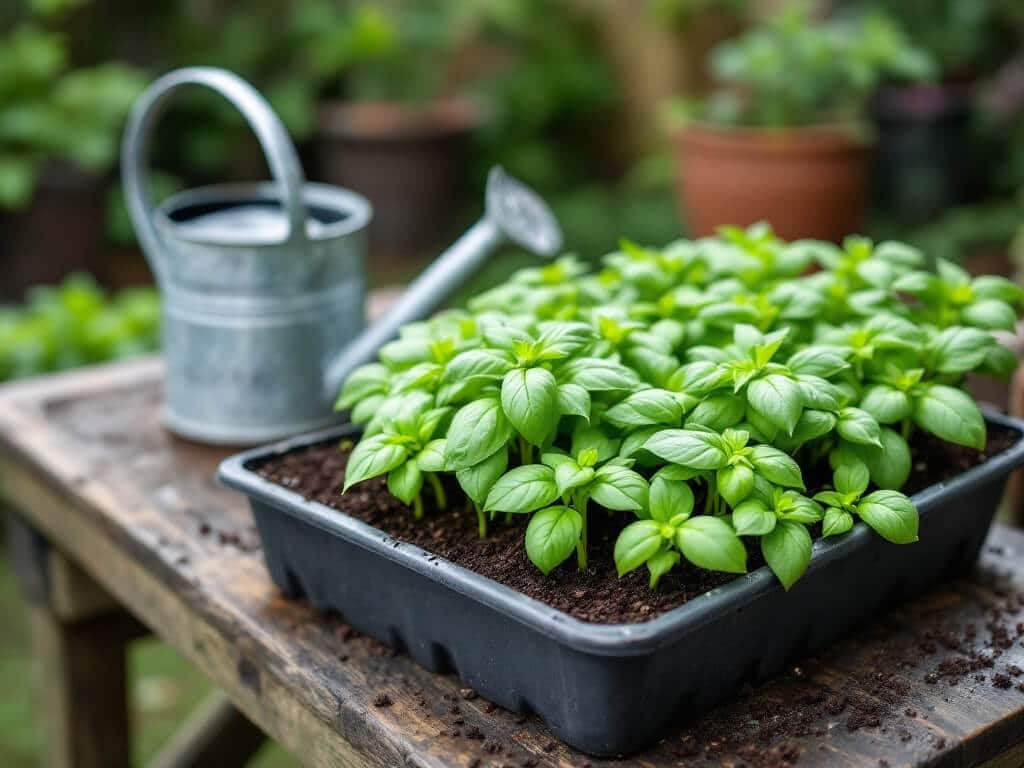
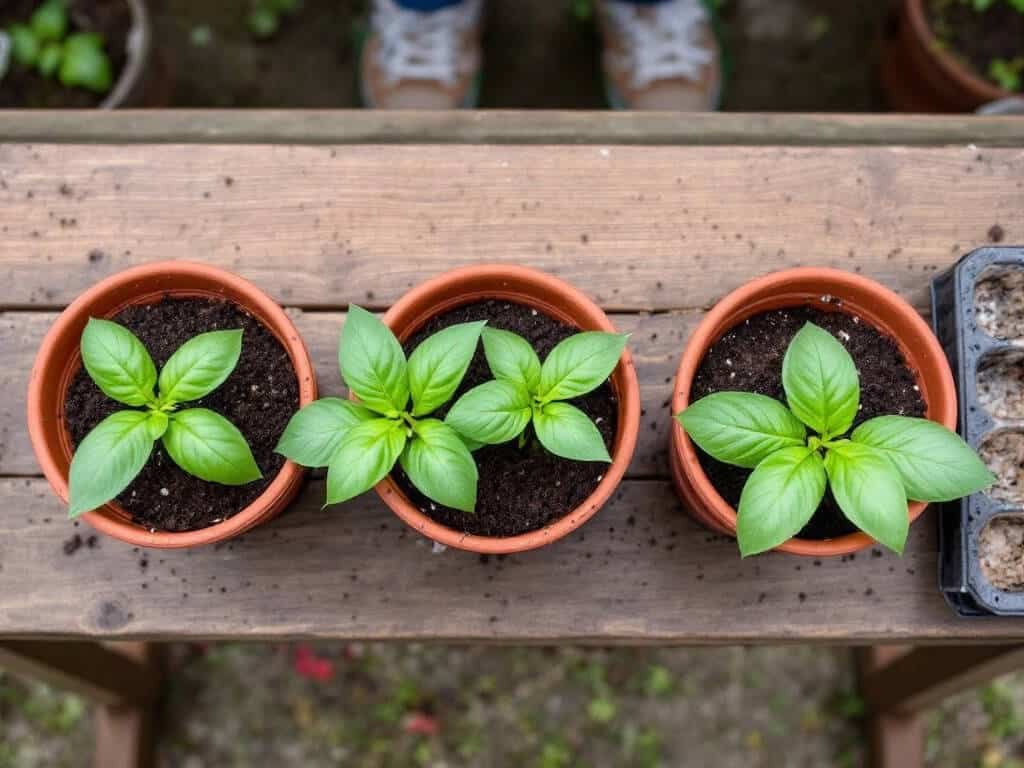
Wait until seedlings have 2–3 pairs of true leaves, then thin or separate them. Indoor-grown basil is usually transplant-ready in about 3–4 weeks, once it has several true leaves.
You have two options:
– Move each seedling or small group into its own 3-inch pot to grow on until the weather warms.
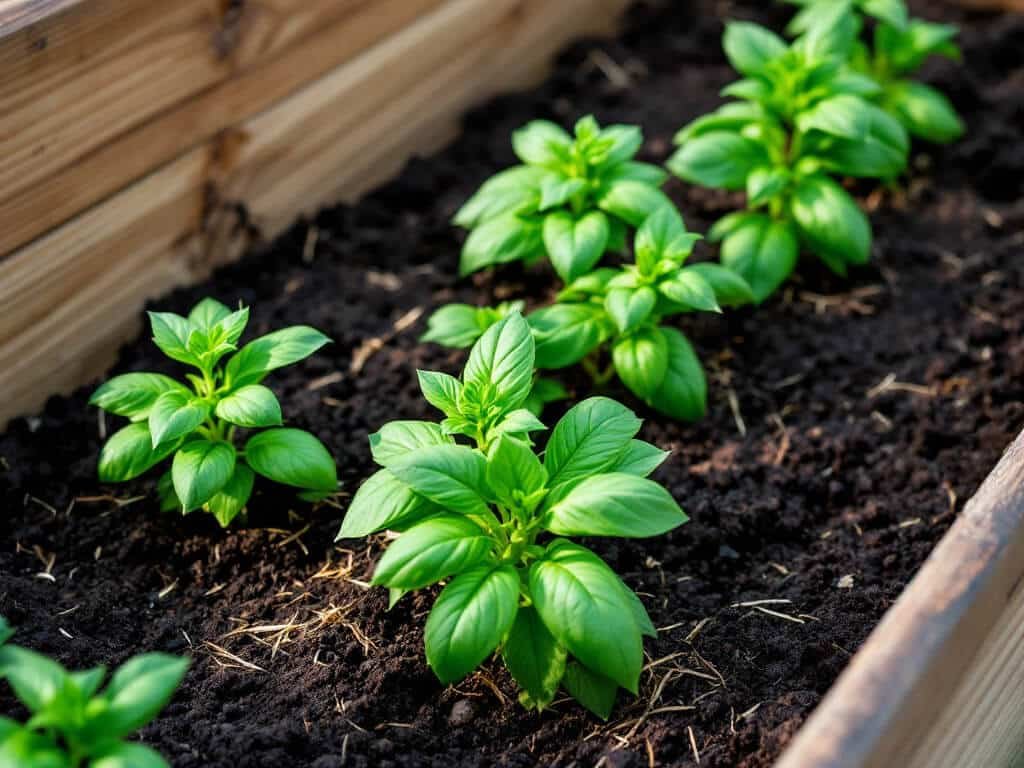
– If conditions outside are already warm enough, set seedlings in the garden 6–12 inches apart.
Basil can reach about 2 feet tall, so the spacing isn’t generous for no reason. Crowding leads to damp foliage, weak growth, and disease.
Harden Seedlings Off
Indoor-grown seedlings need gradual exposure to outdoor conditions before they go in the ground, and they shouldn’t go out until frost danger has passed. Start with a short stretch outside in a sheltered spot, then lengthen the time over several days.
Skipping this step is a common reason transplants stall. Moving a plant straight from a windowsill to full outdoor sun and wind is a shock it doesn’t need.
Plant Basil Outdoors
Wait until soil temperature is at least 60°F and nights are reliably warm. Cold conditions around 50°F can stunt basil or blacken the leaves, so a warm afternoon alone isn’t enough to go on.
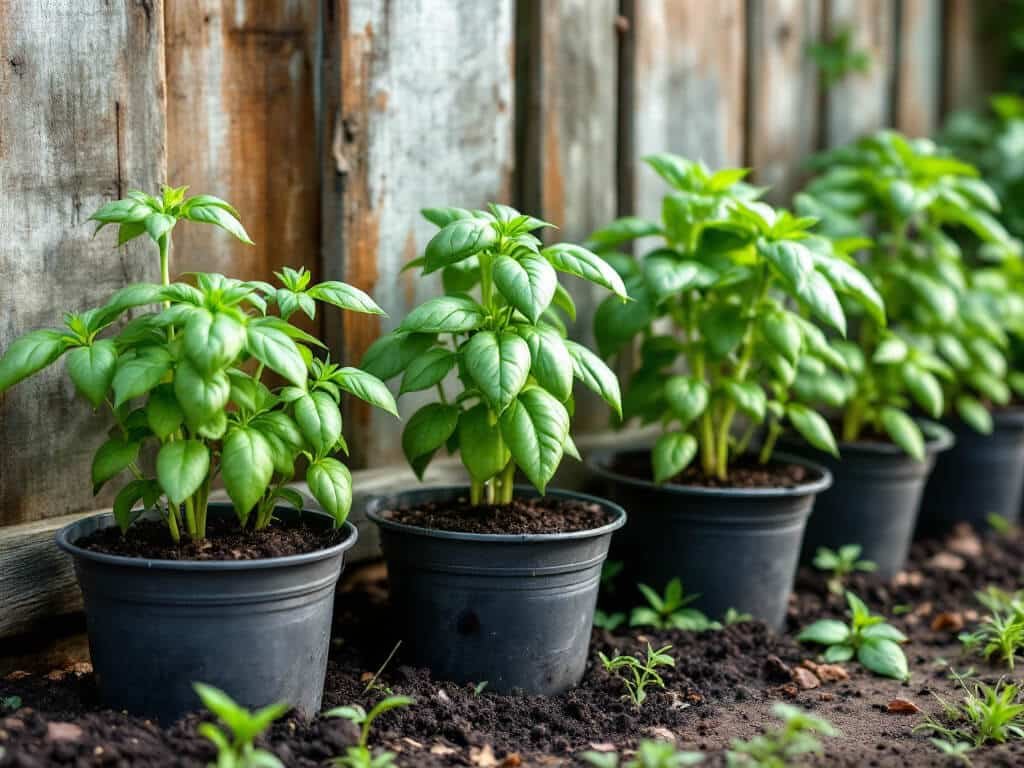
Choose a spot with full sun, ideally 6–8 hours of bright light. The soil should be fertile, rich in organic matter, and well drained. For containers, use at least an 8-inch wide and deep pot with good potting mix. In the ground, keep plants 6–12 inches apart.
If your basil is in a pot, you can bring it indoors before cold weather returns. That’s the advantage of containers in zones 5 through 9.
Harvest and Pinch Basil
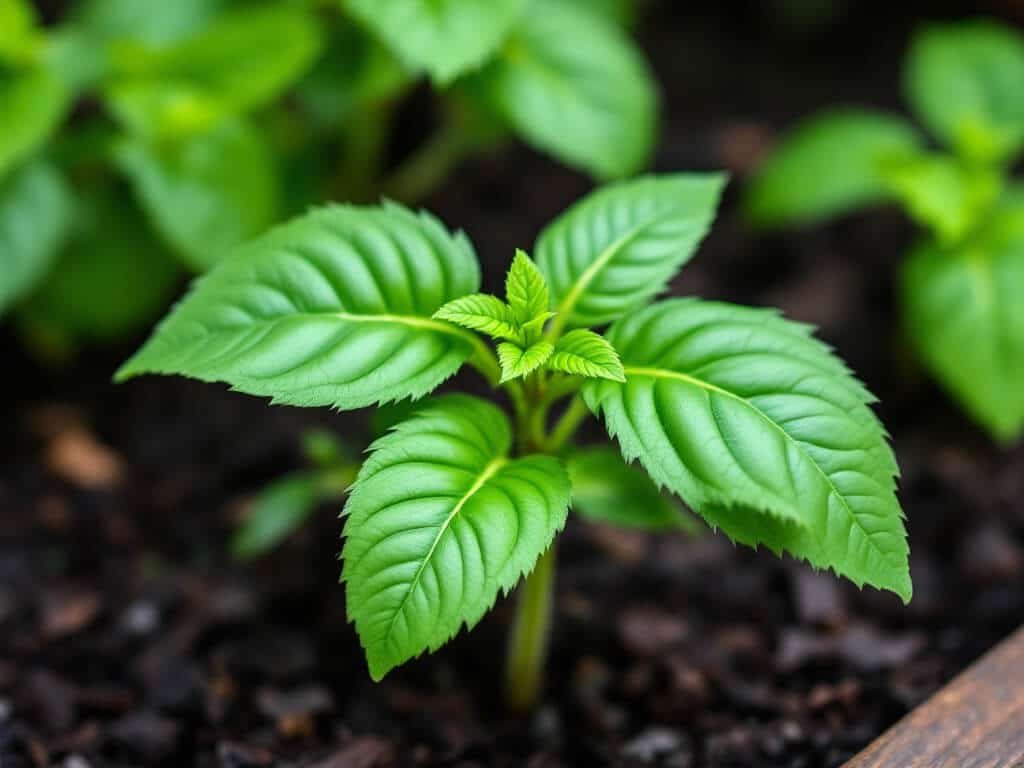
Start harvesting about 4–5 weeks after sowing, when plants are growing vigorously. Pinch growing tips to encourage branching, and pinch off flower buds or flowerheads as they appear to prolong leaf production.
Take from the tips instead of stripping individual leaves from the bottom. Pinching makes the plant bushier, which gives you more to harvest next time. If you want a steady supply all season, sow again in successive batches.
Common Problems
Seeds do not germinate
Move the container somewhere warmer. Basil germinates best near 68–70°F, and a cool windowsill won’t get there.
Seedlings collapse at the soil line
This is damping off. Water less, improve drainage and air movement, and thin out crowded seedlings.
Leggy, pale seedlings
They need more light. Basil wants full sun outdoors or a very bright spot indoors.
Growth stalls after transplanting
Cold soil or air is the likely cause. Wait until soil is at least 60°F, and protect plants from temperatures near 50°F.
Leaves turn black after planting outside
That’s cold injury. Move plants to warmer conditions if you can, and delay outdoor planting until frost danger has passed.
Plants flower too soon or produce few leaves
Pinch growing tips and flowerheads, keep moisture steady, and avoid crowding.
When to Expect Results
Here’s a rough schedule under suitable conditions:
– Germination: about 5–7 days
– Transplant-ready seedlings: about 3–4 weeks after sowing indoors
– Outdoor planting: after frost danger has passed. Sources suggest sowing indoors anywhere from 3–8 weeks before that date, depending on your local conditions
– First harvest: about 4–5 weeks after sowing, when plants are growing vigorously
– Continued harvest: throughout the warm growing season, with regular pinching and successive sowings if needed
Work backward from your last frost date and your own conditions. If your spring runs cold, lean toward the shorter lead time, since oversized seedlings sitting indoors are no better than right-sized ones.
FAQ
How deep should basil seeds be planted?
Sow them on the surface without covering, or cover them with no more than 1/4 inch of mix. Both approaches appear in the RHS and University of Minnesota Extension guidance.
When can basil seedlings go outside?
Plant them after frost danger has passed, once soil temperature is at least 60°F and nights are warm. Harden them off first.
Why are basil seedlings falling over?
Damping off is a common cause, especially when seedlings are overwatered or air circulation is poor. Keep the mix moist rather than saturated, improve drainage and ventilation, and avoid crowding.