
How to Grow Cherry Tomato Seedlings
Tomato seedlings are easy to start and easy to ruin, and the mistakes usually come down to timing, warmth, and light. Cherry tomatoes are a warm-season annual, grown in zones 5 through 9 mostly by working backward from your local last frost. Get the indoor schedule right and the rest is routine.
This guide walks through the whole sequence: sowing, bottom heat, lighting, thinning, hardening off, and the move outdoors. Cherry tomato is a group of tomato cultivars, not a separate species, so the basics are the same as for any tomato. Check your seed packet for the plant’s final height and growth habit before you decide where it goes.
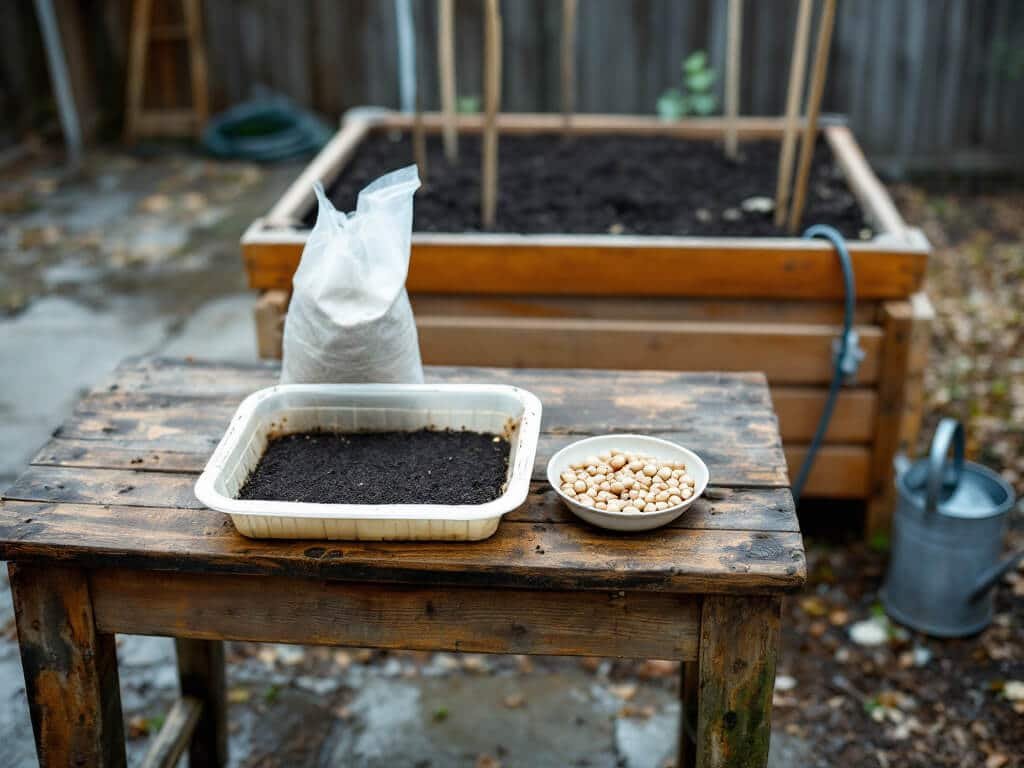
What You Need
Gather everything before you sow, because the heat and light setup needs to be ready the day seeds go in.
– Cherry tomato seeds, picked for your growing space and growth habit
– A seed-starting tray or small pots with drainage holes
– Sterile, soilless germination mix
– A waterproof tray or saucer to sit under the containers
– Plant labels and a marker
– A heating mat with a thermometer
– A bright overhead grow light
– Larger pots for seedlings once true leaves appear
– A small fan for gentle air circulation
– Stakes, cages, spirals, or a trellis for transplanting day
– Row cover, if you plant near your frost date
Schedule Sowing
Count back 5–6 weeks from the day you plan to set plants outdoors, and sow on that date. Tomatoes are warm-season plants, so the outdoor date is not the last frost on the calendar. It is the point when frost danger has passed and the soil has warmed.
Find your local last frost date, pick a transplant date after it, then subtract the weeks. Sowing earlier than that does not give you an earlier crop. It gives you bigger, leggier plants waiting indoors for weather that is not ready.
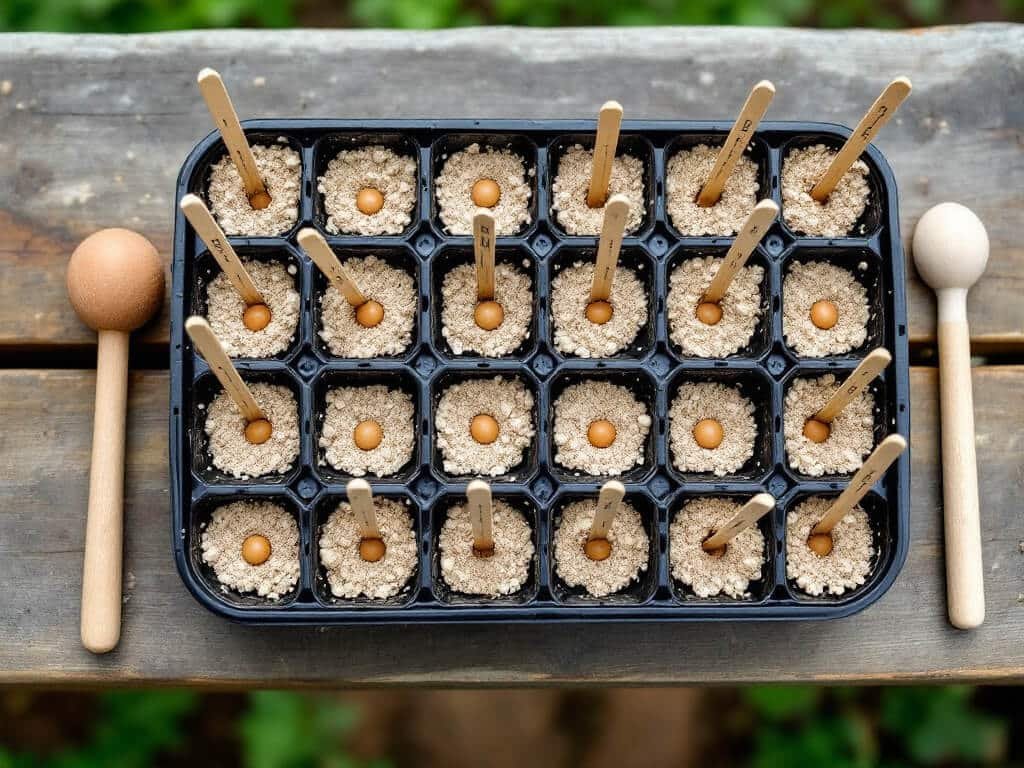
Fill Containers and Sow Seeds
Sow seeds about 1/4 inch deep in sterile, soilless germination mix. Fill your containers, moisten the mix so it is damp but not dripping, and then plant.
Use a sterile mix rather than soil from the yard or a bag of garden soil. Seedling production is where damping-off shows up, and clean mix is your first defense. Label each container as you go, especially if you are starting more than one cultivar. Cherry tomato seedlings look alike at this stage, and you will not remember which is which.
Set the containers on a waterproof tray so you can water from the bottom if you want to.
Provide Bottom Heat
Keep the mix at 75–85°F until the seedlings emerge. A heating mat with a thermometer takes the guesswork out. Under good conditions, around 75–80°F, expect germination in about 6 days, though the cultivar and your conditions can shift that.
The catch is that bottom heat dries the mix quickly. Check the trays every day and moisten them evenly, without leaving the mix waterlogged. A tray that dries out and a tray that sits soggy both cause trouble, and a soggy one invites damping-off.
If you cover the tray with a humidity dome to hold moisture, take it off as soon as seedlings emerge.
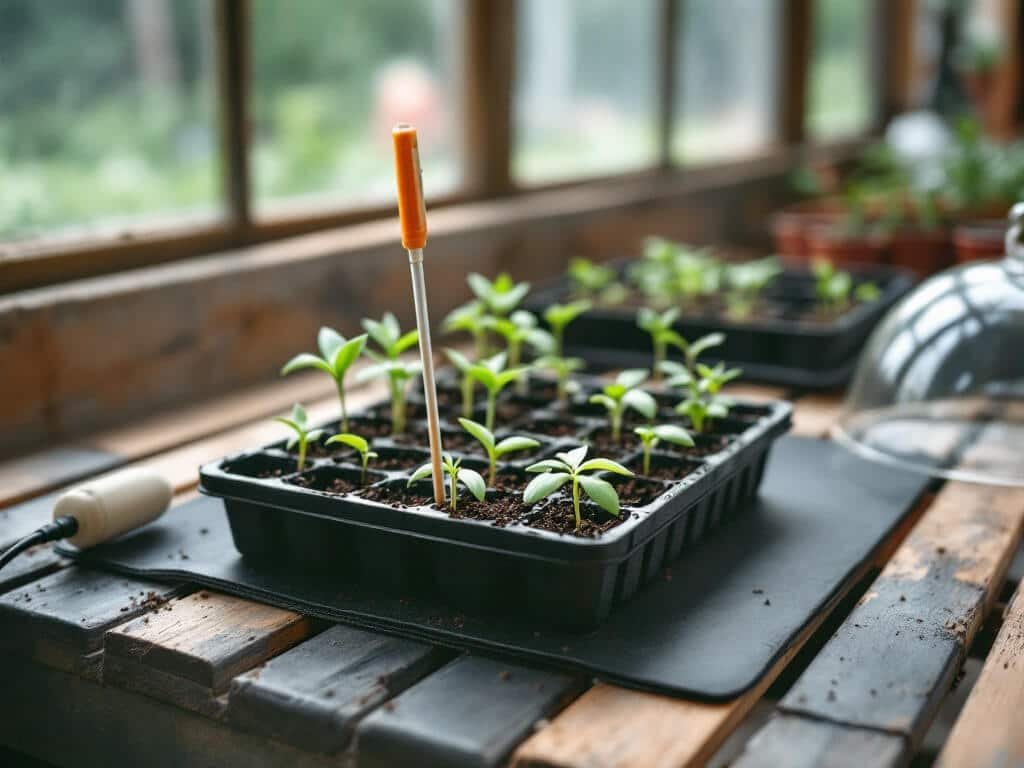
Light Seedlings After Emergence
Once seedlings break the surface, move them under bright overhead light and hold the soil near 70°F when you can. Take them off the heating mat or turn the mat down to get there. Light is the part that most often goes wrong at this stage.
Seedlings without enough light stretch toward whatever light there is and end up with long, leaning stems. A windowsill is often not enough. Hang a grow light directly overhead and keep it close enough to light the plants well without heating them up. Raise the light as the seedlings grow.
Add a small fan on low for gentle air movement. You are not trying to blow the plants around, only to keep the air from sitting still over damp mix.
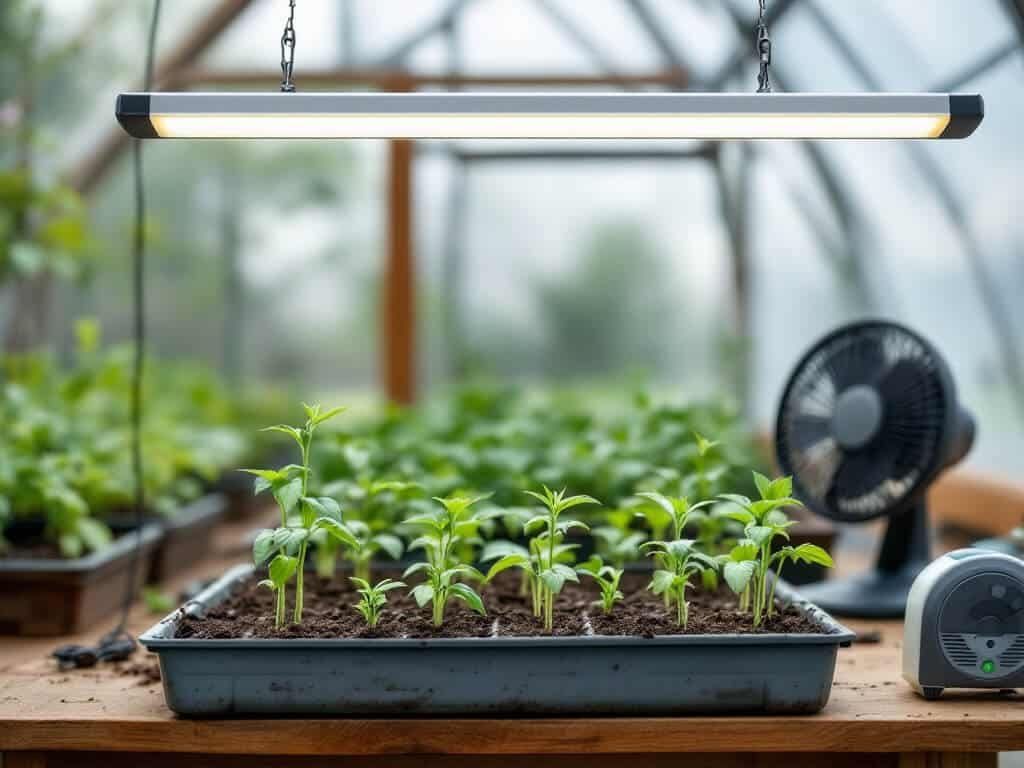
Thin or Transplant After True Leaves Appear
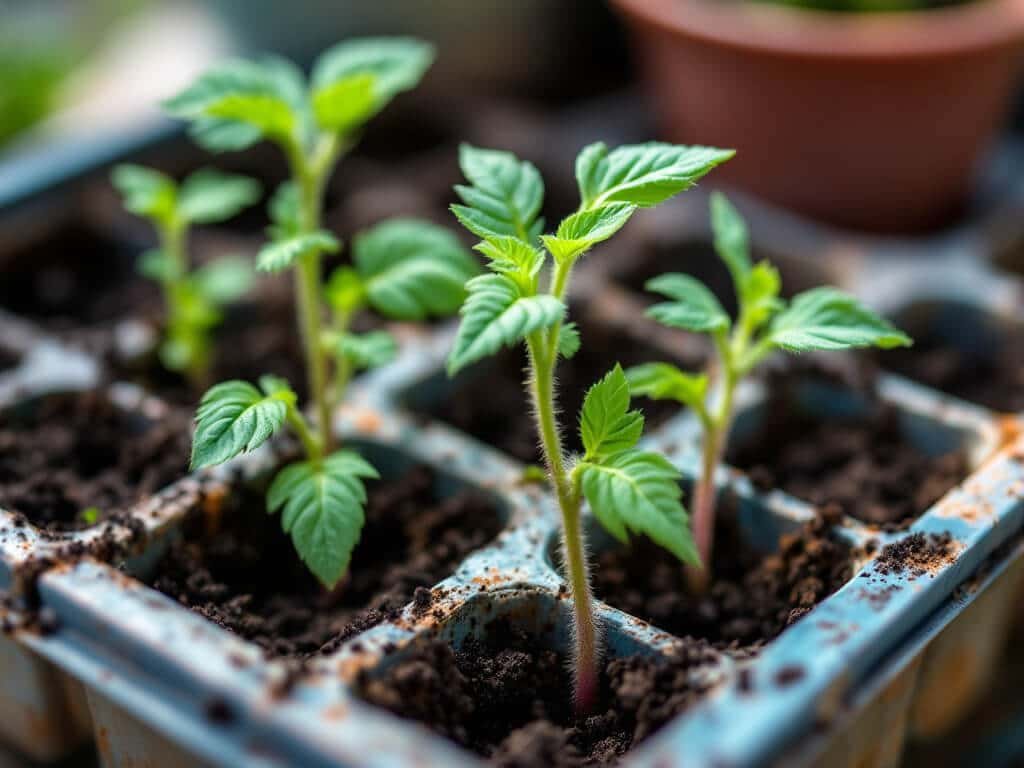
When the first true leaves show, space the seedlings about 2 inches apart in the tray or growing container. The first leaves to appear are seed leaves. True leaves come next and look like proper tomato foliage. Thin crowded containers by removing the weakest seedlings, or move them to their own spots.
If your seedlings outgrow their space before outdoor planting, pot them up into larger containers. Keep up strong overhead lighting through this stretch. Plants that get crowded and dim lean and stretch, and that is hard to undo.
Keep the mix evenly moist but not saturated, and keep the fan running.
Harden Off Seedlings
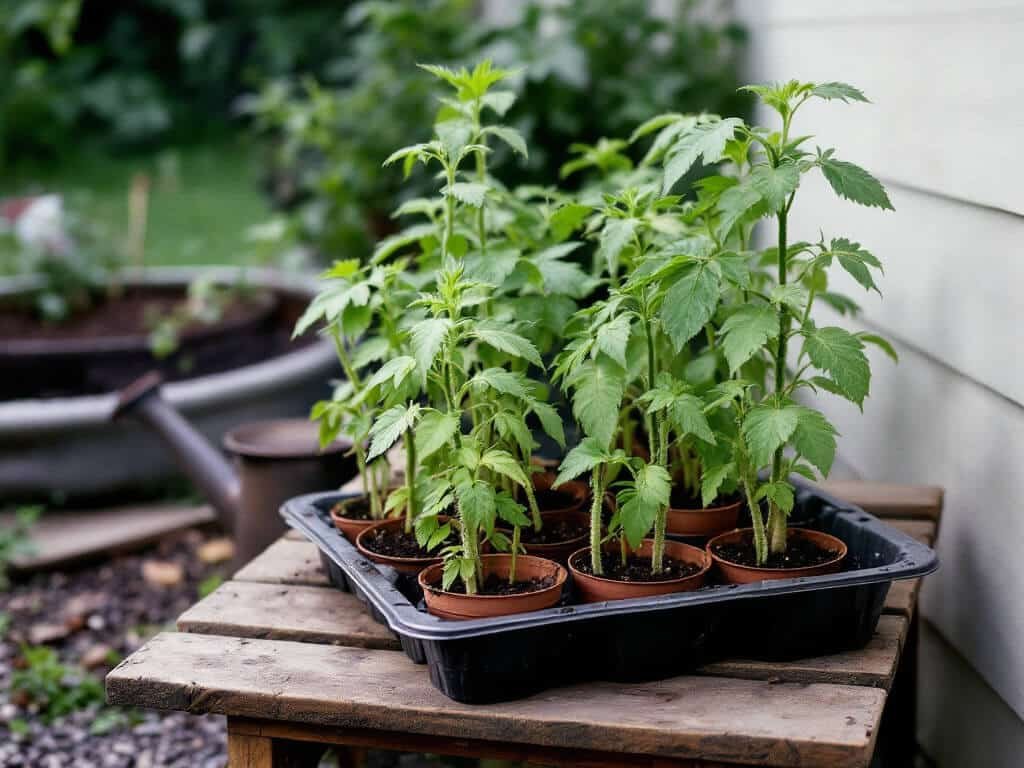
Harden off over 1–2 weeks. Start by putting plants outdoors in a sheltered spot for a few hours, then increase their sun exposure a little each day. Indoor seedlings have never seen wind or direct sun, and skipping this step is how you get transplant shock.
Do not leave the plants out overnight if nights are approaching freezing. Bring them back inside. That is the whole point of doing this a bit before your final transplant date, since you can still pull plants back indoors if the weather turns.
Plan the schedule so hardening off finishes right as your planting window opens.
Transplant After Frost Danger Passes
Do not set cherry tomato plants outside until frost danger has passed and the soil has warmed. Cold injury is the main outdoor risk, and planting early only sets plants back.
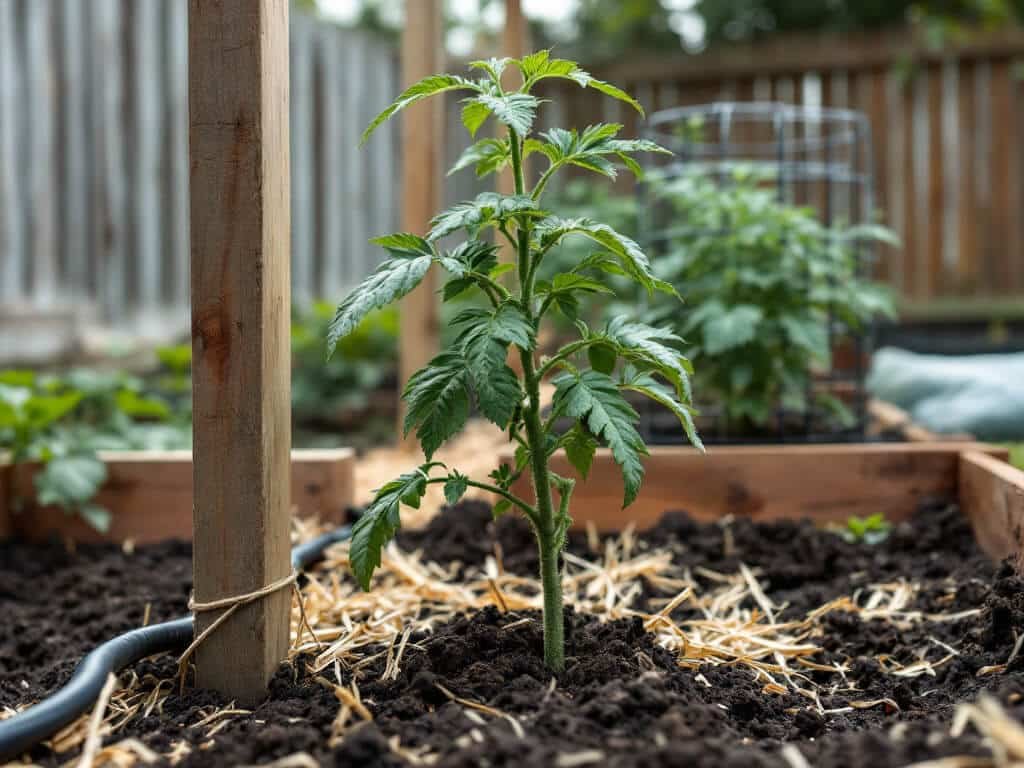
Before you move them, water the plants well. Install the support at planting rather than adding it later. Spacing depends on how you grow them:
– Staked plants: 15–24 inches apart
– Trellised plants: 24–36 inches apart
Plant in late afternoon, or on a cool, cloudy, calm day. If a cold night is forecast after planting, cover the plants with row cover.
Common Problems
Leggy, leaning seedlings
This is a light problem. Give plants brighter overhead light and keep the light close enough to illuminate them without overheating them.
Poor germination
Check the seed age, the sowing depth, and the temperature. Tomato seeds germinate best with warm mix around 75–85°F, so a cool room is a common culprit.
Damping-off
Use sterile mix, do not let the mix stay saturated, and give seedlings some ventilation. Remove any humidity cover once seedlings emerge.
Dry seed-starting mix
Bottom heat dries trays fast. Check them often and moisten the mix evenly without waterlogging it.
Transplant shock
Water plants before transplanting, choose a calm or cloudy day, and harden off gradually.
Cold injury outdoors
Wait until frost danger has passed and the soil is warm. If an unexpected cold night threatens, protect the plants.
When to Expect Results
Here is the rough timeline:
– Germination: About 6 days at 75–80°F.
– Indoor growth: 5–6 weeks from sowing to outdoor planting.
– Hardening off: 1–2 weeks, gradually increasing exposure.
– Outdoor establishment: No reliable number of days, since temperature, light, and plant size all change it.
– Harvest: Fruit comes after flowering, during the warm season. Use the days-to-maturity figure on your seed packet, because it varies by cultivar.
Your transplant date also moves the harvest date. A later planting means later fruit, so do not rush plants outdoors to chase it.
FAQ
When should tomato seeds be started indoors?
Start cherry tomato seeds about 5–6 weeks before the planned outdoor planting date. Set plants outside only after frost danger has passed and the soil has warmed.
How deep should cherry tomato seeds be planted?
Sow them about 1/4 inch deep in sterile, soilless germination mix.
How do I prevent cherry tomato seedlings from becoming leggy?
Provide bright overhead light soon after emergence. Insufficient or poorly positioned light causes seedlings to elongate and lean.