
How to Grow Bush Beans in Pots
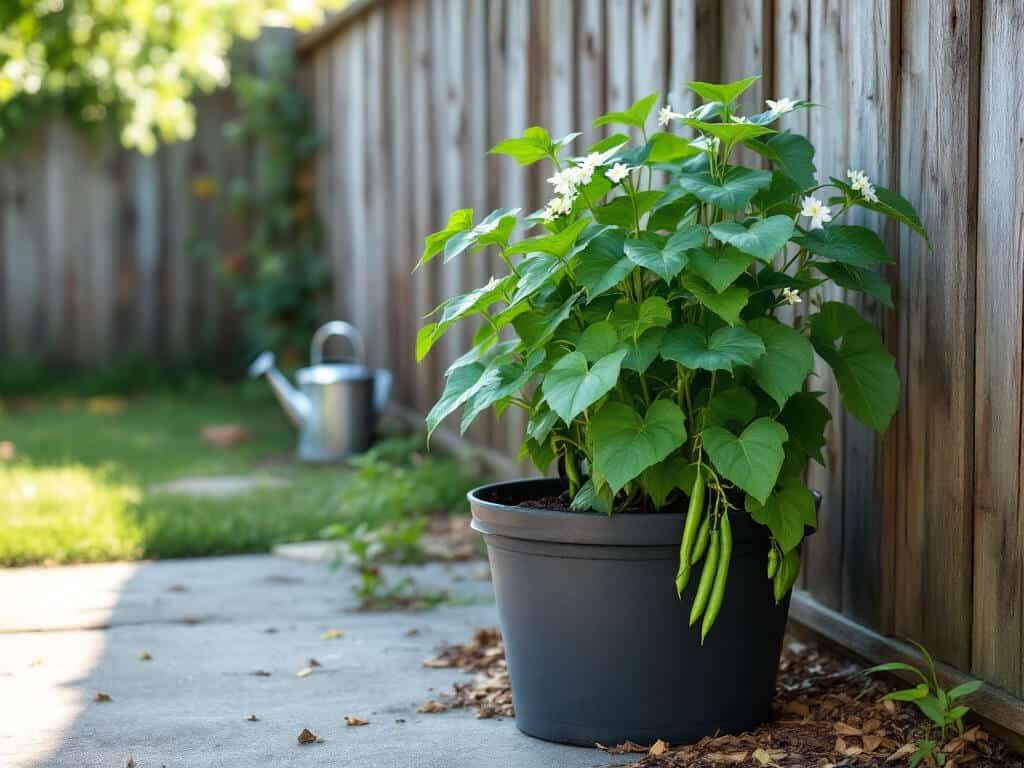
If you want to know how to grow beans in pots, the two decisions that matter most are the type of bean and the size of the container. Pick bush beans, which stay around 2 feet tall and mostly need no support, and give them a pot at least 18 inches wide and deep.
Bush beans are a warm-season annual that works across USDA zones 5 to 9. They go in after frost is over and the soil has warmed, and they come to harvest in roughly 50 to 60 days. The steps below cover the pot, the mix, sowing, watering, and picking.
What You Need
Gather these before you sow:
– A container at least 18 inches wide and 18 inches deep, with drainage holes. A larger pot dries out more slowly, which helps.
– Sterile, peat-free potting compost or another good container mix. Ordinary garden soil alone is not a good choice for a pot.
– Bush bean seeds. Varieties named in the extension material include ‘Blue Lake,’ ‘Greencrop,’ ‘Royal Burgundy,’ ‘Slenderette,’ and ‘Strike.’
– A watering can or hose with a gentle rose, so the water doesn’t blast seeds out of the mix.
– Optional: a general-purpose liquid fertilizer for feeding container vegetables.
– Optional: a container-suitable mulch to hold moisture and keep weeds down.
You don’t need stakes or a trellis. That’s the main reason to choose bush types for a pot.
Choose a Sunny Spot
Put the pot where it gets full sun. Beans do their best with strong light, and bush types grow about 2 feet tall, so a shaded corner of the patio will hold them back.
Set the pot in its final spot before you fill it. A pot this size is heavy once it’s full of damp mix, and you won’t want to drag it around. If you plan a second sowing later in the season, leave room nearby for another container.
Prepare the Pot
Use a container that is at least 18 inches wide and 18 inches deep. Smaller pots dry out faster, and beans need even moisture, especially when they flower.
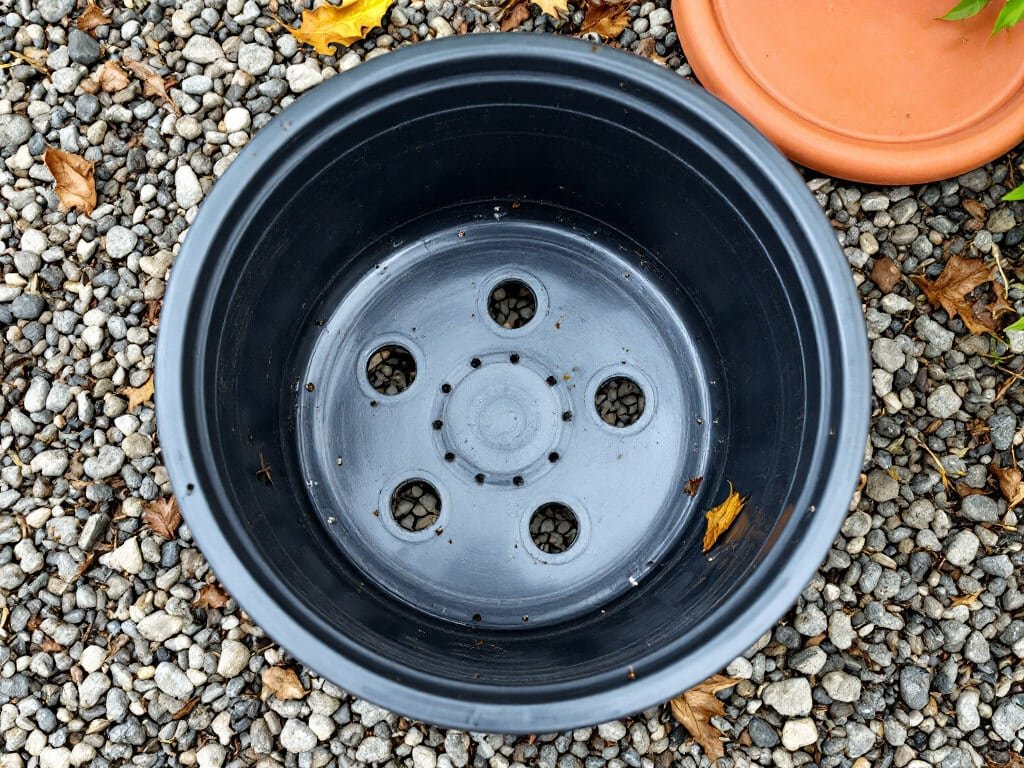
Check the base before anything goes in. Water has to drain freely through the holes, so clear any that are blocked. If the pot sits on a saucer, plan to empty it after watering. Never let the pot stand in water.
Fill the Container With Potting Mix
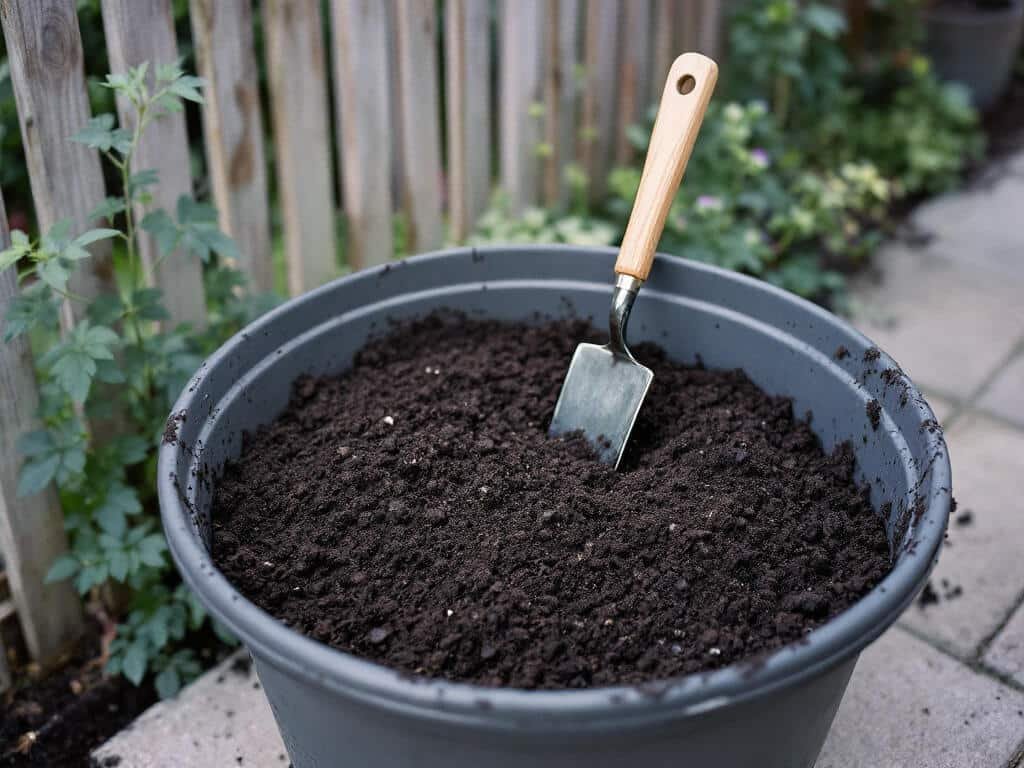
Fill the pot with sterile, peat-free potting compost or another well-drained container mix. Organic matter in the mix is fine, but drainage has to stay good. Plain garden soil by itself tends to be the wrong choice in a container.
Leave some room between the mix and the rim. That gap lets you water thoroughly without the mix and water spilling over the edge. Water the filled pot lightly before sowing so the mix is damp but not soggy.
Sow Bush Bean Seeds
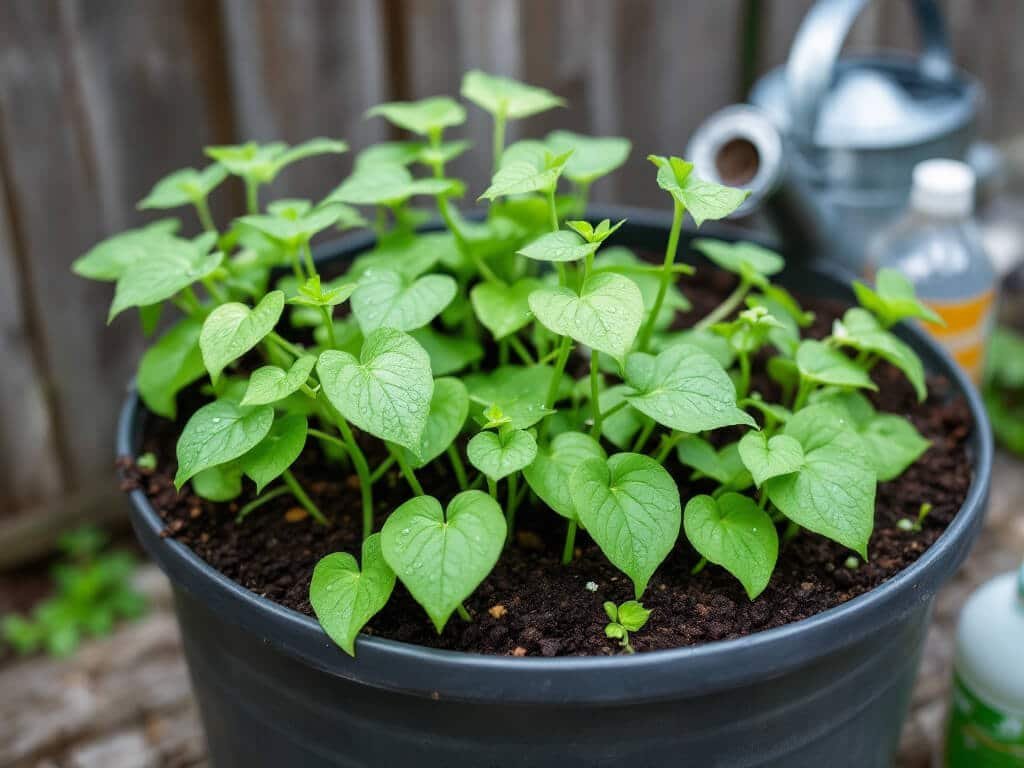
Wait until frost danger has passed and the soil is at least 60°F. Seeds emerge in about 7 to 10 days when soil temperature is 65 to 85°F. Sowing into cold, wet mix is a common reason seeds fail to come up.
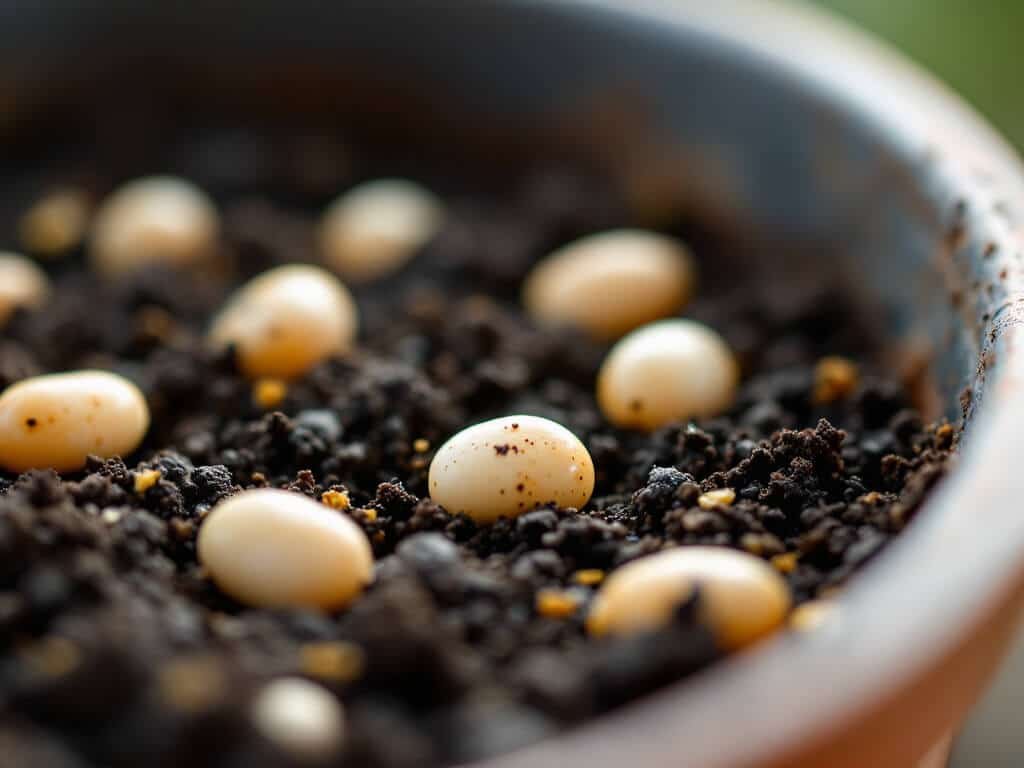
Plant seeds 1 inch deep and 2 to 3 inches apart. Those figures come from garden planting guidance. In a pot, use the same spacing but spread the seeds across the whole surface rather than clustering them in the middle. Crowding them in one spot gives you a tangle of weak plants.
Cover the seeds, water gently with the rose, and keep the mix moist but not saturated.
If you want beans over a longer stretch, sow a second container every 2 to 3 weeks where your growing season allows. Bush beans produce in a concentrated burst, so staggered pots keep the harvest going.
Water and Feed the Plants
Keep the mix evenly moist from sowing through harvest. The most important time is flowering, because drought then can leave you with few or poorly filled pods. Water thoroughly when the surface starts to dry, and check often, since pots dry faster than garden beds.
Overwatering causes problems too. Waterlogged mix can promote root rot, so confirm the drainage holes stay open and don’t leave a saucer full of water under the pot.
Container plants can get a general-purpose liquid fertilizer every two weeks. Follow the product label for dilution, and treat this as optional if the plants look healthy and are growing steadily. A layer of container-suitable mulch can help hold moisture between waterings.
Harvest Regularly
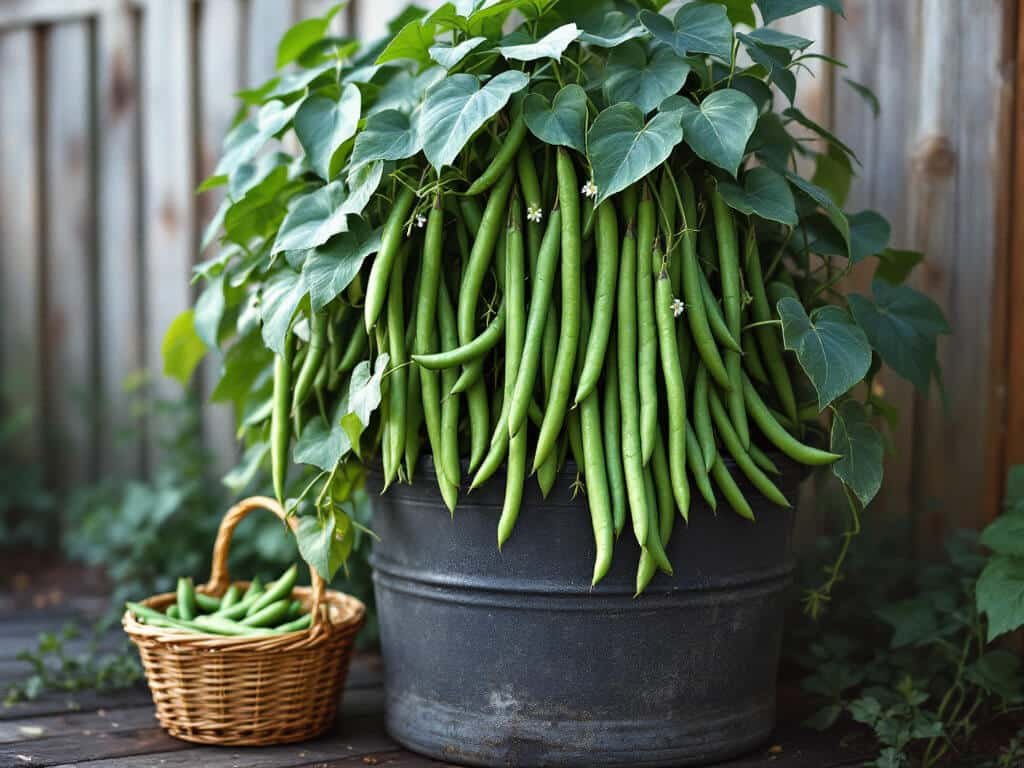
Pods are usually ready 7 to 14 days after flowering. Pick them when they are full-sized but still firm and crisp, with small seeds inside.
Check the plants often once flowers have set. Pods left too long turn tough and oversized, and regular picking encourages the plant to keep producing. Pick every pod that’s ready, even if you don’t need them that day.
Common Problems
Seeds fail to emerge
The soil was probably too cold, too wet, or the seeds were planted wrong. Wait until the soil is at least 60°F, sow 1 inch deep, and keep the mix moist rather than saturated.
Plants wilt between waterings
The pot may be too small or sitting somewhere that dries it out quickly. Use at least an 18-inch pot, check moisture frequently, and water thoroughly when the surface begins to dry.
Yellowing, weak growth, or slow development
Waterlogged mix can restrict roots and encourage root rot. Make sure the drainage holes are open and the pot isn’t sitting in a saucer of standing water.
Few or poorly filled pods
Drought during flowering is the likely cause. Keep moisture even while the plants are blooming.
Pods become tough or oversized
Harvest was delayed. Pick when pods are full-sized but still crisp, and keep picking regularly.
The crop is short
Bush beans produce over a fairly concentrated window. Sow another container every 2 to 3 weeks, where your season allows, for succession harvests.
When to Expect Results
Here is the rough schedule from sowing to the end of the crop:
– Germination: about 7 to 10 days when the soil is 65 to 85°F.
– First harvest: usually 50 to 60 days after sowing, depending on variety.
– Pod development: pods are generally ready 7 to 14 days after flowering.
– Production period: bush varieties commonly flower and mature pods for about 2 to 3 weeks, and frequent picking helps maintain production.
Count the days from sowing, not from when the seedlings appear, and check the seed packet for your variety’s timing.
FAQ
How large should a pot be for bush beans?
Use a container at least 18 inches wide and 18 inches deep, with drainage holes. Larger containers generally hold moisture longer, but every pot still needs good drainage.
When can bush beans be planted outdoors?
Sow after frost danger has passed and the soil has warmed to at least 60°F. Seeds emerge in roughly 7 to 10 days when soil temperatures are 65 to 85°F.
How often should bush beans in pots be watered?
Keep the potting mix evenly moist, especially during flowering, but avoid prolonged saturation. Containers dry faster than garden soil, so expect to check them regularly.