
Parsley Companion Plants: What to Grow Nearby
Most advice on parsley companion plants is a list of traditional pairings, and very little of it is backed by tested results. That doesn’t make the lists useless, but it does mean you should sort the claims that have some support from the ones that are just repeated.
This article does that sorting. You’ll get plants that make sense next to parsley, plants to keep away from it, and a simple layout for beds and containers. Where there is no verified spacing figure, I’ll say so rather than invent one.
Why pairings matter for parsley
Parsley is a biennial herb, but most people grow it as an annual. It makes leaves in its first year, then flowers, sets seed, and dies in its second. You harvest leaves in that first season, preferably before it flowers, so the plant is only in your garden for a short stretch.
Parsley wants full sun to partial shade, evenly moist soil, and fertile, well-drained ground with plenty of organic matter. Those needs are the most practical reason to think about neighbors. A plant that shades parsley for most of the day, or one that wants dry soil while parsley wants moisture, will cause more trouble than any pest.
Parsley’s pest list is also worth knowing: carrot fly, aphids, celery leaf miner, slugs, and snails. Damping-off and fungal problems such as gray mold can show up too. Some companions may help with aphids by attracting beneficial insects, but nothing in the research suggests a neighboring plant stops damping-off or gray mold.
One myth to clear up: parsley does not repel pests from every plant around it. No extension source in the research verifies a broad repellent effect, and companion-planting advice is often traditional. Where benefits have been documented, they tend to be modest or tied to one particular growing system.
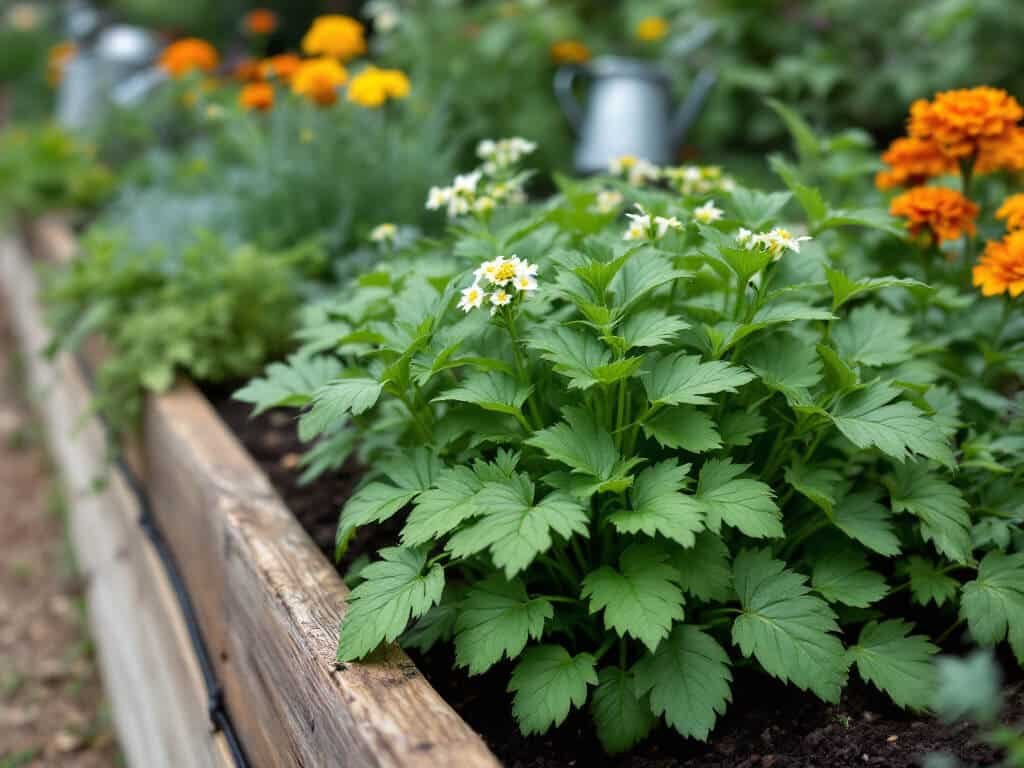
Best companion plants for parsley
The plants below fall into two groups. Tomato and asparagus come from traditional pairings, and the sources don’t verify a mechanism. The rest are flowering plants that feed beneficial insects, which is a better-supported reason to grow them nearby.
Tomato
Tomato appears in a traditional compatible association with parsley, but the sources do not verify a pest-repelling or growth benefit. I’d treat it as a pairing that works in practice, not one that does something special. Use the spacing for your tomato cultivar and keep parsley outside the tomato’s mature canopy so it isn’t shaded out.
Asparagus
Asparagus is also listed as a traditional compatible partner, with no specific mechanism verified. The practical rule is to keep the spacing the asparagus bed needs and fit parsley around it. No parsley-specific spacing was found.
Coriander
Coriander’s small flowers can feed beneficial insects, and it has sometimes deterred unwanted insects in parsley crops. That “sometimes” matters, so don’t count on it. No verified spacing figure exists, so plant both where you can reach each one easily for harvesting.
Dill
Dill’s small flowers can feed beneficial insects that prey on pests such as aphids, and aphids are on parsley’s pest list. Dill gets tall, so allow room for its mature height. No parsley-specific spacing was verified.
Fennel
Fennel flowers provide resources for beneficial insects. The catch is size, since fennel can get large and competitive (more on that below). If you grow it nearby, place it where its mature size won’t shade parsley. No spacing figure was found.
Caraway
Caraway has small flowers that can support beneficial insects. It’s a quieter choice than dill or fennel. Follow the plant’s own recommended mature spacing, since no parsley-specific number was verified.
Queen Anne’s lace
Queen Anne’s lace flowers provide food for beneficial insects. Keep it from crowding the parsley you plan to eat. No verified spacing figure was found, so judge by how big it gets.
Yarrow
Yarrow flowers can provide nectar and shelter for beneficial insects. That shelter value is the reason to give it a spot near the herb bed. Use yarrow’s recommended mature spacing, because no parsley-specific figure was verified.
Sweet alyssum
Sweet alyssum has small flowers that can feed beneficial insects. Its low habit suits the edge of a bed, so put it there where it won’t crowd the parsley. No parsley-specific spacing was verified.
Marigold
Marigold flowers and roots have shown pest-suppression effects in particular studies. That does not establish a universal benefit for parsley, so think of marigold as a reasonable flower to grow nearby, not a guaranteed pest fix. Follow the mature spacing for the marigold variety you choose.
What not to plant with parsley
The short list here is about shared pests, size, and water needs.
Carrot
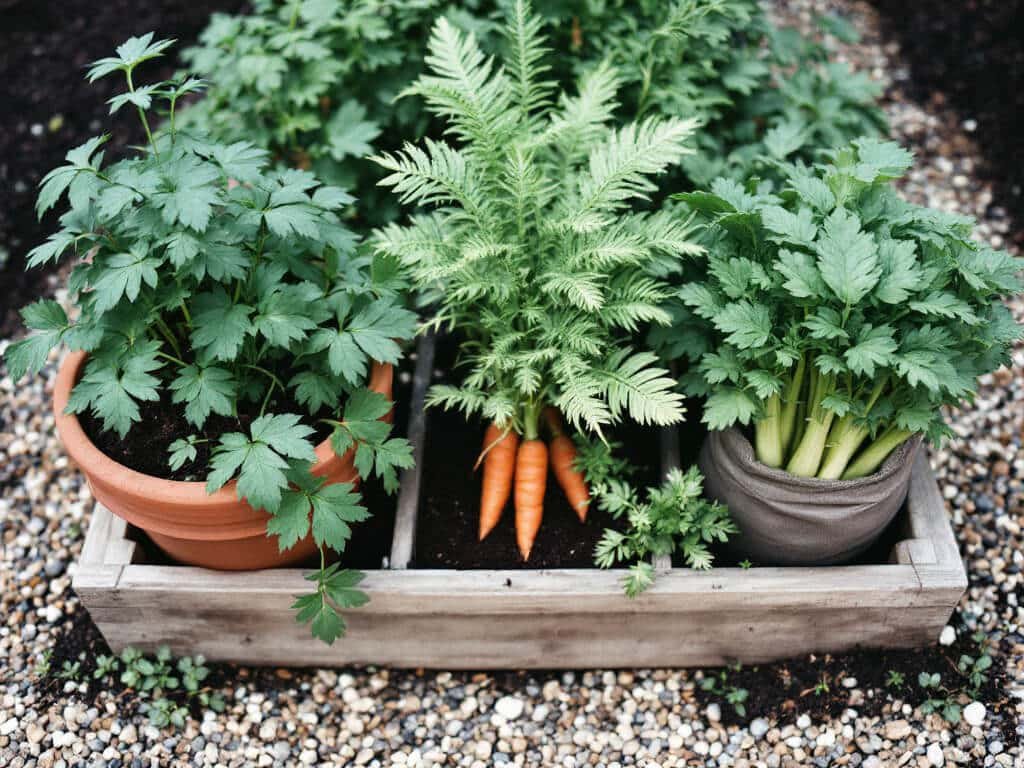
Parsley and carrots are closely related and can be hit by some of the same insects and diseases, including carrot fly. Planting them side by side gives those problems an easy path from one crop to the other. Keep carrots and celery out of the parsley bed.
Celery
Celery is a close relative of parsley and may share insects and diseases with it. Celery leaf miner is listed as a parsley pest, which is reason enough to keep the two apart. If you want both, use separate beds or separate containers.
Fennel planted densely beside parsley
Fennel can become a large, strongly competitive plant. The sources support its value for beneficial insects, but they do not show that close planting helps parsley. I’d give fennel its own corner of the garden, or skip it if space is tight, and rely on smaller flowering plants like sweet alyssum instead.
Any plant with incompatible water needs
Parsley prefers fertile, moisture-retentive, well-drained soil. A drought-loving plant is a poor match in the same container or on the same irrigation zone, because one of the two will always be watered wrong. Check the water needs of any neighbor before you commit.
Layout and spacing
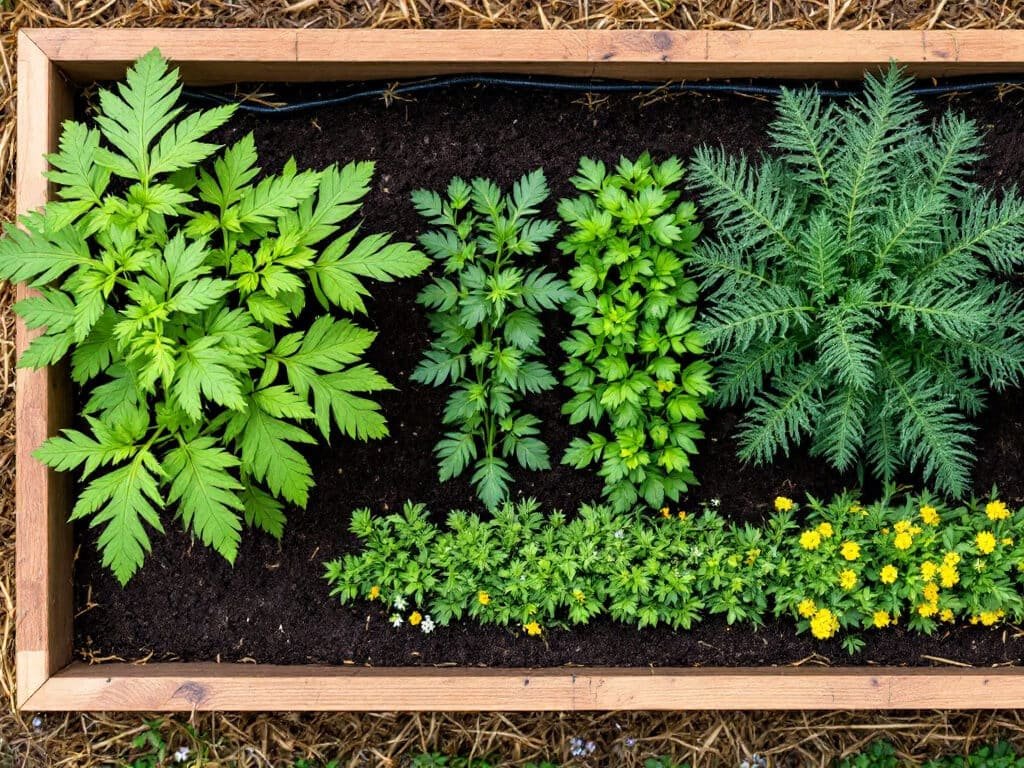
Put parsley where it gets full sun or partial shade and stays evenly moist, and keep taller plants from casting long shade over it. No dependable mature size or parsley-specific spacing was verified, so spacing here comes from the neighbor’s own needs, not a fixed number.
Bed: Keep parsley outside the mature canopy of tomatoes, and leave asparagus its full spacing.
Tall flowers: Place dill and fennel where their height won’t shade parsley.
Edge: Use sweet alyssum along the border of the bed so it doesn’t crowd the parsley.
Access: Keep coriander and parsley both reachable, since you’ll be cutting from them regularly.
Containers: Pair parsley only with plants that accept the same moisture-retentive conditions. Pots can also make parsley harder for slugs and snails to reach.
Separate beds: Grow carrots and celery elsewhere.
FAQ
Can parsley and tomatoes grow together?
Yes. Tomato and parsley are a traditional compatible pairing, but the available source does not verify a specific pest-control or yield benefit. Keep the parsley outside the tomato’s mature canopy.
Does parsley repel pests?
No broad repellent effect was verified. Coriander has sometimes deterred unwanted insects in parsley crops, and parsley’s own flowers can support beneficial insects.
Should parsley be planted near carrots or celery?
Use caution. Parsley, carrots, and celery are closely related and can share insects and diseases.