
Apple Tree Companion Plants: What to Grow Nearby
Most advice on apple tree companion plants is a list of flowers and herbs, and most of it isn’t backed by anything. The extension and RHS sources point somewhere less glamorous: the best things to put near an apple tree are a second apple, a managed grass cover, and a ring of mulch. Here is what each one does, how far from the trunk it goes, and what to keep out.
Why pairings matter for apple tree
An apple tree is a long-term commitment with a short list of needs. It wants at least 8 hours of direct sun, fertile and well-drained soil with a pH of about 6 to 7, and steady moisture while it establishes, during dry spells, and while fruit is forming. Anything you plant nearby either respects those needs or competes with them.
It also has a long list of problems: apple scab, fire blight, plum curculio, codling moth, mites, and leafrollers, with pressure that varies by region. This is where the folklore comes in. Claims that marigolds, lavender, or other herbs and flowers repel apple pests, cure diseases, or boost fruit set were not verified in the extension or RHS sources. What those sources emphasize instead is cultivar selection, compatible pollination, weed control, scouting, sanitation, and drainage.
So think of “companions” as the things that reduce competition and improve pollination. That is a shorter list than the internet offers, but every item on it has a reason behind it.
Best companion plants for apple tree
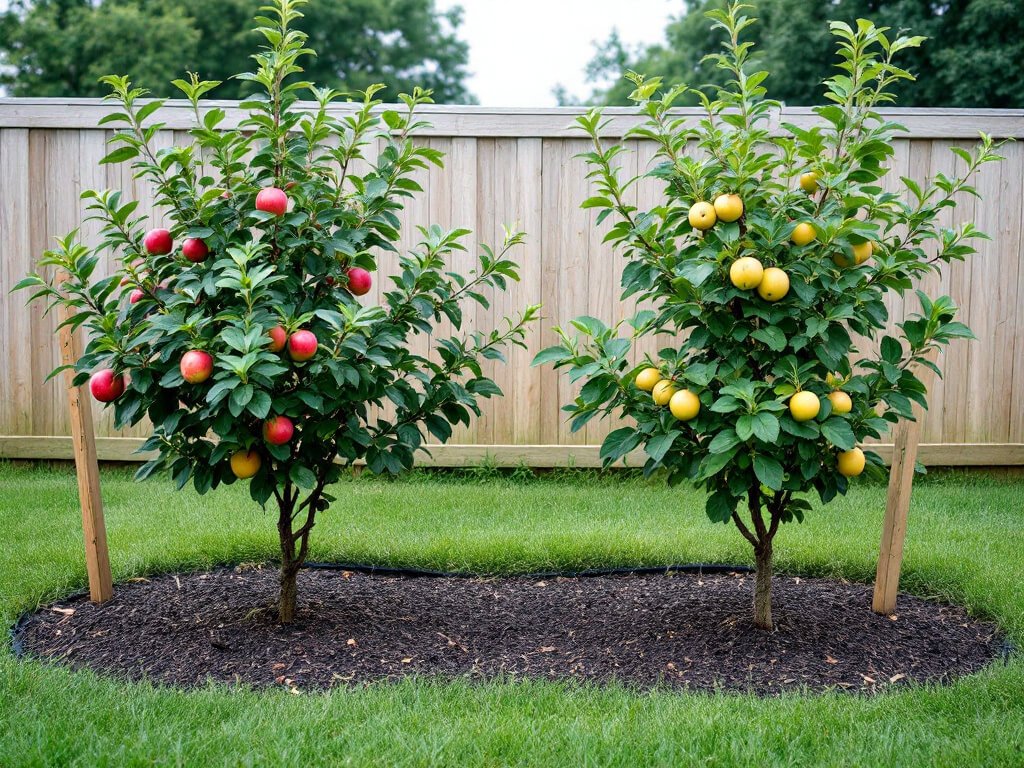
A compatible second apple cultivar
This is the most directly documented companion for fruit production. A second cultivar that blooms at the same time and belongs to a compatible pollination group supplies cross-pollen, and most apples crop better with it. Some cultivars are self-fertile, but check the label rather than assuming.
There is no universal planting distance. Follow the nursery or extension recommendation for your cultivar, rootstock, and site.
A family apple tree
If you only have room for one tree, a family tree carries two or three cultivars on a single root system. That gets you compatible pollen without a second trunk. Plant it the way you would plant any single tree, following the rootstock and planting instructions that come with it. There is no separate companion distance to worry about.
Disease-resistant apple cultivar
Rather than leaning on nearby plants to fend off disease, start with a tree selected for resistance to apple scab or fire blight. It is a more reliable choice than any herb border. Spacing follows the rootstock and training system for that tree, not a companion rule.
Organic mulch
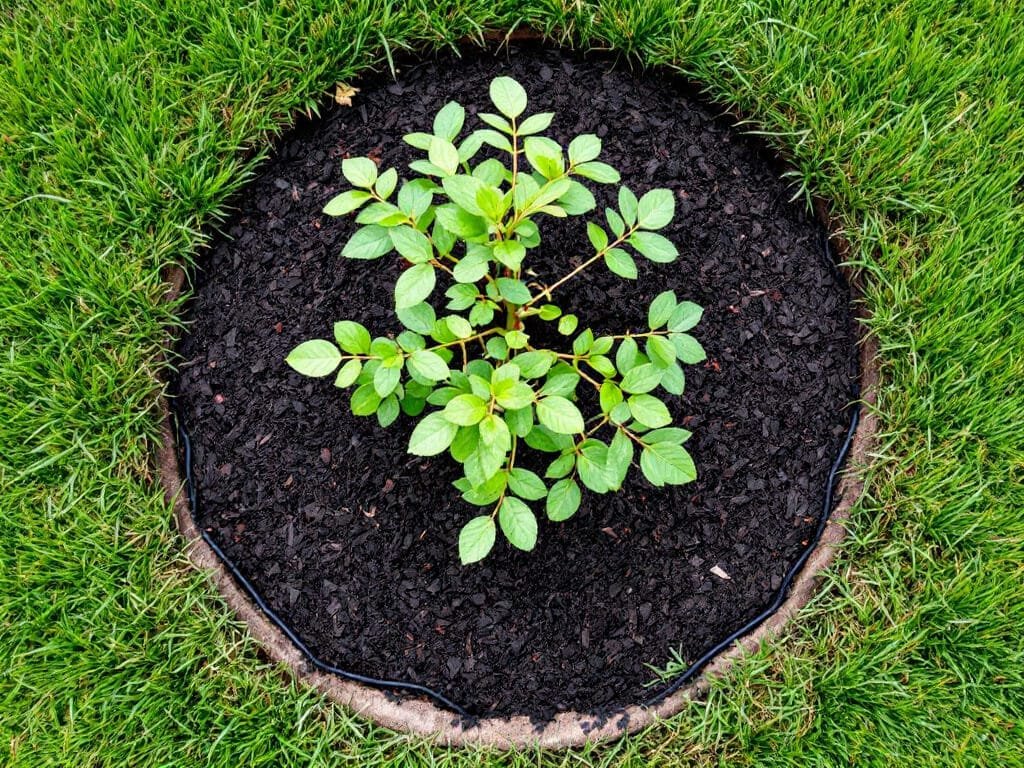
Mulch conserves moisture and suppresses weeds, which takes direct competition off a young tree. The RHS calls for a layer at least 2 inches (5 cm) deep. Spread it around the tree, but keep mulch from touching the trunk.
A maintained bare tree strip
This isn’t a plant, but it is the most useful thing you can do near a young apple. A vegetation-free strip keeps grass and weeds from taking water and nutrients. University of Minnesota guidance calls for about a 3-foot radius for the first three to five years, and orchard systems commonly use a 4-foot-wide strip. Pick the larger one if you have the room.
Fescue grass
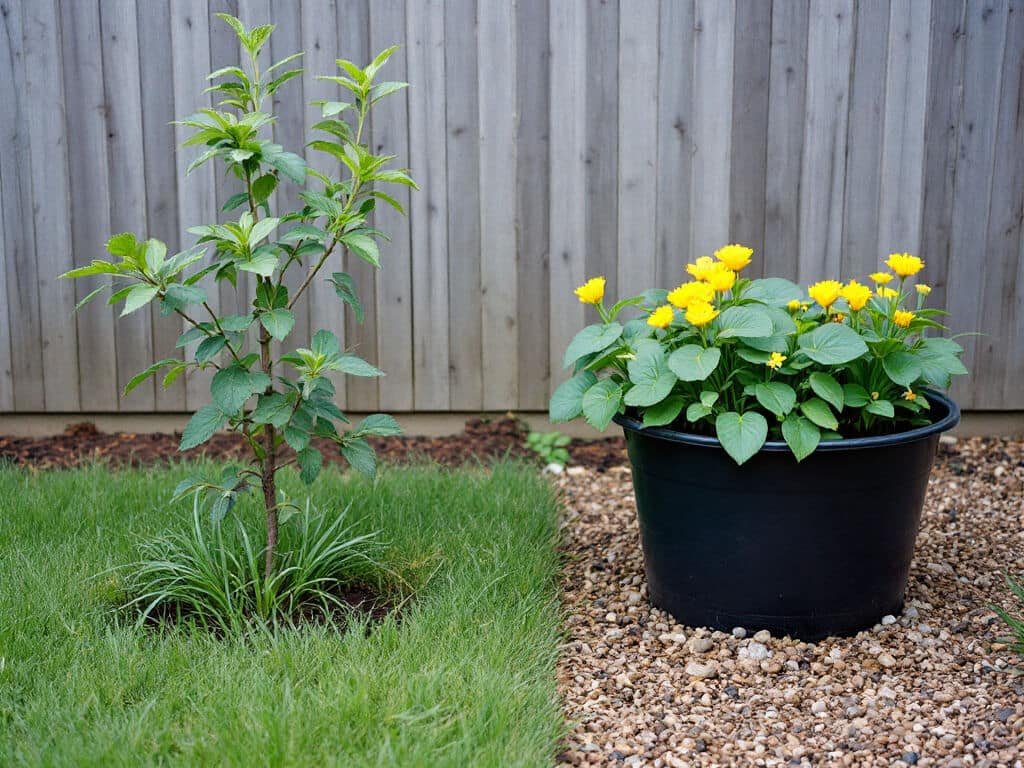
Fescue works as a managed groundcover in the row middles, not under the canopy. It can suppress broadleaf weeds, reduce erosion, improve water infiltration, and offers less vole habitat than some other groundcovers. Keep it at least 4 feet from the trunk, or maintain the 4-foot-wide vegetation-free strip.
Annual ryegrass
Ryegrass is used alongside fescue as an orchard row-middle cover to crowd out broadleaf weeds. Like fescue, it belongs in the mowed lanes between trees, not at the trunk. Maintain a 4-foot-wide vegetation-free strip around the tree row.
White clover
I’d treat this one with caution. No apple-specific pest-repellent benefit was found in the authoritative sources, so there is no reason to plant it for that. If your local orchard guidance supports it as a managed groundcover, it can go in the row middles. Don’t establish it within the 4-foot tree strip.
What not to plant with apple tree
Turf grass directly beneath a young apple tree
Lawn grass right up to the trunk competes with the tree for water and nutrients just when it is trying to establish. Extension guidance is to remove grass and weeds from around young trees. If your apple is sitting in the middle of a lawn, cut a circle out of it and mulch the circle.
Broadleaf weeds in the tree strip
Weeds in the strip compete for the same water and nutrients, and they can interfere with orchard pest and disease management. This is why the grass covers in the row middles are recommended over leaving things to chance. Pull or smother weeds in the strip before they establish.
Plants that need waterlogged soil
Apples need well-drained soil. Waterlogging raises the risk of Phytophthora-related problems in susceptible rootstocks. A bog plant or anything that wants constantly wet feet doesn’t belong near the root zone, and neither does an irrigation setup that keeps the area soggy.
Unmanaged tall plants or trees that shade the apple
Apples need full sun for strong growth and fruit production. A tall perennial, shrub, or neighboring tree that grows up and over the apple works against that. Keep anything tall well clear, or keep it cut back.
Unmanaged vegetation that shelters voles
Some groundcover choices can increase vole concerns. Penn State identifies grass groundcovers as useful for suppressing voles compared with broadleaf weeds. Tall, unmown cover near the trunk is the thing to avoid.
Layout and spacing
For an in-ground tree, keep a mulched, vegetation-free strip around the trunk and put any managed groundcover in the row middle rather than under the canopy. In a container, give the tree its own pot and don’t crowd the roots with other plants.
– Trunk zone: mulch at least 2 inches (5 cm) deep, kept clear of the trunk itself.
– Tree strip: bare or mulched ground, 3-foot radius minimum for the first three to five years, or a 4-foot-wide strip in orchard-style rows.
– Row middles: fescue, with annual ryegrass mixed in if you want it, mowed and kept outside the strip.
– Second cultivar: placed according to the nursery or extension advice for your rootstock and site.
– Container apple: a pot at least 18 to 20 inches (45 to 50 cm) across, with drainage, and nothing else planted in it.
FAQ
Do apple trees need another plant for pollination?
Most apples produce better crops with pollen from a different compatible cultivar that blooms at the same time. Some cultivars are self-fertile, and family trees can combine cultivars on one root system.
Can grass grow under an apple tree?
Not right against a young tree. University of Minnesota Extension recommends removing grass and weeds from about a 3-foot radius for the first three to five years, while orchard systems commonly maintain a 4-foot-wide vegetation-free strip.
Do marigolds, lavender, or herbs repel apple pests?
No reliable apple-specific benefit was verified for these pairings. Apple pest management should rely on monitoring, sanitation, resistant cultivars where available, and regionally appropriate integrated pest management.